Choosing between layered haircuts and non-layered haircuts is not simply a style decision. The cut changes how your hair falls, how full the ends appear, how easily it moves, and how much styling it may need.
Neither option is automatically better. Layers usually add movement or remove selected weight, while a non-layered cut creates a stronger perimeter and fuller-looking ends. Your best choice depends on your hair’s density, strand thickness, texture, length, daily routine, and preferred finish.
This guide explains the differences in practical terms. You will also learn about hybrid cuts, face-framing pieces, internal layers, maintenance, common mistakes, and exactly what to ask for at the salon.
Quick Answer
Choose a layered haircut when you want movement, texture, curl definition, crown lift, or less bulk.
Choose a non-layered haircut when you want stronger-looking ends, a clean outline, easier braids, or a sleek shape.
Still undecided? A blunt perimeter with long internal layers offers a useful middle ground. It preserves fullness while adding controlled movement.
Layered vs Non-Layered Haircuts at a Glance

This comparison shows how each option usually behaves. Results still vary by hair texture, density, length, and cutting technique.
| Feature | Layered Haircut | Non-Layered Haircut |
|---|---|---|
| Basic shape | Contains several blended lengths | Keeps most hair at one main perimeter |
| Movement | More separation and swing | Smoother, heavier movement |
| Appearance of ends | Can look lighter or softer | Usually looks stronger and fuller |
| Volume | Can add lift in selected areas | Holds weight near the bottom |
| Best for thick hair | Helps release controlled bulk | May feel heavy without hidden shaping |
| Best for fine hair | Works when layers stay subtle | Often preserves more visible density |
| Straight hair finish | Softer, fuller, or more textured | Sleek, graphic, and polished |
| Wavy or curly finish | Can improve shape and definition | Can create weight and a fuller base |
| Ponytails and braids | Short pieces may escape | Usually easier to control |
| Styling needs | Depends heavily on layer placement | Often simpler, but sharp lines need smoothing |
| Grow-out | Shorter sections take time to catch up | Usually grows with a more even outline |
| Best compromise | Long or invisible layers | Solid base with hidden weight removal |
What Is a Layered Haircut?
A layered haircut contains sections cut at different lengths. Those lengths may be obvious and dramatic, or so softly blended that they are difficult to see.
Layers can sit around the face, near the crown, through the middle, or beneath the surface. Their purpose may be to add lift, shape curls, reduce heaviness, or create movement.
Common types include:
• Long layers: Gradual lengths that preserve most of the overall length
• Face-framing layers: Shorter front pieces that connect into the main shape
• Internal layers: Hidden shaping beneath the surface
• Ghost layers: Subtle internal pieces designed to add movement without visible steps
• Crown layers: Shorter upper sections that create lift or a rounded shape
• Graduated layers: Progressively stacked lengths that build weight and structure
• Choppy layers: More visible separation for a textured or piece-based finish
• Curly layers: Customized lengths placed around curl pattern, density, and shrinkage
• Butterfly layers: Short upper sections combined with long lower lengths
• Shag layers: Distributed crown, fringe, and perimeter layers with stronger texture
Ghost layers are especially useful for people who want movement without a heavily layered appearance. They sit beneath the top sections, helping the surface remain smooth and connected.
What Is a Non-Layered Haircut?
A non-layered haircut keeps most of the hair falling toward one main lower edge. It may also be called a one-length cut, solid cut, blunt cut, or zero-elevation cut.
The perimeter can be straight, rounded, angled, U-shaped, or slightly curved. A skilled stylist may still soften the ends or remove hidden bulk without changing the cut’s solid appearance.
That distinction matters. A non-layered haircut does not always mean every strand is cut to the exact same measurement. A bob, for example, may include subtle undercutting or beveling to help the perimeter curve inward while still looking blunt.
Popular non-layered shapes include:
• Blunt bob: A strong line near the jaw or chin
• One-length lob: A collarbone or shoulder-length cut with full ends
• Solid long cut: Long hair with little visible elevation
• U-shaped perimeter: A softly rounded outline at the back
• Straight-across perimeter: A clean horizontal baseline
• Angled bob: A longer front with a structured back
• Blunt curly bob: A fuller curl shape with limited layering
• Micro bob: A short, compact shape near the cheekbone or jaw
Choose a Layered Haircut If…
Layers work best when they solve a specific problem. Asking for layers simply because a haircut feels “boring” may lead to more styling than expected.
Consider layers when:
• Your thick hair feels heavy: Internal shaping can release weight without removing all the length.
• Your long hair lies flat: Long layers may help the hair bend and move.
• Your waves disappear underneath: Balanced layers can uncover the natural wave pattern.
• Your curls collect near the bottom: Rounded shaping can distribute volume more evenly.
• You enjoy blowouts: Layers create separation that becomes visible with a round brush.
• You want face framing: Shorter front sections can highlight cheekbones, lips, or the jaw.
• You want crown lift: Carefully placed upper layers may reduce downward pull.
• You prefer textured styling: Layers support bends, waves, flips, and piece-based finishes.
• Your bob feels too triangular: Light internal layers may reduce bottom-heavy width.
• You want change without losing length: Long layers can refresh the shape while protecting overall length.
Layers should still be customized. Thick, straight hair may need internal weight removal, while fine hair may need only two or three longer pieces.
Choose a Non-Layered Haircut If…
A solid cut is often the better choice when the ends need weight, strength, or visual density.
Consider a non-layered cut when:
• Your ends look fine or transparent: More strands reaching the baseline can create a fuller appearance.
• You prefer sleek styling: A blunt line creates a smooth, polished finish.
• You wear your hair up daily: Fewer short sections escape from ponytails, buns, and braids.
• You want predictable grow-out: A solid outline usually changes more evenly.
• You dislike round-brush styling: One-length hair may need less shaping through separate sections.
• Your hair is damaged near the ends: A cleaner perimeter can remove thin, split, or fragile lengths.
• You like graphic shapes: Blunt bobs and sharp lobs create a deliberate outline.
• Your fine hair loses density easily: Heavy layering may make the lower section look weaker.
• You want a professional finish: A solid bob or lob can look controlled with minimal detail.
• You braid your hair often: Similar lengths usually create a cleaner braid.
A one-length cut can still include light face framing. You do not have to choose between a completely solid shape and heavy all-over layers.
The Best Middle Ground: Blunt Ends With Internal Layers
Many people do not need a strict choice between layers and no layers. A hybrid haircut combines a strong lower edge with movement inside the shape.
The perimeter stays blunt, rounded, or U-shaped. Longer internal pieces then remove selected weight without leaving thin, disconnected ends.
This approach works especially well for:
• Fine hair needing slight movement: The baseline remains full while hidden layers prevent stiffness.
• Thick hair needing less bulk: Internal sections reduce heaviness without creating a shredded outline.
• Straight hair needing flexibility: Invisible movement helps the hair bend during blow-drying.
• Wavy hair needing shape: Long internal layers release the wave without causing excessive expansion.
• Long hair that feels heavy: Hidden shaping reduces weight while preserving visible length.
• People nervous about layers: The change remains subtle and easier to grow out.
• Frequent ponytail wearers: Long internal pieces are less likely to fall from the hair tie.
• Professional styles: The exterior remains smooth while the inside feels lighter.
Useful salon wording includes:
“I want a strong, full perimeter with subtle internal movement. Please keep the layers long enough to reach my ponytail.”
Layers, Graduation, Thinning, and Texturizing Are Different
These terms are often treated as interchangeable, but they describe different cutting decisions. Knowing the difference can prevent an unwanted result.
Layers
Layers change the length relationship between sections. They may create visible movement or remain hidden inside the haircut.
Graduation
Graduation builds weight. Shorter hair supports longer hair above it, creating a stacked or curved shape. Graduated bobs often look fuller near the back.
Thinning
Thinning removes density from selected areas. A stylist may use thinning shears, blending shears, or another technique.
Thinning does not automatically create a layered haircut. It can be used inside a blunt-looking shape.
Texturizing
Texturizing changes how the ends or sections separate. It may soften a hard edge, reduce bulk, or create a piece-based finish.
Razor Cutting
A razor can create softness and separation. It may work well on some textures but can leave fragile or highly porous ends feeling rough when used aggressively.
Internal Weight Removal
This technique removes bulk beneath the surface. It is useful when the outside shape should stay smooth and substantial.
Before the service begins, ask:
“Are you changing the shape, removing density, softening the ends, or doing all three?”
Fine or Thin Hair: Layers or No Layers?
Fine hair describes the diameter of each strand. Thin hair describes lower overall density. A person may have fine strands but a large amount of hair, or coarse strands with lower density.
That difference should guide the haircut. Fine or thin hair often benefits from a strong baseline, but carefully placed layers can still add lift and movement.
Best Options for Fine or Thin Hair
• Blunt bob: Creates a compact outline with fuller-looking ends
• Collarbone lob: Preserves density while staying long enough for a ponytail
• Blunt base with face framing: Adds interest without thinning the back
• Ghost layers: Builds hidden movement without obvious separation
• Long layers with solid ends: Keeps movement above the final inches
• Soft bixie: Adds crown lift when the perimeter remains controlled
• Asymmetrical bob: Creates shape without relying on heavy layering
• Rounded one-length cut: Prevents very long hair from developing a pointed tail
Current expert-led coverage of thin-hair cuts includes both layered options and solid shapes. Recommended examples include ghost layers, lobs, bixies, butterfly layers, asymmetrical bobs, and blunt bobs, showing that density matters more than following one universal rule.
What Fine Hair Should Usually Avoid
• Numerous short layers through the bottom half
• Aggressive thinning near already sparse ends
• A razor-heavy finish on fragile hair
• Short crown pieces that cannot blend into the length
• Layers beginning at the widest part of the head
• Removing weight before checking the hair’s natural density
Better Salon Wording
“My priority is keeping the ends full. I would like a solid baseline with minimal, blended movement above it.”
Thick or Dense Hair: Layers or No Layers?
Thick hair may contain coarse strands, high density, or both. A completely solid cut can look beautiful, but it may also feel heavy, wide, or difficult to dry.
The goal is not to remove as much hair as possible. The goal is to remove weight from the right areas while protecting the overall silhouette.
Best Options for Thick Hair
• Long blended layers: Reduce heaviness without creating obvious tiers
• Internal layers: Release bulk beneath a smooth surface
• U-shaped cut: Keeps the center length while softening the corners
• Butterfly cut: Adds upper movement while preserving long lower sections
• Layered lob: Prevents shoulder-length hair from sitting too wide
• Soft shag: Gives dense waves and curls space to form
• Blunt bob with hidden shaping: Maintains a strong outline without excessive bulk
• Rounded curly layers: Distributes curl volume through the shape
• Long V-shaped layers: Creates a more tapered back for very dense lengths
U-shaped cuts can incorporate back layers that reduce excess weight while protecting movement and fullness, making them useful for dense or wavy hair.
What Thick Hair Should Usually Avoid
• Random thinning close to the scalp
• Very short internal pieces that push the surface outward
• Removing too much density from the lower perimeter
• Copying a fine-hair reference without adjusting the technique
• Heavy crown layers when unwanted volume is already present
• Cutting every section with the same tension despite mixed texture
Better Salon Wording
“Please release weight internally, but keep the outside shape strong. I do not want thin or stringy ends.”
Straight, Wavy, Curly, and Coily Hair Compared
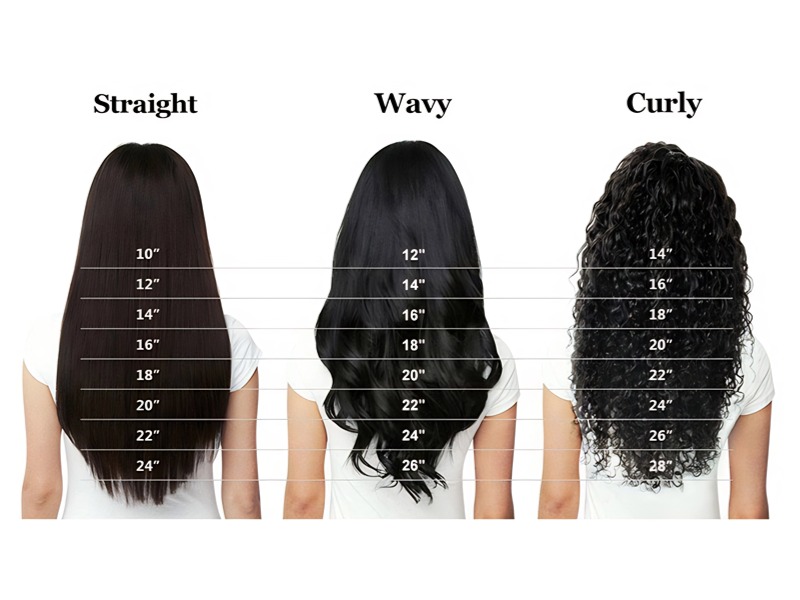
Texture changes how every layer behaves. A layer that looks soft on straight hair may spring several inches higher on curly hair.
Straight Hair
Straight hair displays cutting lines clearly. Blunt cuts emphasize shine and precision, while long blended layers create softness and movement.
Good choices include:
• Blunt bob
• One-length lob
• Ghost layers
• Long face framing
• Butterfly layers
• Textured pixie
• Blunt base with internal shaping
Avoid poorly blended steps because straight hair exposes disconnected lines.
Wavy Hair
Wavy hair often needs enough weight to control expansion and enough movement to reveal the wave pattern.
Good choices include:
• Layered lob
• Long U-shaped layers
• Soft shag
• Face-framing layers
• Blunt bob for fine waves
• Internal layers for dense waves
• Solid perimeter with soft crown movement
Ask the stylist to assess how the waves settle after drying.
Curly Hair
Curls may need layers to prevent a heavy bottom, but short pieces can create more volume than expected.
Good choices include:
• Rounded layers
• Long curl layers
• Curly bob
• Curly shag
• Tapered crop
• Blunt curly lob
• Mixed-length shaping based on curl pattern
A 2026 rounded curl bob uses layers to release weight and build a soft, curved silhouette. Shorter areas create lift, while longer sections preserve necessary weight.
Coily Hair
Coily hair requires careful planning around shrinkage, density, and the desired silhouette. Some shapes need strong layering, while others rely on weight and a fuller perimeter.
Good choices include:
• Rounded coily shape
• Tapered natural cut
• Layered Afro
• Blunt stretched cut
• Long coily layers
• Face-framing coil shaping
• Graduated bob on stretched or pressed hair
For a major shape change, work with a stylist experienced in your texture. Discuss whether the final length will be judged wet, stretched, or fully dry.
Layered vs Non-Layered Cuts by Hair Length
Length affects how much weight the hair carries and how visible each layer becomes.
Short Hair
Short hair makes cutting lines easy to see. The difference between a layered pixie and a blunt micro bob is dramatic.
| Short Cut | Shape | Styling Effort | Maintenance |
|---|---|---|---|
| Textured pixie | Layered crown and separated ends | Low to medium | High |
| Sleek pixie | Smooth, compact outline | Low to medium | High |
| Bixie | Layered pixie-bob blend | Medium | Medium to high |
| Soft layered bob | Movement within a rounded outline | Medium | Medium |
| Blunt bob | Strong jaw or chin-length perimeter | Low to medium | Medium to high |
| Micro bob | Very short, graphic baseline | Medium | High |
| Curly crop | Customized short curl layers | Low after wash day | Medium to high |
Short pixies often need reshaping around every four to six weeks when maintaining a defined silhouette.
Medium Hair
Medium hair offers the easiest balance between movement and practicality.
Strong options include:
• One-length collarbone lob
• Layered shoulder-length cut
• Face-framed lob
• Soft shag
• Butterfly-inspired lob
• Blunt curly lob
• Hybrid lob with a solid baseline
• Medium U-shaped cut
A one-length lob is often better for sleek styling and ponytails. A layered lob is usually better for movement, waves, or internal weight control.
Long Hair
Long hair may become heavy, flat, or slow to dry. Layers can help, but excessive removal can leave the ends narrow.
Strong options include:
• Long one-length cut
• Long U-shaped layers
• V-shaped layers
• Butterfly layers
• Ghost layers
• Long face framing
• Solid perimeter with sparse internal layers
• Long curly cascade
For fine ends, keep the shortest back layers below the shoulders. For thick hair, discuss where bulk builds rather than requesting general thinning.
Face-Framing Layers and Face Shape
Face shape can guide placement, but it should never become a rigid rule. Your preferred part, hair texture, forehead, jawline, and styling routine matter just as much.
Face-framing layers are shorter pieces cut around the front perimeter. The shortest point is chosen first, then connected gradually into the longer hair.
Round Faces
Layers beginning below the chin can create a longer visual line. Avoid adding unwanted width directly beside the fullest cheek area.
Oval Faces
Most placements work well. Choose the starting point based on the feature you want to highlight.
Square Faces
Soft pieces around the cheekbone, jaw, or collarbone can break up a very straight outline. A blunt bob can also emphasize the jaw when that is the desired effect.
Heart-Shaped Faces
Chin-length movement can add fullness around a narrower lower face. Curtain bangs may also create balance near the cheekbones.
Diamond Faces
Layers near the cheekbone or jaw can shift the visual width. Keep the shortest piece away from areas you do not want emphasized.
Long or Oblong Faces
Medium layers, side volume, and fringe can reduce a strongly vertical appearance. Very long, flat hair may increase the impression of length.
The Better Rule
Do not ask, “Which haircut am I allowed to wear?”
Ask:
• Where do I want more width?
• Where do I want less weight?
• Which feature do I want the shortest piece to highlight?
• Will the layers work with my natural texture?
• Can I style them consistently?
Common Layering Mistakes That Cause Bad Results
Layers are not the problem by themselves. Poor placement, excessive removal, or unclear communication usually causes disappointment.
Cutting the Crown Too Short
Short crown sections may stick up, create unwanted roundness, or require daily styling.
Better approach: Establish the shortest acceptable layer before cutting.
Over-Layering Fine Ends
Too many lengths can reduce density near the bottom.
Better approach: Protect the lower perimeter and concentrate movement above it.
Ignoring Ponytail Placement
Face-framing pieces may look attractive when loose but fall out during work or exercise.
Better approach: Show your stylist where your usual hair tie sits.
Removing Bulk Too Close to the Scalp
Short internal pieces can push the surface outward as they grow.
Better approach: Remove weight from areas where it collects, not randomly.
Ignoring Curl Shrinkage
A wet layer may spring much higher after drying.
Better approach: Agree on the dry finished length and discuss shrinkage before cutting.
Copying a Styled Reference Photo
A haircut shown after curling or a professional blowout may look very different when air-dried.
Better approach: Bring both styled and natural-texture references.
Confusing Layers With Thinning
A client may ask for layers but receive density removal instead.
Better approach: Ask which sections will become shorter and which will simply lose bulk.
Choosing a Cut That Fights Natural Texture
A high-maintenance shape may look disappointing without daily heat styling.
Better approach: Choose a cut that still works on an ordinary wash day.
Real-Life Haircut Scenarios
These examples show how density, texture, and routine can matter more than a haircut name.
Fine Straight Hair With Daily Ponytails
The main concerns are transparent ends and short pieces escaping from the hair tie.
Better choice: A collarbone lob with a blunt baseline and face framing below the chin.
Salon request: Keep the back and sides solid. Add only long front movement that reaches the ponytail.
Thick Wavy Hair That Is Usually Air-Dried
The main concerns are heaviness, slow drying, and a wide lower shape.
Better choice: Long internal layers with a U-shaped perimeter.
Salon request: Release weight beneath the surface while preserving enough length to control expansion.
Long Straight Hair That Feels Flat
The main concern is downward pull through the crown and middle.
Better choice: Long blended layers or butterfly-inspired shaping.
Salon request: Keep the lower length substantial and avoid short, disconnected crown layers.
Curly Hair With More Volume at the Bottom
The main concern is a triangular silhouette.
Better choice: Rounded curl layers customized around shrinkage and density.
Salon request: Build lift where the curls collapse while leaving weight where the shape needs control.
Fine Wavy Hair With Weak Ends
The main concern is gaining movement without losing density.
Better choice: A blunt lob with ghost layers.
Salon request: Keep the perimeter strong and add subtle internal movement only where the waves need support.
Thick Straight Hair With a Blunt Bob
The main concern is a heavy or helmet-like shape.
Better choice: A blunt-looking bob with hidden undercutting or internal weight removal.
Salon request: Keep the exterior line sharp, but reduce enough hidden bulk for the ends to curve naturally.
Styling and Maintenance: Which Cut Requires More Work?
A layered cut is not always higher maintenance. A sharp one-length bob may require frequent trimming and smoothing, while long subtle layers may grow out easily.
It helps to separate daily styling effort from salon maintenance.
| Haircut | Daily Styling | Typical Shape Check |
|---|---|---|
| Precision pixie | Low to medium | 4–6 weeks |
| Sharp blunt bob | Low to medium | 4–8 weeks |
| Layered bob or bixie | Medium | 6–8 weeks |
| Collarbone lob | Low to medium | 8–12 weeks |
| Medium layered cut | Medium | 8–12 weeks |
| Long blended layers | Low to medium | 8–14 weeks |
| Long one-length cut | Low | 10–16 weeks |
| Defined curly shape | Low daily, higher wash-day effort | 8–14 weeks |
These are planning ranges, not fixed rules. Hair growth, damage, chemical services, curl pattern, and the precision of the shape can change the timing.
Layered Hair May Need More Styling When:
• The layers are short or dramatic
• The cut was designed around a blowout
• Straight hair needs added bends
• Crown sections must be lifted
• Face-framing pieces need direction
• The ends were heavily texturized
Non-Layered Hair May Need More Styling When:
• A blunt line must remain perfectly smooth
• Dense hair needs controlled beveling
• The bob flips at the shoulders
• Humidity expands a solid wavy shape
• The perimeter must curve inward
• The cut depends on very straight ends
Ponytails, Braids, Buns, and Grow-Out
Daily styling should influence the cut before any hair is removed.
Short layers can create softness around the face, but they may also escape from tied styles. A solid haircut usually offers more control, although long internal layers can preserve most updo options.
Before Choosing Layers, Consider:
• High ponytails: Crown and temple layers may fall forward.
• Low ponytails: Chin-length pieces may need clips or pins.
• Braids: Similar lengths usually produce cleaner, more secure sections.
• Buns: Long layers tuck more easily than short choppy pieces.
• Half-up styles: Crown layers may work well because they join the upper section.
• Exercise: The shortest pieces should reach your usual elastic or headband.
• Formal updos: Layers can create soft detail when intentionally curled and pinned.
• Growing out: Short layers may require several trims before reaching the baseline.
To grow layered hair toward one length, trim the lower perimeter while allowing shorter sections to catch up. Avoid repeatedly shortening the top unless maintaining the layered shape.
Layered and Blunt Haircut Ideas for 2026
The strongest 2026 haircut direction is not simply “more layers.” Current cuts balance movement with healthy-looking, substantial ends.
Expert trend coverage for summer 2026 highlights Hollywood bobs, bixies, curly wolf cuts, collarbone lobs, feathered layers, and quiet luxury layers.
Quiet Layers
Subtle, seamless pieces create movement without a shaggy or heavily separated finish.
Best for: Straight, wavy, fine, or medium-density hair
Maintenance: Low to medium
Ask for: Long blended layers with a polished perimeter
Hollywood Bob
A softer bob with movement, bounce, and a less rigid outline than a traditional blunt bob.
Best for: Fine to medium hair, straight hair, or soft waves
Maintenance: Medium
Ask for: A softly structured bob with controlled internal movement
Collarbone Lob
A practical in-between length that works with blunt, layered, and hybrid finishes.
Best for: Most textures and active routines
Maintenance: Low to medium
Ask for: A collarbone perimeter with movement matched to your density
Bixie
A layered blend of a pixie and bob with texture around the crown, ears, and nape.
Best for: People growing out a pixie or wanting a short textured shape
Maintenance: Medium to high
Ask for: A soft pixie-bob with enough length for flexible styling
Curly Wolf Cut
A curl-focused shape with stronger upper layers and controlled length through the perimeter.
Best for: Dense curls and people who enjoy visible volume
Maintenance: Medium
Ask for: Rounded crown lift with enough lower weight to prevent excessive expansion
Feathered Layers
Face-framing and upper layers sweep away from the face, creating a soft retro finish.
Best for: Straight or wavy medium-to-long hair
Maintenance: Medium to high
Ask for: Long feathered sections that still blend when air-dried
Blunt Base With Soft Layers
A strong perimeter supports lighter internal movement.
Best for: Fine hair, dense hair, cautious first-time layer clients
Maintenance: Low to medium
Ask for: Full ends with subtle internal or face-framing layers
What to Ask Your Stylist
A haircut name alone is not enough. Two stylists may interpret “butterfly layers” or “a blunt lob” differently.
Use this consultation checklist before the cutting begins.
Length
• Where will the final perimeter sit when the hair is dry?
• How much length will be removed?
• Where will the shortest layer begin?
• Will the front pieces reach my ponytail?
Shape
• Will the perimeter be straight, rounded, angled, U-shaped, or V-shaped?
• Will the layers be visible or hidden?
• Where will volume increase?
• Where will weight be removed?
Technique
• Are you adding layers, graduation, texturizing, or thinning?
• Will you use shears, thinning shears, or a razor?
• How will the technique affect my natural texture?
• Will the cut be checked after drying?
Routine
• How will this look when air-dried?
• Will it need a round brush, diffuser, or curling tool?
• How often should I plan a shape check?
• Can I still wear my usual ponytail, braid, or bun?
Helpful Salon Script
“I want movement, but I do not want thin ends. Please keep a strong perimeter and add only long, blended layers. The shortest pieces must reach my ponytail, and I usually air-dry my hair.”
For curly or coily hair, add:
“Please account for shrinkage and show me where the shortest section will sit when fully dry.”
FAQs
Are layers better than no layers?
Neither option is universally better. Layers are usually better for movement, texture, and controlled weight removal, while non-layered cuts are usually better for strong ends and a clean outline.
The right choice depends on density, texture, length, and styling habits.
Do layers make hair look thicker or thinner?
Layers can create lift and movement, which may make the upper hair appear fuller. However, too many short layers can make the lower ends look thinner.
A blunt baseline with light internal layers is often a safer option for fine or low-density hair.
Can a blunt haircut have hidden layers?
Yes. A stylist can add internal layers, ghost layers, subtle undercutting, or hidden weight removal while keeping the outside perimeter visually blunt.
This technique is especially helpful for thick hair or solid bobs that feel too heavy.
What is the difference between layers and thinning?
Layers change the lengths and shape of the haircut. Thinning removes density.
A stylist can layer hair without thinning it, or thin a solid haircut without creating visible layers.
Are layers good for fine hair?
They can be, but placement matters. Fine hair often responds best to long, soft, or internal layers rather than many short sections.
Keep the perimeter substantial when the ends already look sparse.
Are layers good for thick hair?
Yes. Internal or long blended layers can reduce heaviness and improve movement.
Avoid random thinning that leaves the surface frizzy or the ends stringy.
Can layers make frizz worse?
Poorly placed layers or aggressive thinning may increase expansion, especially in wavy, curly, or porous hair.
Well-planned layers can improve shape by removing weight from areas where the texture collapses.
Should curly hair be layered?
Many curl patterns benefit from customized layers, but some need a stronger perimeter for weight and control.
The stylist should account for density, shrinkage, mixed curl patterns, and the desired dry silhouette.
Which cut is easier for ponytails and braids?
A non-layered or minimally layered cut is usually easier to control. Short face or crown layers may fall from elastics and braids.
Long internal layers are less disruptive than short, choppy sections.
How do I ask for subtle layers?
Ask for long blended layers, ghost layers, or internal movement with a strong perimeter.
Clearly state where the shortest layer may begin and how much fullness you want to protect.
How often should layered hair be trimmed?
Subtle long layers may hold their shape for several months. Short, dramatic, or highly precise layers often need attention sooner.
Your stylist should recommend timing based on length, texture, damage, and the desired finish.
Conclusion
The choice between layered haircuts and non-layered haircuts comes down to what your hair needs. Layers can create movement, release weight, and shape natural texture. A non-layered cut can strengthen the perimeter, simplify updos, and give the hair a cleaner outline.
You do not always have to choose one extreme. A blunt base with long internal or face-framing layers often provides the best balance between fullness and movement.
Before your appointment, save photos that match your natural texture and density. Decide where the shortest piece may sit, how full the ends should remain, and how much styling you are willing to do. Clear salon wording will help turn your inspiration into a haircut that still works on an ordinary day.
1 thought on “Layered Haircuts vs Non-Layered: Which Cut Is Right for You?”