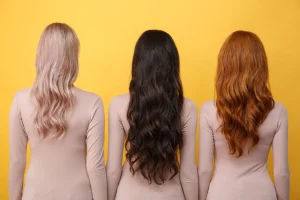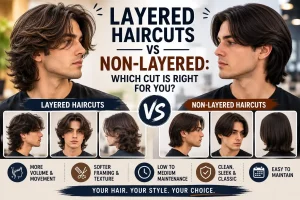
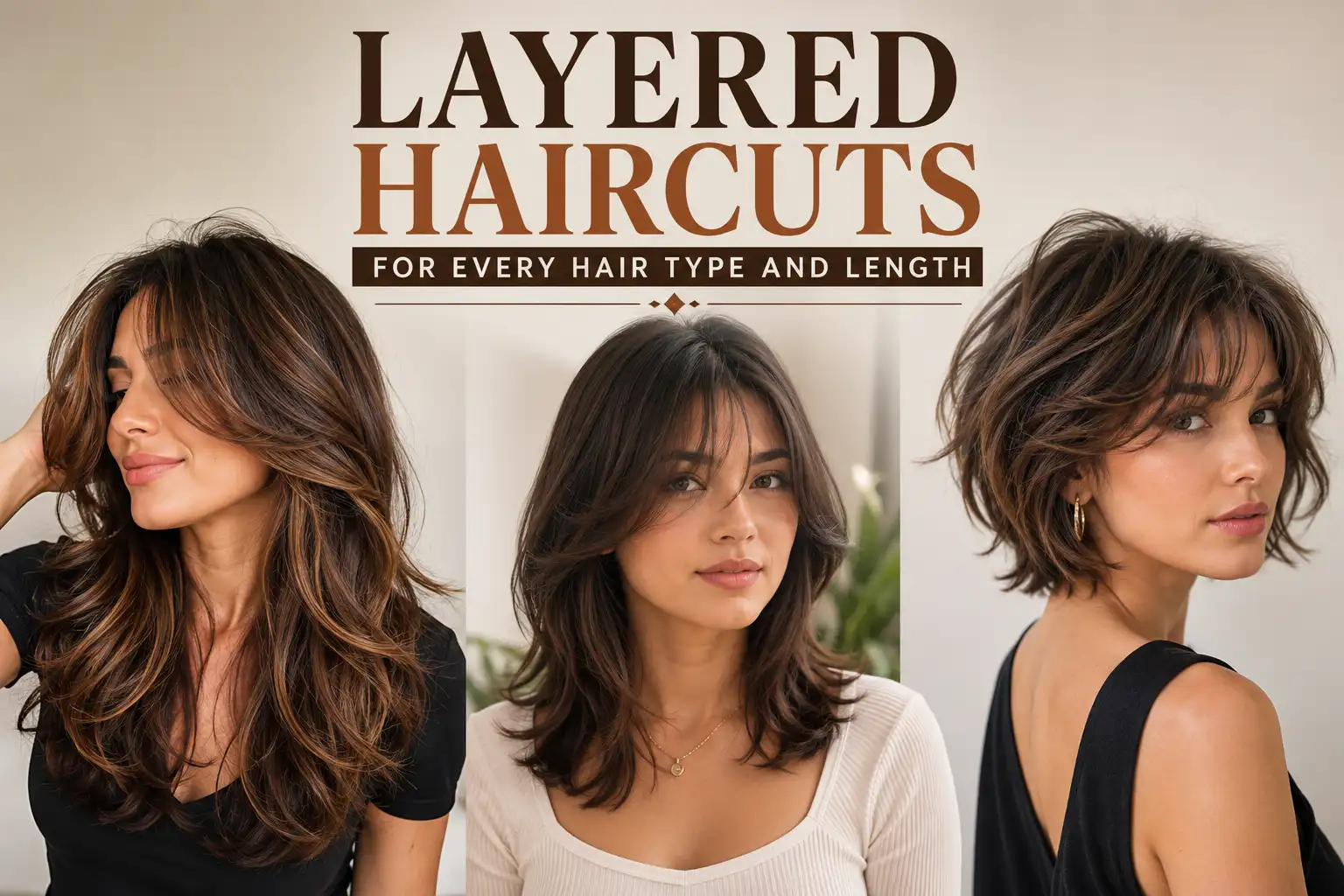
Layered haircuts can make hair feel lighter, fuller, softer, and easier to style. The secret is not just getting “layers.” It is choosing the right kind of layers for your hair type, length, density, face shape, and daily routine.
A great layered cut should solve a real problem. Maybe your hair feels heavy, flat, bulky, shapeless, or hard to style. This guide shows the best layered haircut ideas, what each cut looks like, who it suits, what to avoid, and exactly what to ask your stylist.
Quick Answer: What Is A Layered Haircut?
A layered haircut uses different hair lengths to create shape, movement, volume, softness, or weight removal. Instead of cutting all the hair into one blunt line, the stylist creates shorter and longer sections that help the hair move better.
The best layered haircut depends on your goal. Choose long blended layers to keep length, face-framing layers to soften the front, internal layers to remove bulk, invisible layers for subtle movement, or shaggy layers for more texture.
Best Layered Haircuts At A Glance
| Hair Goal | Best Layered Haircut | Best For | Styling Effort |
|---|---|---|---|
| Keep length | Long blended layers | Long straight, wavy, or thick hair | Low to medium |
| Add volume | Face-framing layers | Flat roots, fine hair, medium hair | Medium |
| Reduce bulk | Internal layers | Thick or dense hair | Medium |
| Add soft movement | Invisible layers | Fine, straight, or medium-density hair | Low |
| Add bounce | Butterfly layers | Medium to long hair | Medium |
| Add edge | Wolf cut layers | Wavy, thick, curly, or bold styles | Medium to high |
| Add casual texture | Shag layers | Wavy, curly, or undone styles | Medium |
| Try shorter hair | Layered bob or lob | Most hair types | Low to medium |
| Shape curls | Rounded curly layers | Curly and coily hair | Medium |
| Keep styling simple | Textured lob | Wavy, straight, or medium hair | Low to medium |
Why Layered Haircuts Are So Popular
Layered haircuts stay popular because they can change the way hair behaves without always changing the whole length. They can make long hair feel lighter, short hair look more shaped, and medium hair look more polished.
They also work across many styles. A layered cut can look soft and natural, bouncy and polished, messy and textured, or sharp and modern. The difference comes from layer placement, hair density, styling method, and how much texture your stylist adds.
Layers Can Help With
• Flat roots that need lift
• Heavy ends that pull the hair down
• Thick hair that feels bulky
• Fine hair that needs light movement
• Curly hair that needs better shape
• Wavy hair that needs more bend
• Straight hair that looks too plain
• Long hair that feels heavy
• Short hair that needs texture
• Bangs that need to blend into the cut
• Face-framing pieces that soften the front
• Ponytails and updos that need loose detail around the face
Types Of Layers Explained
Not all layers look the same. Before your salon visit, it helps to know the main types of layers and what each one does.
Long Layers
Long layers add movement while keeping most of the length. They are one of the safest choices if you want a visible change without a major chop.
They work well for long hair, thick hair, medium hair, wavy hair, and straight hair.
Face-Framing Layers
Face-framing layers are shorter pieces around the front of the hair. They can highlight the cheekbones, soften the jawline, open the face, or make ponytails look more finished.
They are ideal if your hair feels heavy or flat around your face.
Internal Layers
Internal layers remove weight from inside the haircut. They are not always obvious from the outside, but they can make thick hair feel lighter and move better.
They are best for dense hair, thick waves, heavy curls, and bulky lobs.
External Layers
External layers are visible on the outside of the haircut. They create a more noticeable shape, especially in shags, wolf cuts, bobs, pixies, and feathered styles.
They are a good choice if you want texture people can see.
Invisible Layers
Invisible layers are soft, blended layers that create movement without looking choppy. They are great if you want a natural result.
They work well for fine hair, straight hair, medium hair, and low-maintenance cuts.
Feathered Layers
Feathered layers have light, airy ends. They can create a soft, flipped, or blowout-friendly finish.
They look especially good with curtain bangs, long hair, medium hair, and butterfly cuts.
Choppy Layers
Choppy layers are more separated and textured. They give the hair a bold, piecey, undone look.
They suit wolf cuts, shag cuts, short layered haircuts, and edgy bobs, but they usually need more styling.
Graduated Layers
Graduated layers build weight in a controlled shape. They are common in bobs and shorter cuts where the back, sides, or front need structure.
They can make a cut look fuller and more sculpted.
The Layer Match Method
The best layered haircut is not always the trendiest one. It is the one your hair can actually support.
Before choosing a cut, answer these five questions:
- Do I want to keep length or change shape?
- Do I need volume, softness, weight removal, or texture?
- Do I usually air-dry, blow-dry, curl, or straighten my hair?
- Do I wear ponytails, buns, clips, or updos often?
- What is the shortest front piece I can handle?
If you answer these before the salon visit, your stylist can adjust the cut to your real life, not just a photo.
Long Layered Haircuts
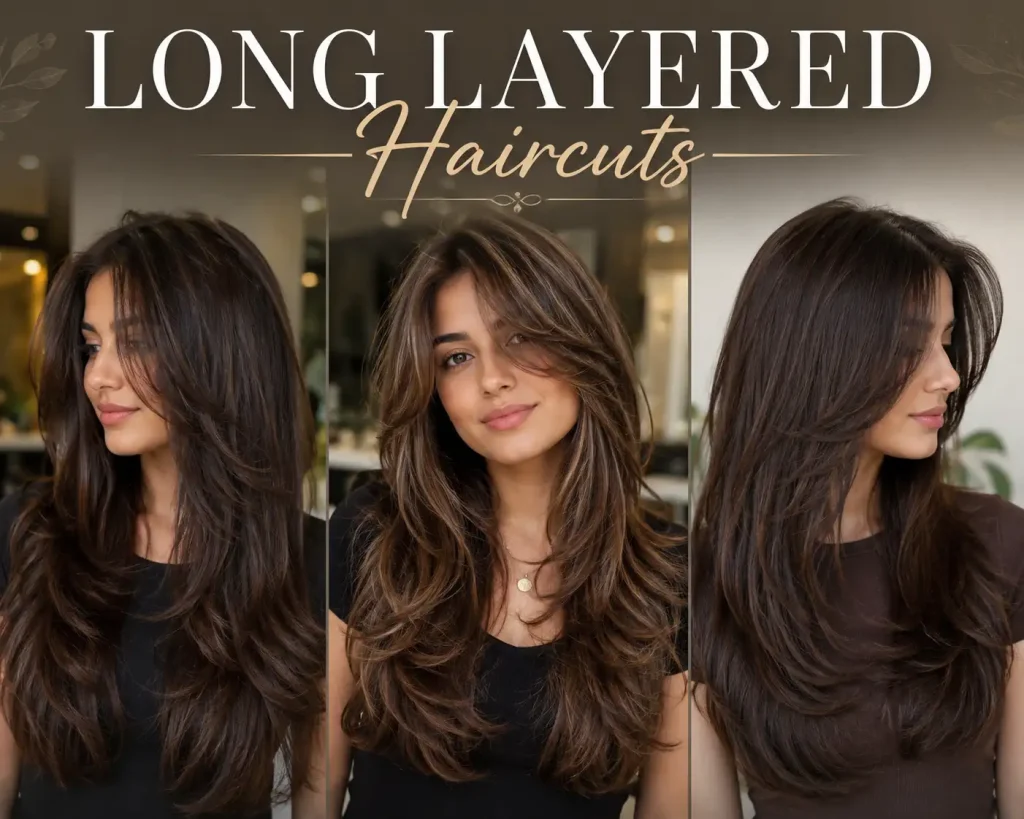
The Long layered haircuts are best if you want movement without losing your length. They can make long hair feel lighter, fuller, and less heavy at the bottom.
The most important detail is where the shortest layer starts. If you want an easier grow-out, ask about layers that begin around the chin, collarbone, or lower.
Best Long Layered Haircut Ideas
• Long blended layers keep the ends full while adding flow.
• Butterfly layers add bounce around the cheekbones and shoulders.
• U-shaped layers create a soft rounded back shape.
• V-cut layers give very long thick hair a sharper outline.
• Long face-framing layers soften the front without removing much length.
• Feathered front layers work well with curtain bangs and blowouts.
• Invisible long layers add movement without obvious separation.
• Long shag layers create relaxed texture for wavy hair.
• Rounded long layers help dense hair move without looking thin.
• Minimal end layers suit fine hair that needs a fuller bottom line.
Best For
Long layered haircuts work best for people who want to keep length but avoid a heavy, flat, one-length shape.
What To Ask Your Stylist
Say: “I want long blended layers, but please keep fullness at the ends.”
If you want front shape, add: “Keep the shortest face-framing layer around my chin or collarbone.”
Medium Layered Haircuts
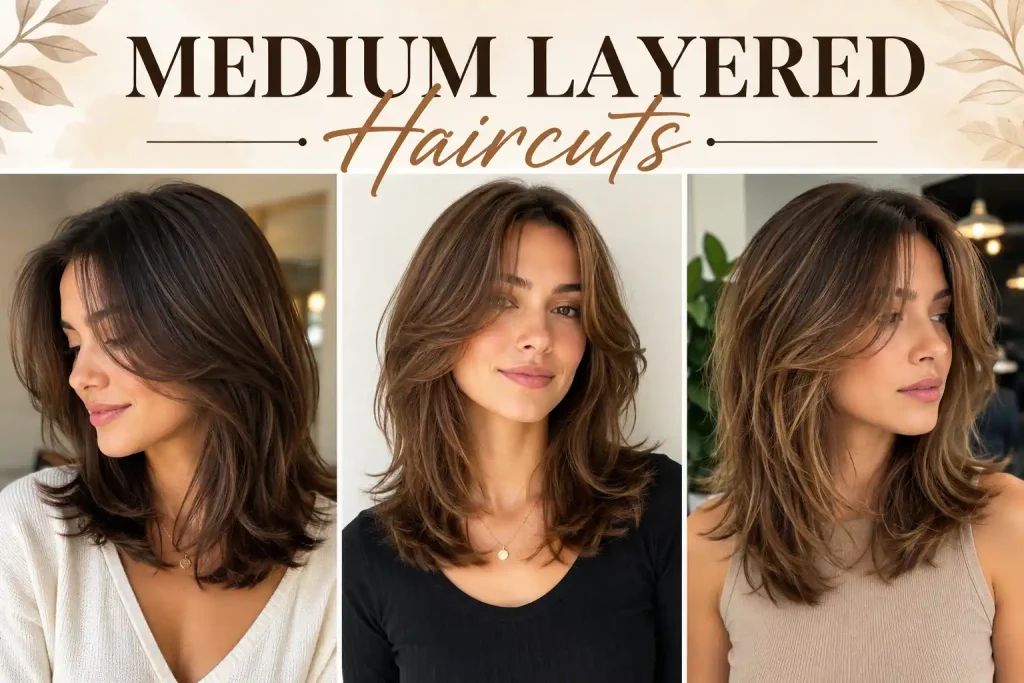
The Medium layered haircuts usually fall near the shoulders or collarbone. This length is practical because it feels fresh but still allows ponytails, clips, and easy everyday styling.
Medium layers can work for almost every texture. The best version depends on whether you want volume, softness, weight removal, or more wave definition.
Best Medium Layered Haircut Ideas
• Layered lob gives movement without going too short.
• Collarbone layers create a soft frame around the face and neck.
• Shoulder-length layers make thick hair feel lighter.
• Textured lob helps waves bend instead of sitting flat.
• Medium shag layers add crown lift and casual texture.
• Curtain bangs with layers soften the eyes and cheekbones.
• Internal medium layers remove bulk without thinning the ends.
• Swoopy layers create a smooth, rounded finish.
• U-shaped medium layers keep the back full and balanced.
• Side-parted layers can soften angular features.
Best For
Choose a medium layered haircut if you want a style that is easy to wear down but still long enough to pull back.
Short Layered Haircuts
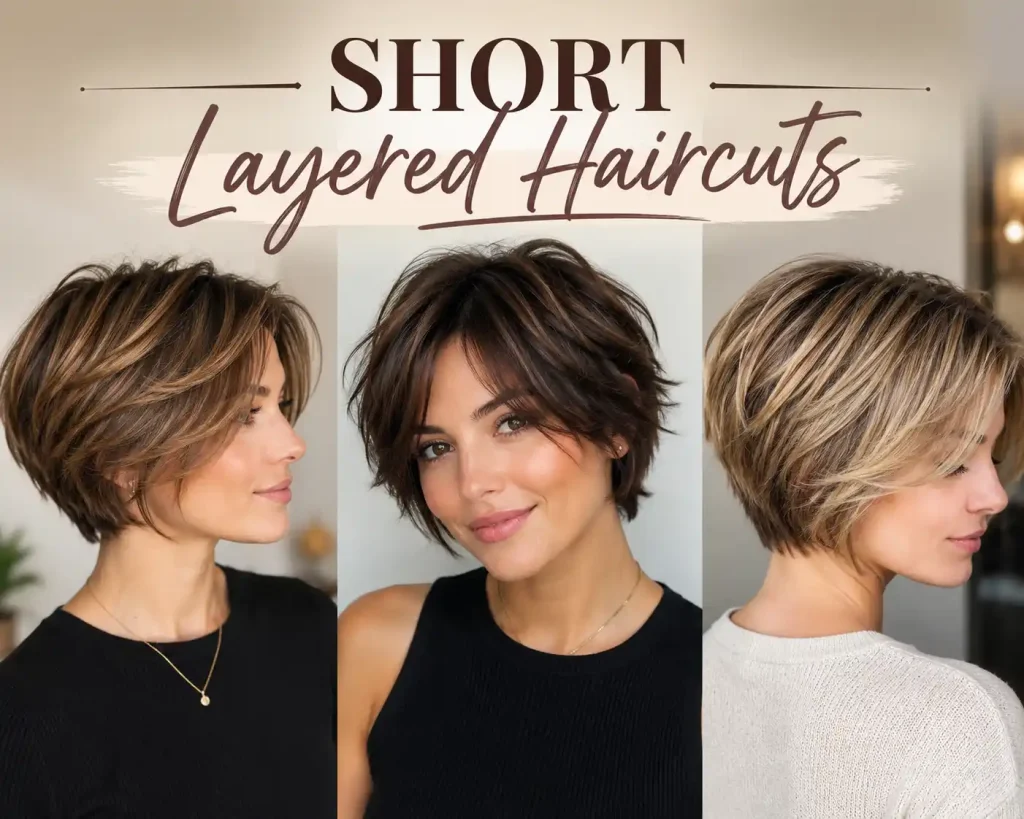
The Short layered haircuts can add shape, lift, and texture. They work well for pixies, bixies, short bobs, cropped cuts, and textured styles.
Short layers can feel easy when the cut fits your texture. However, very short or choppy layers often need more styling and more frequent trims.
Best Short Layered Haircut Ideas
• Textured pixie adds lift at the crown.
• Layered bixie blends pixie texture with bob softness.
• Short layered bob gives body without heavy ends.
• Cropped shag adds messy movement and personality.
• Soft nape-length bob feels polished but light.
• Layered curly crop helps curls sit in a rounded shape.
• Tapered short cut removes bulk near the neck.
• Side-swept pixie layers soften the forehead area.
• Piecey short layers suit straight or slightly wavy hair.
• Rounded layered bob helps fine hair look fuller.
Maintenance Note
Short layered cuts usually need shape refreshes sooner than long layers. If you want a crisp outline, plan regular trims.
Layered Haircuts For Straight Hair
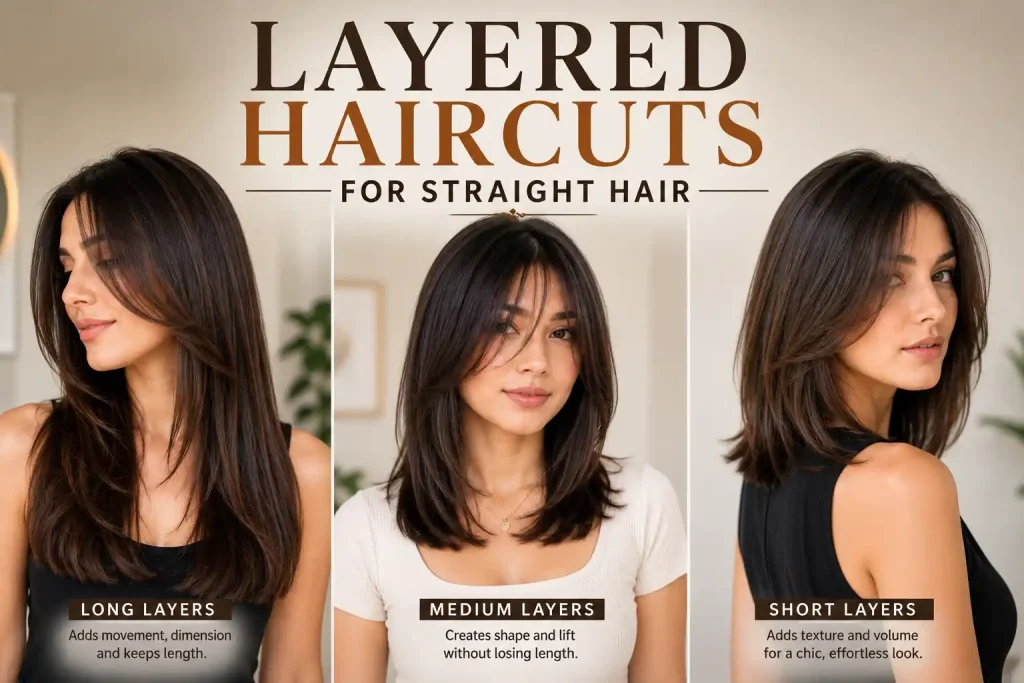
Straight hair can show layer lines more clearly than wavy or curly hair. That means the layers need to be blended carefully.
The best layers for straight hair add movement without creating harsh steps. Soft shaping, invisible layers, feathered ends, and light face-framing pieces usually work best.
Best Layered Cuts For Straight Hair
• Invisible layers add movement without obvious lines.
• Long blended layers keep straight hair from looking flat.
• Feathered layers create a soft, airy finish.
• Face-framing layers add shape around the front.
• Layered lob gives straight hair more structure.
• Tiered bob can make fine straight hair look fuller.
• Soft curtain layers help the front fall naturally.
• Blunt ends with light layers protect fullness.
• Long U-shaped layers add flow to straight long hair.
• Tapered bob layers keep short straight hair neat.
What To Avoid
Avoid very choppy layers if you want a smooth look. On straight hair, harsh layers can show more than expected.
Layered Haircuts For Wavy Hair
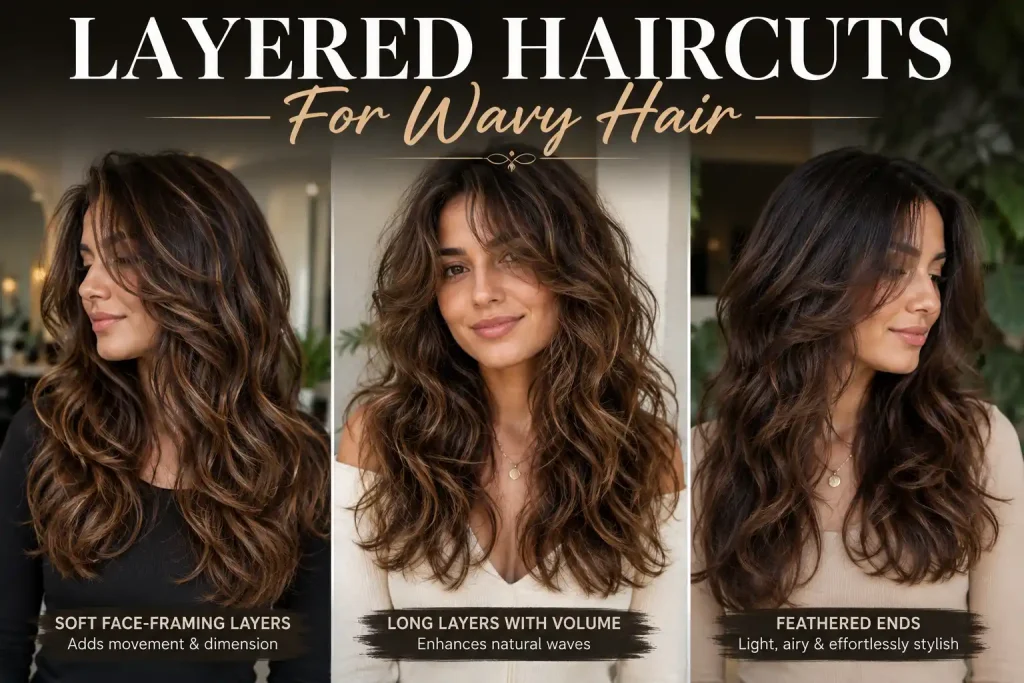
Wavy hair often looks best with movement instead of heavy blunt lines. Layers can help waves bend, lift, and sit with less effort.
The goal is to support your natural wave pattern. A good layered haircut can make air-drying easier and reduce flat roots.
Best Layered Cuts For Wavy Hair
• Long beachy layers create loose, natural movement.
• Textured lob gives waves a simple everyday shape.
• Medium shag adds lift around the crown.
• Soft face frames bring shape to the front.
• Curtain bangs work well if your waves bend smoothly.
• Wolf-lite layers add edge without too much choppiness.
• Feathered layers soften thick waves.
• Invisible layers add movement to fine waves.
• Layered bob gives short waves more body.
• Collarbone layers help waves sit naturally.
Wavy Hair Styling Tip
Use a light mousse, curl cream, or air-dry cream. Scrunch while damp, then avoid touching the hair too much as it dries.
Layered Haircuts For Fine Hair
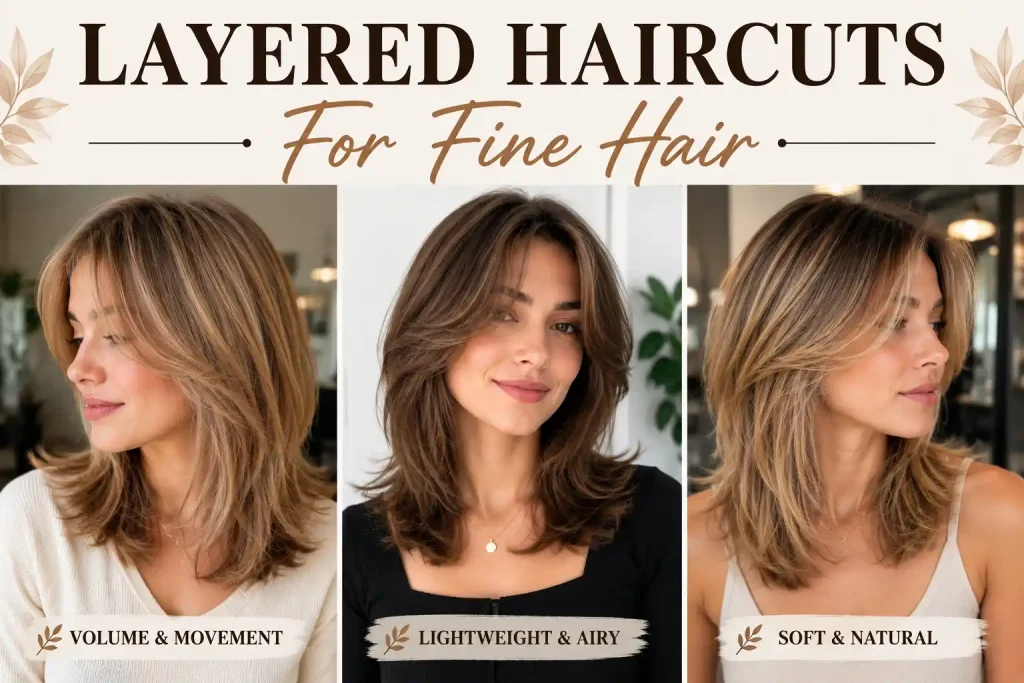
Fine hair can look fuller with the right layers. It can also look thinner if the stylist removes too much weight.
Fine hair usually needs soft layers, strong ends, and careful face-framing. The goal is movement without losing density at the bottom.
Best Layered Cuts For Fine Hair
• Soft long layers add movement without thinning the bottom.
• Tiered bob creates the look of fullness.
• Collarbone lob keeps hair light but not too short.
• Invisible layers add movement without choppy lines.
• Face-framing pieces refresh the front without removing too much hair.
• Rounded bob layers help the shape look fuller.
• Soft curtain bangs work if the front hairline is dense enough.
• Light crown layers can help flat roots.
• Blunt ends with soft layers protect fullness.
• Short layered bob can make fine hair look lifted.
Fine Hair Mistakes To Avoid
• Avoid too many short layers through the back.
• Avoid heavy thinning shears if your ends look sparse.
• Avoid deep choppy layers unless you style your hair often.
• Avoid very wispy ends if you want thicker-looking hair.
What To Ask Your Stylist
Say: “I want movement, but I need to keep fullness at the ends.”
Layered Haircuts For Thick Hair
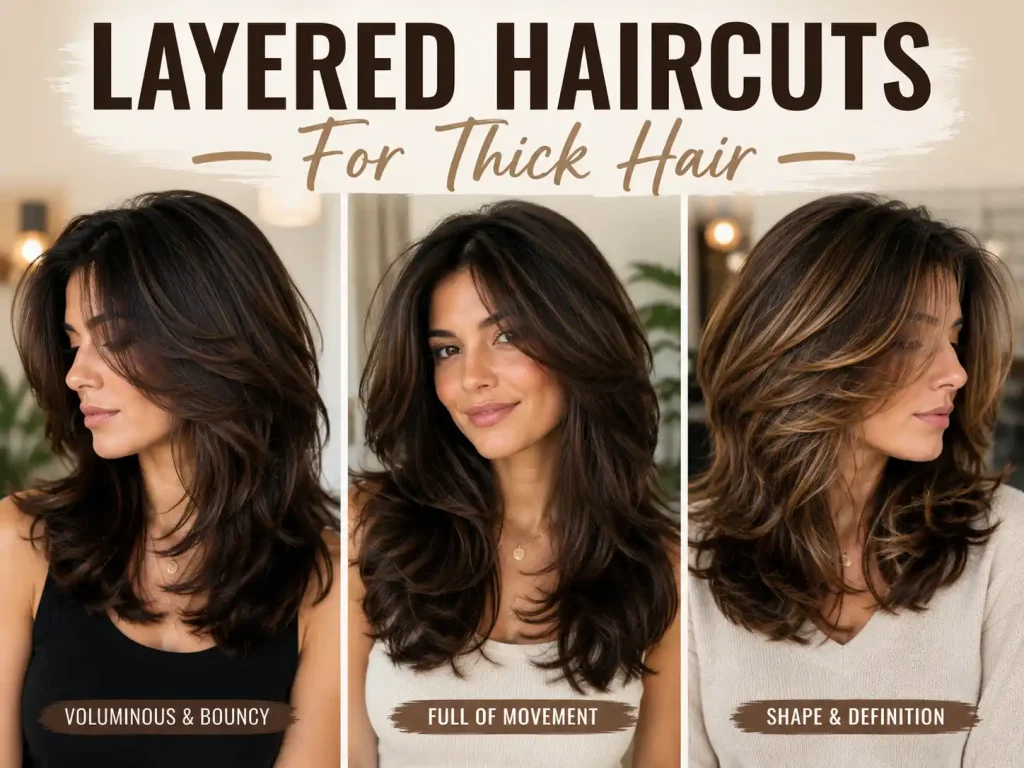
Thick hair often needs layers to remove weight and improve movement. Without the right shape, dense hair can feel heavy, wide, hard to dry, or difficult to style.
The best layers for thick hair are controlled. The goal is not thin ends. The goal is better balance, lighter movement, and easier styling.
Best Layered Cuts For Thick Hair
• Internal layers remove hidden bulk.
• Long rounded layers add movement without losing fullness.
• Layered lob makes thick hair feel lighter.
• Feathered layers soften dense ends.
• Curtain bangs break up heaviness around the face.
• Soft shag layers add airiness and texture.
• V-cut layers give very long thick hair shape.
• Tapered bob removes bulk near the nape.
• Textured layers help thick waves bend better.
• Curly thick layers create a balanced shape.
Thick Hair Mistakes To Avoid
Do not simply ask your stylist to “thin it out.” That phrase can lead to stringy ends if the weight is removed in the wrong place.
Instead, ask for internal weight removal, soft debulking through the interior, or layers that reduce bulk without thinning the ends.
Layered Haircuts For Curly And Coily Hair
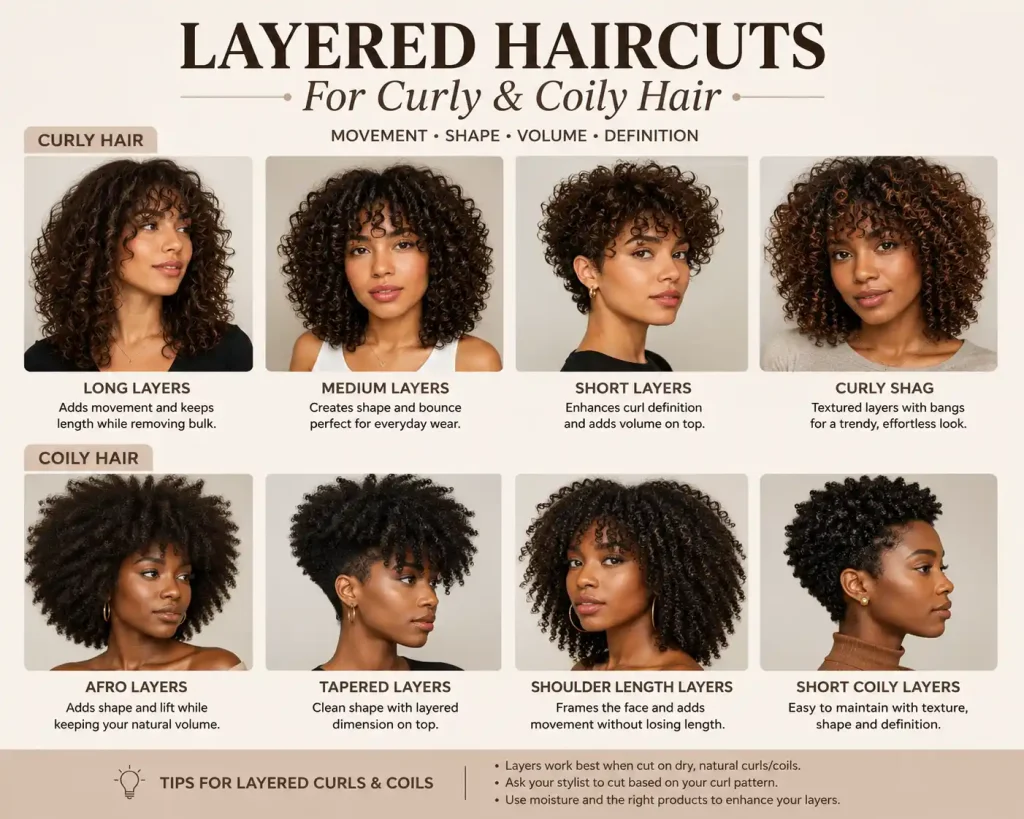
Curly and coily layered haircuts need careful planning because curls shrink after drying. A piece that looks long when wet can sit much shorter once the curl pattern returns.
The goal is shape, not random short pieces. A strong curly cut respects curl pattern, density, shrinkage, and how you wear your hair most often.
Best Layered Cuts For Curly And Coily Hair
• Rounded curly layers help curls form a balanced shape.
• Long curly layers remove heaviness without losing length.
• Curly shag adds crown lift and face-framing texture.
• Layered curly bob helps curls sit rounder at the sides.
• Coily shaped layers keep enough weight to avoid uneven shrinkage.
• Curly face-framing layers soften the front without cutting too short.
• Dry-shaped layers help the stylist see how curls really sit.
• Layered curly bangs work best when cut longer at first.
• Internal curl shaping can reduce bulk in dense curls.
• Soft perimeter layers help curls avoid a heavy triangle shape.
Curly Hair Salon Tip
Ask: “Can you shape my curls based on how they dry naturally?”
If your curl pattern changes across your head, tell your stylist. Many people have tighter curls in one area and looser curls in another.
Curly Hair Care Note
Curly and coily hair can frizz or break when brushed dry. Detangle gently with conditioner, fingers, or a wide-tooth comb when hair is wet or damp.
Layered Haircuts With Bangs
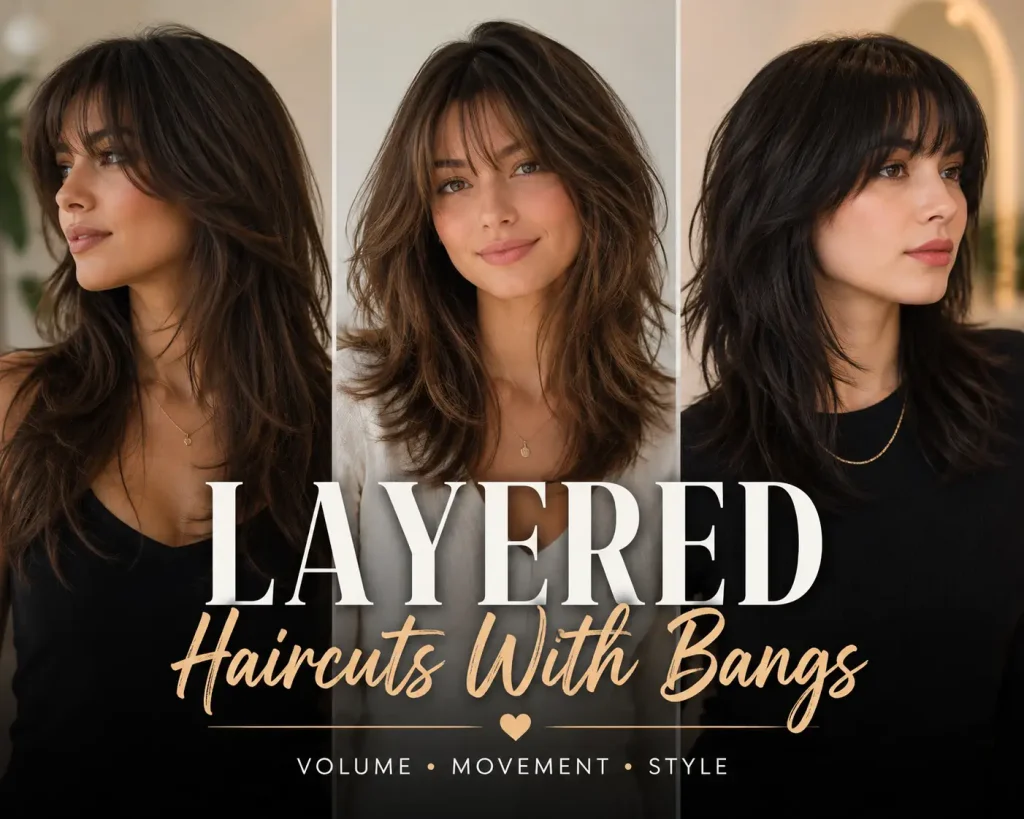
The Layered haircuts with bangs can completely change the feel of your haircut. Bangs can make layers look softer, fuller, more modern, or more face-framing.
The most important rule is blend. Bangs should connect into the side layers so they do not look separate from the rest of the cut.
Best Bangs To Pair With Layers
• Curtain bangs blend well with long and medium layers.
• Wispy bangs soften fine or medium-density hair.
• Side bangs work well with layered bobs and lobs.
• Bottleneck bangs add shape around the eyes and cheekbones.
• Curly bangs need extra length because curls shrink.
• Choppy bangs pair well with wolf cuts and shag layers.
• Long bangs are easier to grow out than short bangs.
• Soft eyebrow bangs can balance longer face shapes.
• Face-framing bangs make ponytails and updos look finished.
• Layered side fringe can soften square or angular features.
Bangs Warning
Bangs are not always low-maintenance. If you do not want daily styling, choose long curtain bangs or soft face-framing pieces instead of short fringe.
Face-Framing Layers
Face-framing layers are shorter pieces around the front of the hair. They are one of the easiest ways to make a haircut feel fresh without changing all the length.
They can highlight cheekbones, soften a jawline, open the face, and make ponytails look more polished.
Best Face-Framing Layer Ideas
• Cheekbone layers highlight the middle of the face.
• Chin-length layers soften the jaw area.
• Collarbone face frames feel subtle and easy to grow out.
• Long front layers suit anyone nervous about short pieces.
• Curtain face frames pair well with long bangs.
• Butterfly face frames create more bounce and drama.
• Curly face frames should be cut with shrinkage in mind.
• Fine hair face frames should stay light and soft.
• Thick hair face frames can be bolder and more shaped.
• Side-part face frames can add natural asymmetry.
What To Ask Your Stylist
Say: “I want face-framing layers that connect into the rest of my haircut.”
Also ask your stylist to show where the shortest front piece will land before cutting.
Layered Haircuts By Face Shape
Face shape can guide layer placement, but it should never be a strict rule. Your hair texture, density, part, length, and styling routine matter just as much.
Think of layers as a way to create balance. They can add softness, length, width, lift, or structure depending on where they are placed.
| Face Shape | Best Layer Placement | Good Layered Haircut Ideas |
| Round face | Below the chin or collarbone | Long layers, side layers, curtain bangs |
| Square face | Around the jaw or below it | Soft curved layers, side bangs |
| Oval face | Most placements work | Long layers, bobs, shags, bangs |
| Heart face | Cheekbones and chin area | Curtain bangs, collarbone layers |
| Long face | Around cheekbones or brow | Bangs, medium layers, side volume |
| Diamond face | Near cheekbones and chin | Face frames, soft lobs |
| Strong jawline | Curved pieces near the jaw | Soft layers, side-swept bangs |
| Narrow face | Side volume | Medium layers, waves, curtain fringe |
Smart Face-Shape Rule
Use face-shape advice as a guide, not a rulebook. The most flattering cut is the one that works with your natural hair and makes you feel comfortable.
Layered Haircuts For Women Over 40, 50, And 60
Layered haircuts for mature hair should feel fresh, soft, and easy to manage. The goal is not to hide age. The goal is to create a cut that supports your texture, density, lifestyle, and personal style.
As hair changes over time, some people notice thinner ends, dryness, curl pattern changes, or less root volume. Soft layers can help, but heavy layering is not always the answer.
Best Layered Haircut Ideas For Mature Hair
• Soft shoulder-length layers add movement without looking overdone.
• Layered lob feels polished and easy to style.
• Face-framing layers brighten the front without a major cut.
• Rounded bob layers can make fine hair look fuller.
• Soft pixie layers add lift and texture to short hair.
• Long blended layers keep length while reducing heaviness.
• Curly rounded layers help curls keep a balanced shape.
• Side-swept bangs with layers soften the forehead and cheek area.
• Feathered layers create lightness around the face.
• Textured bob gives movement without requiring long styling sessions.
What To Avoid
Avoid very thin, wispy ends if your hair already lacks fullness. Ask for soft movement with a strong shape instead.
Butterfly Cut Layers
The butterfly cut is a layered haircut with shorter face-framing pieces and longer layers through the back. It gives the feeling of a shorter haircut while keeping length.
Butterfly layers are best for people who want bounce, volume, and a soft front shape. They work especially well on medium to long hair.
Best Butterfly Layer Ideas
• Classic butterfly layers create movement around the face and shoulders.
• Butterfly layers with curtain bangs add a soft parted frame.
• Long butterfly layers keep the back full and flowing.
• Medium butterfly layers create bounce around the collarbone.
• Soft butterfly layers work well for fine or medium hair.
• Bold butterfly layers suit thick hair that can hold shape.
• Wavy butterfly layers air-dry with natural movement.
• Blowout butterfly layers create a full, flipped finish.
Who Should Try It?
Try butterfly layers if you want a noticeable change but do not want to lose much length.
Avoid very short front pieces if you tie your hair back every day or dislike styling the front.
Wolf Cut Vs Shag Vs Butterfly Cut
These three cuts are all layered, but they create different results. Knowing the difference helps you ask for the right haircut.
| Style | What It Looks Like | Best For | Styling Level |
| Butterfly cut | Soft front layers with long back layers | Medium to long hair | Medium |
| Wolf cut | Choppy layers, crown volume, bold texture | Wavy, curly, thick, edgy styles | Medium to high |
| Shag cut | Piecey layers, bangs, relaxed movement | Wavy, curly, casual texture | Medium |
| Soft shag | Less choppy, more blended | First-time shag clients | Medium |
| Wolf-lite cut | Softer wolf shape | People who want edge without drama | Medium |
| Long shag | Texture while keeping length | Long wavy or thick hair | Medium |
Quick Choice Guide
So, Choose butterfly layers if you want soft bounce. Choose a wolf cut if you want bold shape. Choose a shag if you want relaxed texture.
Layered Bob And Lob Haircuts
Layered bobs and lobs are great when you want shape without very long hair. They can look sleek, soft, textured, full, or casual.
A bob usually sits around the jaw, chin, or neck. A lob, or long bob, usually falls around the shoulders or collarbone.
Best Layered Bob And Lob Ideas
• Layered lob works for many hair types and face shapes.
• Tiered bob adds fullness to fine or medium hair.
• Textured bob gives straight hair more movement.
• Curly layered bob helps curls sit in a rounded shape.
• Tapered bob removes bulk near the nape.
• Soft French bob frames the jaw and cheekbones.
• Collarbone lob is a safe first step into shorter hair.
• Shaggy bob works well for waves and casual texture.
• Side-parted lob softens angular features.
• Blunt bob with light layers keeps fullness but adds movement.
Best For
Choose a layered bob or lob if you want a haircut that feels fresh but still practical.
A lob is usually easier to tie back. A shorter bob usually needs more shape maintenance.
Layers Vs Texturizing
Layers and texturizing are not the same thing. They can work together, but they do different jobs.
Layers change the length structure of the haircut. Texturizing changes how the hair feels, moves, or separates.
| Technique | What It Does | Best For | Watch Out For |
| Layers | Creates shorter and longer sections | Shape, volume, movement | Too many can thin fine hair |
| Texturizing | Softens weight or adds separation | Thick hair, bobs, shags | Too much can make ends stringy |
| Point cutting | Softens blunt ends | Bobs, lobs, straight hair | Needs control on fine hair |
| Razor cutting | Creates airy texture | Shags, waves, edgy cuts | Not ideal for every texture |
| Thinning shears | Removes bulk | Dense hair | Can damage shape if overused |
What To Ask
If you want shape, ask for layers. If you want less heaviness or softer ends, ask whether texturizing would help.
Internal Layers Vs External Layers
Internal layers remove weight inside the haircut while keeping the outside shape fuller. They are helpful for thick hair that feels heavy but still needs strong ends.
External layers are visible from the outside. They create a clear layered look, especially in shags, wolf cuts, feathered cuts, and short textured styles.
| Layer Type | Best For | Result |
| Internal layers | Thick hair, dense waves, heavy lobs | Lighter feel with fuller-looking ends |
| External layers | Visible shape, texture, shags, short cuts | More noticeable movement |
| Blended layers | Natural-looking movement | Soft finish |
| Choppy layers | Bold texture | Piecey, edgy shape |
| Face-framing layers | Front shape | Softer face area |
Salon Phrase
Say: “I want weight removed inside the haircut, but I do not want the ends to look thin.”
Low-Maintenance Layered Haircuts
A low-maintenance layered haircut should work with your natural texture. If a cut only looks good with a full blowout, it is not truly low-maintenance.
Choose layers that support how your hair already behaves. This matters most if you air-dry, avoid heat, or have busy mornings.
Best Low-Maintenance Layered Cuts
• Long blended layers grow out softly.
• Invisible layers add movement without hard lines.
• Collarbone layers are easy to refresh.
• Textured lob works well for natural waves.
• Soft face-framing layers change the look without heavy upkeep.
• Rounded curly layers help curls keep shape.
• Internal layers make thick hair easier to manage.
• Minimal fine-hair layers keep the ends full.
• Long curtain bangs are easier than short bangs.
• Air-dry layers work with your natural texture.
Heat Styling Note
If you use hot tools, keep heat moderate and use protection. Letting hair partly air-dry before styling can help reduce unnecessary heat exposure.
Layered Haircuts By Styling Difficulty
Some layers are easy. Others look best with more daily styling. Before choosing a cut, be honest about your routine.
| Styling Level | Best Layered Haircuts | Good For |
| Low | Long blended layers, invisible layers, collarbone layers | Easy grow-out, natural texture |
| Low to medium | Textured lob, long face frames, soft bob layers | Simple daily styling |
| Medium | Butterfly cut, curtain bangs, shaggy lob | Blowouts, waves, shape |
| Medium to high | Wolf cut, choppy shag, short bangs | Bold texture, daily styling |
| High | Micro bangs, very short layers, sculpted pixie | Frequent trims and styling |
Smart Styling Rule
Do not choose a high-maintenance haircut for a low-maintenance lifestyle. A beautiful cut should fit your real mornings.
Best Products And Tools For Layered Haircuts
You do not need a complicated routine to style layered hair. The best products depend on your texture and the finish you want.
Fine hair usually needs lightweight products. Thick, curly, coily, or dry hair may need more moisture and control.
Helpful Styling Options
• Round brush for bouncy long layers.
• Large rollers for butterfly layers and curtain bangs.
• Diffuser for curly and wavy layers.
• Wide-tooth comb for gentle detangling.
• Light mousse for root lift.
• Texture spray for shags, bobs, and wolf cuts.
• Curl cream for curly and coily layers.
• Smoothing cream for thick or frizz-prone hair.
• Heat protectant before hot tools.
• Soft clips to shape curtain bangs while drying.
Common Layered Haircut Mistakes To Avoid
Layers can look amazing, but the wrong approach can lead to regret. Most problems happen when the stylist removes too much weight, cuts the front too short, or ignores natural texture.
A strong consultation can prevent most mistakes. Bring photos, explain your routine, and say what you do not want.
Mistakes To Avoid
• Asking for lots of layers without saying where you want them.
• Cutting fine hair too deeply through the back.
• Removing too much weight from already thin ends.
• Cutting curly layers without considering shrinkage.
• Choosing short bangs when you dislike daily styling.
• Asking for a wolf cut when you need a polished style.
• Using only celebrity photos with a different hair texture.
• Forgetting to ask how the cut will grow out.
• Asking for “thinning” instead of controlled weight removal.
• Cutting face-framing pieces too short for ponytails.
Better Salon Phrase
Say: “I want layers that solve my main problem, but I do not want thin ends or disconnected pieces.”
How To Fix Bad Layers
Bad layers can happen when pieces are cut too short, too heavy, too thin, or too disconnected. The fix depends on what went wrong.
Do not panic-cut more hair at home. A stylist may be able to blend the layers, adjust the perimeter, reshape the face frame, or create a shorter style that looks intentional.
Common Problems And Fixes
| Problem | What It Looks Like | Possible Fix |
| Layers are too choppy | Harsh steps or disconnected pieces | Blend the transition areas |
| Ends look too thin | Stringy bottom line | Trim perimeter and reduce future thinning |
| Front pieces are too short | Hair falls out of ponytails | Blend into curtain bangs or side fringe |
| Curly layers shrink too much | Uneven curl shape | Reshape dry and adjust curl-by-curl |
| Thick hair looks puffy | Too much width at the sides | Add internal weight control |
| Fine hair looks flat | Not enough structure | Strengthen the bottom line |
What To Tell Your Stylist
Say: “I do not want to lose more length unless it improves the shape. Can you blend the layers and make the ends look fuller?”
How To Grow Out Layered Hair
Growing out layers takes patience, but it does not have to look messy. The key is shaping the ends while letting the shorter pieces catch up.
A stylist can trim the perimeter, blend harsh pieces, and use face-framing to make the grow-out look intentional.
Grow-Out Tips
• Keep trims small and focused on shape.
• Avoid adding new short layers while growing old ones out.
• Use curtain bangs to blend short front pieces.
• Try waves or curls to hide uneven lengths.
• Keep the bottom line clean so the hair looks fuller.
• Use clips, half-up styles, and soft updos during awkward stages.
• Ask for blending, not more thinning.
• Be patient with short crown layers because they take longer to settle.
Layered Haircut Photo Checklist For Your Stylist
Photos help, but only if they match your real hair. A photo of thick wavy hair may not translate the same way on fine straight hair.
Bring examples that show the front, side, and back. Also bring one photo of what you do not want.
Save Photos That Show
• Your preferred length
• Your ideal front layers
• The amount of volume you like
• The level of texture you want
• A similar hair type
• A similar hair density
• A realistic styling finish
• How short the bangs or face frame should be
• The back view of the haircut
• A style you want to avoid
How To Ask Your Stylist For Layered Haircuts
Clear wording helps your stylist understand your goal. Photos are useful, but your stylist also needs to know your hair type, styling routine, and comfort level.
Bring two or three photos that match your real texture. Also bring one photo of what you do not want.
Helpful Salon Phrases
• “I want long blended layers with fullness kept at the ends.”
• “Please add face-framing layers that connect into the length.”
• “I want movement without making my hair look thinner.”
• “Can you remove weight inside my thick hair?”
• “Please keep the shortest layer below my chin.”
• “I want soft layers, not choppy layers.”
• “Can this cut work with my natural curls?”
• “I usually air-dry, so I need an easy shape.”
• “Show me where the shortest front piece will sit.”
• “How will this haircut look in six weeks?”
• “Can you adjust this photo for my hair type?”
• “Please avoid layers that make the ends look stringy.”
Layered Haircut Maintenance Guide
Layered haircuts need maintenance, but the schedule depends on the cut. Short, choppy, and bang-heavy layers need more upkeep. Long blended layers grow out more softly.
Maintenance also depends on your texture. Curly hair, thick hair, and short hair may need shape checks sooner than long soft layers.
| Haircut Type | Maintenance Need |
| Long blended layers | Trim when ends feel heavy or uneven |
| Medium layers | Refresh when shape starts to fall flat |
| Short layers | Trim more often to keep the shape clean |
| Bangs with layers | Bang trims may be needed sooner |
| Curly layers | Reshape when curls lose balance |
| Wolf cut or shag | Refresh when crown layers grow out |
| Layered bob | Maintain when the edge loses shape |
At-Home Care Tips
• Use less heat when possible.
• Detangle gently from ends upward.
• Use lightweight products on fine hair.
• Use smoothing cream on thick mids and ends.
• Scrunch waves or curls while damp.
• Style bangs first before they dry into place.
• Avoid rough towel drying.
• Book trims based on shape, not only length.
Free Layered Haircut Salon Checklist
Before your appointment, write down your answers to these questions. This makes it easier to explain what you want.
Bring This To The Salon
• My hair type is: straight / wavy / curly / coily
• My hair density is: fine / medium / thick
• My main goal is: volume / movement / less bulk / face framing / easier styling
• I want to keep this much length: __________
• The shortest front piece I am comfortable with is: __________
• I usually style my hair by: air-drying / blow-drying / curling / straightening
• I wear my hair up: often / sometimes / rarely
• I want to avoid: thin ends / short bangs / choppy layers / too much volume
• My reference photos show: front / side / back / similar texture
FAQs About Layered Haircuts
Are Layered Haircuts Good For All Hair Types?
Yes, layered haircuts can work for most hair types. The cut needs to be adjusted for your density, texture, length, and styling routine.
Fine hair usually needs softer layers. Thick, curly, or wavy hair may need more shape and weight control.
Do Layers Make Hair Look Thicker Or Thinner?
Layers can make hair look thicker when they add lift and structure. They can also make hair look thinner if too much weight is removed.
If you have fine hair, ask for movement without losing fullness at the ends.
What Is The Easiest Layered Haircut To Maintain?
Long blended layers are usually the easiest to maintain. They grow out softly and do not need constant reshaping.
A textured lob is another good choice if you want movement with a practical length.
What Is The Difference Between Layers And Face-Framing Layers?
Layers can be cut throughout the sides, back, crown, and ends. Face-framing layers are shorter pieces around the front of the haircut.
You can get one or both. For a natural look, ask your stylist to connect the front pieces into the rest of the cut.
Is The Butterfly Cut A Layered Haircut?
Yes, the butterfly cut is a layered haircut. It uses shorter face-framing layers with longer layers through the back.
It is a strong choice if you want bounce, movement, and a soft front shape without losing much length.
Are Layered Haircuts Hard To Style?
Some layered haircuts are easy, while others need more styling. Long blended layers, invisible layers, and soft lobs are usually easier.
Cuts with short bangs, choppy shags, or strong wolf layers need more daily shaping.
What Layers Are Best For Fine Hair?
Fine hair usually looks best with soft layers, invisible layers, tiered bobs, and strong ends. Avoid removing too much weight.
Ask your stylist for light movement while keeping the bottom line full.
What Layers Are Best For Thick Hair?
Thick hair often benefits from internal layers, rounded layers, long layers, and controlled weight removal. These layers help hair move without looking stringy.
Ask for weight removal through the interior instead of heavy thinning at the ends.
Should Curly Hair Have Layers?
Curly hair can look beautiful with layers when the cut respects curl shrinkage and density. Layers can help curls form a rounder, lighter shape.
Ask for a stylist who understands curly or coily hair, especially for major changes.
Are Layers Good For Straight Hair?
Yes, layers can work well on straight hair, but they need to be blended carefully. Straight hair can show harsh layer lines more clearly.
For a soft result, ask for invisible layers, feathered layers, or long blended layers.
What Are Internal Layers?
Internal layers are layers cut inside the haircut to remove weight. They are useful for thick hair that feels bulky.
They can make hair feel lighter while keeping the outside shape fuller.
Can Bad Layers Be Fixed?
Many bad layers can be improved, but the fix depends on the problem. A stylist may blend harsh lines, reshape the front, trim the perimeter, or adjust the overall outline.
Avoid cutting more at home. Book a correction appointment and explain what feels wrong.
How Long Does It Take Layers To Grow Out?
It depends on how short the layers are and how fast your hair grows. Long layers usually blend faster, while short crown layers or short face pieces take longer.
Small trims can help the grow-out look cleaner without removing too much length.
What Should I Tell My Stylist Before Getting Layers?
Tell your stylist your styling routine, how often you use heat, whether you air-dry, and how short you are comfortable going.
Also explain what you want to avoid, such as thin ends, short bangs, choppy pieces, or too much volume at the sides.
Conclusion
Layered haircuts are one of the easiest ways to refresh your hair without choosing a completely new style. The right layers can add volume, movement, softness, shape, and balance.
Before your appointment, choose your main goal: keep length, add fullness, remove bulk, shape curls, or frame your face. Then bring realistic photos and use clear salon wording so your stylist can create layers that fit your natural hair and daily routine.