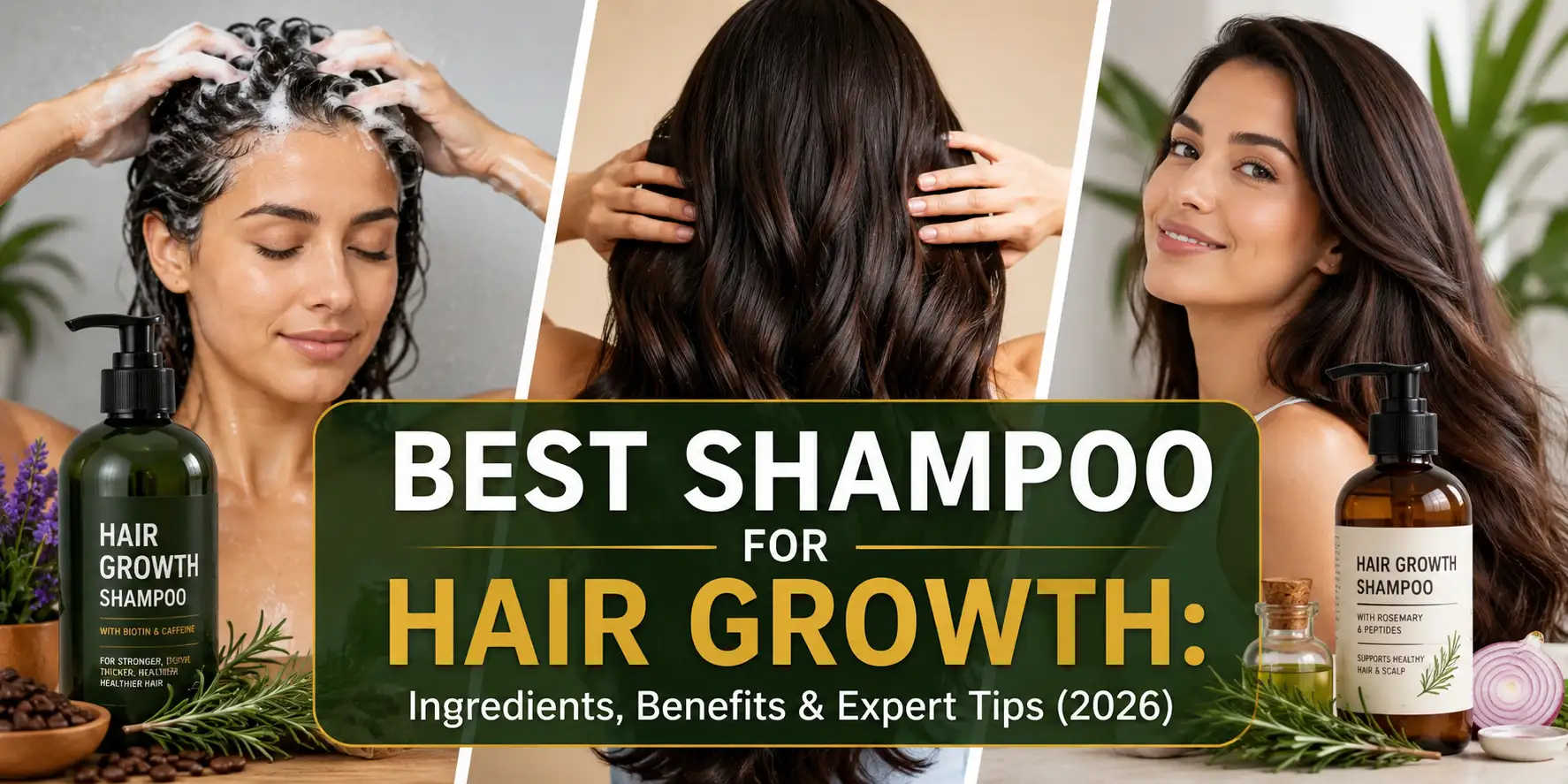
If you’re searching for the best shampoo for hair growth, you’re not alone. Millions of people deal with thinning hair, excessive shedding, breakage, or a scalp that doesn’t feel as healthy as it should. With so many products claiming to deliver thicker, fuller hair, it can be difficult to know what actually works.
The reality is that a shampoo won’t magically grow inches of new hair overnight. However, the right formula can improve scalp health, reduce breakage, strengthen existing strands, and support the environment needed for healthier hair growth. Understanding which ingredients matter—and which marketing claims to ignore—can save both time and money.
This guide explains the science behind hair growth shampoos, how to choose the right formula, which ingredients deserve your attention, and what dermatologists and hair professionals recommend for healthier-looking hair.
Quick Answer
A hair growth shampoo helps support healthier hair by improving scalp conditions, reducing breakage, and strengthening strands. Ingredients such as caffeine, biotin, rosemary oil, peptides, niacinamide, ketoconazole, and proteins are commonly found in shampoos designed for thinning or fragile hair. While these products cannot directly cure hair loss, they can help create conditions that support stronger, fuller-looking hair over time.
Does Shampoo Really Help Hair Growth?
One of the biggest misconceptions in hair care is that shampoo alone can make hair grow dramatically faster. In reality, hair growth is influenced by many factors, including genetics, hormones, age, nutrition, stress levels, and overall health.
What a shampoo can do is improve the health of the scalp and hair shaft. When the scalp is balanced and hair strands are protected from excessive damage, hair often appears fuller, healthier, and more resilient.
What Hair Growth Shampoos Can Do
A quality shampoo may:
- Remove excess oil and buildup
- Support a healthy scalp environment
- Strengthen weakened hair strands
- Reduce breakage
- Improve hair manageability
- Help maintain moisture balance
- Support scalp comfort
What Hair Growth Shampoos Cannot Do
Even the most advanced shampoo cannot:
- Instantly regrow lost hair
- Permanently reverse genetic hair loss
- Replace professional medical treatment
- Deliver overnight results
Understanding these limitations helps set realistic expectations and prevents disappointment.
Hair Growth Science Explained
To understand how hair growth shampoos work, it helps to understand how hair grows.
The Hair Growth Cycle
Hair follicles follow a repeating cycle consisting of three primary stages:
| Growth Phase | Description |
|---|---|
| Anagen | Active growth phase where hair grows continuously |
| Catagen | Short transition phase when growth slows |
| Telogen | Resting phase before the strand sheds |
Most healthy hair remains in the anagen phase for several years. When the cycle becomes disrupted, increased shedding or thinning may occur.
Hair Growth vs Hair Retention
A major mistake people make is focusing only on new growth.
In many cases, improving hair retention creates a fuller appearance much faster than trying to accelerate growth itself.
Hair retention focuses on:
- Reducing breakage
- Preventing split ends
- Improving scalp health
- Strengthening weak strands
- Minimizing damage
When fewer hairs break or shed prematurely, overall density often appears improved.
Hair Density vs Hair Thickness
These terms are often confused.
Hair density refers to how many hairs grow on the scalp.
Hair thickness refers to the width of individual strands.
Some shampoos improve the appearance of thickness without affecting actual density.
Scalp Microbiome and Scalp Barrier Health
Many articles overlook one of the most important factors in healthy hair: the scalp environment.
What Is the Scalp Microbiome?
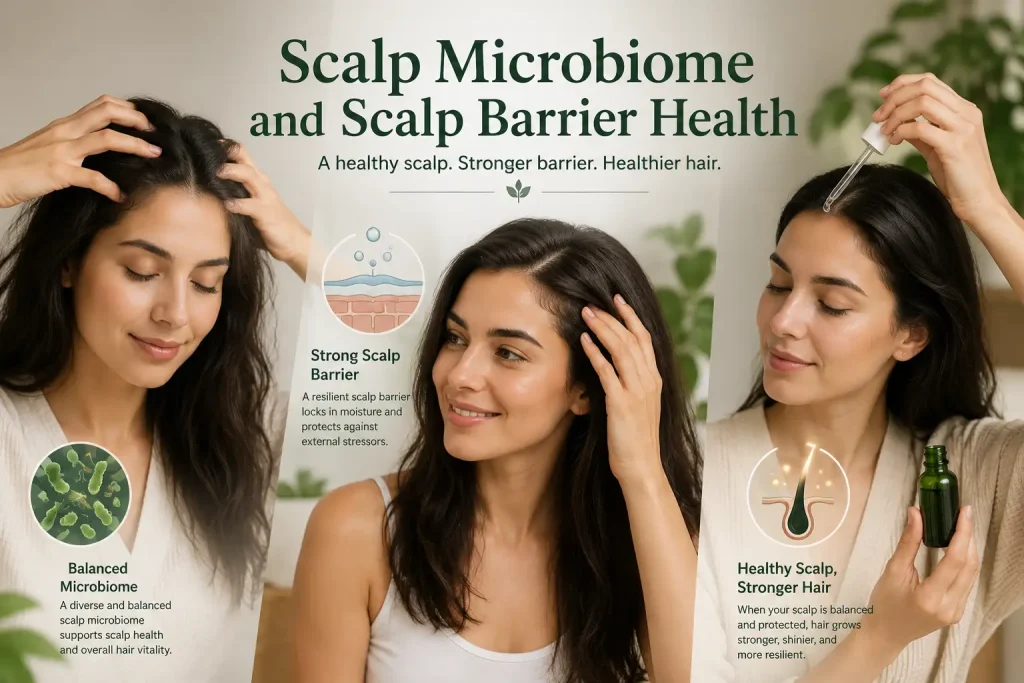
Your scalp contains a natural ecosystem of microorganisms that help maintain balance.
When this balance is disrupted by harsh products, excessive buildup, irritation, or over-cleansing, the scalp may become less comfortable and less supportive of healthy-looking hair.
Understanding the Scalp Barrier
The scalp barrier protects against:
- Moisture loss
- Irritants
- Environmental stressors
When the barrier becomes compromised, you may experience:
- Dryness
- Itching
- Sensitivity
- Flaking
- Increased discomfort
Signs of an Unhealthy Scalp
Common signs include:
- Persistent dandruff
- Excess oil production
- Dry patches
- Irritation
- Redness
- Product buildup
Supporting the scalp barrier through gentle cleansing and appropriate products can improve overall hair quality.
Common Causes of Hair Thinning
Hair thinning rarely has a single cause.
Understanding why your hair is changing can help you choose products more effectively.
Genetics
Genetics remain one of the most significant influences on hair growth and density.
Family history often plays a role in long-term thinning patterns.
Stress
Chronic stress may affect the natural hair growth cycle.
Many people notice increased shedding after:
- Major life changes
- Illness
- Emotional stress
- Poor sleep
Hormonal Changes
Hormonal fluctuations can affect hair density.
Examples include:
- Pregnancy
- Postpartum shedding
- Menopause
- Thyroid changes
Nutritional Factors
Hair requires adequate nutrition to remain healthy.
Insufficient intake of key nutrients may affect:
- Hair strength
- Hair quality
- Hair appearance
Hair Damage
Frequent exposure to:
- Heat styling
- Bleaching
- Chemical treatments
- Tight hairstyles
can weaken strands and contribute to breakage.
Scalp Conditions
Common scalp concerns include:
- Dandruff
- Excess oil
- Inflammation
- Product buildup
Addressing these concerns often improves overall hair quality.
Hair Shedding vs Hair Loss
Many people use these terms interchangeably, but they describe different situations.
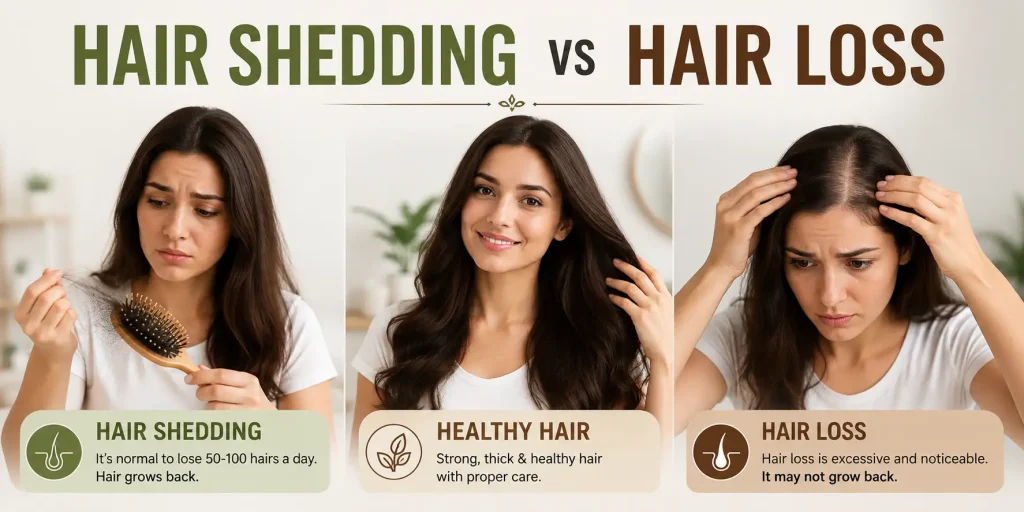
Hair Shedding
Shedding is a normal part of the hair growth cycle.
Healthy individuals naturally lose hair every day.
Temporary shedding may occur after:
- Stress
- Illness
- Hormonal changes
Hair Loss
Hair loss generally refers to more persistent reductions in density.
Signs include:
- Visible scalp exposure
- Receding hairline
- Wider hair part
- Thinning crown
When to See a Dermatologist
Consider professional guidance if you experience:
- Sudden hair loss
- Patchy bald spots
- Significant thinning
- Persistent shedding
- Severe scalp irritation
Early evaluation may help identify underlying causes.
Best Ingredients for Hair Growth Shampoos Ranked
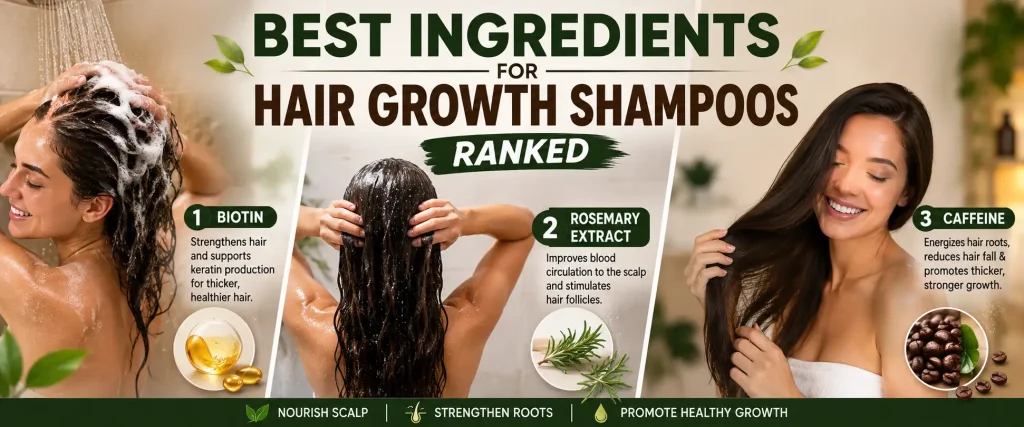
While many shampoos make bold promises, only a handful of ingredients consistently appear in high-quality formulations.
Ingredient Ranking Table
| Ingredient | Primary Benefit | Best For |
| Ketoconazole | Scalp health support | Dandruff and scalp concerns |
| Caffeine | Scalp-focused formulas | Thinning concerns |
| Rosemary Oil | Botanical scalp support | Natural hair care |
| Peptides | Hair strengthening | Weak hair |
| Biotin | Reduced breakage | Fragile strands |
| Niacinamide | Scalp barrier support | Sensitive scalp |
Ketoconazole
Ketoconazole is widely used in scalp-focused shampoos because it helps manage dandruff and maintain a cleaner scalp environment.
Benefits include:
- Reduced flakes
- Improved scalp comfort
- Better scalp cleanliness
Caffeine
Caffeine shampoos have become increasingly popular among people concerned about thinning hair.
Benefits may include:
- Enhanced scalp freshness
- Lightweight cleansing
- Support for healthy scalp conditions
Rosemary Oil
Rosemary oil remains one of the most talked-about botanical ingredients in modern hair care.
Popular benefits include:
- Scalp support
- Natural formulation appeal
- Compatibility with multiple hair types
Peptides
Peptides are amino-acid chains used in many premium formulas.
Potential benefits:
- Improved resilience
- Better texture
- Stronger-feeling strands
Biotin
Biotin is often included in strengthening shampoos.
Benefits may include:
- Reduced breakage
- Improved hair appearance
- Support for weak strands
Niacinamide
Niacinamide supports:
- Moisture balance
- Scalp comfort
- Barrier function
A healthy scalp environment often contributes to healthier-looking hair.
Ingredients to Avoid in Hair Growth Shampoos
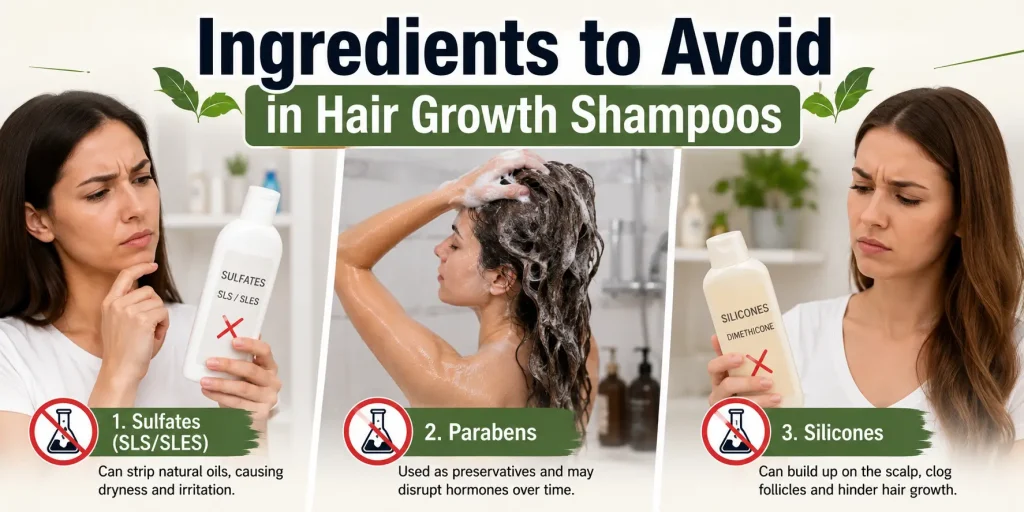
Not every shampoo marketed for hair growth deserves a place in your routine.
Excessively Harsh Cleansers
Potential concerns:
- Dryness
- Irritation
- Frizz
- Brittleness
Heavy Fragrances
Some fragrances may trigger irritation in sensitive individuals.
Buildup-Causing Ingredients
Excessive residue may contribute to:
- Flat hair
- Reduced volume
- Oily appearance
Misleading Marketing Claims
Be cautious of products promising:
- Instant growth
- Guaranteed results
- Miracle regrowth
- Overnight transformation
These claims are rarely realistic.
How to Read a Hair Growth Shampoo Label
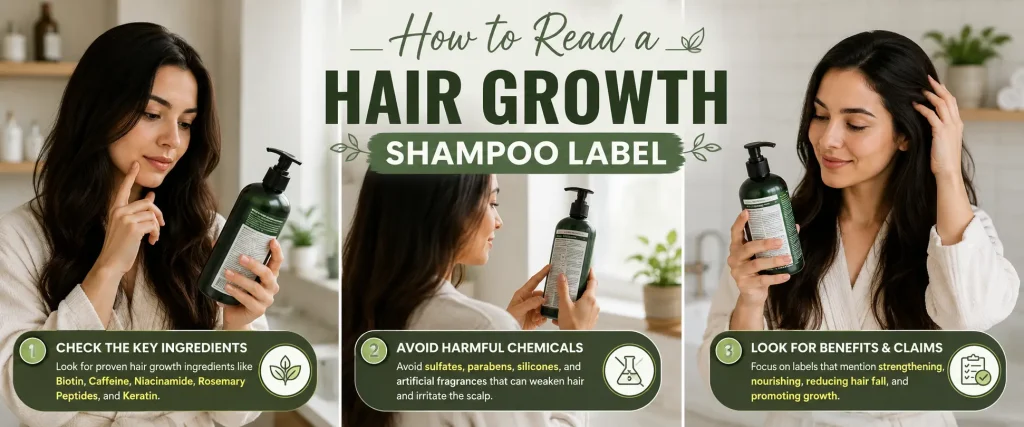
Many consumers buy products based on packaging rather than ingredients.
Step 1: Check the Active Ingredients
Look for:
- Ketoconazole
- Caffeine
- Biotin
- Peptides
- Rosemary oil
- Niacinamide
Step 2: Review Supporting Ingredients
Beneficial additions include:
- Proteins
- Amino acids
- Aloe vera
- Green tea extract
Step 3: Match Ingredients to Your Goal
- Breakage → Biotin, proteins
- Sensitive scalp → Niacinamide
- Dandruff → Ketoconazole
- Natural routine → Rosemary oil
Choosing based on your concern is often more effective than choosing based on brand popularity.
Hair Growth Shampoo vs Hair Growth Serum
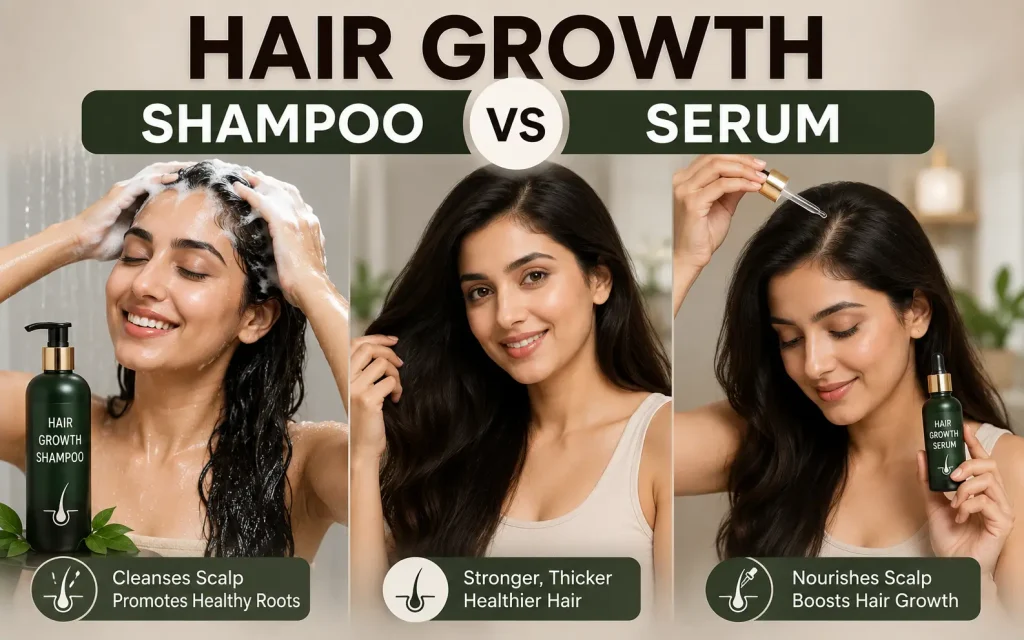
Many people wonder whether they should use a hair growth shampoo, a hair growth serum, or both. The answer depends on your goals and scalp condition.
A shampoo primarily focuses on cleansing the scalp, reducing buildup, and delivering beneficial ingredients during washing. A serum stays on the scalp longer, allowing ingredients to remain in contact with the skin for extended periods.
Key Differences
| Feature | Hair Growth Shampoo | Hair Growth Serum |
|---|---|---|
| Contact Time | Minutes | Hours |
| Main Purpose | Cleansing and scalp support | Targeted scalp treatment |
| Frequency | During washing | Daily or several times weekly |
| Best For | Overall scalp health | Specific thinning concerns |
| Ease of Use | Very easy | Requires consistency |
Which Should You Choose?
Choose a shampoo if:
- You want better scalp health
- You experience buildup or excess oil
- You’re beginning a hair-care routine
- You want to reduce breakage
Choose a serum if:
- You have noticeable thinning
- You want a leave-in treatment
- You prefer targeted scalp application
Many people use both as part of a complete routine.
How to Choose a Hair Growth Shampoo by Hair Type
Not every shampoo works equally well for every hair type. Choosing the wrong formula may leave your hair feeling dry, heavy, or difficult to manage.
Fine Hair
Fine hair can easily become weighed down.
Look for:
- Lightweight formulas
- Volumizing ingredients
- Biotin
- Peptides
- Protein-based support
Avoid overly rich formulas that flatten volume.
Thick Hair
Thick hair often benefits from additional moisture and nourishment.
Recommended ingredients:
- Peptides
- Botanical oils
- Amino acids
- Hydrating agents
Balance moisture with effective cleansing.
Curly Hair
Curly hair naturally struggles to distribute scalp oils throughout the hair shaft.
Helpful features include:
- Sulfate-free cleansing
- Moisture support
- Gentle formulas
- Protein balance
Coily Hair
Coily textures typically need maximum moisture retention.
Look for:
- Rich hydration
- Reduced stripping
- Gentle cleansing
- Breakage protection
Straight Hair
Straight hair often becomes oily faster than other textures.
Choose:
- Lightweight formulas
- Scalp-balancing ingredients
- Clarifying support
Color-Treated Hair
Color-treated hair benefits from:
- Sulfate-free formulas
- Moisture support
- Protein reinforcement
- Color-protecting ingredients
Damaged Hair
Damaged hair requires strengthening support.
Focus on:
- Proteins
- Peptides
- Amino acids
- Moisturizing ingredients
Best Hair Growth Shampoos for Women
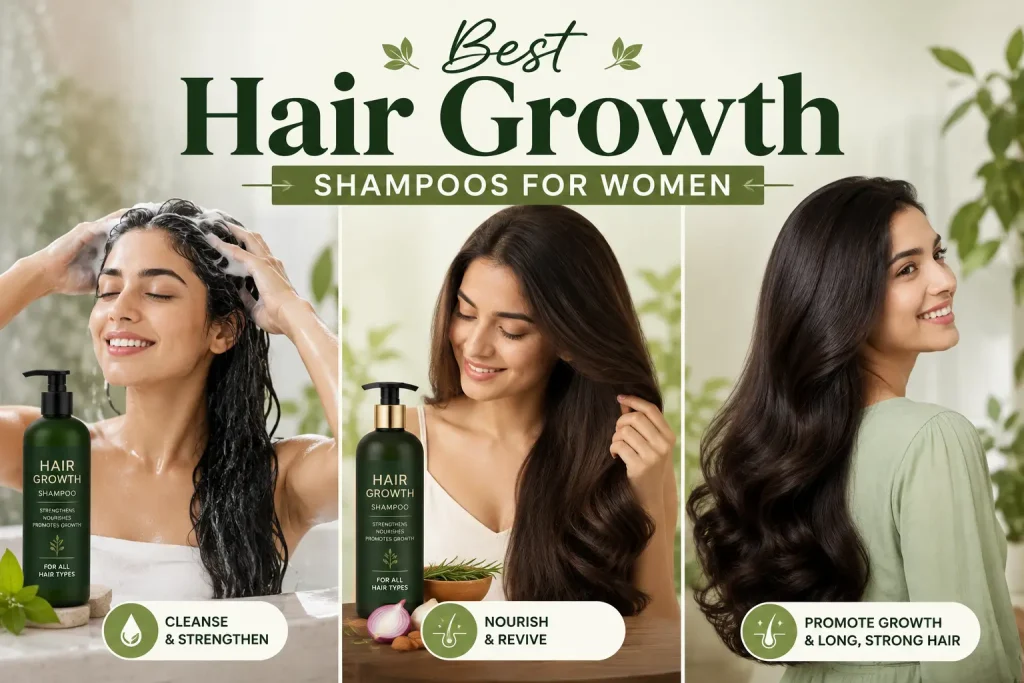
Women’s hair concerns often change throughout different life stages.
Postpartum Hair Shedding
Many women experience temporary shedding after pregnancy.
Helpful shampoo characteristics:
- Gentle cleansing
- Scalp-supporting ingredients
- Breakage reduction
- Moisture balance
Menopause-Related Thinning
Hormonal shifts can affect hair density and texture.
Look for:
- Peptides
- Biotin
- Niacinamide
- Scalp-focused formulas
Color-Treated Hair
Women who color their hair frequently should prioritize:
- Sulfate-free shampoos
- Protein support
- Moisture retention
Styling Damage
Frequent heat styling can increase breakage.
Choose products that focus on:
- Strengthening
- Moisture balance
- Hair retention
Women’s Hair Growth Framework
| Concern | Recommended Ingredients |
| Breakage | Biotin, proteins |
| Dryness | Niacinamide, aloe vera |
| Thinning | Caffeine, peptides |
| Color-treated hair | Sulfate-free formulas |
| Sensitive scalp | Niacinamide, gentle cleansers |
Best Hair Growth Shampoos for Men
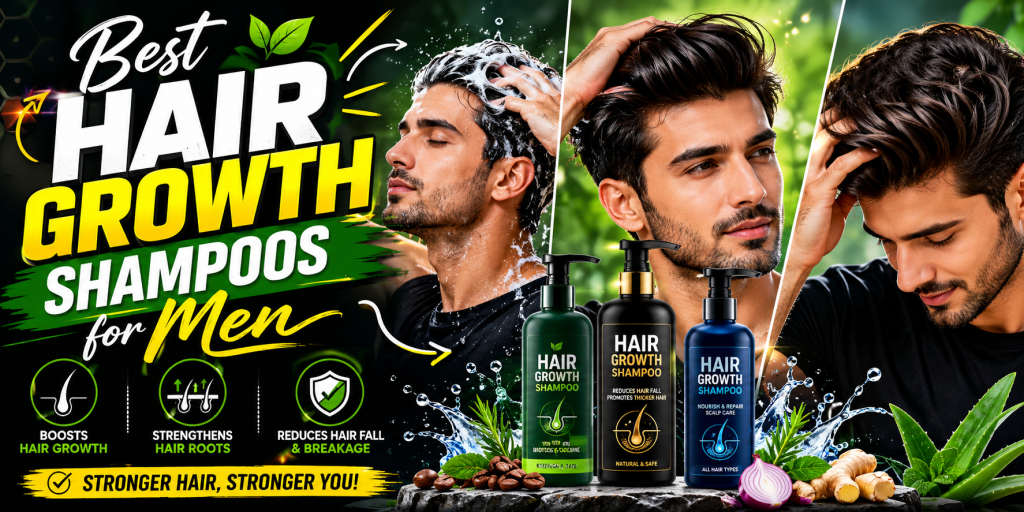
Men often begin searching for hair growth shampoos after noticing changes around the crown or hairline.
Crown Thinning
Many men first notice thinning at the crown.
Helpful ingredients:
- Caffeine
- Peptides
- Ketoconazole
Receding Hairline Concerns
While shampoos cannot reverse a receding hairline, they may help improve overall scalp health and hair quality.
Oily Scalp
Men frequently experience higher oil production.
Recommended features:
- Lightweight cleansing
- Scalp-balancing ingredients
- Regular cleansing schedules
Dandruff and Thinning
Flakes and irritation can make hair concerns more noticeable.
Shampoos containing ketoconazole may help manage dandruff while supporting scalp comfort.
Men’s Hair Growth Framework
| Concern | Recommended Ingredients |
| Oily scalp | Caffeine |
| Dandruff | Ketoconazole |
| Breakage | Biotin |
| Weak hair | Peptides |
| Sensitive scalp | Niacinamide |
Choosing a Hair Growth Shampoo by Scalp Type
Many articles focus on hair type but ignore scalp type.
The scalp often plays a larger role than the hair itself.
Oily Scalp
Look for:
- Lightweight formulas
- Clarifying ingredients
- Balanced cleansing
Avoid excessively rich products.
Dry Scalp
Prioritize:
- Moisture support
- Gentle cleansing
- Barrier-friendly ingredients
Sensitive Scalp
Choose:
- Fragrance-free options
- Niacinamide
- Gentle surfactants
Flaky Scalp
Consider formulas designed for dandruff management and scalp balance.
Combination Scalp
Some people experience oily roots and dry lengths.
A balanced formula often works best.
Sulfate-Free Hair Growth Shampoos
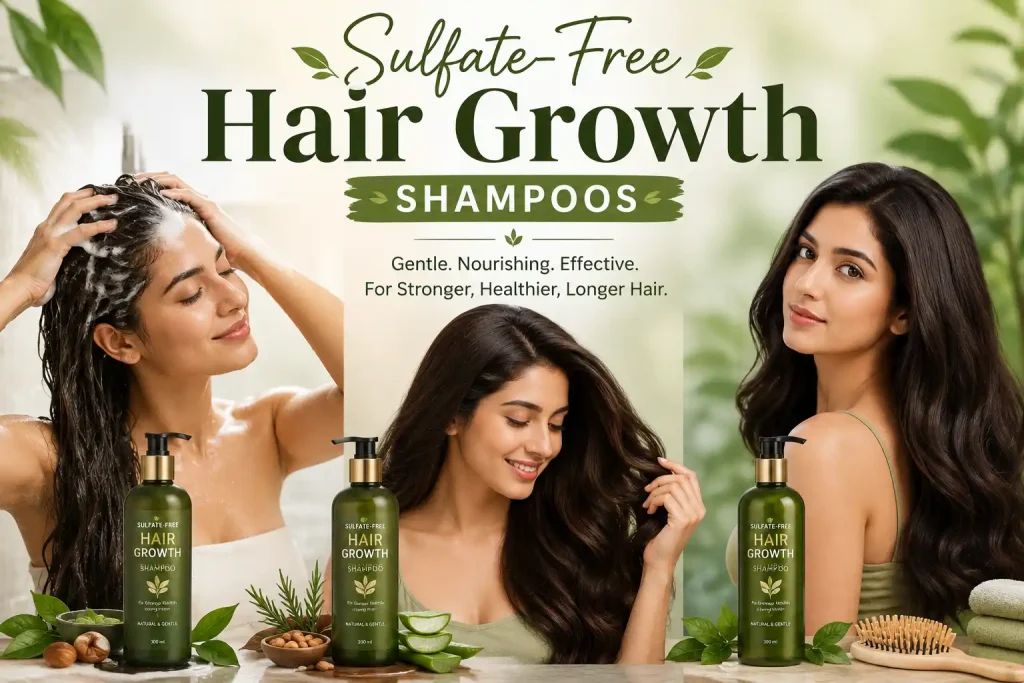
Sulfates are cleansing agents responsible for the rich foam many people associate with shampoo.
While effective cleansers, they are not ideal for everyone.
Benefits of Sulfate-Free Shampoos
Potential advantages include:
- Better moisture retention
- Reduced dryness
- Less irritation
- Better support for color-treated hair
Who Benefits Most?
Sulfate-free shampoos are often suitable for:
- Curly hair
- Coily hair
- Dry hair
- Sensitive scalps
- Color-treated hair
Potential Drawbacks
Some users notice:
- Less foam
- Longer adjustment periods
- Reduced effectiveness against heavy buildup
Natural Hair Growth Shampoos
Natural formulas continue to gain popularity among consumers seeking gentler alternatives.
Rosemary-Based Shampoos
Rosemary remains one of the most widely used botanical ingredients in hair care.
Benefits may include:
- Scalp support
- Natural appeal
- Compatibility with many hair types
Peppermint-Based Formulas
Peppermint is often included because it creates a refreshing scalp experience.
Tea Tree Oil Formulas
Tea tree oil is commonly used in scalp-focused products designed for oily or flaky scalps.
Saw Palmetto and Pumpkin Seed Extract
These botanical ingredients frequently appear in hair-support formulations aimed at maintaining scalp health.
What Natural Shampoos Can Realistically Do
Natural shampoos may:
- Improve scalp comfort
- Reduce breakage
- Support moisture balance
- Enhance overall hair appearance
They should not be viewed as instant solutions for significant hair loss.
Drugstore vs Salon Hair Growth Shampoos
A common assumption is that expensive salon shampoos automatically outperform affordable alternatives.
In reality, ingredient quality and suitability matter more than price.
Drugstore Hair Growth Shampoos
Advantages:
- Affordable
- Easy to find
- Wide ingredient variety
- Good value
Potential limitations:
- Quality varies
- Some rely heavily on marketing
Salon Hair Growth Shampoos
Advantages:
- Often more specialized
- Frequently recommended by stylists
- May include premium ingredient combinations
Potential limitations:
- Higher cost
- Not always necessary
Which Is Better?
The best shampoo is the one that:
- Matches your scalp type
- Matches your hair type
- Contains beneficial ingredients
- Supports long-term consistency
A $15 shampoo that fits your needs will usually outperform a $50 shampoo that doesn’t.
Hair Growth Shampoo Decision Tree
Use this quick framework to narrow your options.
If Your Main Concern Is Thinning
Look for:
- Caffeine
- Peptides
- Rosemary oil
If Your Main Concern Is Breakage
Look for:
- Biotin
- Proteins
- Amino acids
If Your Main Concern Is Dandruff
Look for:
- Ketoconazole
- Scalp-balancing formulas
If Your Main Concern Is Dryness
Look for:
- Niacinamide
- Aloe vera
- Sulfate-free formulas
If Your Main Concern Is Sensitivity
Look for:
- Fragrance-free products
- Gentle cleansers
- Barrier-supporting ingredients
How to Build an Effective Hair Growth Routine
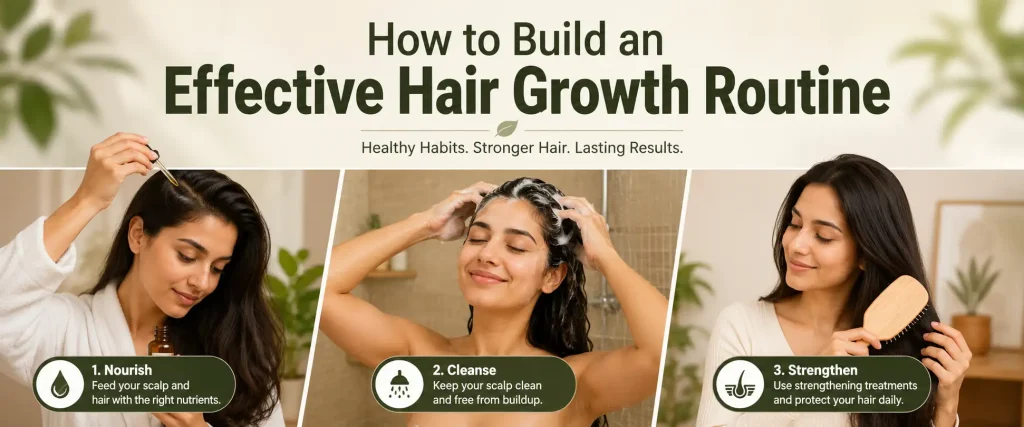
A great shampoo is only one piece of the puzzle. Many people focus entirely on finding the perfect product while overlooking habits that have a much bigger impact on long-term hair health.
The strongest routines combine proper cleansing, scalp care, damage prevention, and healthy lifestyle habits.
Step 1: Cleanse According to Your Scalp Type
Your washing schedule should match your scalp rather than following a universal rule.
Oily Scalp
- Wash more frequently
- Use lightweight formulas
- Remove buildup consistently
Dry Scalp
- Wash less often
- Use moisturizing shampoos
- Avoid harsh cleansers
Sensitive Scalp
- Choose fragrance-free products
- Avoid excessive scrubbing
- Focus on scalp barrier support
Step 2: Use Conditioner Consistently
Many people skip conditioner because they think it makes hair greasy.
In reality, conditioner helps:
- Reduce breakage
- Improve moisture retention
- Minimize tangles
- Protect the hair shaft
- Improve manageability
Healthy-looking hair often depends just as much on conditioning as cleansing.
Step 3: Protect Hair From Daily Damage
Hair faces stress every day.
Common sources include:
- Heat styling
- UV exposure
- Tight hairstyles
- Rough brushing
- Chemical processing
Reducing these sources of damage can significantly improve hair quality over time.
Step 4: Support Hair From the Inside
Healthy hair routines extend beyond products.
Important factors include:
- Balanced nutrition
- Adequate protein intake
- Hydration
- Stress management
- Quality sleep
Hair growth shampoos work best when combined with healthy lifestyle habits.
Step 5: Focus on Hair Retention
One of the most overlooked concepts in hair care is hair retention.
Many people see visible improvements when they stop losing healthy hair to breakage.
Focus on:
- Gentle detangling
- Heat protection
- Deep conditioning
- Regular trims
- Protective hairstyles
Hair Growth Timeline: What Results Can You Expect?
Many consumers become discouraged because they expect immediate changes.
Hair growth and hair improvement require patience.
First Month
Possible improvements:
- Cleaner scalp
- Less buildup
- Better scalp comfort
- Reduced irritation
Months 2–3
You may notice:
- Reduced breakage
- Improved texture
- Better manageability
- Stronger-feeling strands
Months 4–6
Some people begin seeing:
- Fuller-looking hair
- Improved density appearance
- Better volume
- Less visible breakage
Beyond Six Months
Long-term consistency often produces the most noticeable improvements.
Remember that results vary based on:
- Genetics
- Age
- Hair type
- Scalp condition
- Overall health
What Dermatologists Recommend for Healthier Hair
Hair professionals and dermatologists generally agree on several key principles.
Prioritize Scalp Health First
A healthy scalp provides the foundation for healthy-looking hair.
Many scalp concerns can affect:
- Hair quality
- Comfort
- Manageability
- Overall appearance
Treat Underlying Conditions
If thinning or shedding becomes significant, a shampoo alone may not address the root cause.
Conditions such as:
- Hormonal changes
- Nutritional deficiencies
- Chronic stress
- Medical conditions
may require professional evaluation.
Be Consistent
One of the most common mistakes professionals observe is constantly changing products.
A shampoo usually needs time before meaningful improvements become noticeable.
Set Realistic Expectations
Shampoos can support healthy hair, but they are not miracle products.
The goal should be healthier hair and scalp conditions rather than overnight transformation.
Common Hair Growth Shampoo Scams to Avoid
The hair care industry is filled with exaggerated promises.
Learning how to spot misleading claims can save both money and frustration.
“Guaranteed Hair Growth”
No shampoo can guarantee hair growth for every person.
Hair growth depends on many factors beyond a shampoo formula.
“Instant Results”
Hair changes require time.
Products claiming immediate growth should be approached carefully.
“Secret Ingredients”
Most effective shampoos rely on well-known ingredients rather than mysterious proprietary blends.
Before-and-After Photos Without Context
Photos can be misleading when:
- Lighting changes
- Styling changes
- Hair fibers are used
- Timelines are unclear
Always evaluate products based on ingredients rather than marketing images.
Celebrity Endorsements
A celebrity endorsement does not necessarily indicate product quality.
Focus on formulation, not promotion.
Common Mistakes That Prevent Better Results
Many people unknowingly reduce the effectiveness of their hair-care routine.
Switching Products Too Quickly
Hair products often require several weeks of consistent use before meaningful changes become noticeable.
Ignoring the Scalp
Healthy hair starts at the scalp.
Neglecting buildup, irritation, or dandruff can undermine even the best shampoo.
Overwashing Hair
Excessive washing may contribute to:
- Dryness
- Frizz
- Irritation
- Increased brittleness
Using Excessive Heat
Frequent heat styling remains one of the leading causes of hair breakage.
Choosing Products Based on Marketing Alone
A beautiful bottle doesn’t guarantee a quality formula.
Always evaluate ingredients first.
Hair Growth Shampoo Myths vs Facts
Myth: Shampoo Can Regrow Hair Overnight
Fact: Hair growth is a gradual biological process that takes time.
Myth: Expensive Shampoos Always Work Better
Fact: The right ingredients matter more than price.
Myth: Natural Ingredients Are Always Superior
Fact: Natural ingredients can be helpful, but formulation quality remains the most important factor.
Myth: More Shampoo Means Better Results
Fact: Using extra shampoo rarely improves performance and may increase dryness.
Myth: Hair Growth Shampoos Work for Everyone
Fact: Results depend on individual factors such as genetics, scalp health, and overall hair condition.
Expert Tips for Thicker, Healthier-Looking Hair
Keep the Scalp Clean but Balanced
Avoid both excessive buildup and excessive cleansing.
Protect Existing Hair
Reducing breakage is often the fastest path to fuller-looking hair.
Choose Products Based on Your Needs
Select shampoos according to:
- Hair type
- Scalp type
- Primary concern
rather than popularity.
Reduce Heat Styling
Less heat often means stronger, healthier strands.
Stay Consistent
Consistency usually produces better results than constantly changing products.
Frequently Asked Questions
What is the best shampoo for hair growth?
The best shampoo for hair growth depends on your hair type and scalp condition. Look for ingredients such as caffeine, biotin, peptides, rosemary oil, niacinamide, and ketoconazole based on your specific needs.
Does shampoo actually help hair grow?
Shampoo cannot directly force hair to grow faster. However, it can support scalp health, reduce breakage, and improve the environment where healthy hair grows.
What ingredient is most important for thinning hair?
There is no single best ingredient for everyone. Caffeine, ketoconazole, peptides, rosemary oil, and biotin are among the most commonly used ingredients in thinning-hair formulas.
Can dandruff cause hair thinning?
Dandruff itself does not directly cause permanent hair loss. However, irritation, scratching, and poor scalp health may contribute to increased shedding and breakage.
What is the scalp microbiome?
The scalp microbiome is the collection of microorganisms that naturally live on the scalp. Maintaining balance helps support scalp comfort and overall hair health.
Should I use conditioner with hair growth shampoo?
Yes. Conditioner helps reduce breakage, improve moisture retention, and protect the hair shaft.
Is sulfate-free shampoo better for hair growth?
Sulfate-free formulas may be beneficial for dry, curly, color-treated, or sensitive hair. They are not automatically better for everyone.
How often should I wash thinning hair?
The ideal frequency depends on your scalp type. Oily scalps may need more frequent washing, while dry or curly hair often benefits from less frequent cleansing.
Can hard water affect hair quality?
Yes. Hard water can contribute to buildup, dryness, and reduced manageability, which may affect overall hair appearance.
When should I see a dermatologist about hair loss?
Seek professional guidance if you experience:
- Sudden hair loss
- Significant thinning
- Patchy bald spots
- Persistent shedding
- Severe scalp irritation
Conclusion
Choosing the best shampoo for hair growth starts with understanding what these products can realistically accomplish. The right formula can support scalp health, reduce breakage, strengthen fragile strands, and improve the overall appearance of your hair, but it should not be expected to create overnight transformation.
Focus on ingredients that match your specific concerns, build a consistent routine, and prioritize both scalp health and hair retention. Over time, these habits can create healthier conditions for stronger, fuller-looking hair.
If your hair thinning or shedding continues despite using quality products and maintaining healthy habits, consult a dermatologist to identify potential underlying causes. The combination of proper care, realistic expectations, and consistency offers the best path toward healthier hair in 2026 and beyond.