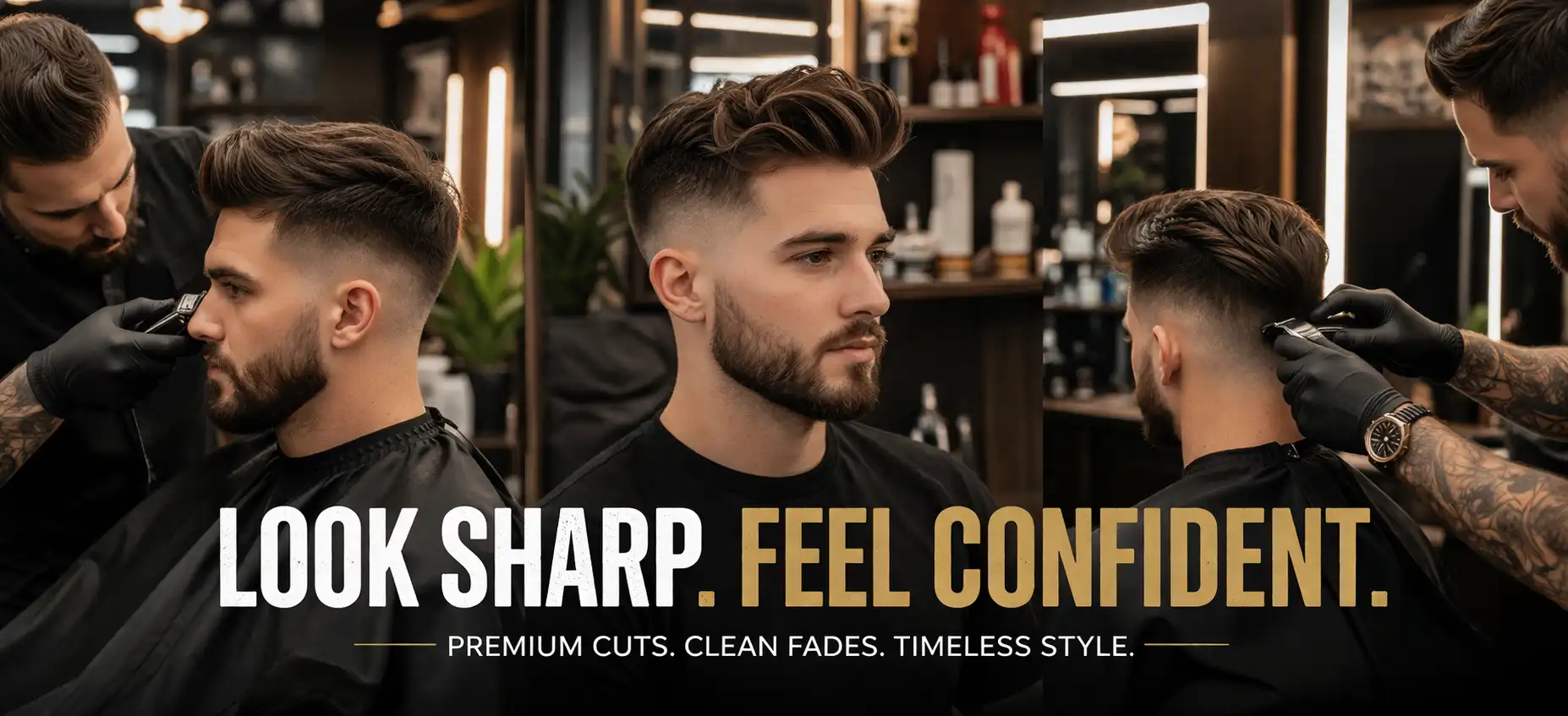
The undercut fade continues to dominate men’s grooming trends in 2026 because it combines sharp contrast, modern styling flexibility, and suitability for both professional and casual looks. From corporate offices to street style culture, this haircut remains popular due to its clean appearance, adaptability across hair types, and ability to match evolving fashion trends.
This haircut suits men who want a stylish yet versatile look, whether they prefer sleek, polished styles or textured, relaxed finishes. It works well for straight, wavy, curly, thick, and fine hair, and can be customized based on face shape, lifestyle, and maintenance preference.
In this guide, you’ll learn what an undercut fade is, how it differs from similar haircuts, the best style variations to try in 2026, and expert barber and styling tips to help you achieve and maintain the perfect look.
An undercut fade is a hairstyle that combines the sharp contrast of an undercut with the gradual blending of a fade, creating a modern, structured haircut that balances boldness with smooth transitions.
Quick Answer About Undercut Fade
An undercut fade is a modern men’s haircut where the top is kept longer while the sides and back are gradually faded. It combines the bold contrast of an undercut with the smooth blending of a fade, creating a clean, versatile, and stylish look suitable for all hair types.
You May Also Like:
Styles Explained – A Guide to Undercut Hairstyles
What Is an Undercut Fade?
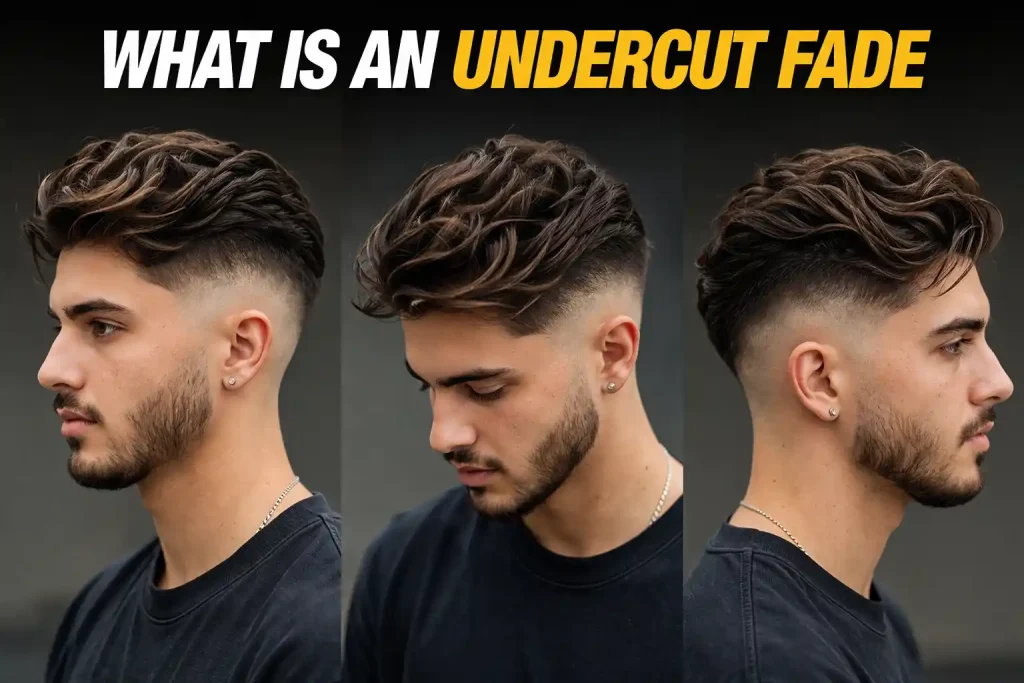
An undercut fade is a modern men’s haircut that combines the sharp contrast of an undercut with the smooth blending technique of a fade. The top section remains longer and more defined, while the sides and back gradually taper down in length, creating a clean and structured look.
How It Combines Two Haircut Techniques
This style merges two distinct barbering methods:
- Undercut Technique: The top hair is left significantly longer than the sides, often creating a noticeable contrast.
- Fade Technique: The sides and back are blended gradually from longer hair into shorter lengths, often down to the skin.
Instead of having a harsh disconnection like a traditional undercut, the fade softens the transition, resulting in a polished, modern finish.
Visual Explanation
Imagine the haircut divided into two sections:
- Top Section: Longer, styled hair (pompadour, textured crop, slick back, etc.)
- Side & Back Section: Gradually tapered hair that transitions from thick to short (low, mid, or high fade)
Why It’s So Versatile
The undercut fade works for almost every hair type and setting because:
- It suits straight, wavy, and curly hair
- It can be styled for professional environments or casual streetwear
- It adapts to different face shapes
- It allows multiple top styling options without changing the fade structure
Who Should Get an Undercut Fade?
Best for:
- Men who want a clean yet stylish haircut
- Those who like flexibility (formal + casual looks)
- People with medium to thick hair
Avoid if:
You don’t want frequent trims
You prefer low-maintenance haircuts
You have very thin hair without volume
Undercut Fade
An undercut fade is a hairstyle that combines a longer top section with faded sides and back, blending the contrast of an undercut with the smooth transition of a fade. It creates a clean, modern look that works for multiple hair types and face shapes.
Undercut vs Fade vs Taper: What’s the Real Difference?
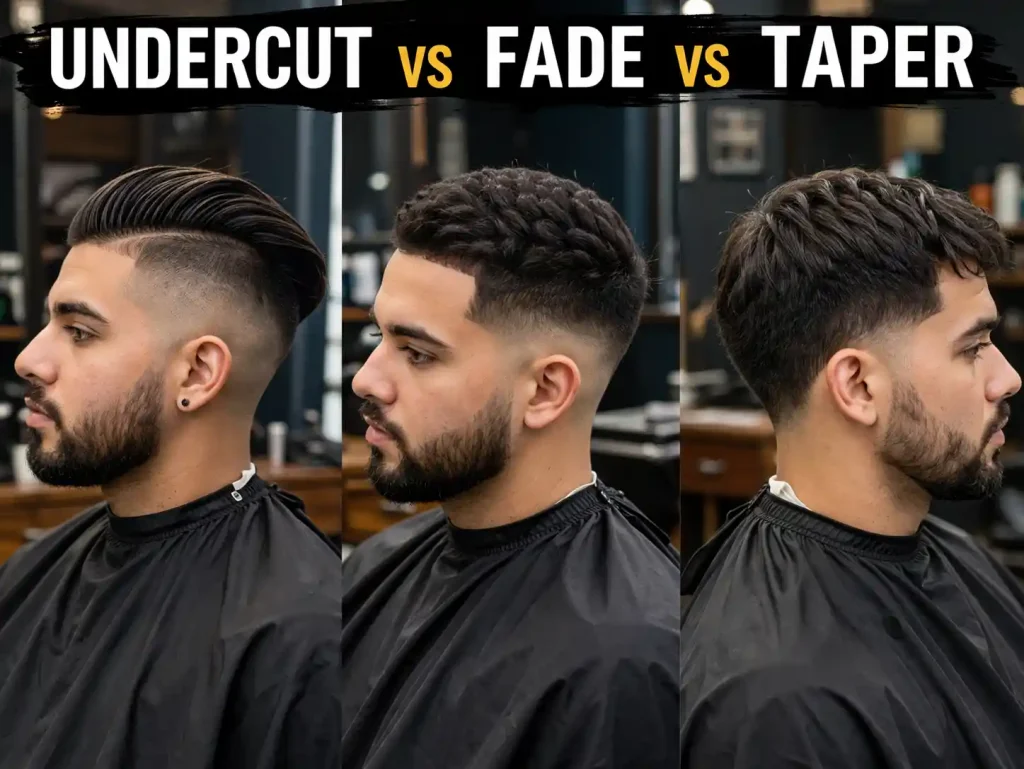
Many people confuse these haircuts because they share similar elements. However, the structure, blending technique, and maintenance level differ significantly.
What Is a Classic Undercut?
A classic undercut features long hair on top with short or shaved sides, typically with a clear separation between the two sections. There is little to no blending.
- Structure: High contrast between top and sides
- Blend: Minimal or none (often disconnected)
- Look: Bold and dramatic
Best for men who prefer a strong, edgy appearance.
What Is a Fade?
A fade haircut focuses on gradually tapering the sides and back from longer hair to very short or skin level.
- Structure: Even distribution of hair length on top
- Blend: Smooth gradient transition
- Look: Clean and subtle
Fades can be low, mid, high, skin, drop, or burst, depending on how high the blending starts.
What Is a Taper?
A taper haircut is a more conservative version of a fade. The hair gradually shortens near the neckline and sideburns but doesn’t dramatically shorten higher up the head.
- Structure: Longer overall length
- Blend: Very subtle transition
- Look: Natural and professional
Tapers are ideal for business or formal settings.
Side-by-Side Comparison Table
| Feature | Undercut | Fade | Taper | Undercut Fade |
| Structure Difference | Long top, sharply shorter sides | Gradual length reduction | Subtle shortening at edges | Long top with faded sides |
| Blend Difference | Little to no blending | Smooth gradient blend | Very soft blend | Controlled blend with contrast |
| Maintenance Level | Medium–High | High (frequent trims) | Low | Medium–High |
| Best Lifestyle Fit | Trendy, bold styles | Clean modern looks | Professional settings | Versatile (office + casual) |
The Anatomy of an Undercut Fade
Most articles explain what an undercut fade looks like — but very few break down how it’s technically constructed. Understanding the anatomy of this haircut helps you communicate clearly with your barber and choose the right variation for your face shape and lifestyle.
An undercut fade is built from three core elements:
- Top Length & Shape
- Transition Area (Blend Zone)
- Fade Height & Finish
Let’s break each one down in detail.
High, Mid & Low Fade Explained
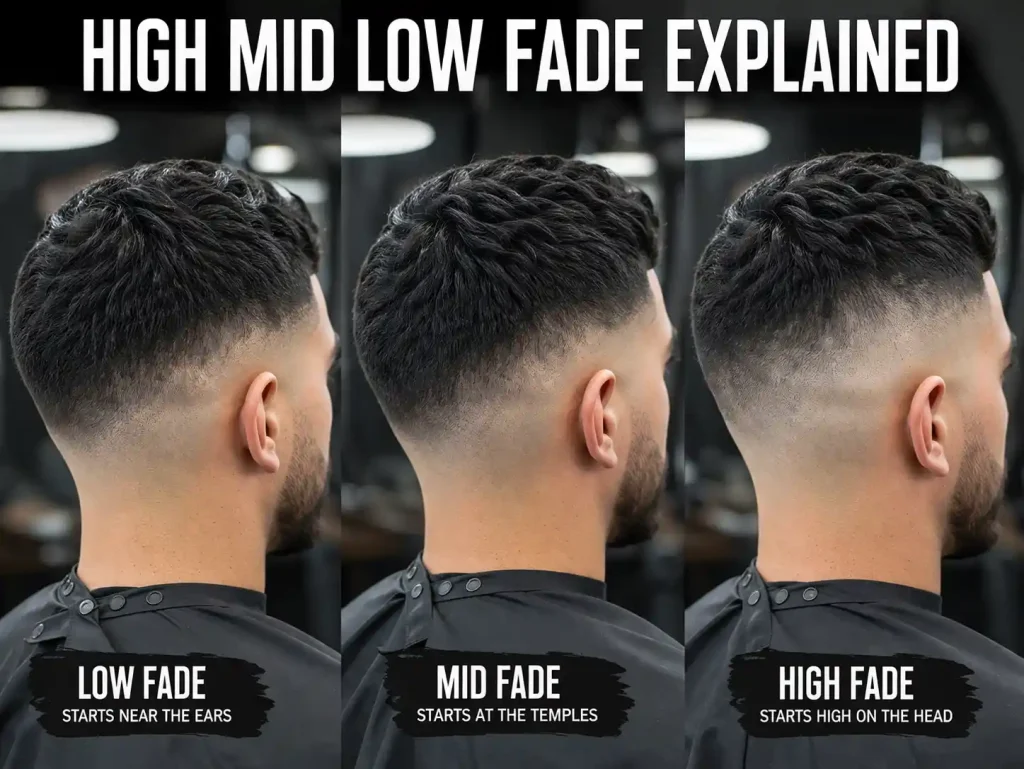
The difference between a high, mid, and low fade comes down to where the fade begins on the head.
Low Fade Undercut
- Fade starts just above the ears
- Leaves more bulk on the sides
- Subtle and conservative
- Ideal for professional or office environments
Best for: Round and heart-shaped faces (adds balance without exposing too much scalp)
Mid Fade Undercut
- Fade starts around the temple area
- Balanced between bold and subtle
- Most versatile option
Best for: Almost all face shapes and lifestyles
High Fade Undercut
- Fade begins near the upper temples
- Removes more bulk from the sides
- Strong contrast between top and sides
Best for: Thick hair, square faces, bold modern looks
Blended vs Disconnected Undercut Fade
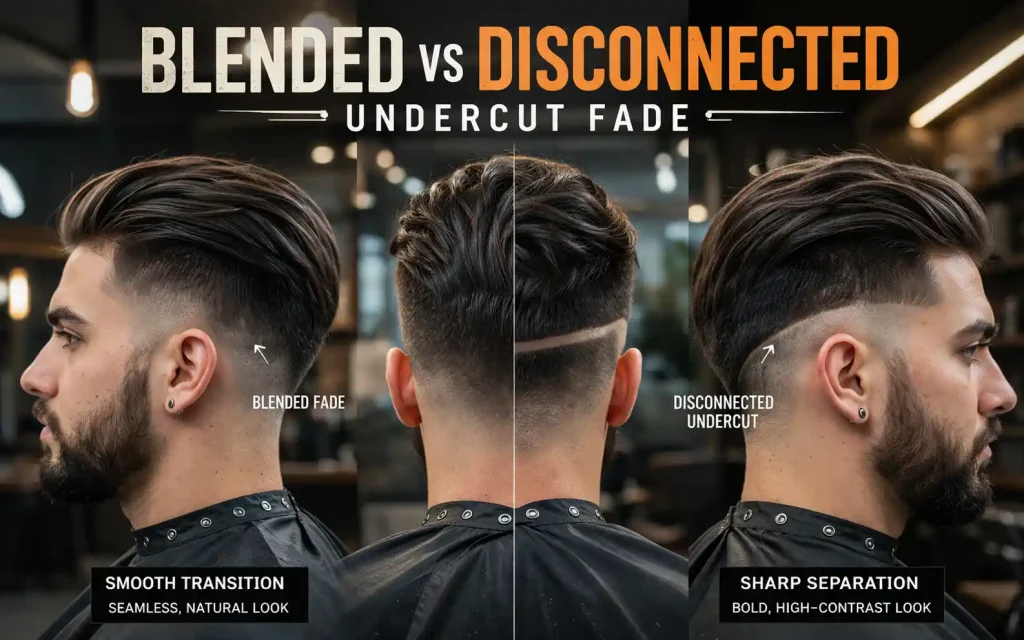
This is one of the most misunderstood differences.
Blended Undercut Fade
- Smooth transition between top and sides
- No visible harsh line
- Clean and professional appearance
Ideal for: Corporate settings and subtle style preferences
Disconnected Undercut Fade
- Noticeable separation between top and faded sides
- Creates dramatic contrast
- Edgy and fashion-forward
Ideal for: Street style, creative professions, and bold personalities
Clipper Guard Numbers Guide
Understanding clipper guard numbers helps you control the final result.
| Guard Number | Hair Length | Typical Use in Undercut Fade |
| #0 (No Guard) | Skin-level | Skin fade base |
| #0.5 – #1 | Very short | Lower fade line |
| #2 | Short but visible | Mid fade transition |
| #3 – #4 | Moderate length | Upper blend area |
| #5+ | Longer | Sometimes used before blending into top |
How to Communicate With Your Barber:
Instead of saying “short on the sides,” say:
- “Mid fade starting at a #1 transitioning to a #3.”
- “Skin fade up to a #2 before blending.”
That level of clarity ensures accuracy.
Fade Gradation Levels (Skin, Shadow, Burst, Drop)
Not all fades are the same. The finish of the fade dramatically changes the style.
Skin Fade (Bald Fade)
- Fades completely into skin
- Ultra-clean and sharp
- Requires frequent maintenance
Shadow Fade
- Doesn’t fully expose skin
- Leaves a slight shadow effect
- More forgiving as it grows out
Burst Fade
- Curves around the ear
- Circular fade pattern
- Often paired with faux hawks
Drop Fade
- Fade line “drops” behind the ear
- Follows natural head shape
- Adds contour and dimension
2026’s Best Undercut Fade Styles
The undercut fade remains one of the most customizable men’s hairstyles in 2026. Below are the most popular variations, along with who they suit, how difficult they are to style, and how much maintenance they require.
Classic Undercut Fade
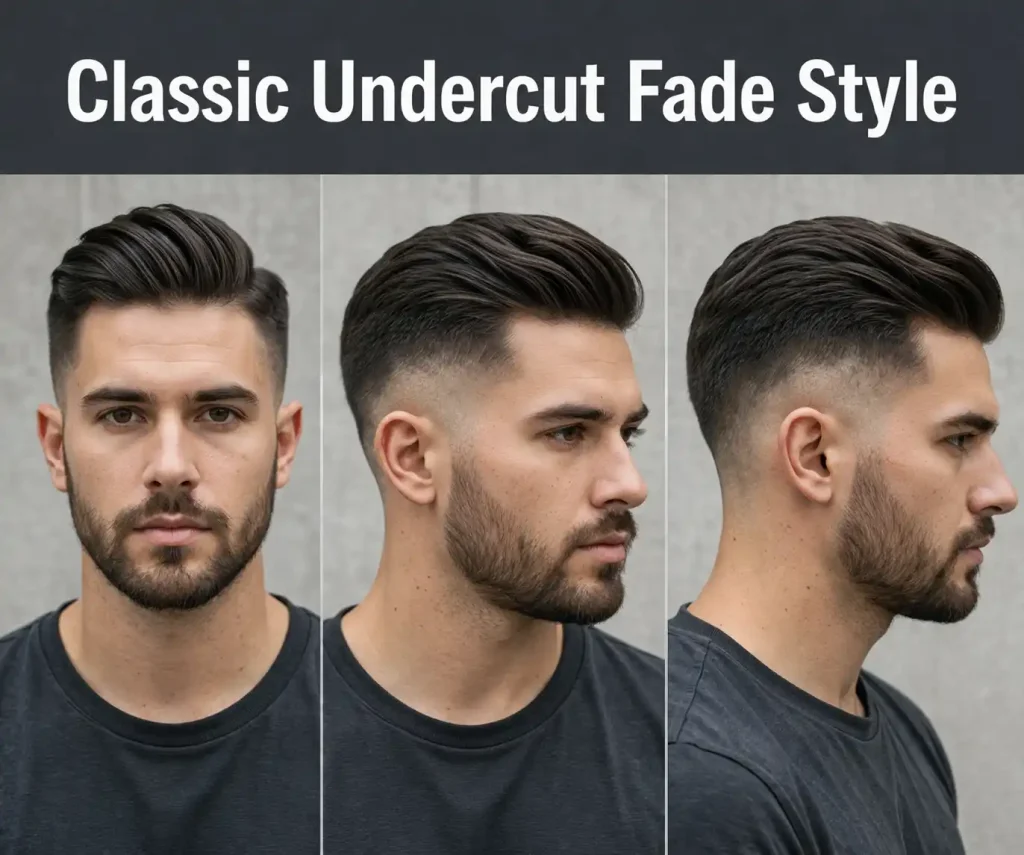
The timeless version that balances sharp sides with moderate length on top.
Who it suits:
✔ Most face shapes
✔ Straight or slightly wavy hair
✔ Men who want a clean, structured look
Styling difficulty: Easy
Use a light pomade or matte clay and comb into place.
Maintenance level: Medium
Trim every 2–3 weeks to keep the fade sharp.
Textured Undercut Fade
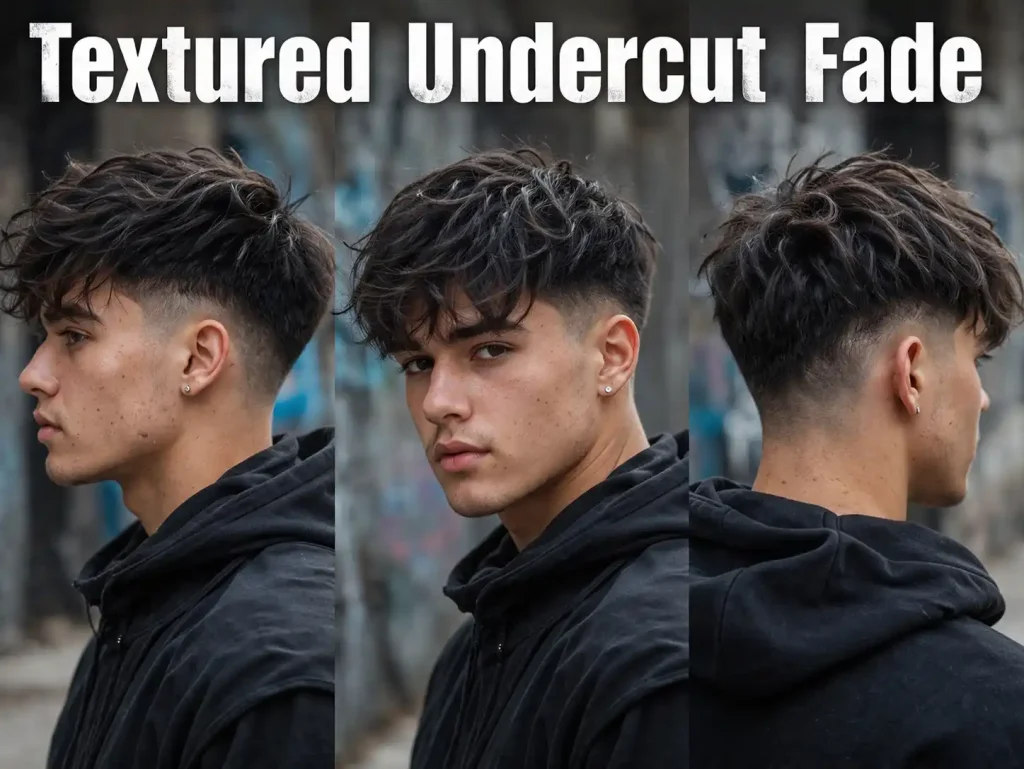
Adds choppy layers and natural movement on top for a modern finish.
Who it suits:
✔ Thick hair
✔ Younger, trend-focused styles
✔ Casual and streetwear looks
Styling difficulty: Moderate
Requires blow-drying and matte clay for separation.
Maintenance level: Medium
Texture grows out well, but fade needs refresh every 2–3 weeks.
Pompadour Undercut Fade
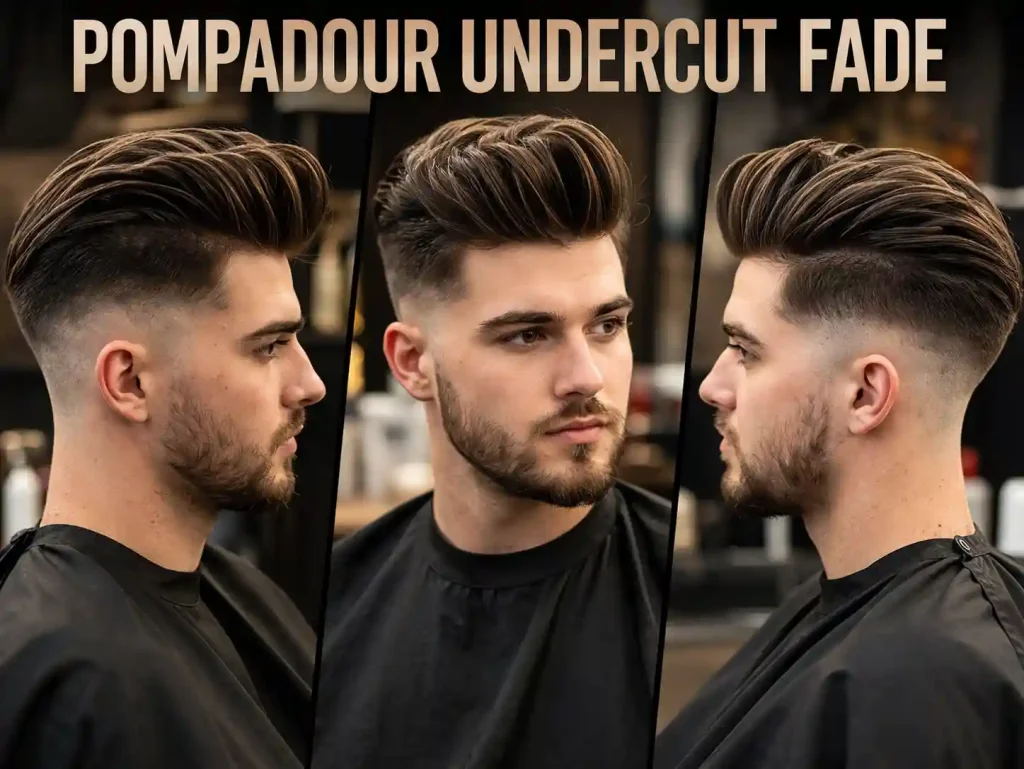
A bold, voluminous top paired with tight faded sides.
Who it suits:
✔ Oval and square face shapes
✔ Thick or medium-density hair
✔ Men who prefer classic-meets-modern style
Styling difficulty: High
Requires blow dryer, round brush, and strong-hold pomade.
Maintenance level: High
Frequent trims (2 weeks) and daily styling required.
Curly Undercut Fade
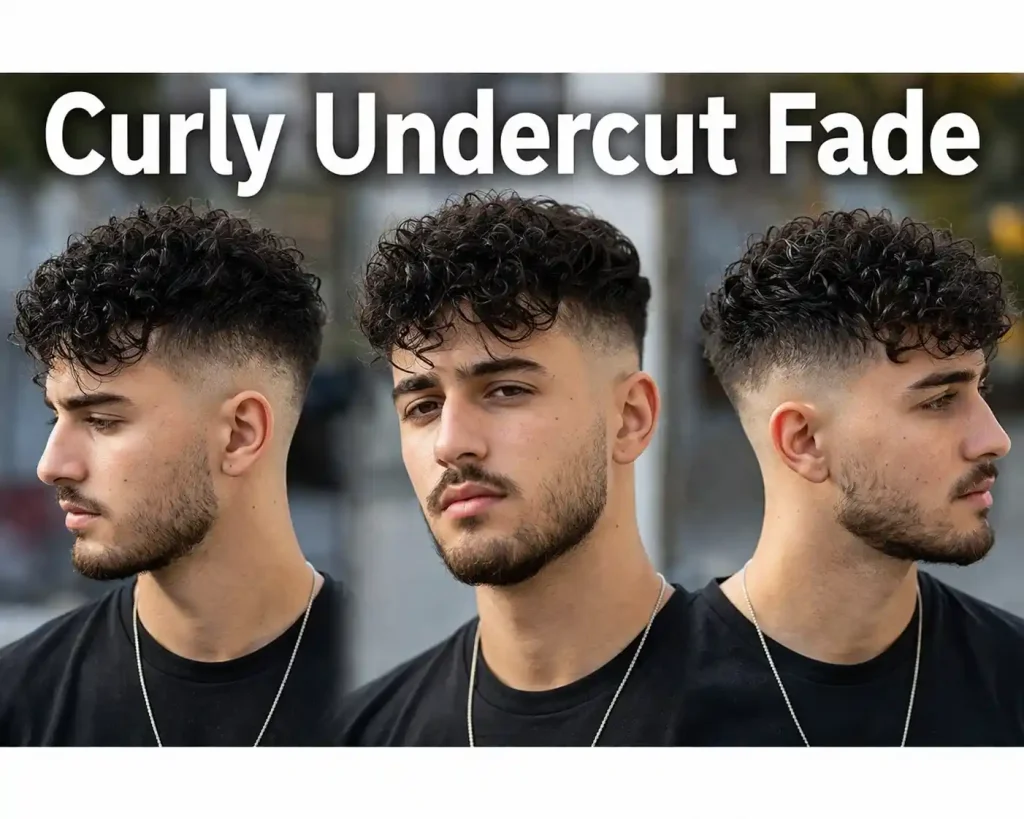
Keeps natural curls on top while maintaining clean faded sides.
Who it suits:
✔ Naturally curly or wavy hair
✔ Men wanting volume with structure
✔ Balanced face shapes
Styling difficulty: Moderate
Use curl cream or light mousse; avoid heavy products.
Maintenance level: Medium
Curls grow naturally, but fades require upkeep.
Faux Hawk Undercut Fade
A modern, edgy look with raised center volume and tapered sides.
Who it suits:
✔ Angular face shapes
✔ Thick hair
✔ Creative or bold personalities
Styling difficulty: Moderate to High
Requires strong-hold product and directional styling.
Maintenance level: High
Sharp fade lines must be maintained every 2 weeks.
Long Hair Undercut Fade
Longer top (5+ inches) styled back, tied, or swept.
Who it suits:
✔ Oval and round faces
✔ Medium to thick hair
✔ Men who want versatility (man bun, slick back, loose flow)
Styling difficulty: Moderate
Longer hair needs conditioning and occasional heat styling.
Maintenance level: Medium
Sides fade quickly; top requires regular trimming to avoid bulk.
Side-Swept Undercut Fade
Top is combed diagonally for a polished and versatile look.
Who it suits:
✔ Professional settings
✔ Straight or lightly wavy hair
✔ Round face shapes (adds angles)
Styling difficulty: Easy to Moderate
Blow-dry with light hold pomade.
Maintenance level: Medium
Fade refresh every 2–3 weeks.
Drop Fade Undercut
The fade “drops” behind the ear, following the head’s natural curve.
Who it suits:
✔ Curved head shapes
✔ Thick hair
✔ Men who want dimension and contour
Styling difficulty: Easy
Works with textured, slick, or messy tops.
Maintenance level: Medium to High
Drop fades lose shape faster as hair grows.
Undercut Fade With Beard
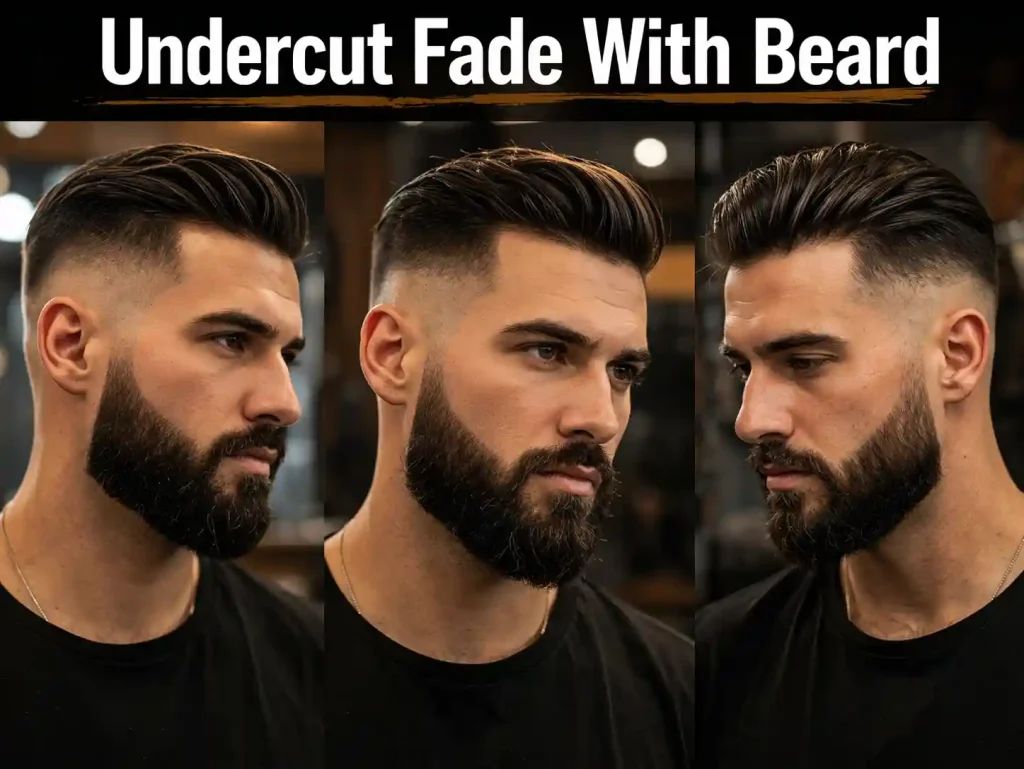
Blends the fade seamlessly into a beard for a cohesive look.
Who it suits:
✔ Men with full beards
✔ Strong jawlines
✔ Balanced or oval face shapes
Styling difficulty: Moderate
Requires beard oil and grooming alignment.
Maintenance level: High
Both fade and beard line-ups need frequent touch-ups.
Undercut Fade With Hard Part / Design
Features a shaved line (hard part) or artistic design.
Who it suits:
✔ Fashion-forward personalities
✔ Creative industries
✔ Thick, straight hair
Styling difficulty: Easy for daily styling
The hard part defines structure automatically.
Maintenance level: Very High
Design lines fade quickly — expect trims every 1–2 weeks.
Pros and Cons of Undercut Fade
Pros
- Highly versatile styling options
- Works for most hair types and face shapes
- Looks modern, clean, and sharp
- Can be customized (low, mid, high fade)
Cons
- Requires regular maintenance (2–4 weeks)
- Styling may take time daily
- Wrong fade choice can affect face balance
Best Styling Products for Undercut Fade
For straight hair: Lightweight pomade
For curly hair: Curl cream
For thick hair: Strong-hold clay
For thin hair: Volumizing mousse
Choosing the Right Undercut Fade for Your Face Shape
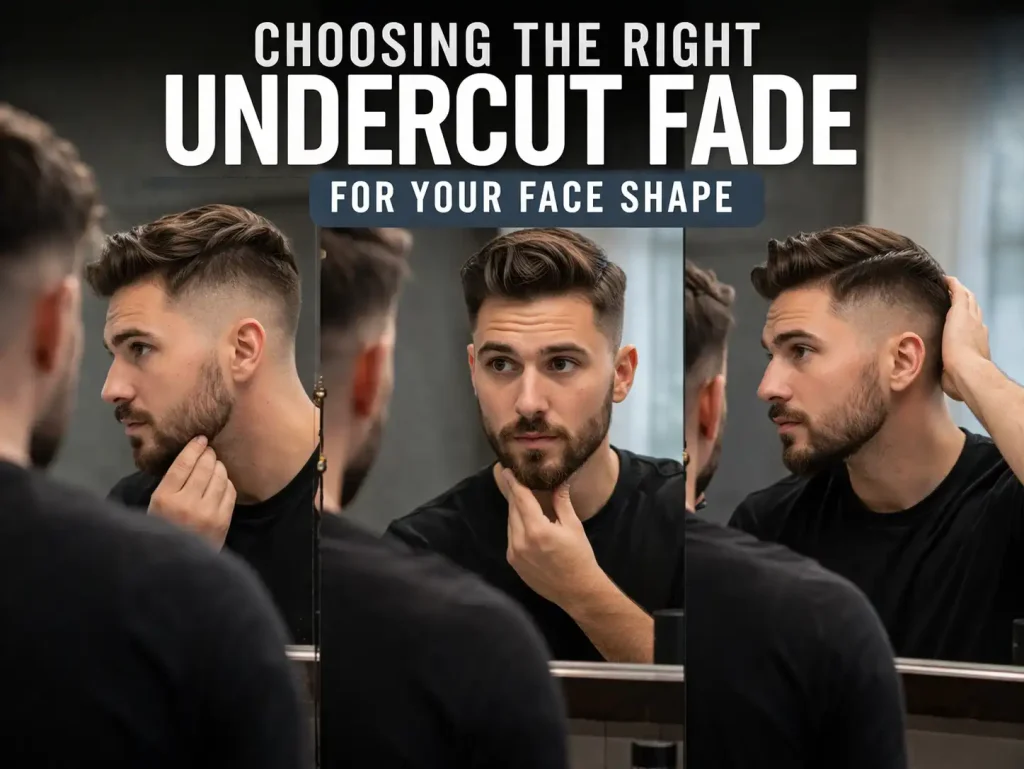
While many guides show popular undercut fade styles, few explain which variation suits each face shape. Choosing the right fade enhances your features, balances proportions, and ensures your haircut looks intentional rather than random. Below is a face-shape decision guide for 2026’s best undercut fades.
Oval Face
- Characteristics: Balanced proportions, slightly rounded jawline, forehead slightly wider than chin.
- Best Undercut Fades: Almost any style works — Classic, Textured, Pompadour, Side-Swept.
- Quick Tip: Avoid styles that cover your balanced symmetry; most modern fades highlight the natural proportion.
Decision Guide: Oval face = most flexibility. Pick based on personality, hair type, and styling preference.
Square Face
- Characteristics: Strong jawline, broad forehead, angular features.
- Best Undercut Fades: High Fade, Pompadour, Curly, Faux Hawk.
- Quick Tip: Add volume on top to balance the angular jaw; softer textured tops can offset sharp edges.
Decision Guide: Square face = emphasize height/top volume, maintain clean fade lines.
Round Face
- Characteristics: Fuller cheeks, soft jawline, equal width and length.
- Best Undercut Fades: High Fade, Side-Swept, Textured Undercut.
- Quick Tip: Keep sides tight and add height on top to elongate the face. Avoid heavy, flat tops that add width.
Decision Guide: Round face = create illusion of length, contrast with tight sides.
Heart Face
- Characteristics: Wider forehead, narrower chin, prominent cheekbones.
- Best Undercut Fades: Side-Swept, Textured, Long Hair Undercut Fade.
- Quick Tip: Avoid overly high fades that accentuate forehead width; maintain length on top and around temples.
Decision Guide: Heart face = balance forehead width, soften angular features.
Diamond Face
- Characteristics: Narrow forehead and chin, wide cheekbones.
- Best Undercut Fades: Side-Swept, Curly, Drop Fade, Pompadour.
- Quick Tip: Keep volume at forehead or chin to balance wide cheekbones; avoid too flat or too tall top styles.
Decision Guide: Diamond face = add volume at ends (top/front), tight fade around cheeks for balance.
Quick Overall Decision Guide Table
| Face Shape | Recommended Fade Style | Top Style Advice | Key Tip |
| Oval | Any | Match personality | Flexible, most styles work |
| Square | High Fade, Pompadour | Volume on top | Soften angular jawline |
| Round | High Fade, Side-Swept | Add height | Elongate face, tight sides |
| Heart | Side-Swept, Textured | Moderate top | Balance wide forehead |
| Diamond | Side-Swept, Drop Fade | Volume at top | Reduce cheekbone width prominence |
Pro Tip: Pairing the right fade height with top styling creates the most flattering look for your face shape. This ensures your undercut fade doesn’t just follow trends — it enhances your natural features.
Customizing Your Undercut Fade for Your Hair Type
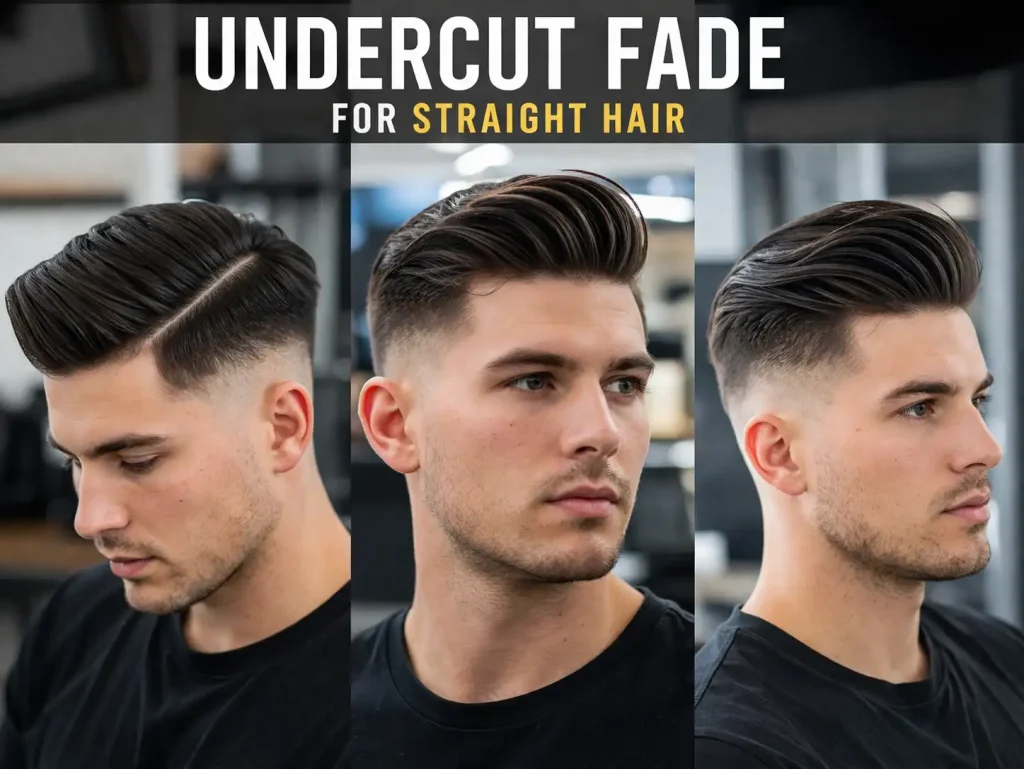
Not all undercut fades look the same on every hair type. Understanding your hair’s natural texture, thickness, and growth pattern helps you choose the right fade style, top length, and product to achieve a clean, stylish look. Below is a guide for customizing your undercut fade based on hair type.
Straight Hair
- Best Fades: Low to mid fade for subtlety, high fade for bold contrast.
- Top Styling: Pompadour, Side-Swept, or Classic Undercut.
- Products: Lightweight pomade or clay for volume and separation.
- Styling Tip: Use a comb and blow-dryer to maintain sleek lines and add controlled volume.
Straight hair responds well to precise cuts; a disconnected fade creates maximum contrast.
Curly Hair
- Best Fades: Mid to high fade, blended or disconnected depending on desired drama.
- Top Styling: Textured Undercut, Curly Undercut Fade, Faux Hawk.
- Products: Curl cream, light mousse, or leave-in conditioner to enhance natural curl definition.
- Styling Tip: Avoid heavy waxes that weigh curls down; maintain fade regularly to prevent bulk from overtaking curls.
Curly hair thrives on texture — a fade keeps sides clean while top remains dynamic.
Wavy Hair
- Best Fades: Mid fade for versatility, low fade for natural flow.
- Top Styling: Textured crop, Side-Swept, or Pompadour variations.
- Products: Light to medium hold cream or sea salt spray for movement.
- Styling Tip: Enhance natural waves with minimal heat; twist sections lightly for separation.
Wavy hair suits most fade types — focus on enhancing wave pattern without flattening the top.
Thick Hair
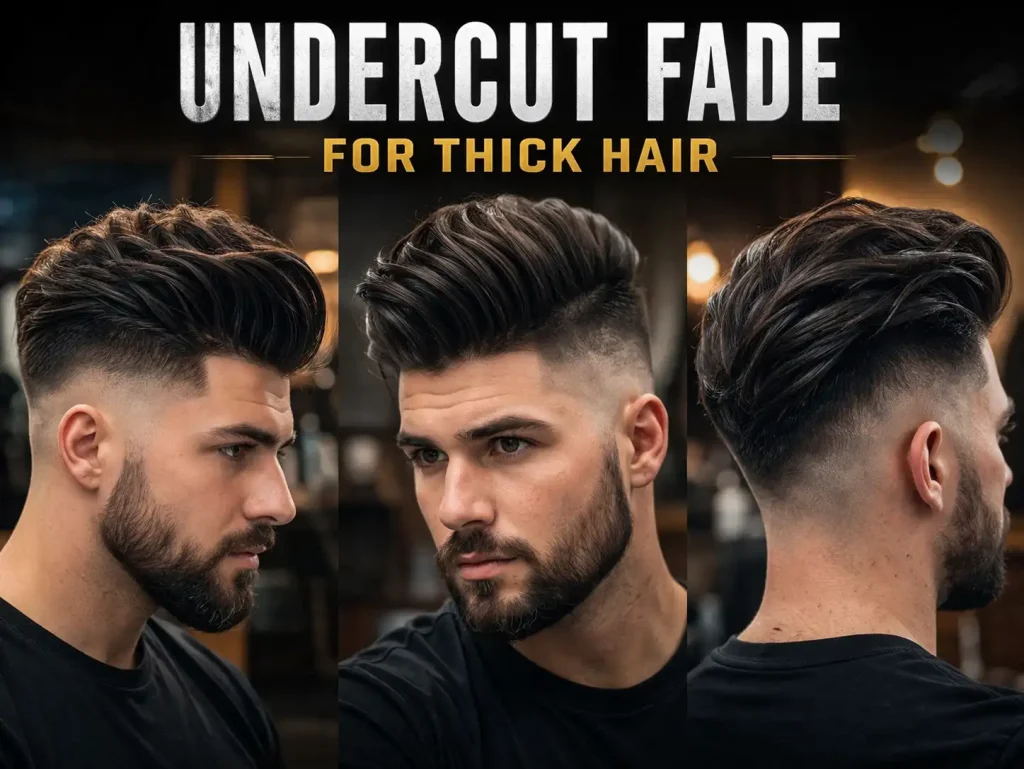
- Best Fades: High fade for bold contrast, drop fade for dimension.
- Top Styling: Pompadour, Textured, Faux Hawk.
- Products: Strong-hold pomade, clay, or styling cream to control volume.
- Styling Tip: Use thinning shears if needed to reduce bulk while keeping shape intact.
Thick hair benefits from fade contrast and structured layering.
Fine / Thin Hair
- Best Fades: Low to mid fade to avoid exaggerating scalp exposure.
- Top Styling: Textured crop, Side-Swept, or Slight Pompadour.
- Products: Lightweight volumizing mousse or clay for lift.
- Styling Tip: Focus on volume on top to compensate for thin sides; avoid slicked-down heavy products.
Fine hair requires strategic top length and subtle fade to prevent flat, unbalanced look.
Coarse / Textured Hair
- Best Fades: High fade or disconnected fade for bold contrast.
- Top Styling: Textured Undercut, Curly Top, or Short Afro variations.
- Products: Leave-in conditioner, curl cream, or matte clay to define structure.
- Styling Tip: Moisturize and shape daily; fade keeps sides manageable while top retains volume and texture.
Coarse hair thrives with structured contrast and daily styling; fades prevent heaviness on the sides.
Quick Styling Summary Table by Hair Type
| Hair Type | Recommended Fade | Top Style | Products | Key Tip |
| Straight | Low/High | Pompadour, Side-Swept | Lightweight pomade/clay | Disconnected fade creates contrast |
| Curly | Mid/High | Textured, Curly, Faux Hawk | Curl cream/mousse | Avoid heavy wax, maintain fade |
| Wavy | Mid/Low | Textured crop, Side-Swept | Sea salt spray/cream | Enhance natural wave pattern |
| Thick | High | Pompadour, Faux Hawk | Strong-hold clay/pomade | Reduce bulk with thinning shears |
| Fine/Thin | Low/Mid | Textured crop, Side-Swept | Volumizing mousse/clay | Add lift on top, avoid heavy products |
| Coarse/Textured | High | Curly Top, Textured Undercut | Leave-in, curl cream | Moisturize and define daily |
How to Ask for an Undercut Fade at the Barber
One of the most common questions men search for is: “How do I ask my barber for an undercut fade?” Knowing the right words, visuals, and technical details can save time, prevent mistakes, and ensure you leave the barber chair with the exact look you want.
The Exact Words to Use
To get a precise undercut fade, use clear, descriptive phrases:
- “I want an undercut fade with a mid fade starting at a #1 and blending into a #3 on top.”
- “Keep the top 3–4 inches long, textured, and slightly layered.”
- “I’d like a disconnected undercut with the fade high on the sides.”
Pro Tip: Avoid vague terms like “short on sides” — barbers need exact numbers, fade type, and top length.
Showing Reference Photos Correctly
- Bring 2–3 high-quality images from multiple angles (front, side, back).
- Show a photo that matches your hair type and density as closely as possible.
- Point out exactly what you like: fade height, top texture, length, or hard part.
Pro Tip: Highlight the part of the hairstyle that’s most important to you so the barber focuses on it.
What Clipper Numbers to Mention
Using clipper guards helps your barber know exact lengths:
| Section | Suggested Clipper Number |
| Fade base | #0 – #1 |
| Mid fade | #2 – #3 |
| Upper fade / blending | #3 – #5 |
| Top (if trimmed) | #6+ or scissors |
Pro Tip: Always specify whether you want a skin fade, shadow fade, or tapered fade at the top of the sides.
Questions Your Barber Might Ask
- “Do you want a blended fade or disconnected?”
- “How long do you want the top?”
- “Do you want a hard part/design?”
- “Would you like it textured or slicked back?”
Knowing the answers in advance speeds up the process and avoids miscommunication.
Step-by-Step Styling Guide at Home
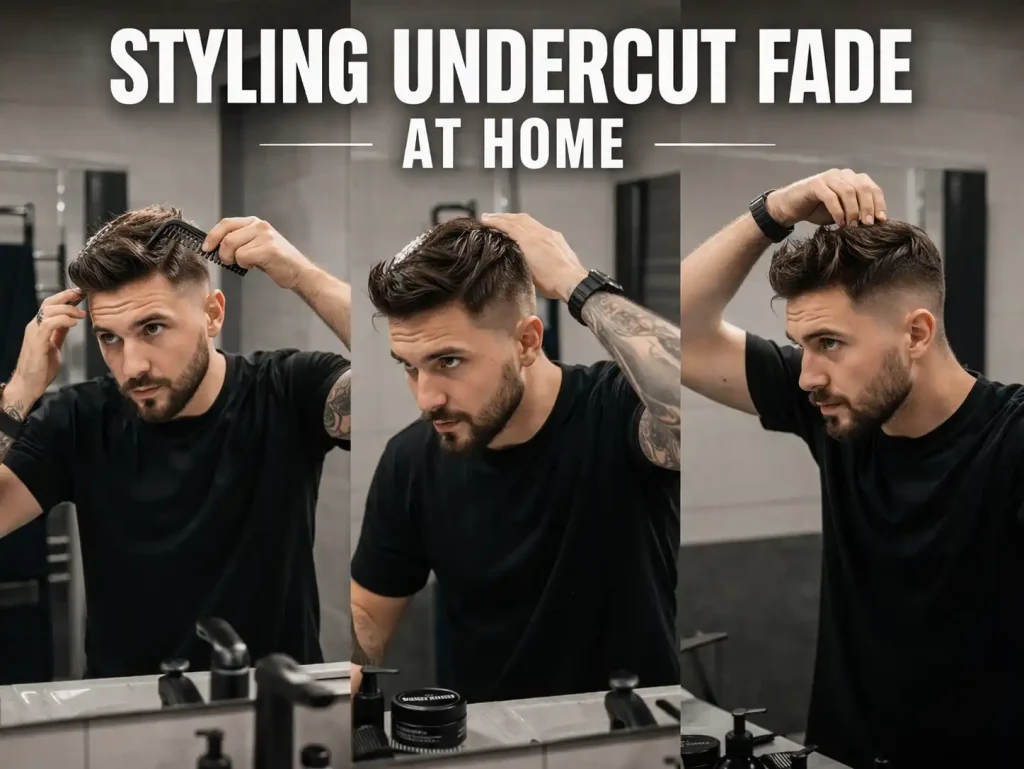
Styling an undercut fade at home doesn’t have to be complicated. With the right routine and products, you can maintain a professional, sharp look daily. Below is a step-by-step guide tailored for different hair types and time constraints.
Pre-Styling Routine
Before applying any product, prep your hair for the best results:
Wash + Prep
- Use a light shampoo to remove oil and residue.
- Condition if needed, especially for thick or curly hair.
- Towel-dry gently to avoid frizz; don’t rub aggressively.
Towel vs Blow Dry
- Towel Dry: Best for casual, textured looks. Leaves natural movement.
- Blow Dry: Ideal for volume, pompadour, or side-swept styles. Use a medium heat setting and a round brush to lift roots and direct hair.
Pro Tip: Always start with slightly damp hair — too wet hair will dilute products, too dry makes styling stiff.
Product Selection Guide
The right product depends on your desired finish:
| Product | Best For | Key Tip |
| Pomade (sleek) | Slicked-back, polished styles | Provides shine and control |
| Clay (texture) | Messy, voluminous, or textured looks | Matte finish, medium hold |
| Wax (flexible hold) | Tousled or flexible styles | Works well for repositioning hair throughout the day |
| Sea Salt Spray (volume) | Wavy, beachy, or natural styles | Adds lift and texture without weight |
Pro Tip: Start with a small amount and add gradually — easier to build than remove excess product.
Quick 5-Minute Workday Style
For busy mornings:
- Apply a small amount of clay or pomade to damp hair.
- Use fingers to lift and style top into desired shape.
- Comb or finger-style side sections.
- Quick blast with blow dryer if needed for extra hold.
This routine works for textured, side-swept, or short pompadour looks.
Night Routine & Reset
Maintaining your undercut fade requires a simple nightly routine:
- Brush hair lightly to prevent tangles.
- Apply a light leave-in conditioner or serum for moisture.
- Optional: Wrap long top sections or use a satin pillowcase to prevent friction.
- Refresh fade edges with a quick comb-through in the morning.
Pro Tip: Regular nightly care keeps hair healthy, shiny, and easier to style, prolonging the fade’s sharp appearance between barber visits.
How Much Does an Undercut Fade Cost?
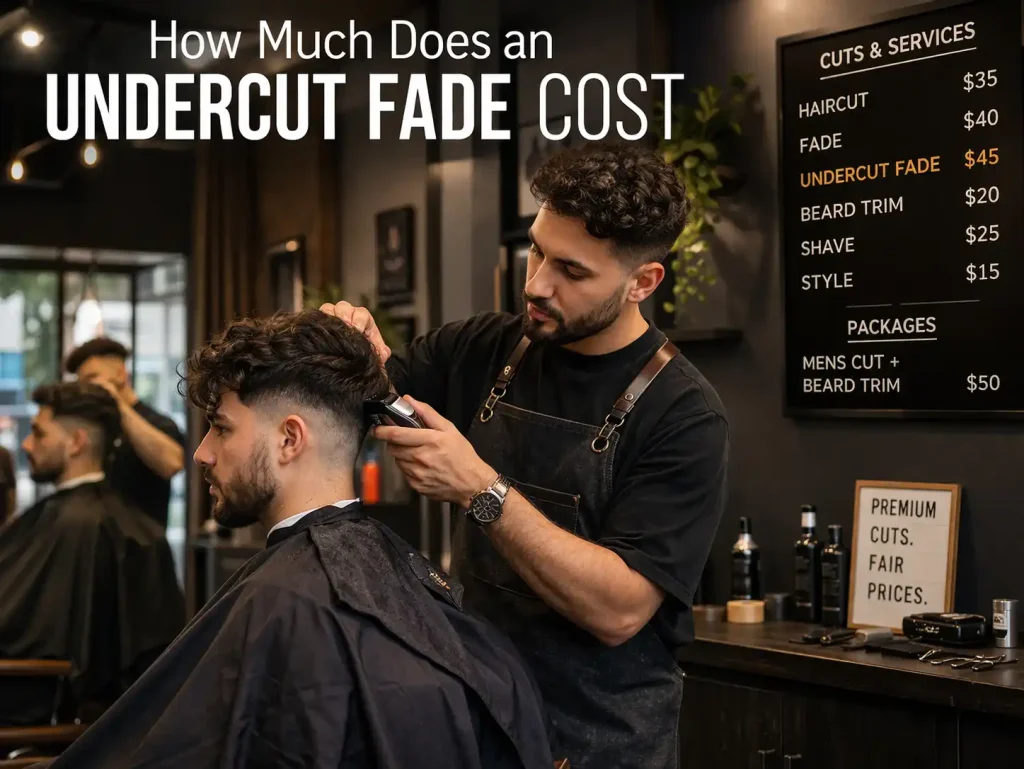
- Basic haircut: $15 – $40
- Premium barber: $40 – $100+
- With beard + styling: $50 – $120
Factors affecting price:
- Barber experience
- Location
- Fade complexity (skin fade, designs)
- Additional services (beard, styling)
Maintenance & Trim Schedule
Keeping an undercut fade looking sharp requires consistent maintenance. Many guides mention fades briefly, but few give a structured trim schedule and practical advice. Here’s a detailed breakdown to help your haircut stay fresh.
How Often to Trim
- High Fades / Skin Fades: Every 2–3 weeks to maintain clean contrast.
- Mid Fades: Every 3–4 weeks depending on hair growth rate.
- Low Fades / Subtle Blends: Every 4–6 weeks; grows out naturally.
- Top Hair: Trim every 4–6 weeks for shape; longer styles may need minimal adjustments monthly.
Pro Tip: Schedule trims proactively; faded sides grow unevenly faster than top hair.
DIY Touch-Ups (What’s Safe & What’s Not)
Safe:
- Cleaning up neckline and sideburns with trimmer.
- Minor fade blending using clippers with proper guard.
- Touching up hard parts or shaved designs carefully.
Avoid:
- Over-fading or removing too much length from the top.
- Trying a full skin fade at home if you’re inexperienced.
- Cutting against natural growth patterns, which causes uneven results.
Pro Tip: If unsure, leave major fades to a barber — small touch-ups at home keep the haircut tidy without risk.
Seasonal Adjustments
- Summer: Hair may grow faster due to humidity; consider slightly more frequent trims.
- Winter: Hair may appear thicker due to dryness; moisture-based products prevent frizz.
- Adjust styling products: lightweight creams in summer, heavier clays or pomades in winter.
Seasonal maintenance helps fades stay sharp and comfortable year-round.
How to Prevent Uneven Fading
- Always trim sides consistently; uneven growth is noticeable with short fades.
- Check fade lines in natural light — barbers use mirrors, but you can monitor at home.
- Avoid heavy styling on one side that flattens hair and exaggerates unevenness.
- Schedule regular barber visits instead of waiting for the fade to grow out completely.
Common Undercut Fade Mistakes to Avoid
Even with the best fade, mistakes can ruin the look. Here are the most common pitfalls:
- Choosing the Wrong Fade Height
- High fades look bold but may not suit all face shapes; low fades may appear flat on thick hair.
- High fades look bold but may not suit all face shapes; low fades may appear flat on thick hair.
- Ignoring Face Shape
- A fade that doesn’t complement your features can throw off balance and proportions.
- A fade that doesn’t complement your features can throw off balance and proportions.
- Over-Using Heavy Products
- Too much pomade, wax, or clay can weigh down the top and make the fade blend messy.
- Too much pomade, wax, or clay can weigh down the top and make the fade blend messy.
- Skipping Maintenance
- Grows out quickly; faded sides especially need attention to prevent sloppy appearance.
- Grows out quickly; faded sides especially need attention to prevent sloppy appearance.
- Going Too Disconnected
- Extreme disconnected fades without proper styling can appear harsh and unpolished.
Professional vs Casual Undercut Fades
Many guides focus on style trends but neglect the context of where the fade is worn. Understanding the difference between professional, casual, and formal settings ensures your undercut fade is appropriate, versatile, and stylish.
Office-Appropriate Versions
- Fade Type: Low to mid fade for subtle contrast.
- Top Style: Side-swept, classic pompadour, or neatly combed back.
- Product: Lightweight pomade or clay for a polished, non-shiny finish.
- Who It Suits: Oval, square, or heart-shaped faces.
- Pro Tip: Avoid extreme disconnected fades or hard parts; maintain clean side lines.
SEO Note: This section targets “undercut fade for work/professional look” — a gap competitors rarely cover.
Creative / Street Style Versions
- Fade Type: High fade, drop fade, or disconnected fade.
- Top Style: Textured crop, faux hawk, messy or voluminous styles.
- Product: Clay, wax, or sea salt spray for texture and volume.
- Who It Suits: Younger audiences, creative industries, and casual settings.
- Pro Tip: Add hard parts or shaved designs for individuality.
Formal Event Styling
- Fade Type: Mid fade, clean blend, polished edges.
- Top Style: Slicked back, side-part, or classic pompadour.
- Product: Strong-hold pomade with light shine.
- Who It Suits: Weddings, black-tie events, corporate presentations.
- Pro Tip: Slight shine can elevate the look; maintain fade edges the day before the event.
Strategic Takeaway: Knowing the difference between office, casual, and formal fades keeps your style versatile and intentional.
Undercut Fade Trends & Influences
Styling trends evolve every year, and 2026 introduces new textures, celebrity influences, and social media-driven variations. Staying aware of trends keeps your content fresh, authoritative, and shareable.
Celebrity Examples
- Celebrities like Timothée Chalamet, Zayn Malik, and Chris Hemsworth continue to inspire modern fades.
- Shows how high-volume pompadours, textured crops, and disconnected fades work in real life.
Social Media Style Shifts
- TikTok and Instagram have popularized short-textured tops, minimalistic fades, and creative hard parts.
- Viral styling videos influence daily barber requests.
Minimalist vs Bold Fades
- Minimalist fades: Low or mid fades, subtle blend, natural finish.
- Bold fades: High, skin, or drop fades with sharp contrasts and disconnected tops.
- Both styles are trending; choice depends on personality, profession, and confidence level.
Texture Trend Shift
- Textured and messy tops are gaining popularity over slicked-back finishes.
- Natural movement, curls, and waves are celebrated, requiring barbers and styling routines to adapt.
FAQ About Undercut Fade
Here are concise, 40–60 word answers designed to target featured snippets and common search queries about undercut fades.
What is an undercut fade?
An undercut fade combines a longer top section with short, tapered sides and back. The fade blends hair gradually while the top remains styled in various ways, creating a clean, structured, and versatile haircut suitable for multiple occasions and hair types.
Does an undercut fade suit all face shapes?
Yes, the undercut fade can be customized for different face shapes. High fades suit square faces, mid fades fit oval faces, and side-swept or textured tops balance round or heart-shaped faces. Choosing the right top length and fade height ensures a flattering look.
How long does an undercut fade last?
A fade typically stays sharp for 2–4 weeks depending on hair growth and fade height. Longer top sections may require trims every 4–6 weeks to maintain shape. Regular barber visits and home styling help keep the haircut fresh.
What’s the difference between high and low fade?
A high fade starts near the upper temples, creating a bold, dramatic contrast. A low fade begins just above the ears, giving a subtle, professional look. Mid fades balance both extremes for versatility and suit most face shapes and styles.
Can women wear undercut fades?
Absolutely. Women can wear undercut fades with long, short, or textured tops. Female fades can be blended or disconnected and styled with braids, waves, or sleek straight hair, offering a trendy, edgy, and versatile look.
Is it high maintenance?
Maintenance depends on fade height and top style. High or skin fades require trims every 2–3 weeks, while mid or low fades last 3–6 weeks. Daily styling with the right products ensures the top stays defined without overloading hair.
Best styling product?
- Pomade: Sleek and polished finishes
- Clay: Textured, matte styles
- Wax: Flexible hold for tousled looks
- Sea Salt Spray: Volume and natural movement
Choose based on hair type, top length, and desired finish.
Can you combine an undercut fade with a beard?
Yes. Fading the sides into a beard creates a cohesive, clean look. Ensure beard lines are sharp and aligned with the fade for symmetry. Full, short, or stubble beards all work when paired with a fade.
Final Thoughts: Is an Undercut Fade Right for You?
The undercut fade is one of the most versatile, modern haircuts for 2026. Whether you prefer professional, casual, or bold street styles, there’s a fade variation to suit your hair type, face shape, and lifestyle.
Quick Decision Summary:
- Bold personality → High/Disconnected fade
- Professional → Low/Mid fade with sleek top
- Texture-focused → Textured or Curly top
Style Confidence Tip: Your fade is more than a haircut — it’s a statement of style and personality.