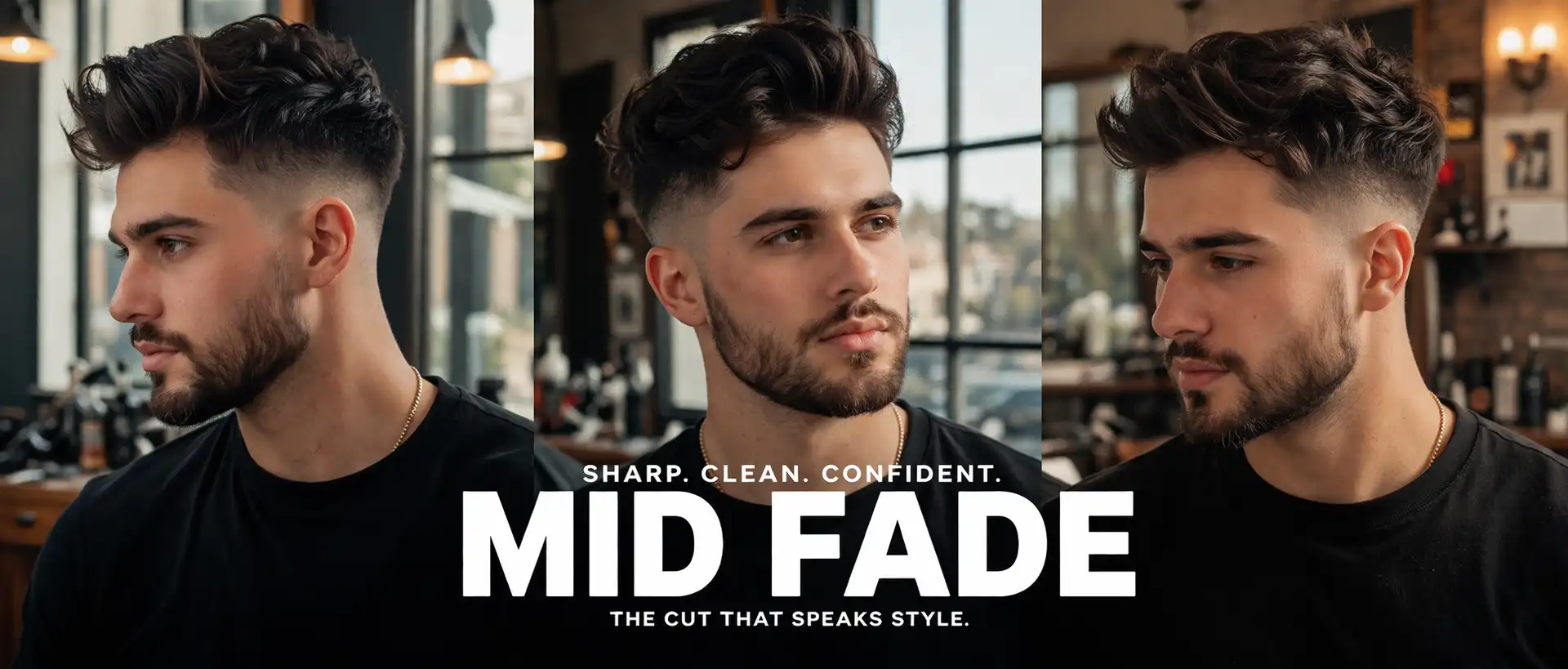
The mid fade haircut is one of the most versatile and modern men’s hairstyles today. Clean around the sides, sharp at the temples, and perfectly balanced between a low and high fade, it delivers a look that works in both professional and casual settings. Whether you prefer a textured top, slick back, curly finish, or beard pairing, the mid fade adapts effortlessly to different hair types and face shapes.
But choosing the right mid fade isn’t just about picking a style photo. The height of the fade, the blending technique, your head shape, hair density, and even your lifestyle all play a role in how the cut will look on you.
In this complete guide, you’ll discover the best mid fade styles, how it compares to other fades, which version suits your face shape, what to tell your barber, and how to maintain that sharp, fresh look week after week.
Quick Answer – Which Mid Fade Should You Choose?
- Round face: Mid fade + volume on top
- Oval face: Any mid fade works
- Square face: Textured top + mid fade
- Thin hair: Mid fade + short textured crop
- Curly hair: Mid fade + natural curls
You May Also Like:
Top 40 Mid Fade Haircuts for Men
Burst Fade Haircut Best Styles for Every Hair Type
What Is a Mid Fade Haircut?
A mid fade haircut is a men’s hairstyle where the fade begins around the temples and gradually blends into longer hair on top. It sits between a low fade and a high fade, creating a balanced, clean transition that works for both professional and casual looks. The mid fade offers structure, sharpness, and versatility across different hair types and face shapes.
Why Men Choose the Mid Fade
The mid fade haircut strikes the perfect balance between clean and modern. It offers a sharp, polished appearance without looking overly dramatic, making it ideal for men who want structure without going too extreme.
It’s also professional yet edgy—neat enough for corporate environments but stylish enough to stand out in social settings. The fade placement adds definition around the temples while keeping the overall look refined.
Another major advantage is that it works with most hair textures, including straight, wavy, thick, thin, and curly hair. The mid fade adapts easily to different top styles, from textured crops to slick backs.
Finally, it’s easy to customize and suitable for multiple age groups, whether you’re a student, a working professional, or someone looking for a timeless upgrade.
Is a Mid Fade Right for Your Lifestyle?
Choosing a mid fade haircut isn’t just about style — it’s also about how well it fits your daily routine, work environment, and personal image. Here’s how it performs across different lifestyles:
Corporate Professionals
For office environments, the mid fade offers a clean, structured appearance without looking too bold. Paired with a side part, comb over, or neatly styled top, it maintains a professional and polished look while still appearing modern. It’s sharp enough to look well-groomed but subtle enough to meet workplace standards.
Students
Students often want something stylish yet low-maintenance. The mid fade works perfectly because it delivers a trendy and fresh look without requiring excessive daily styling. Whether you prefer textured, messy, or short cropped tops, it adapts easily to changing trends.
Athletes
Athletes benefit from the clean sides and reduced bulk that a mid fade provides. It keeps hair off the ears and neckline, helping with comfort during training or competition. It’s practical, breathable, and easy to maintain with frequent trims.
Creative Industries
In creative fields, appearance is part of personal branding. The mid fade can be customized with longer textured tops, hard parts, designs, or beard combinations, allowing for individuality while keeping structure. It balances creativity with grooming discipline.
Best Mid Fade Based on Hair Type
The mid fade haircut works across almost every hair texture, but the way it’s cut and styled should match your natural hair type for the best results.
Thick Hair
A mid fade for thick hair helps remove bulk from the sides while keeping volume on top. This creates a clean contrast and prevents the style from looking heavy. Ask your barber for slight texturizing on top to reduce weight. For styling, use a matte clay or lightweight pomade to control volume while keeping natural movement.
Thin Hair
With thin hair, the goal is to create the illusion of fullness. A mid fade keeps the sides tight, which makes the top appear thicker by comparison. Avoid going too short on top. Use a volumizing pre-styler and a light hold product to add lift without weighing the hair down.
Straight Hair
Straight hair pairs perfectly with a mid fade because it shows clean lines and sharp blending. Styles like a slick back, side part, or textured crop work especially well. Use a medium-hold pomade for shine or a matte paste for a more natural finish.
Curly Hair
A mid fade with curly hair creates strong contrast between tight sides and defined curls on top. Keep enough length to let the curls form naturally. Use a curl cream or lightweight styling cream to enhance definition and reduce frizz without stiffness.
Wavy Hair
Wavy hair benefits from a mid fade because it highlights the natural texture while keeping the overall shape controlled. A layered cut on top enhances movement. Apply a sea salt spray for texture and finish with a light styling cream for flexible hold.
Coarse Hair
Coarse hair can appear dense and difficult to manage, but a mid fade keeps the sides structured and manageable. Ask your barber for blending that softens harsh lines. Use a hydrating styling cream or medium-hold pomade to control frizz and maintain smoothness.
Best Mid Fade for Your Face Shape
Choosing the right mid fade haircut isn’t only about hair type — your face shape plays a major role in how balanced and sharp the final look appears. Adjusting volume placement, beard pairing, and fade height can dramatically improve proportions.
Round Face
A round face benefits from added height and structure. Keep more volume on top to create the illusion of length. A slightly sharper mid fade that blends cleanly around the temples helps slim the sides. Pairing it with a short, structured beard can add definition to the jawline. Avoid overly wide or flat styles that emphasize roundness.
Oval Face
An oval face is the most versatile and works well with almost any mid fade variation. Keep balanced volume on top, not too tall and not too flat. Standard mid fade height works perfectly here. Beard pairing is optional, but a light stubble or short beard enhances symmetry without overpowering facial proportions.
Square Face
Square faces already have strong jawlines, so the goal is to complement that structure. A textured or slightly lifted top works well without going extreme. Keep the fade clean but not too high to maintain proportion. A full, well-shaped beard pairs especially well with square faces, enhancing masculinity and balance.
Diamond Face
Diamond face shapes are narrower at the forehead and chin with wider cheekbones. Avoid excessive height on top. Instead, aim for moderate volume with some width to balance proportions. Keep the mid fade slightly softer rather than extremely tight. A short, controlled beard can help broaden the jaw area.
Heart Face
Heart-shaped faces are wider at the forehead and narrower at the chin. Avoid overly tall volume on top. Instead, choose a balanced, textured style that doesn’t exaggerate upper width. A mid fade that isn’t too high helps maintain proportion. Pairing with a medium-length beard can add weight around the chin and create symmetry.
15 Modern Mid Fade Haircut Ideas
Textured Mid Fade
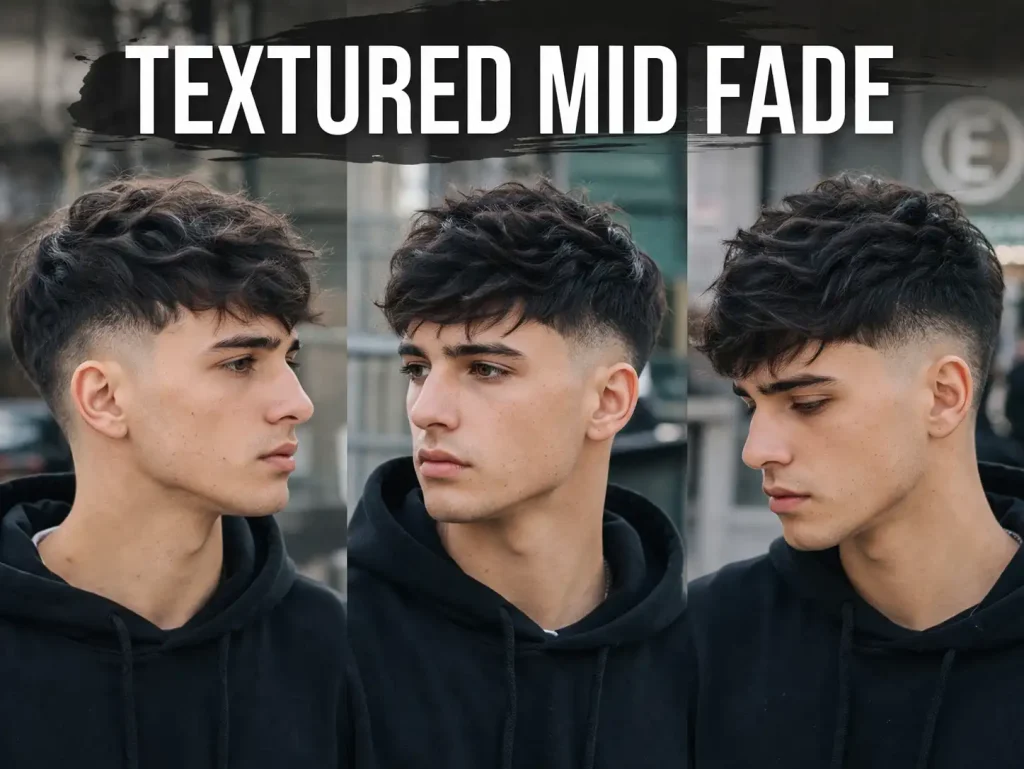
The textured mid fade is one of the most popular modern variations. The sides are clean and blended at temple level, while the top is cut with layers to create movement and separation. This style works especially well for thick or straight hair because it adds dimension without looking bulky. A matte clay or texturizing paste enhances the natural finish and keeps the look effortless rather than overly styled.
Skin Mid Fade
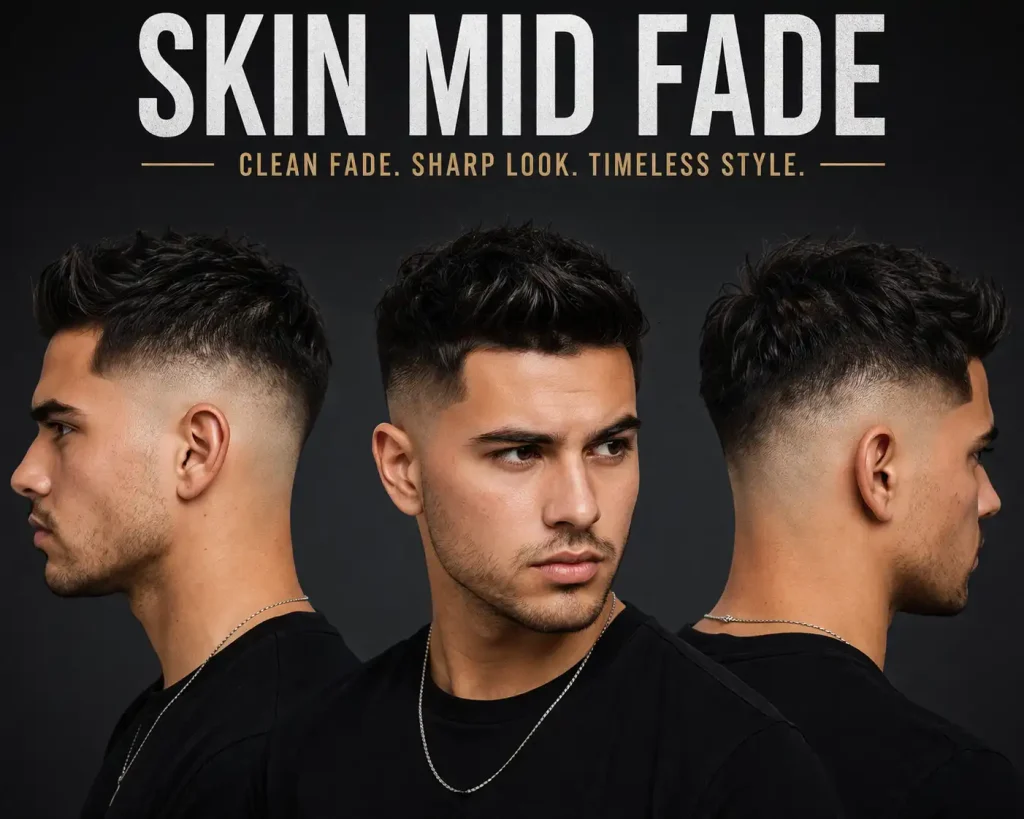
A skin mid fade blends the sides down to bare skin, creating a sharp, high-contrast transition into the longer top. It delivers a bold and polished appearance, making it ideal for men who prefer a crisp, defined haircut. This variation pairs well with short crops, slick backs, or even buzzed tops. Regular trims every two to three weeks help maintain its sharp edge.
Curly Mid Fade
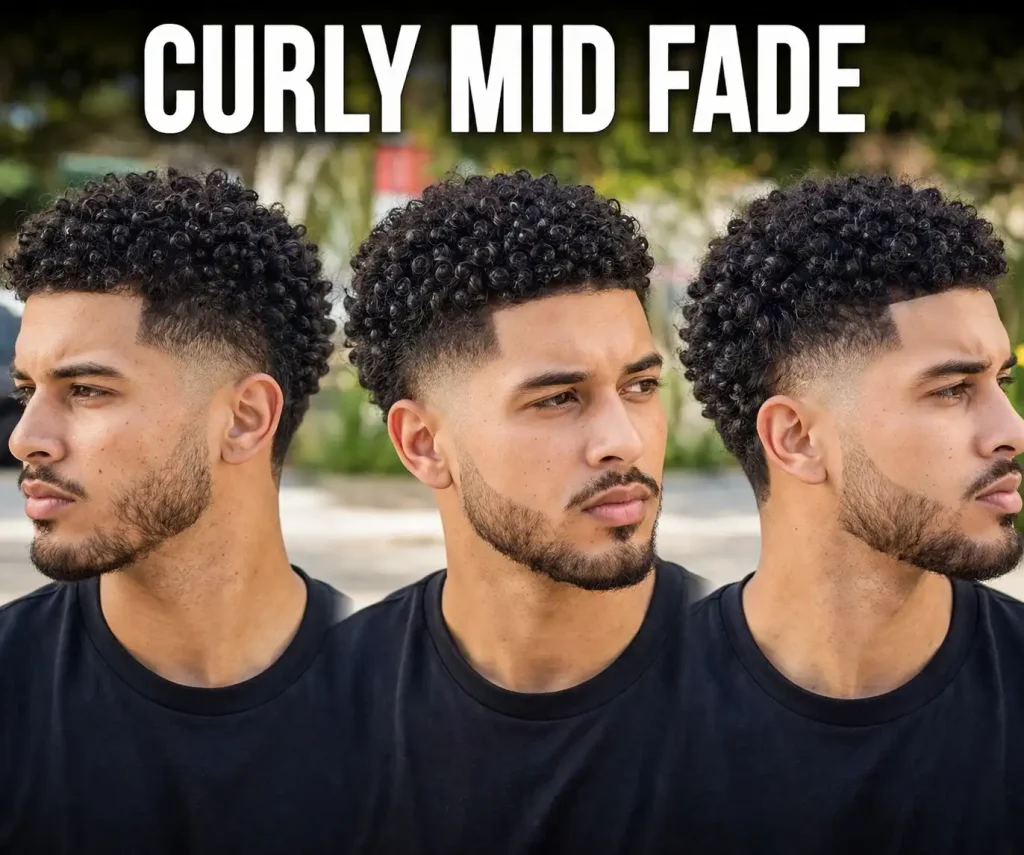
The curly mid fade highlights natural texture while keeping the sides clean and controlled. The fade reduces bulk around the ears, allowing the curls on top to stand out. Keeping enough length is important for proper curl definition. A lightweight curl cream or styling mousse enhances texture while minimizing frizz and maintaining flexibility throughout the day.
Mid Fade With Beard
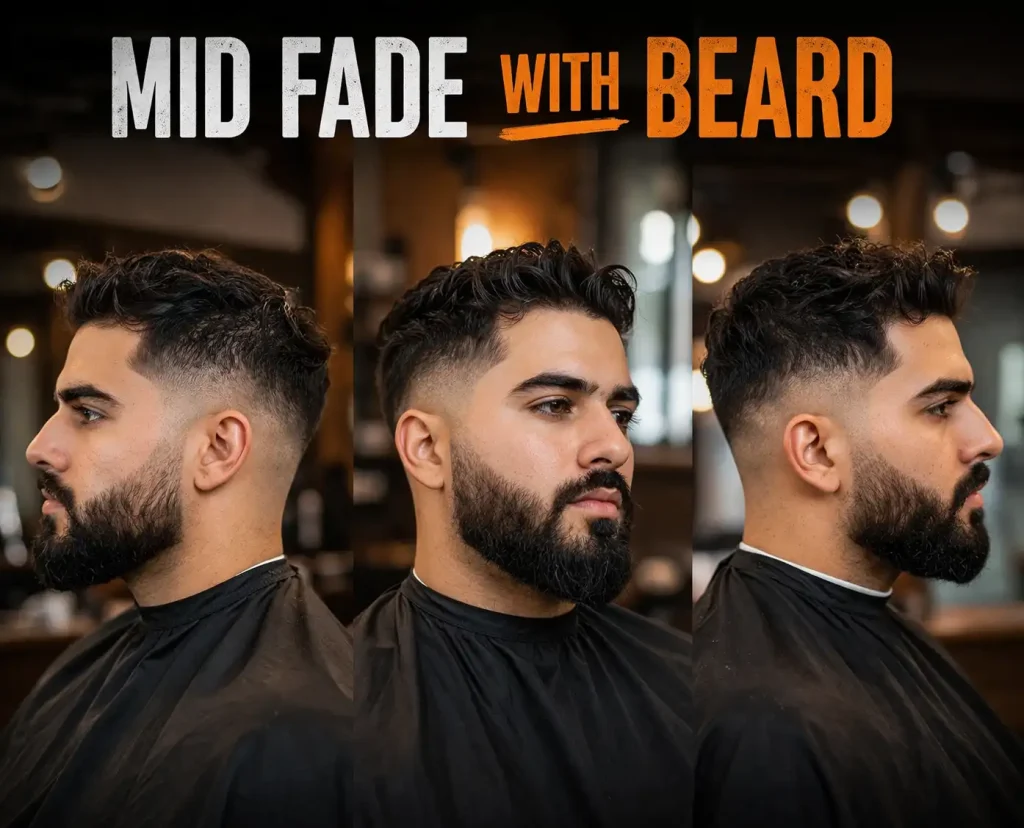
Pairing a mid fade with a beard creates a balanced and masculine look. The fade should blend smoothly into the beard for a seamless transition. This combination works particularly well for square and round face shapes, adding structure to the jawline. Regular beard grooming and shaping are essential to keep the overall appearance clean and intentional.
Hard Part Mid Fade
The hard part mid fade features a shaved line that separates the top from the faded sides. This adds sharp contrast and a defined, structured finish. It pairs well with comb overs or slick backs for a refined, professional appearance. Because the hard part grows out quickly, maintenance every two to three weeks keeps the line crisp.
Pompadour Mid Fade
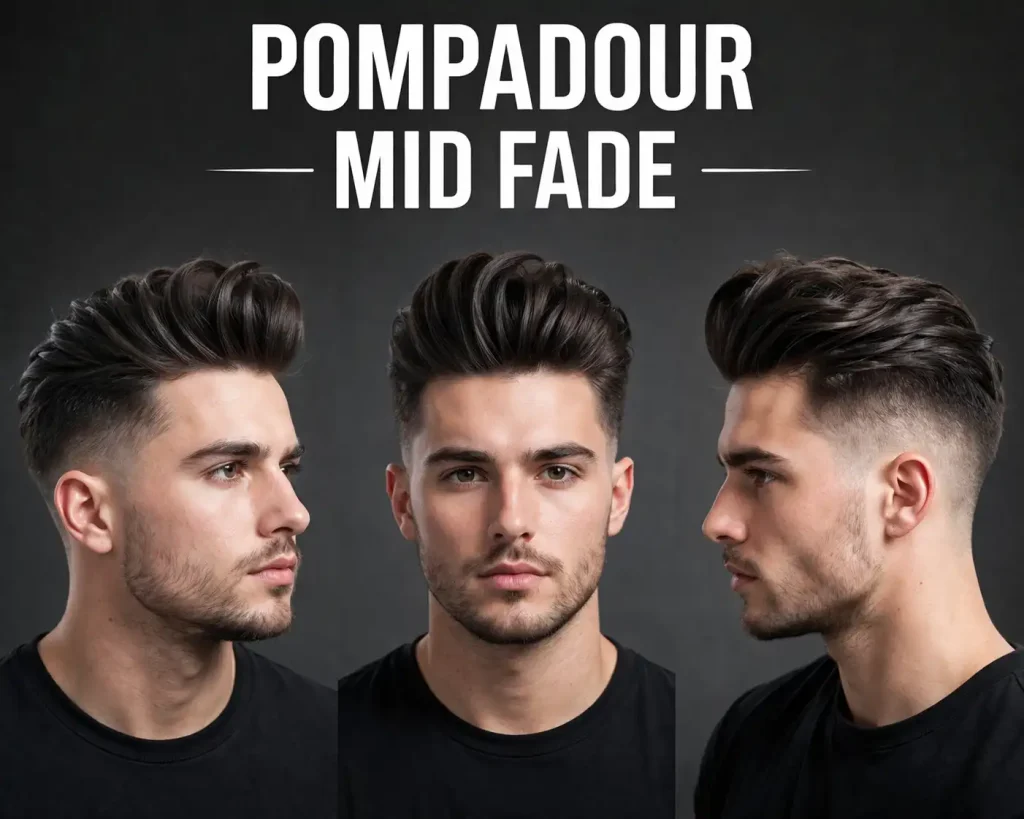
A pompadour mid fade combines classic volume with modern sharpness. The top is styled upward and backward for height, while the sides remain neatly faded. This style elongates round or shorter face shapes and creates a bold yet elegant silhouette. Blow-drying with a round brush and applying a medium-hold pomade helps maintain lift and control.
Slick Back Mid Fade

The slick back mid fade offers a clean and timeless aesthetic. Hair is combed straight back, creating a smooth, polished look that works well in professional settings. It suits straight or slightly wavy hair best. Use a medium-shine pomade for a classic finish or a matte product for a more contemporary feel.
Mid Fade With Fringe
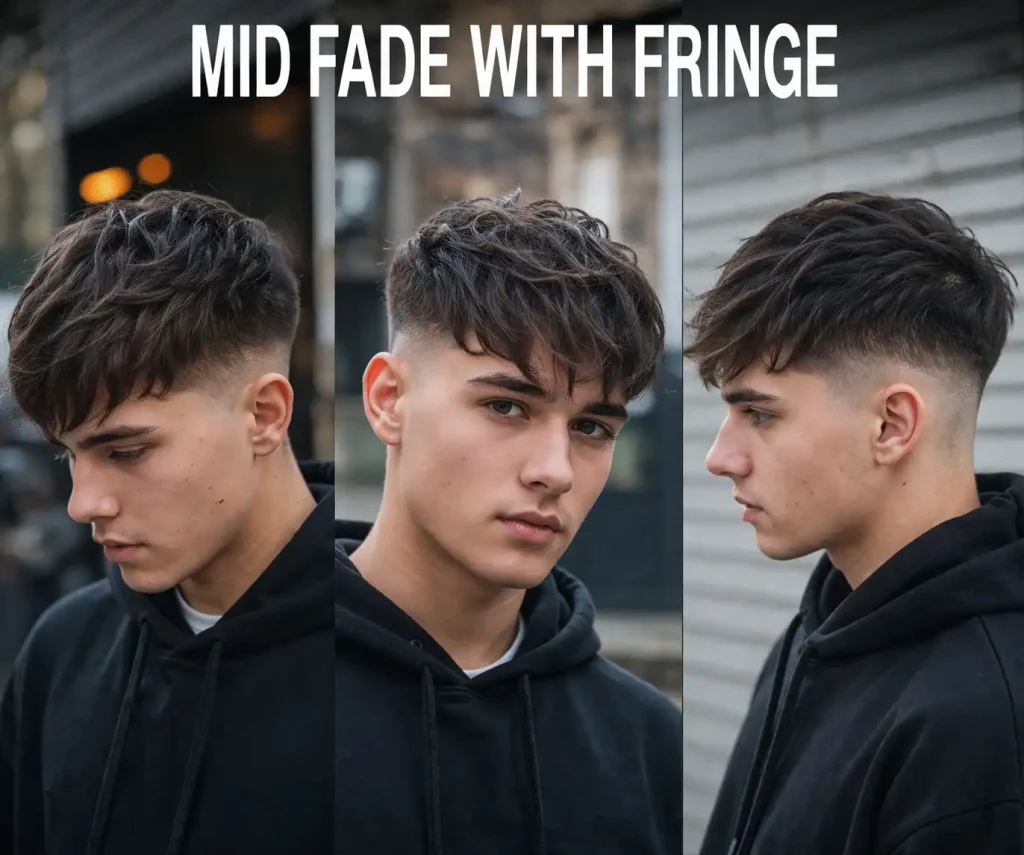
A mid fade with fringe keeps the sides tight while allowing the front section to fall forward. This variation softens angular features and works especially well for men with longer or narrow face shapes. A textured fringe adds movement, while a controlled fringe creates a sharper edge. Lightweight styling cream keeps it natural and flexible.
Buzz Cut Mid Fade
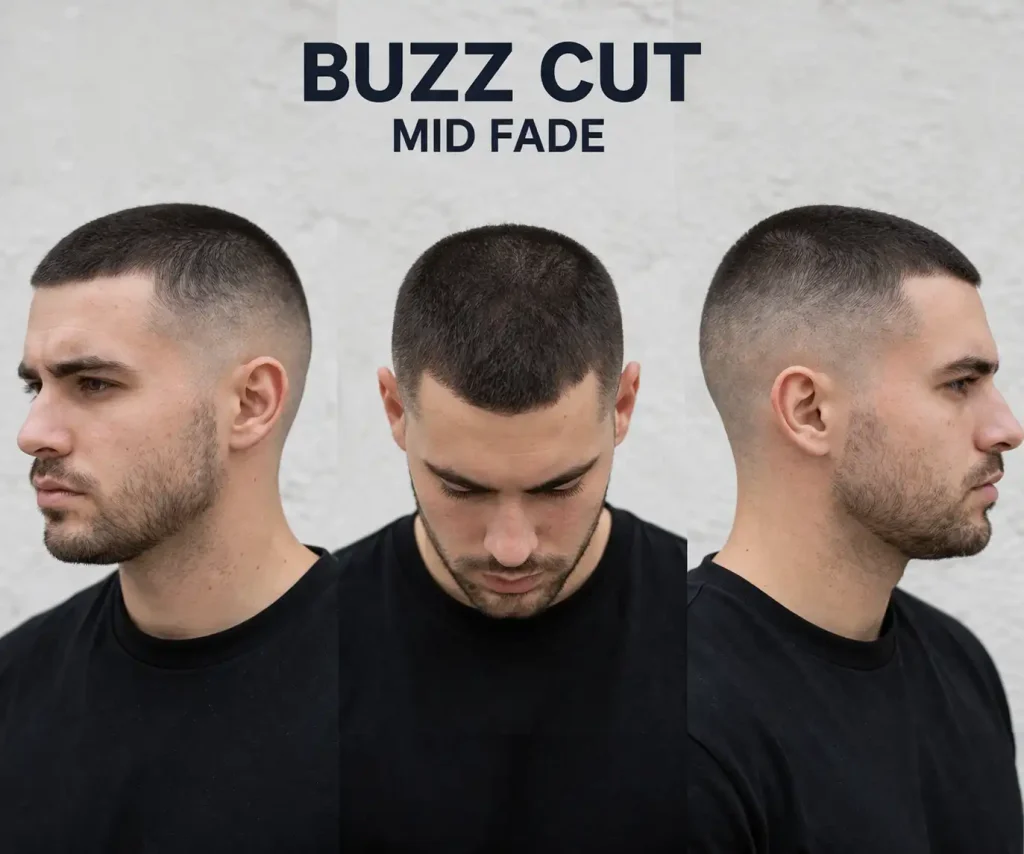
The buzz cut mid fade is minimal and low-maintenance. The top remains short and uniform, while the fade adds structure and dimension. This style is ideal for men who prefer simplicity without sacrificing a clean appearance. It requires minimal styling, though regular trims are necessary to maintain the fade’s sharpness.
Undercut Mid Fade
An undercut mid fade blends two bold techniques. The sides are faded while maintaining a distinct separation from the longer top. This style creates dramatic contrast and works well with slick backs or long textured tops. It’s best suited for men who want a modern, statement-making haircut.
Comb Over Mid Fade
The comb over mid fade delivers a refined and versatile appearance. The top is styled to one side, creating structure and direction. This variation suits professional environments while remaining stylish. A light pomade or styling cream keeps the part defined without stiffness.
Mid Fade With Design
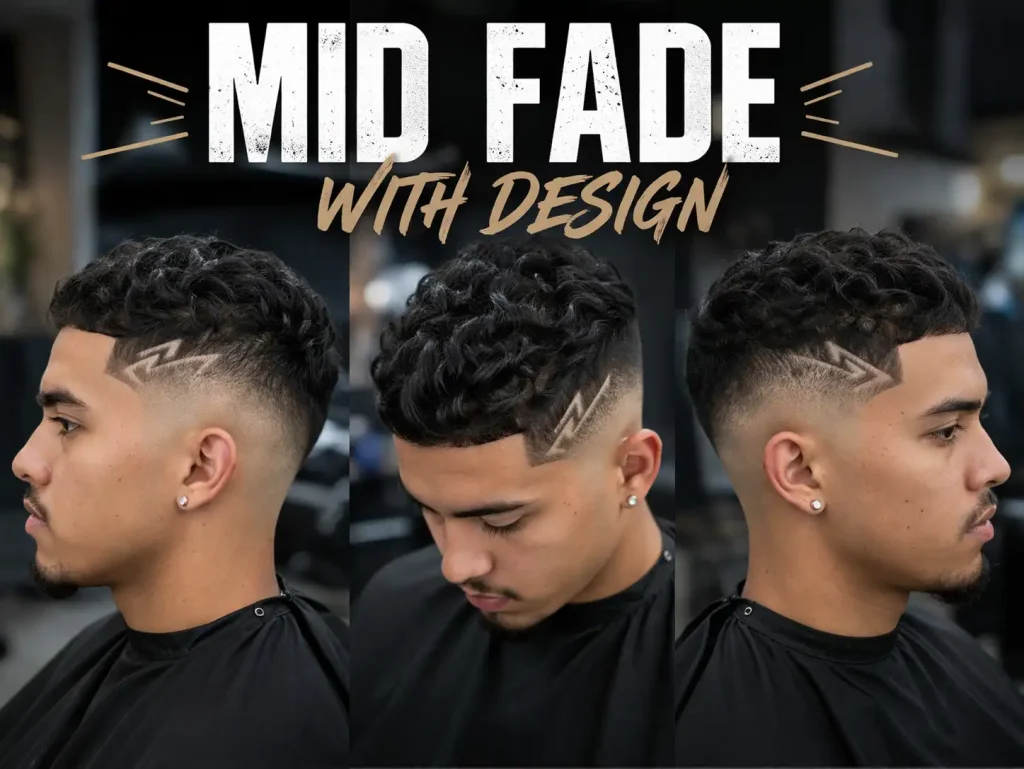
A mid fade with design incorporates shaved lines or patterns into the faded area. This adds personality and creativity while maintaining the clean structure of the fade. Designs can be subtle or bold, depending on preference. Frequent touch-ups keep the pattern sharp and visible.
Mid Fade With Long Top
The mid fade with long top keeps significant length above while tapering the sides. This allows for multiple styling options, including messy texture, slick backs, or tied-back looks. It works best for thicker hair types and requires styling products for control and shape.
Short Crop Mid Fade
A short crop mid fade features a neat, textured top with slightly shorter length at the front. It’s clean, practical, and easy to manage. This variation works well for straight or slightly wavy hair and requires minimal daily styling.
Tapered Neckline Mid Fade
The tapered neckline mid fade focuses on a softer finish at the back of the neck rather than a sharp squared edge. This creates a natural, subtle transition as the haircut grows out. It’s ideal for men who prefer a clean but less dramatic finish and want a fade that ages gracefully between trims.
How a Mid Fade Is Structured

Understanding how a mid fade haircut is built gives you better control over the final result and helps you communicate clearly with your barber. The structure of the fade determines how sharp, subtle, or dramatic the cut appears.
Temple Starting Point
A true mid fade begins around the temple area, roughly between a low fade (near the ear) and a high fade (closer to the crown). The placement is critical because it defines the balance of the haircut. Starting too low turns it into a low fade, while starting too high shifts it toward a high fade. Proper temple placement ensures proportion and symmetry.
Blending Gradient
The key to a strong mid fade is the blending gradient. The hair transitions gradually from very short at the bottom to longer as it moves upward. A smooth gradient creates a clean, professional appearance. Harsh lines or uneven blending can ruin the look, so precision in fading technique is essential.
Clippers & Guard Numbers
Barbers typically use clippers with different guard numbers to achieve the fade. For example, a fade might begin with no guard or a #0 at the base, moving upward through #1, #2, or higher depending on the desired length. The top length remains significantly longer to create contrast. Clear communication about guard preferences ensures the result matches your expectations.
Skin vs Shadow Fade
A skin mid fade blends down to bare skin at the bottom, creating high contrast and a sharper finish. A shadow fade keeps slight stubble at the base for a softer, more subtle look. The choice depends on personal preference, workplace requirements, and maintenance commitment.
Neckline Finish
The neckline finish completes the haircut. It can be tapered for a natural grow-out effect or squared for a sharper appearance. A tapered neckline looks more subtle and ages better between trims, while a squared neckline offers a crisp, defined edge.
When these structural elements are executed properly, the mid fade appears balanced, clean, and professionally crafted rather than simply short on the sides.
Mid Fade vs Other Fade Types (Comparison Hub)
Understanding how the mid fade haircut compares to other fade variations helps you choose the right style for your face shape, lifestyle, and maintenance preferences. Below is a detailed breakdown of how the mid fade differs from other popular fade types.
Mid Fade vs Low Fade
A mid fade starts around the temples, creating a balanced and noticeable transition. A low fade begins closer to the ear and neckline, offering a more subtle and conservative look. Low fades are ideal for men who prefer minimal contrast, while mid fades provide stronger structure and definition without being extreme.
| Feature | Mid Fade | Low Fade |
| Height | Starts at temples | Starts just above ears |
| Sharpness | Moderate contrast | Subtle and soft |
| Maintenance | Every 2–3 weeks | Every 3–4 weeks |
| Best Face Shape | Round, square, oval | Oval, long |
| Professional Suitability | Highly professional | Very conservative |
Mid Fade vs High Fade
A high fade begins much closer to the crown, creating a bold and dramatic look. The mid fade sits lower and offers a more balanced transition. High fades are sharper and edgier, while mid fades provide versatility across different environments.
| Feature | Mid Fade | High Fade |
| Height | Mid-temple level | Near upper sides |
| Sharpness | Balanced | Very sharp |
| Maintenance | Every 2–3 weeks | Every 2 weeks |
| Best Face Shape | Round, square | Oval, strong jawlines |
| Professional Suitability | Safe for most workplaces | Depends on industry |
Mid Fade vs Taper
A taper gradually shortens the hair near the neckline and sideburns without dramatically changing the side length. A mid fade removes more hair and creates visible contrast. Tapers are subtle, while mid fades are more structured and modern.
| Feature | Mid Fade | Taper |
| Height | Temple area | Only sideburns & neckline |
| Sharpness | Noticeable contrast | Very soft transition |
| Maintenance | Every 2–3 weeks | Every 3–4 weeks |
| Best Face Shape | Most shapes | Long, oval |
| Professional Suitability | Modern professional | Extremely conservative |
Mid Fade vs Burst Fade
A burst fade curves around the ear in a circular pattern, often leaving more length at the back. It is commonly paired with mohawks or mullets. A mid fade blends straight across the sides for a cleaner, more traditional structure.
| Feature | Mid Fade | Burst Fade |
| Height | Straight temple line | Circular around ear |
| Sharpness | Structured | Creative contrast |
| Maintenance | Moderate | Moderate to high |
| Best Face Shape | Round, square | Oval, diamond |
| Professional Suitability | Workplace friendly | More trend-focused |
Mid Fade vs Drop Fade
A drop fade follows the natural curve of the head, dipping lower behind the ear. It creates a rounded silhouette. The mid fade maintains a straighter blend across the sides, giving it a cleaner profile.
| Feature | Mid Fade | Drop Fade |
| Height | Straight across temples | Drops behind ear |
| Sharpness | Balanced | Slightly dramatic curve |
| Maintenance | Every 2–3 weeks | Every 2–3 weeks |
| Best Face Shape | Round, square | Oval, diamond |
| Professional Suitability | Very adaptable | Depends on styling |
The mid fade haircut stands out because it offers balance. It delivers noticeable structure without the extreme boldness of a high fade or burst fade, while remaining more modern and defined than a taper. That flexibility is what makes it one of the most universally appealing fade styles available today.
The Psychology of the Mid Fade
A mid fade haircut does more than shape your hair — it shapes perception. The way a haircut is structured influences how others interpret your personality, grooming standards, and attention to detail.
Clean Image
The sharp blending and defined temple line of a mid fade project a clean and controlled image. It signals that you care about maintenance and presentation. Because the fade sits in the middle range — not too subtle and not too extreme — it communicates balance and discipline without appearing overly flashy.
Detail-Oriented Personality
A properly executed mid fade requires precision in blending and symmetry. Choosing this style often reflects a detail-oriented mindset. The structured gradient and crisp lines suggest that you appreciate refinement and intentional grooming rather than casual or unplanned styling.
Confidence
The mid fade adds visible contrast around the sides, drawing attention to facial structure. This structured framing enhances jawlines and sharpens overall appearance, which naturally boosts visual confidence. It’s a haircut that stands out subtly — not loud, but noticeable.
Modern Grooming Mindset
Opting for a mid fade reflects a modern approach to grooming. It blends traditional barbering technique with contemporary style trends. The result is a look that feels current without being experimental, making it a strong choice for men who value staying updated while maintaining sophistication.
Exactly What to Tell Your Barber
Walking into a barbershop with a clear request ensures your mid fade haircut turns out exactly how you expect. Being specific about length, blending, and finish prevents miscommunication.
Guard number example:
Tell your barber how short you want the bottom of the fade. For example, you might say you prefer a #0 or skin at the base, blending into a #1 or #2 guard as it moves upward. If you do not want it too tight, specify that clearly.
Blending preference:
Ask for a smooth gradient blend rather than a harsh line. If you prefer a sharper, more defined contrast, mention that you want visible separation between the sides and top.
Skin vs taper:
Clarify whether you want a skin mid fade (blended down to bare skin) or a shadow fade (slight stubble at the base). This affects both appearance and maintenance frequency.
Length on top:
Be precise about how much length you want left on top. Mention whether you plan to style it textured, slicked back, or natural. Bringing a reference photo can help align expectations.
Example script block:
“I’d like a mid fade starting at the temples, skin at the bottom blending into a #1, with about three inches left on top for texture. Please keep the blend smooth and taper the neckline.”
Clear communication transforms a good haircut into a precise one.
Barber Checklist (Save This Before Your Cut)
- Fade type: Skin / Shadow
- Fade height: Mid (temples)
- Guard: #0 → #1 → #2
- Top length: (mention inches)
- Style goal: Textured / Slick / Natural
- Neckline: Tapered or square
How to Style a Mid Fade Haircut
A mid fade looks its best when styled properly. The product and technique you use should match your hair type and desired finish.
Best Products (Pomade, Clay, Cream)
Choose products based on texture and finish. Pomade provides shine and control, ideal for slick backs or comb overs. Matte clay adds volume and texture without shine. Styling cream offers lightweight hold for natural, flexible movement.
Blow-Drying Technique
For volume, apply a pre-styler and blow-dry while lifting the hair upward or backward with a brush. Direct airflow toward the roots for lift. Blow-drying adds structure and helps maintain shape throughout the day.
Styling for Curly Hair
Use a curl-enhancing cream to define curls without stiffness. Avoid heavy pomades that flatten texture. Let curls air-dry slightly before diffusing for controlled volume.
Styling for Thick Hair
Thick hair benefits from texturizing clay or medium-hold pomade. Apply product evenly and work it through from roots to ends to prevent clumping.
Achieving Matte vs Shiny Finish
For a natural, modern look, choose matte products. For a classic or polished appearance, select a medium-shine pomade. The finish significantly changes how formal or casual your mid fade appears.
How Long Does a Mid Fade Last?
A mid fade haircut typically maintains its sharp appearance for about two to three weeks, depending on hair growth speed and fade type.
Week 1: Sharp & Crisp
The fade lines are clean, the gradient is smooth, and contrast is most noticeable. This is when the haircut looks its freshest.
Week 2: Slight Softening
Edges begin to soften slightly. The overall structure remains intact but loses some sharpness.
Week 3: Noticeable Blend Blur
The fade starts blending naturally as hair grows. The contrast becomes less defined, especially around the temples and neckline.
Week 4: Time for a Trim
At this stage, the fade looks grown out. A maintenance cut restores structure and sharpness.
How often to trim:
Every 2–3 weeks keeps the fade clean and defined.
Maintenance cost range:
Pricing varies by location, but fades typically cost more than basic trims due to precision work.
DIY touch-up warning:
Attempting to fix a fade at home without experience can create uneven blending. Professional tools and technique make a significant difference.
Regular upkeep preserves the clean structure that defines a mid fade.
| Factor | Details |
|---|---|
| Duration | 2–3 weeks |
| Trim time | 20–40 minutes |
| Cost (avg) | $15–$50 |
| Maintenance level | Medium |
Mistakes That Ruin a Mid Fade
Even a popular haircut like the mid fade can go wrong if key details are ignored.
Going too high: Starting the fade too close to the crown turns it into a high fade and changes facial balance.
Ignoring head shape: Fade placement should complement your natural contours.
Wrong styling products: Heavy products can flatten texture or create unwanted shine.
Skipping trims: Letting the fade grow out too long removes definition.
Not blending properly: Harsh lines or uneven transitions disrupt the clean gradient that defines a proper mid fade.
Attention to these details ensures the haircut remains structured and intentional.
When a Mid Fade May Not Be the Best Choice
While highly versatile, the mid fade haircut is not ideal for everyone.
Extremely long face shapes: Adding too much height on top may exaggerate facial length. A lower fade might be more suitable.
Severe hair thinning: High contrast between faded sides and thinning top can make hair loss more noticeable.
Specific professional restrictions: Certain conservative environments may prefer subtle tapers instead of visible fades.
Mid Fade Haircut FAQs
Is a mid fade haircut good for beginners?
Yes, a mid fade is great for beginners because it’s balanced, easy to maintain, and works with most hair types and styles.
Does a mid fade make your face look slimmer?
Yes, it reduces bulk on the sides and adds height on top, which helps make the face appear slimmer.
Which is better: mid fade or taper fade?
A mid fade is more modern and defined, while a taper fade is more subtle and conservative. The better choice depends on your style preference.
Is mid fade high maintenance?
No, it’s medium maintenance. A trim every 2–3 weeks keeps it looking sharp.
Can you get a mid fade with long hair?
Yes, a mid fade works well with long hair on top and can be styled in multiple ways like slick back or textured.
Is mid fade suitable for school or office?
Yes, it’s clean and balanced, making it suitable for both professional and casual environments.
Does mid fade work with a beard?
Yes, it blends well with a beard and helps create a more structured and masculine look.
What is the difference between mid fade and skin fade?
Mid fade refers to the height, while skin fade refers to how short the fade goes. A mid fade can also be a skin fade.
How do I ask for a mid fade at the barber?
Ask for a mid fade starting at the temples, with your preferred length on top and smooth blending.
Is mid fade good for a receding hairline?
Yes, it shifts attention upward and can make the hairline less noticeable when styled properly.
How long does a mid fade take?
It usually takes 20–40 minutes depending on the style and detail.
Can a mid fade go wrong?
Yes, if the fade is uneven or poorly blended, it can affect the overall look, so clear instructions matter.
Related Fade Styles You Should Explore
- Burst Fade (best for bold styles)
- Low Fade (more subtle and conservative)
- High Fade (sharp and edgy look)
- Taper Fade (clean and natural finish)
Conclusion
The mid fade haircut remains one of the most versatile and modern men’s styles because it balances structure, flexibility, and clean presentation. Whether you prefer a textured top, sharp skin fade, or beard pairing, there is a variation that fits your face shape and lifestyle.
Save a style reference that matches your goals, communicate clearly with your barber, and do not hesitate to experiment with different lengths or finishes. The right mid fade can elevate your overall look with precision and confidence.