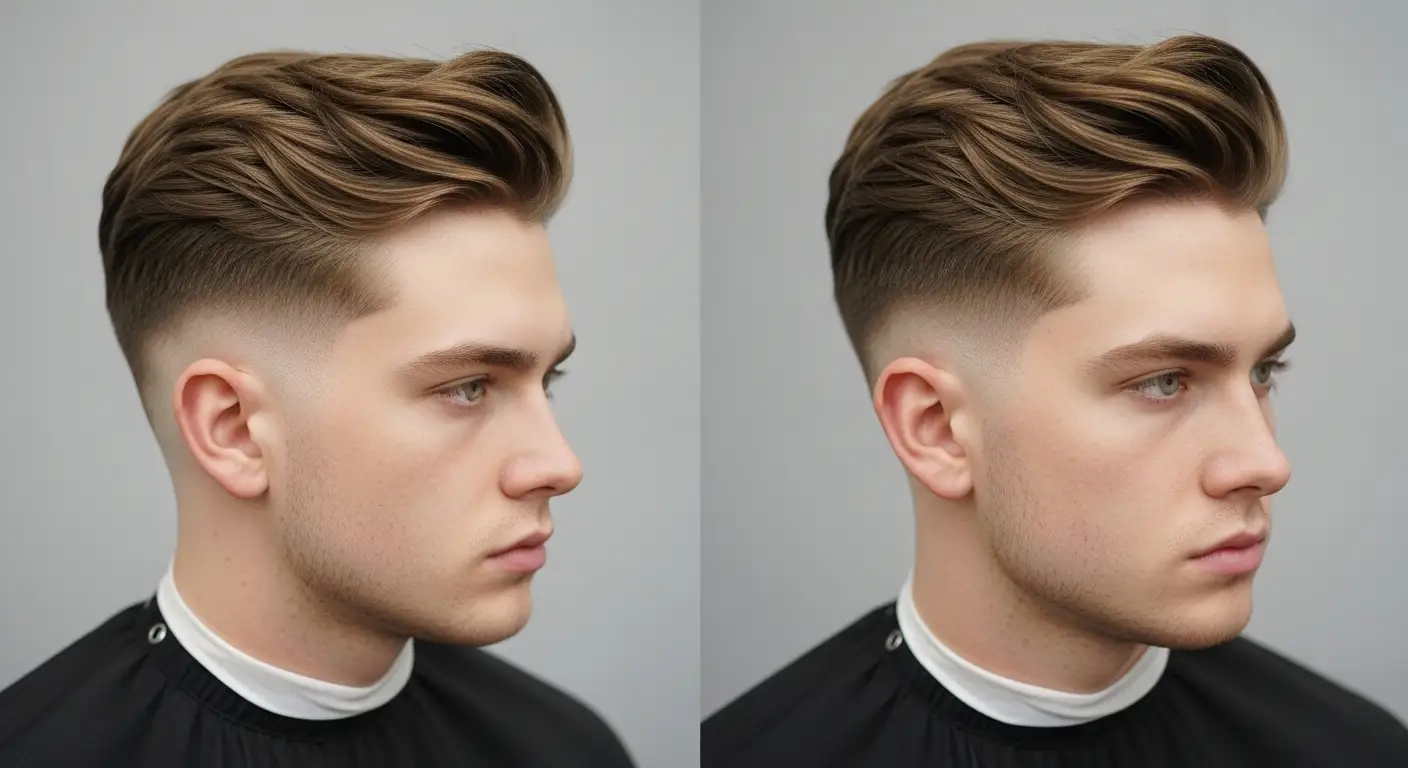
The long on top short on sides haircut is one of the most popular men’s hairstyles in 2026 — but choosing the right version makes all the difference.
Some go too short on top and lose styling flexibility. Others keep too much bulk on the sides, ruining the clean contrast that makes this haircut look sharp. And many don’t realize that fade height, top length, and texture placement can completely change how their face shape and hair type look.
That’s why this guide isn’t just another list of haircut ideas.
Inside, you’ll discover the best long on top short on sides variations, how to choose the right version for your face shape and hair type, what to tell your barber for a perfect cut, and how to style it step-by-step so it actually looks good in real life — not just in photos.
Whether you want a clean professional look, a modern textured style, or a bold high-contrast fade, this guide will help you choose the version that works for you — and avoid the mistakes that ruin this haircut for most men.
Quick Answer
The long on top short on sides haircut is a men’s hairstyle where the top is kept longer (usually 2–6 inches) while the sides and back are cut short using a fade, taper, or undercut. It creates contrast, adds volume, and enhances facial structure. This haircut suits most face shapes, works with different hair types, and can be styled for both professional and casual looks with minimal daily effort.
You May Also Like:
Best Older Mens Hairstyles 2026 for Men Over 50
Best Soccer Player Haircuts for Men 2026
15 Long Top, Short Sides Men’s Haircuts 2026
Best Fringe Haircuts Men 2026 Modern Styles You Must Try
Best Fringe Haircuts Men 2026 Modern Styles You Must Try
What Is a Long on Top Short on Sides Haircut?
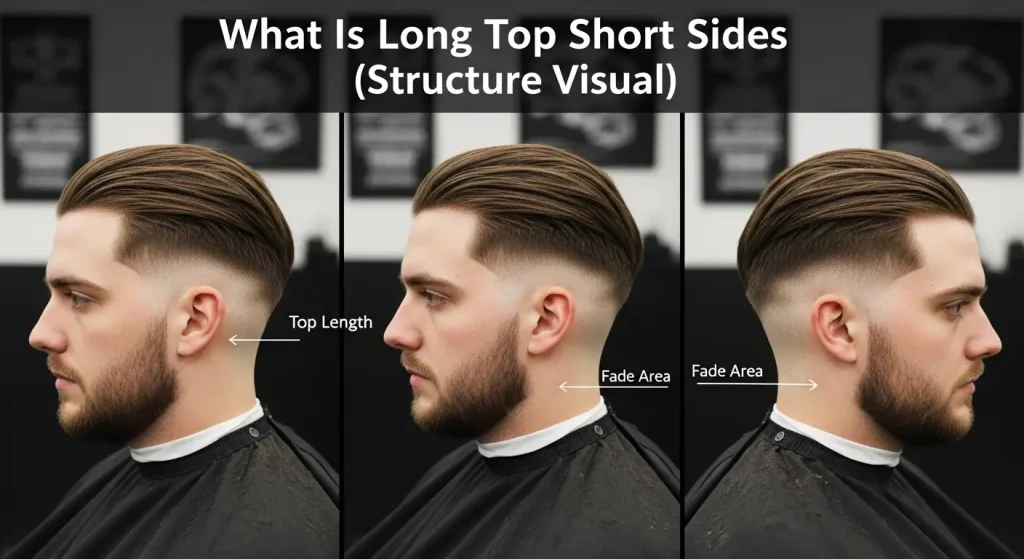
A long on top short on sides haircut is a men’s hairstyle where the hair on the top is kept significantly longer than the sides and back, which are trimmed short using a fade, taper, or undercut. It creates contrast, volume, and a clean, modern silhouette.
Core Structure Explained
The haircut is built on contrast and proportion:
- Top: Usually 2–6 inches in length, depending on style (quiff, pompadour, messy, slick back).
- Sides: Clipped short using guards, often blended gradually.
- Back: Tapered or faded to maintain a clean neckline.
- Transition Area: The blend between top and sides defines how sharp or soft the look feels.
The stronger the contrast, the bolder the haircut appears. A softer blend creates a more professional and conservative look.
Difference Between Fade, Taper, and Undercut
Understanding this difference is critical when asking your barber:
Fade
- Gradual transition from very short (sometimes skin) to longer hair.
- Can be low, mid, or high.
- Sharp, modern, high-contrast look.
Taper
- Subtle shortening around sideburns and neckline.
- More conservative.
- Ideal for professional environments.
Undercut
- No gradual blending.
- Sides are clipped very short while the top remains disconnected.
- Bold and edgy appearance.
Why It Never Goes Out of Style
This haircut survives trends because it:
- Enhances the jawline
- Adds height and structure to the face
- Works for almost all face shapes
- Can be styled formal or casual
- Adapts to different hair types
It balances clean structure + creative styling freedom, which is why it remains one of the most requested men’s haircuts year after year.
The Evolution of Long Top Short Sides
Military roots
The foundation of the long on top short on sides haircut traces back to military grooming standards. Soldiers were required to keep the sides and back extremely short for hygiene and uniformity, while leaving slightly more length on top. This created a clean, structured, masculine silhouette that later influenced civilian barbering styles.
90s undercut trend
In the 1990s, the undercut brought dramatic contrast into mainstream fashion. The sides were clipped very short or shaved, while the top remained significantly longer and often styled with volume. This bold disconnect pushed the “long top, short sides” structure into youth culture and fashion-forward communities.
Fade culture rise
The 2000s and 2010s saw the explosion of fade culture in barbershops. Precision blending techniques evolved, introducing low, mid, high, and skin fades. Social media amplified barber artistry, turning the gradual transition between lengths into a defining feature of modern men’s grooming.
Why it dominates modern men’s grooming
Today, the haircut dominates because it balances structure with versatility. It can be conservative with a low taper or bold with a skin fade. It works in corporate offices, creative industries, and casual environments. Its adaptability keeps it relevant year after year.
Why This Haircut Is So Popular
Jawline enhancement
Shorter sides remove bulk around the face, naturally sharpening facial angles. The contrast draws attention upward, creating a cleaner outline that emphasizes the jaw and cheekbones.
Masculinity perception
Studies in grooming psychology suggest that defined edges and structured silhouettes are associated with strength and confidence. The tight sides combined with controlled volume on top project a deliberate, put-together appearance.
Height illusion effect
Volume on top elongates the face visually. This subtle vertical lift makes men appear taller and more proportionate, especially beneficial for rounder or shorter face shapes.
Confidence & first impression impact
First impressions are heavily influenced by grooming. A well-executed long top short sides haircut signals attention to detail, style awareness, and self-care. That combination often translates into higher perceived confidence and professionalism.
18 Best Long Top Short Sides Haircut Variations
Each style below includes who it suits, maintenance level, professional rating, and boldness level to help you choose the right version for your lifestyle and face shape.
1. Low Fade Long Top
Who it suits: Beginners, office professionals, most face shapes
Maintenance level: Medium
Professional rating: High
Boldness level: Moderate
A subtle fade that starts low near the ears. Clean, versatile, and safe for work environments.
2. Mid Fade Long Top
Who it suits: Oval and square faces
Maintenance level: Medium
Professional rating: Medium–High
Boldness level: Moderate
Balanced contrast with a noticeable but not dramatic transition.
3. High Fade Long Top
Who it suits: Men wanting sharp contrast
Maintenance level: High
Professional rating: Medium
Boldness level: High
The fade starts higher on the head, creating a strong, modern silhouette.
4. Skin Fade Long Top
Who it suits: Thick hair, bold personalities
Maintenance level: High
Professional rating: Medium
Boldness level: Very High
Sides are faded down to the skin for maximum contrast and sharpness.
5. Taper Long Top
Who it suits: Corporate professionals
Maintenance level: Low–Medium
Professional rating: Very High
Boldness level: Low
A subtle, gradual shortening around the neckline and sideburns. Conservative and timeless.
6. Undercut Long Top
Who it suits: Fashion-forward styles
Maintenance level: Medium
Professional rating: Medium
Boldness level: High
Little to no blending between top and sides. Clean, edgy, and bold.
7. Textured Top with Short Sides
Who it suits: Thick or fine hair
Maintenance level: Medium
Professional rating: High
Boldness level: Moderate
Layered top adds movement and volume while keeping sides tight.
8. Quiff with Short Sides
Who it suits: Round or oval faces
Maintenance level: Medium–High
Professional rating: High
Boldness level: High
Hair is styled upward and slightly back for height and structure.
9. Pompadour with Short Sides
Who it suits: Thick hair, square faces
Maintenance level: High
Professional rating: Medium
Boldness level: Very High
High volume on top styled back dramatically for a statement look.
10. Slick Back Long Top
Who it suits: Straight or wavy hair
Maintenance level: Medium
Professional rating: Very High
Boldness level: Moderate
Hair is combed straight back with shine or matte finish.
11. Messy Top with Short Sides
Who it suits: Casual lifestyles
Maintenance level: Low–Medium
Professional rating: Medium
Boldness level: Moderate
Relaxed and textured with natural movement.
12. Comb Over with Short Sides
Who it suits: Professional settings
Maintenance level: Medium
Professional rating: Very High
Boldness level: Low–Moderate
Side-swept styling creates a polished, structured look.
13. Curly Long Top Short Sides
Who it suits: Naturally curly hair
Maintenance level: Medium
Professional rating: Medium–High
Boldness level: Moderate
Keeps curls defined on top while controlling bulk on the sides.
14. Wavy Long Top Short Sides
Who it suits: Natural waves
Maintenance level: Medium
Professional rating: High
Boldness level: Moderate
Enhances texture while maintaining clean edges.
15. Fringe Version
Who it suits: Larger foreheads, youthful styles
Maintenance level: Medium
Professional rating: Medium
Boldness level: Moderate
Hair falls forward slightly while sides remain tight.
16. Side Part Variation
Who it suits: Formal environments
Maintenance level: Medium
Professional rating: Very High
Boldness level: Low
Defined part line adds structure and sophistication.
17. Disconnected Undercut
Who it suits: Bold fashion styles
Maintenance level: Medium–High
Professional rating: Medium
Boldness level: Very High
Sharp separation between top and sides without blending.
18. Modern Professional Version
Who it suits: Office professionals, executives
Maintenance level: Medium
Professional rating: Very High
Boldness level: Moderate
| Style | Maintenance | Boldness | Best For |
|---|---|---|---|
| Low Fade | Medium | Moderate | Office |
| High Fade | High | Bold | Sharp look |
| Taper | Low | Safe | Professional |
Long Top Short Sides by Face Shape
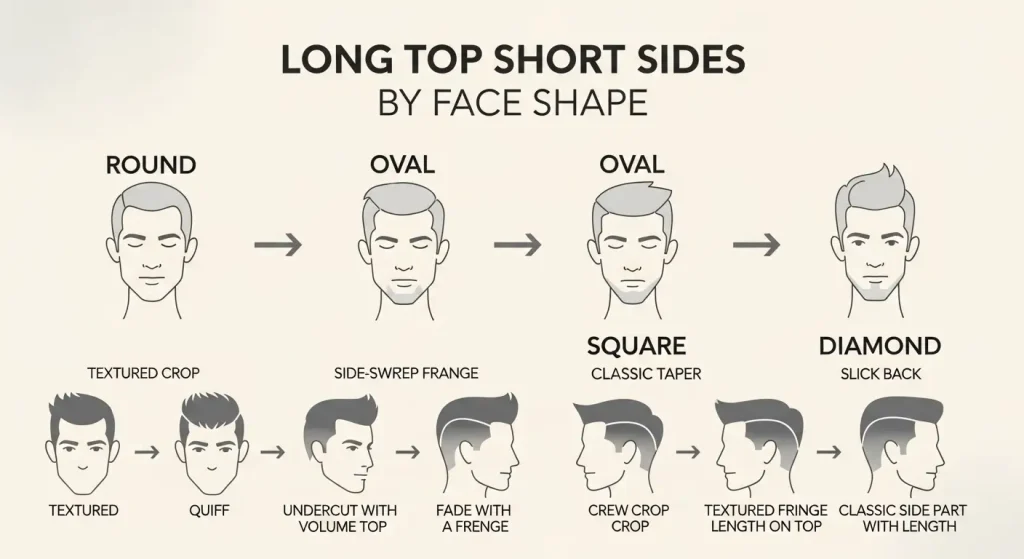
Round face slimming strategy
Round faces benefit from added height and reduced width. Keep the sides tighter with a mid or high fade to slim the face, and add volume on top to elongate proportions. Avoid excessive bulk on the sides, as it makes the face appear wider.
Oval face versatility
Oval faces are the most adaptable. Almost every variation works, from low fades to textured quiffs. Focus on maintaining balanced proportions rather than extreme contrast to preserve natural symmetry.
Square face sharp angles
Square faces already have strong jawlines, so structured styles like pompadours or slick backs enhance natural definition. A clean fade keeps the look sharp and masculine without overpowering facial angles.
Diamond face balancing method
Diamond faces have wider cheekbones and a narrower forehead and chin. Add moderate volume on top and avoid extremely high fades. A softer taper helps balance facial width without exaggerating angles.
Heart-shaped face correction
Heart-shaped faces benefit from controlled volume. Avoid very high volume pompadours, and instead choose textured or side-part variations. A low fade or taper keeps the look proportional and less top-heavy.
Long Top Short Sides for Different Hair Types
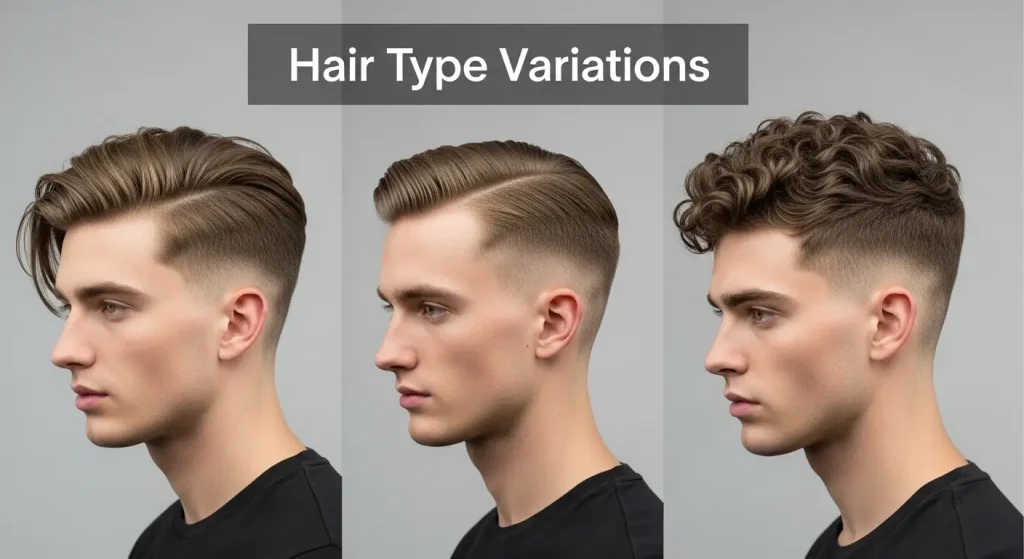
Thick hair
Thick hair works exceptionally well with this haircut. Barbers can remove bulk through texturizing while keeping volume on top. Fades help control heaviness around the sides.
Fine hair
Fine hair benefits from shorter top lengths with light texture. Use matte styling products to create the illusion of density without weighing hair down.
Thin hair
Thin hair requires careful blending. Keep sides tight but not too high, and avoid extreme contrast that exposes scalp visibility.
Curly hair
Curly hair thrives with controlled sides and defined curls on top. A fade helps manage volume while allowing natural texture to stand out.
Coarse hair
Coarse hair needs strong hold styling products. Structured styles like quiffs or pompadours help control thickness while maintaining shape.
Receding hairline strategy
A slightly longer top styled forward or textured can soften hairline recession. Avoid sharp high fades that exaggerate temple exposure.
Long Top Short Sides for Thinning or Receding Hair
Volume illusion tips
Blow-dry hair upward using lightweight products to create vertical lift. Texture reduces scalp visibility and makes hair appear fuller.
Best fade placement
Low to mid fades are safer choices. Extremely high fades can make thinning areas more noticeable.
What to avoid
Avoid slicked-back styles that flatten hair and expose thinning spots. Heavy, shiny products also increase scalp contrast.
Execution & Barber Strategy
How to Ask Your Barber for the Perfect Cut
Guard numbers explained
Sides are typically cut using clipper guards ranging from #0 to #4. Lower numbers create tighter fades, while higher numbers leave more length.
Fade height levels
Specify whether you want a low, mid, or high fade. This determines where the shortest part begins on the sides.
Top length in inches
Be clear about the desired top length, usually between 2–6 inches depending on style.
Blending instructions
Request a smooth transition if you want a classic look, or a stronger contrast for a bold appearance.
Photo reference strategy
Bring 1–2 clear reference photos that match your hair type and face shape to avoid miscommunication.
What NOT to say
Avoid vague instructions like “just make it short.” Be specific about fade height, length, and styling preference.
Fade vs Taper vs Undercut
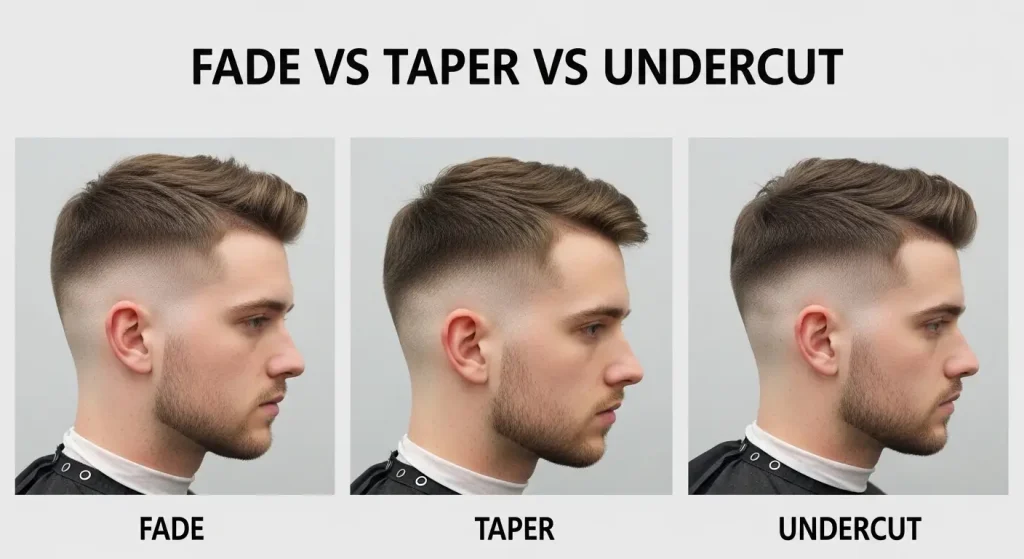
Maintenance difference
Fades require more frequent touch-ups. Tapers last longer. Undercuts fall somewhere in between depending on contrast.
Grow-out behavior
Fades lose sharpness quickly. Tapers grow out more naturally. Undercuts maintain structure but show length differences faster.
Professional appearance
Tapers are most conservative. Low fades are office-friendly. High fades and disconnected undercuts appear bolder.
Sharpness level
Skin fades and undercuts create the strongest contrast. Tapers offer softer transitions.
Best for beginners
Low fades and tapers are safest starting points for first-timers.
Can You Do It at Home?
Clippers needed
Use adjustable clippers with multiple guard sizes for proper blending.
Mirror setup
A dual-mirror setup helps you see the back clearly and avoid uneven cuts.
Blending tips
Start with a higher guard and gradually work shorter to prevent harsh lines.
Risk factors
Uneven fading and harsh transition lines are common beginner mistakes.
When to avoid DIY
If you want a skin fade, sharp blend, or complex texture work, it’s better to visit a professional barber.
Step-by-Step Styling Guide
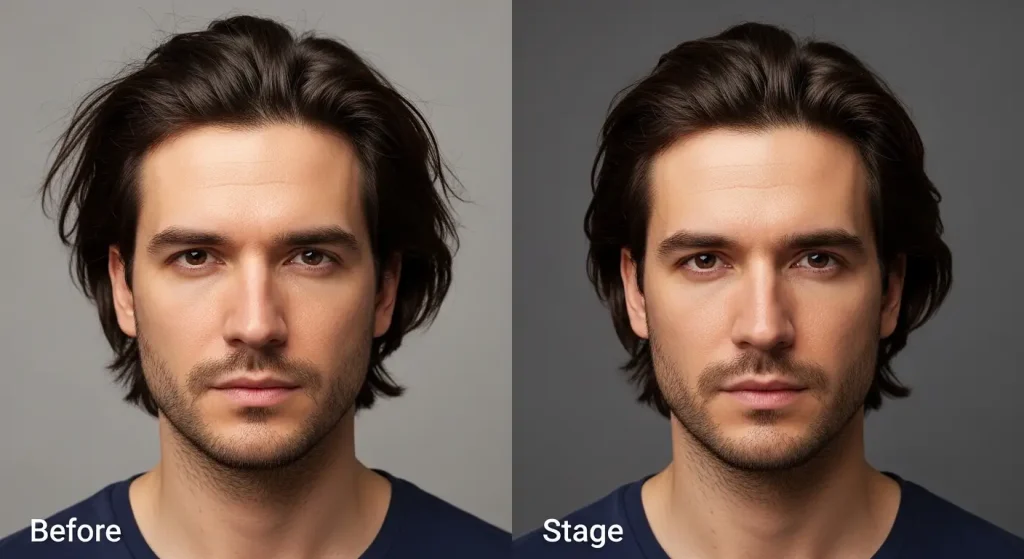
Blow dry technique
Start with slightly damp hair. Apply a small amount of pre-styler or lightweight product, then use a blow dryer while lifting hair upward with your fingers or a round brush. Direct heat from front to back to build structure and lock in volume.
Volume method
Focus on lifting at the roots rather than the tips. Blow-dry against the natural direction first, then style it into place. This creates longer-lasting height and prevents the top from collapsing during the day.
Direction control
Decide early whether you want a forward fringe, side part, slick back, or quiff. Use a comb for cleaner lines or fingers for a textured finish. Consistent direction keeps the haircut intentional rather than messy.
Matte vs shine finish
Matte products create a natural, modern look and hide scalp visibility. Shine products give a classic, polished appearance ideal for formal settings. Choose based on occasion and hair density.
Best Products Based on Hair Type
Fine hair → lightweight clay
Lightweight matte clay adds texture and grip without weighing hair down, making it appear fuller.
Thick hair → strong hold pomade
Strong hold pomade controls volume and keeps structured styles like pompadours and slick backs in place.
Curly hair → curl cream
Curl cream defines curls while reducing frizz, allowing the top to look controlled but natural.
Oily scalp → matte product
Matte products reduce shine and absorb excess oil, helping maintain a fresh appearance throughout the day.
Office vs Casual vs Party Versions
Professional sleek styling
Use a low or mid fade with controlled volume on top. Comb hair neatly to the side or back with a light shine product for a clean corporate look.
Casual textured look
Apply matte clay and use fingers to create natural movement. Slight imperfection adds relaxed confidence.
Night-out high volume look
Blow-dry for maximum height and apply a stronger hold product. A sharper fade enhances contrast under evening lighting.
Beard Pairing Guide
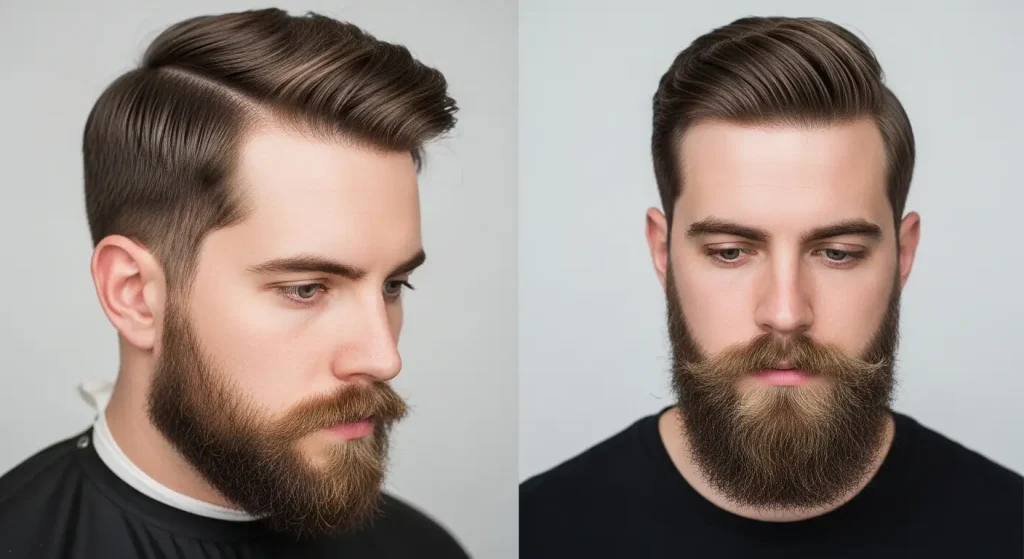
Stubble balance
Light stubble pairs well with low and mid fades, adding subtle ruggedness without overpowering the haircut.
Short boxed beard
A short boxed beard complements structured styles like quiffs and comb overs, creating balanced facial proportions.
Full beard contrast
A fuller beard pairs best with clean fades to maintain definition between hair and facial hair.
Clean shave effect
A clean shave enhances the sharpness of the haircut, especially with high fades or skin fades.
The 4-Week Maintenance Plan
Week 1 – Sharp
Fresh fade lines are crisp, and volume holds easily with minimal product.
Week 2 – Controlled growth
Sides begin to soften slightly but still look structured. Light edge-up may be optional.
Week 3 – Edge-up
The fade starts losing sharpness. A quick neckline and sideburn cleanup restores definition.
Week 4 – Full refresh
Time for a full haircut to reset contrast and maintain overall shape.
The Grow-Out Timeline Most Men Ignore
How sides grow week by week
Hair typically grows about half an inch per month. Fades lose sharpness within two to three weeks.
When it looks messy
High fades appear uneven faster than low fades. Bulk on the sides becomes noticeable around week three.
How to extend fade life
Use trimmers for minor cleanups around the neckline and sideburns. Keep styling structured to hide growth.
When to re-cut
If the contrast between top and sides disappears or styling becomes difficult, it’s time for a refresh.
Cost Breakdown (Budget vs Premium Barbers)
Average pricing
Basic long top short sides cuts vary depending on region, typically falling into standard men’s haircut pricing tiers.
Fade upcharge
Skin fades and complex blends may cost more due to precision work and additional time required.
Beard blend pricing
Combining a haircut with a beard fade or shape-up increases overall cost but enhances symmetry.
Location impact
Urban barbershops and high-end grooming studios charge more than local neighborhood barbers.
Common Mistakes That Ruin This Haircut
Over-disconnecting
Creating too much separation between the top and sides without proper blending can make the haircut look harsh and unbalanced. Unless you intentionally want a disconnected undercut, ask for a smooth transition.
Too much height
Excessive volume on top can make the hairstyle look exaggerated or unstable. Height should complement your face shape, not overpower it.
Wrong fade placement
A fade that starts too high or too low for your head shape can distort facial proportions. Always match fade height to your face shape and hair density.
Heavy products
Using thick, greasy products can flatten volume and expose scalp areas. Choose products based on your hair type and desired finish.
Ignoring face shape
Not every variation suits every face. Choosing a style without considering proportions often leads to imbalance.
Why Long Top Short Sides Remains the Most Versatile Men’s Haircut
The long top short sides haircut continues to dominate men’s grooming because it perfectly balances structure and adaptability. Few hairstyles offer the same level of customization while remaining clean, masculine, and modern.
Style flexibility
Whether you prefer a sleek office look, a textured casual finish, or a bold high-volume statement style, this haircut adapts easily. By simply changing the fade height or styling method, you can transform the entire appearance without changing the core cut.
Masculinity
The tight sides highlight facial structure, especially the jawline, while controlled volume on top adds height and presence. This contrast creates a sharp, confident silhouette that consistently ranks as one of the most attractive men’s hairstyles.
Modern appeal
From social media trends to professional settings, this haircut fits seamlessly into today’s grooming standards. It works across industries, age groups, and personal styles, making it one of the safest yet most stylish choices available.
Longevity
Unlike trend-driven cuts that fade quickly, long top short sides has evolved with time. From military roots to modern fades, it adapts without losing relevance. That adaptability is exactly why it remains a go-to haircut year after year.
Common Myths About Long Top Short Sides
“It’s high maintenance”
While sharp fades require upkeep, low fades and tapers are manageable with trims every few weeks. Styling takes only a few minutes once you know the technique.
“It only suits young men”
This haircut works for all ages. Adjusting fade height and top volume makes it suitable for both younger and mature men.
“It’s not professional”
Low fades and tapered versions are widely accepted in corporate environments. Styling determines how formal or casual it appears.
“It doesn’t work for thinning hair”
With the right fade placement and textured styling, it can actually make thinning hair appear fuller.
Should You Get Long Top Short Sides?
Face shape
Choose a variation that enhances your proportions.
Hair density
Thicker hair allows more volume, while thinner hair benefits from controlled contrast.
Work environment
Low fades and tapers are safest for professional settings.
Styling tolerance
If you prefer minimal effort, opt for textured or shorter top versions.
Maintenance commitment
Skin fades need frequent trims; tapers last longer between visits.
Budget
Regular fade maintenance may increase grooming costs over time.
FAQs
Is long top short sides professional?
Yes, it can be highly professional when styled appropriately. Low fades and tapers paired with controlled volume create a clean, polished look suitable for office and corporate environments.
Is it high maintenance?
Maintenance depends on the variation. Skin fades require frequent touch-ups, while low fades and tapers can last several weeks. Daily styling typically takes only a few minutes.
Does it suit thinning hair?
Yes, when done correctly. A low or mid fade with textured volume on top can reduce scalp visibility and create the illusion of thicker hair.
How long should the top be?
The top usually ranges from 2 to 6 inches depending on the desired style. Shorter tops are easier to manage, while longer tops allow more styling flexibility.
What guard number is best?
Guard numbers typically range from #0 to #4 on the sides. Lower guards create tighter fades, while higher guards leave more length for softer transitions.
How often should you trim?
Most men refresh the cut every 3 to 4 weeks. Skin fades may require touch-ups every 2 weeks to maintain sharpness.
Does it make you look older or younger?
It can make you look sharper and more modern. Higher volume and sharper fades often create a youthful appearance, while tapered versions appear more mature and refined.
Can older men wear it?
Absolutely. Choosing a softer taper and moderate top length makes this haircut suitable and flattering for older men as well.
Is long on top short sides attractive?
Yes, it enhances jawline, adds height, and creates a clean masculine look.
Which fade is best for beginners?
A low fade or taper is safest and most professional.
Conclusion
The long on top short on sides haircut isn’t just a trend — it’s a timeless structure that continues to evolve with modern styling, barbering techniques, and personal expression. Its strength lies in versatility. Whether you prefer a clean, professional taper, a balanced mid fade, or a bold skin fade with high volume, this haircut adapts to your face shape, hair type, and lifestyle.
The key to making it work isn’t just choosing the right variation — it’s understanding proportion, contrast, and maintenance. When the top length, fade placement, and styling method are aligned, the result is a haircut that looks sharp, intentional, and easy to manage.
More importantly, this style gives you flexibility. You can keep it polished for work, relaxed for daily wear, or elevated for special occasions — all with the same base cut. That’s what makes it one of the most reliable and high-performing men’s hairstyles today.
If you want a haircut that enhances your features, stays relevant in 2026, and works across every setting, long on top short on sides remains one of the smartest choices you can make.Choose your style, show your barber, and upgrade your look with confidence.