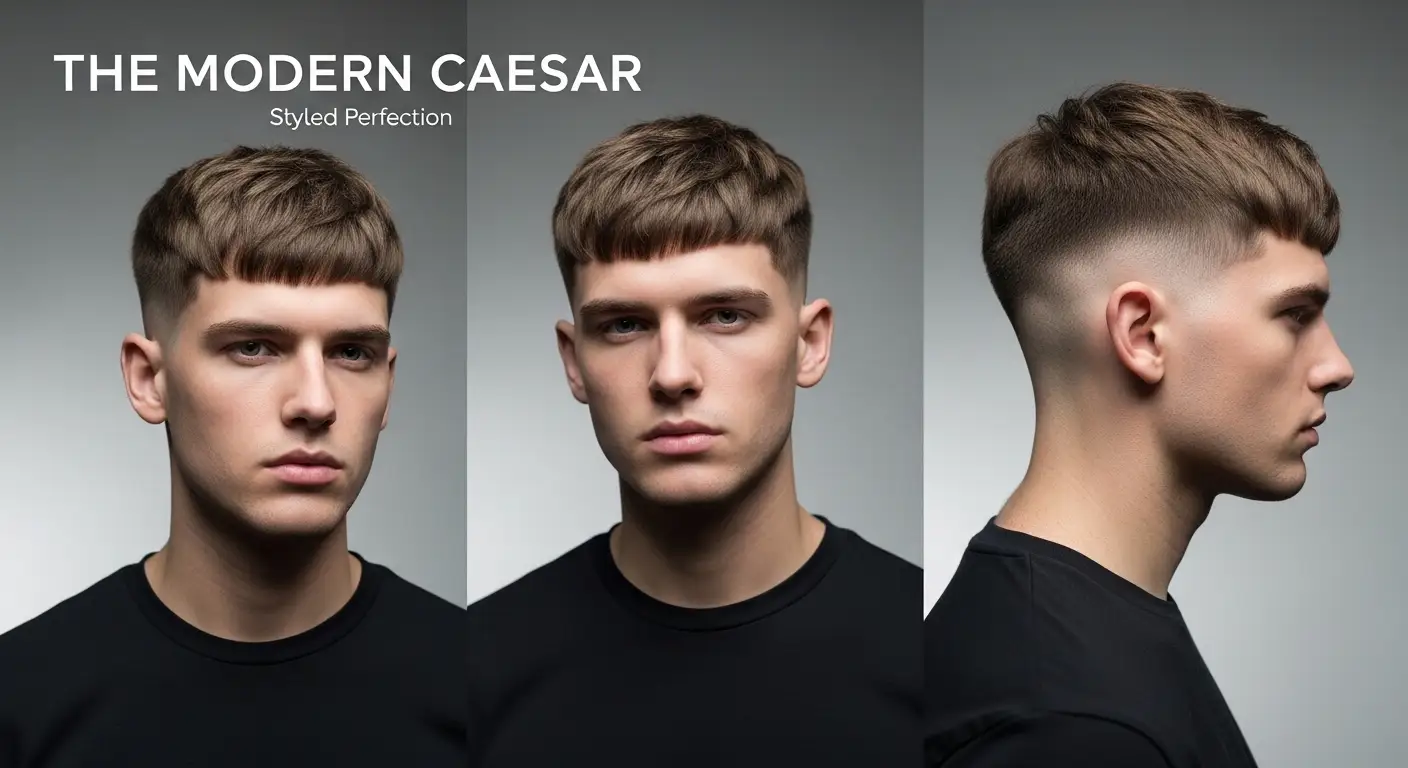
At first glance, it looks like a simple short haircut. But the truth is, small details like fringe length, fade height, and texture can completely change how it looks on your face. Get it right, and it sharpens your jawline, balances your forehead, and gives you a clean, confident appearance. Get it wrong, and it can make your face look wider, longer, or even thinner than it actually is.
That’s exactly why the Caesar haircut for men has made a massive comeback in 2026. It’s not just stylish — it’s strategic, low-maintenance, and works for everything from corporate offices to casual streetwear.
In this ultimate guide, you’ll learn exactly which Caesar haircut suits your face shape, hair type, and lifestyle — plus how to ask your barber for the perfect version so you never leave the chair disappointed again.
quick answer
A Caesar haircut is a short men’s style with a straight fringe, even length on top, and short faded or tapered sides. It’s clean, low-maintenance, and suits most face shapes.
| Style | Fringe | Texture | Maintenance |
|---|---|---|---|
| Caesar | Straight | Low–Medium | Low |
| French Crop | Uneven | High | Medium |
| Crew Cut | None | Low | Very Low |
What Is a Caesar Haircut?
A Caesar haircut is a short, structured men’s hairstyle featuring a straight, horizontal fringe across the forehead with evenly trimmed length on top. The sides are typically cut short and often blended into a fade or taper for a clean finish. The style is traditionally associated with Julius Caesar, whose forward-combed hair inspired the look.
Key Features:
- Short horizontal fringe (blunt or slightly textured)
- Even, cropped length on top
- Clean, tight sides
- Often paired with low, mid, or high fade
- Low-maintenance and face-framing
The History of the Caesar Cut – From Ancient Rome to Modern Fades
The Caesar cut traces back to Ancient Rome, where Julius Caesar was often depicted with hair brushed forward and cut short across the forehead. While historians debate whether he wore it to conceal thinning hair, the structured fringe became symbolically linked to power and authority.
The style resurfaced in the 1990s, popularized by actors and hip-hop culture, then evolved again in the 2010s with the rise of textured crops and precision fades. Modern barbers adapted the classic blunt cut by integrating low, mid, and skin fades, creating a sharper, more contemporary silhouette.
You May Also Like:
Line Up Haircut Guide for Men 2026: Styles, Trends & Tips
Best Buzz Cut for Men Styles Lengths and Tips Guide
Best Soccer Player Haircuts for Men 2026
Best Older Mens Hairstyles 2026 for Men Over 50
34 Modern Caesar Haircuts for Men
Why the Caesar Haircut Is Trending Again in 2026
The Caesar haircut is trending again because it fits the modern demand for clean, low-maintenance style. Men are moving toward minimalist grooming routines, and this structured, short cut delivers a sharp look without daily effort. It works especially well for receding hairlines by bringing hair forward naturally. It’s also corporate-friendly, easy to maintain, and influenced by Gen Z’s textured crop trend that favors natural movement over heavy styling.
The Psychology Behind the Caesar Haircut
The Caesar cut isn’t just practical — it’s visually strategic. The straight fringe helps balance a larger forehead and creates proportional harmony. Short sides enhance jawline definition, making the face appear stronger and more structured. Clean, sharp lines signal control and confidence. Because it’s neat and deliberate, the style subtly communicates discipline and masculinity without appearing aggressive or overstyled.
30+ Modern Caesar Haircut Variations
Classic Caesar Cut
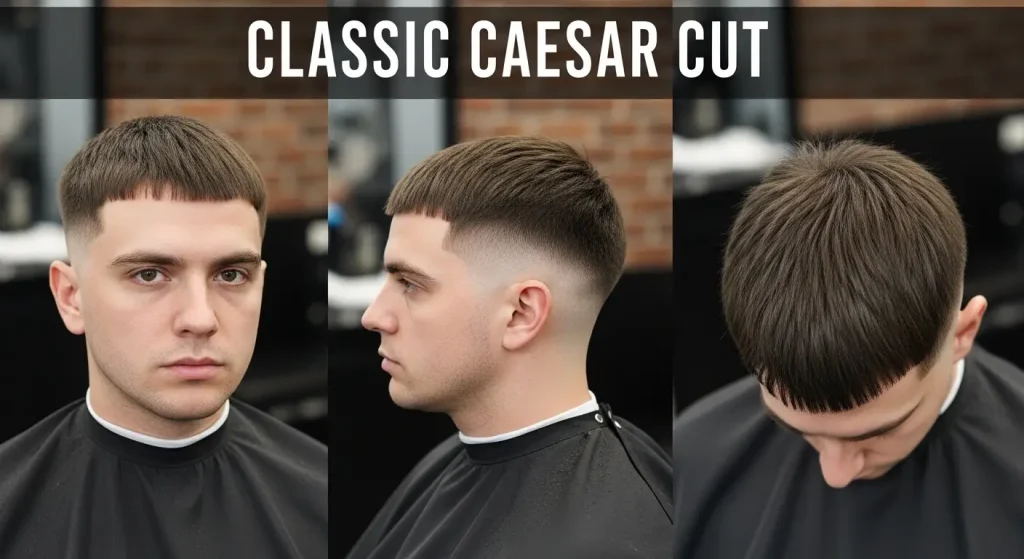
The classic Caesar cut features an even length across the top with a blunt, straight fringe and uniformly short sides. It’s structured, timeless, and low maintenance. There’s minimal fading — just a clean trim around the edges. This version works well for men who want a no-nonsense haircut that stays professional and polished. It’s especially flattering on oval and square face shapes.
Textured Caesar Cut
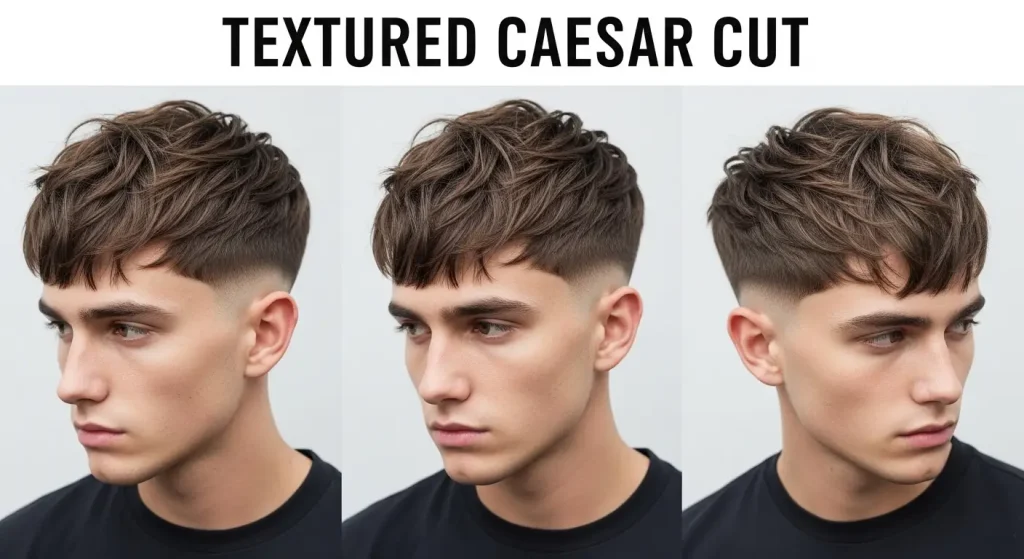
The textured Caesar adds dimension to the traditional version by incorporating choppy layers or point cutting on top. Instead of a flat fringe, it has soft separation and movement. This modern adaptation works well for thick or slightly wavy hair and aligns with current crop trends. It reduces bulk while maintaining structure, making it ideal for men who want a contemporary edge.
Caesar with Low Fade
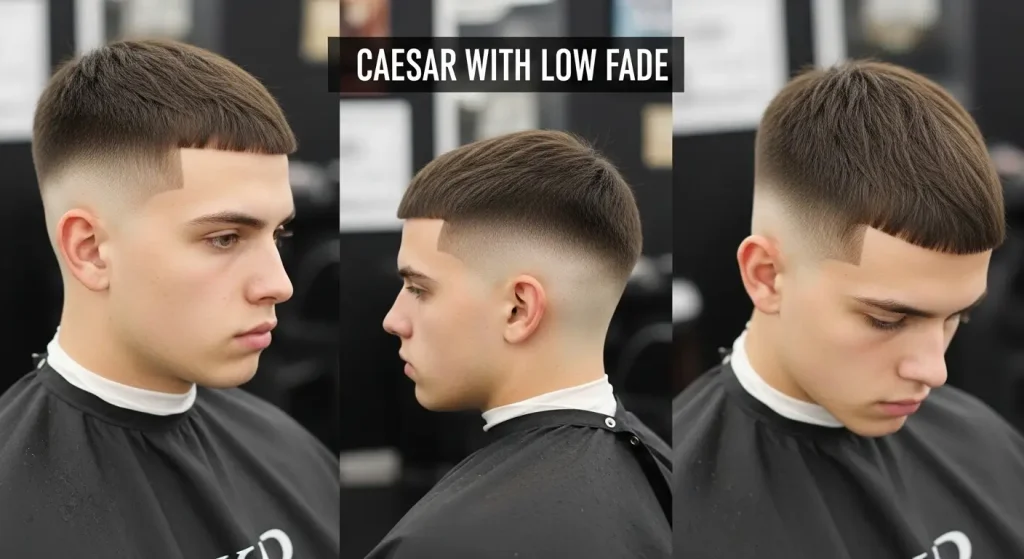
A low fade keeps the transition subtle, starting just above the ears. It preserves more structure on the sides while adding cleanliness. This version is perfect for corporate environments because it looks sharp without being dramatic. It works especially well for round faces, as the gradual fade maintains balance without overexposing the temples.
Caesar with Mid Fade
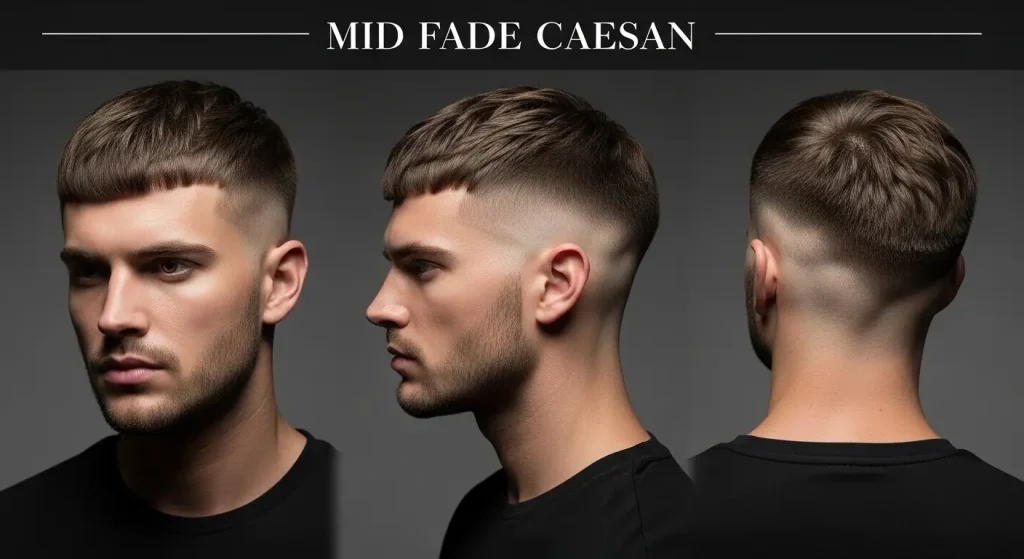
The mid fade begins higher on the head, creating stronger contrast between the top and sides. It sharpens the silhouette and adds definition. This version suits square and oval faces best, offering a balanced yet modern look. It’s a popular middle ground between subtle and bold styling.
Caesar with High Fade
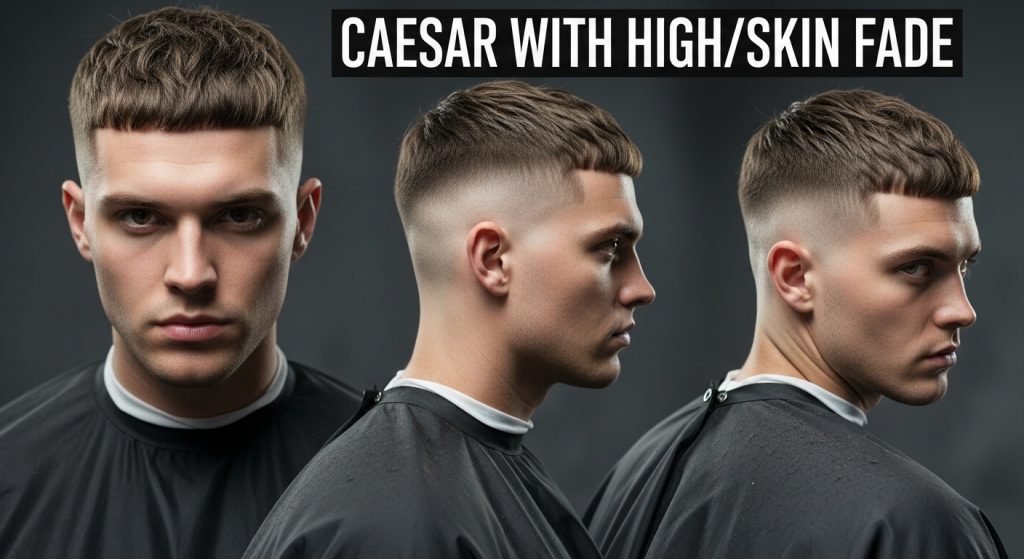
A high fade creates dramatic contrast and emphasizes the short fringe. It draws attention upward and works well for men with strong jawlines. However, it may exaggerate long face shapes. This is a bold, contemporary version best suited for confident, trend-forward styling.
Caesar with Skin Fade
The skin fade blends the sides down to the scalp for maximum contrast. It gives the Caesar cut a sharp, modern finish and works particularly well with textured tops. Maintenance is higher, requiring frequent trims to keep the fade crisp.
Caesar with Taper
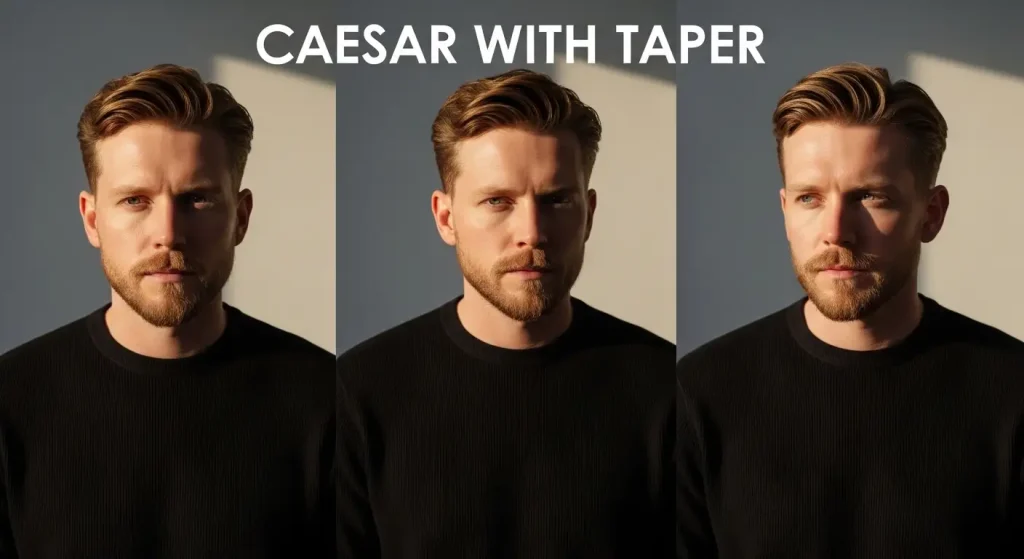
A taper keeps the sides gradually shorter without fully fading to skin. It’s subtle and professional, ideal for conservative workplaces. This version maintains versatility and grows out more gracefully than high-contrast fades.
Buzzed Caesar
The buzzed Caesar keeps the top extremely short while preserving the forward fringe structure. It’s ultra-low maintenance and excellent for active lifestyles. It works best for men with even head shape and minimal thinning.
Long Caesar
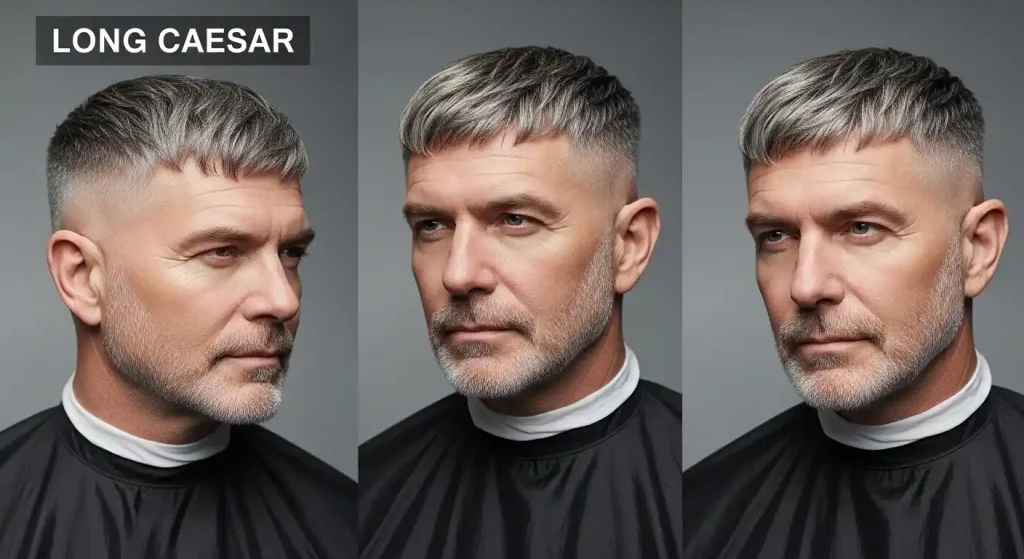
The long Caesar maintains the signature fringe but allows more length on top. This creates styling flexibility and suits thicker hair types. It can be worn slightly messy or brushed forward for a dramatic effect.
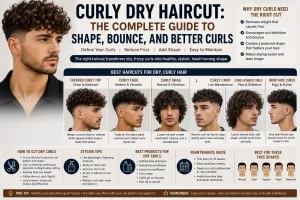
Curly Caesar
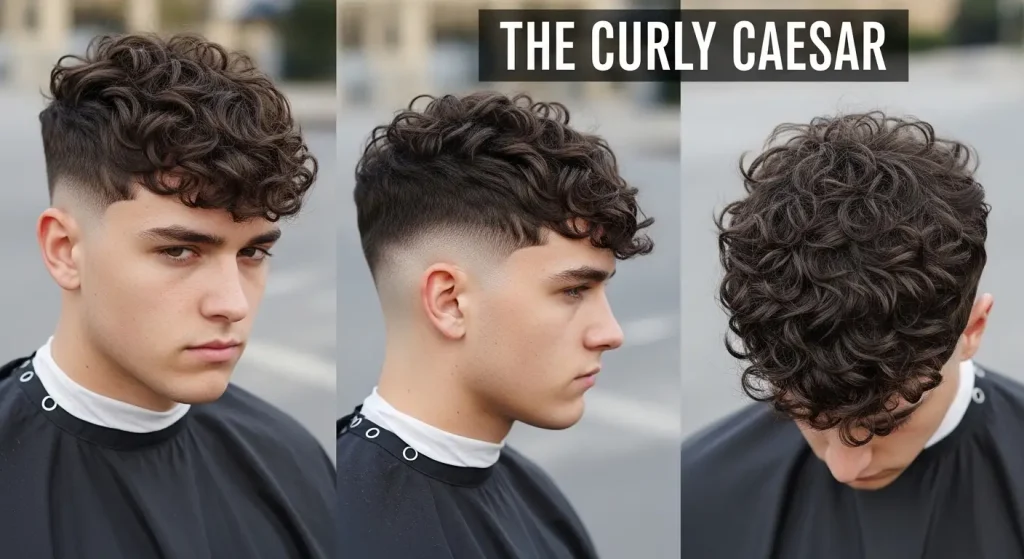
This version embraces natural curls while shaping them into a forward fringe. The sides are typically faded or tapered for control. It’s ideal for men who want structure without fighting natural texture.
Wavy Caesar
Wavy hair adds soft movement to the Caesar cut. A textured finish prevents bulk while enhancing natural flow. It works well with low or mid fades.
Disconnected Caesar
The disconnected Caesar creates a visible separation between the top and sides. It’s bold and fashion-forward, suitable for creative industries.
Messy Caesar
The messy Caesar softens the fringe and adds irregular texture. It’s relaxed and youthful, perfect for casual settings.
Blunt Fringe Caesar
This version keeps the fringe sharply cut in a straight line. It’s clean and architectural, best for men with balanced facial proportions.
Military Caesar
Extremely short and practical, the military Caesar prioritizes discipline and simplicity. It’s clean, sharp, and easy to maintain.
Korean Caesar

Inspired by East Asian trends, this version features softer layering and subtle texture. It’s stylish and often paired with natural volume.
Corporate Caesar
Clean lines, subtle taper, minimal texture — this variation is designed for professional environments. It maintains authority without looking trendy.
Mature Men Caesar
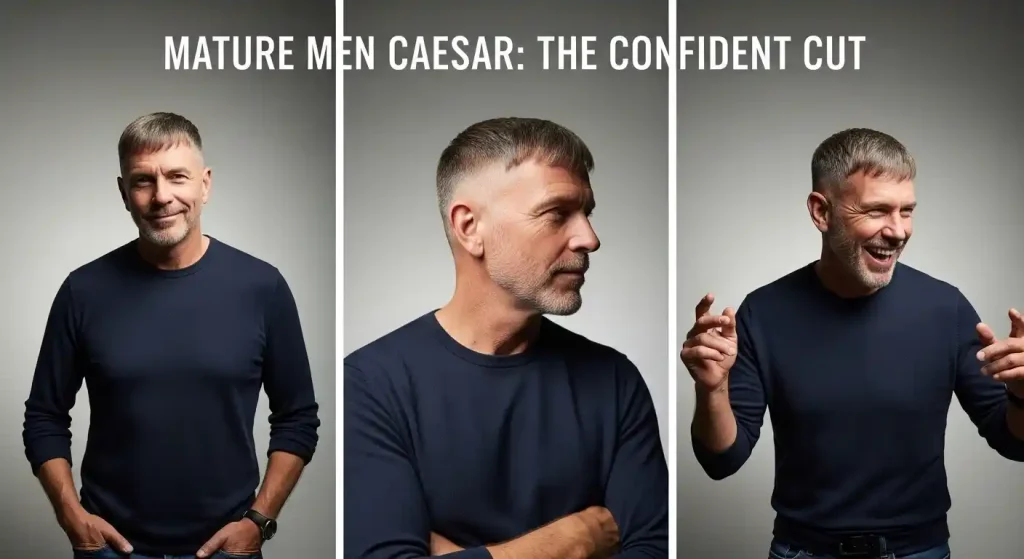
For men over 40 or 50, the Caesar can soften thinning hairlines while keeping a structured appearance. A low taper works best to maintain subtlety.
Caesar Haircut by Face Shape
Round Face
- Ideal fringe: Slightly textured, not overly blunt
- Best fade: Mid fade for height illusion
- Avoid: Heavy blunt fringe that widens face
Oval Face

- Ideal fringe: Classic or textured
- Best fade: Any fade works
- Avoid: Excessive height
Square Face
- Ideal fringe: Soft texture
- Best fade: Low or mid fade
- Avoid: Overly harsh high fade
Long Face
- Ideal fringe: Slightly longer fringe
- Best fade: Low fade
- Avoid: High fade (adds vertical length)
Heart Face
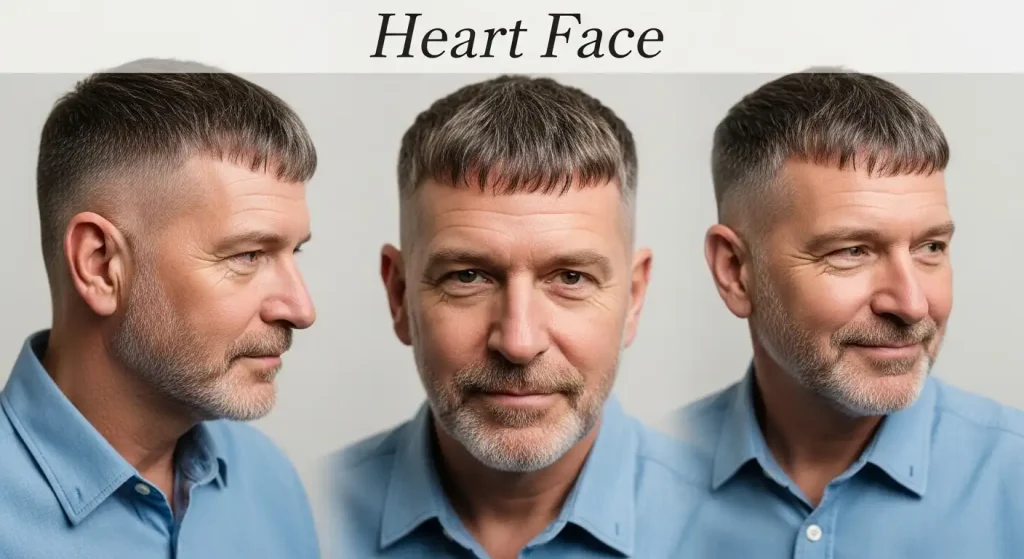
- Ideal fringe: Balanced blunt cut
- Best fade: Low taper
- Avoid: Extremely short fringe
Caesar Haircut by Hair Type
Thick Hair
Works perfectly with textured or layered Caesar styles to remove bulk.
Thin Hair
Blunt fringe helps create density illusion. Avoid heavy texturing.
Straight Hair
Maintains clean structure and sharp lines easily.
Wavy Hair
Adds natural movement; best styled with light matte cream.
Curly Hair
Requires controlled fade and defined shaping for structure.
Receding Hairline
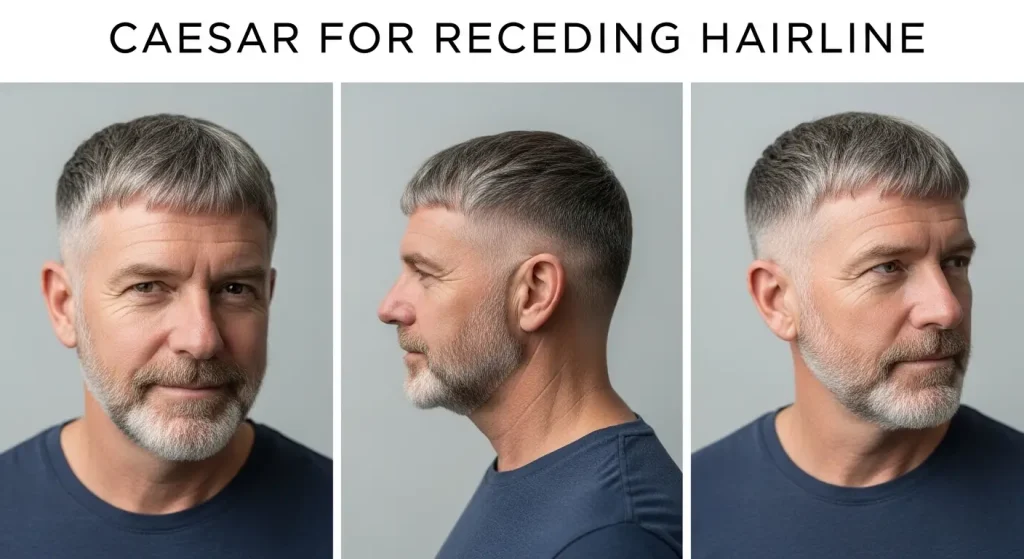
Forward fringe helps conceal early recession naturally.
Caesar Haircut by Age Group
Teens
Textured or messy Caesar works well for youthful style.
20s
High fade or bold versions suit experimentation.
30s
Balanced low or mid fade for professional versatility.
40+
Subtle taper with controlled fringe looks refined.
50+
Low taper Caesar keeps structure while softening thinning hair.
Caesar Haircut by Lifestyle
Office Professionals
Low fade or taper for clean, conservative appearance.
Students
Textured or messy Caesar offers trend appeal.
Athletes
Buzzed or skin fade Caesar minimizes maintenance.
Creative Industries
Disconnected or high fade Caesar adds personality.
Low-Maintenance Guys
Classic or tapered Caesar requires minimal daily styling.
How to Ask Your Barber for a Caesar Haircut
Getting the perfect Caesar haircut depends heavily on how clearly you communicate with your barber. Small details like guard numbers and fringe length can completely change the outcome.
Guard Numbers (Sides)
- #0–#1 → Skin fade (very tight, high contrast)
- #1–#2 → Clean short fade
- #2–#3 → More conservative taper
Length on Top
- 0.5–1 inch → Classic tight Caesar
- 1–2 inches → Textured modern Caesar
- Keep it even across the top with a straight fringe
Fade Instructions
Specify:
- Low fade (subtle)
- Mid fade (balanced)
- High fade (bold contrast)
- Taper (professional)
Texture Request
Ask for:
- “Point cutting for texture” (natural separation)
- “Blunt fringe” (sharp line)
- “Light layering” (for thick hair)
Exact Phrase to Say
“Can I get a Caesar cut with about 1 inch on top, a textured fringe, and a mid fade on the sides? Keep the front slightly blunt but natural.”
Bringing a photo always helps.
Caesar Cut vs French Crop vs Crew Cut
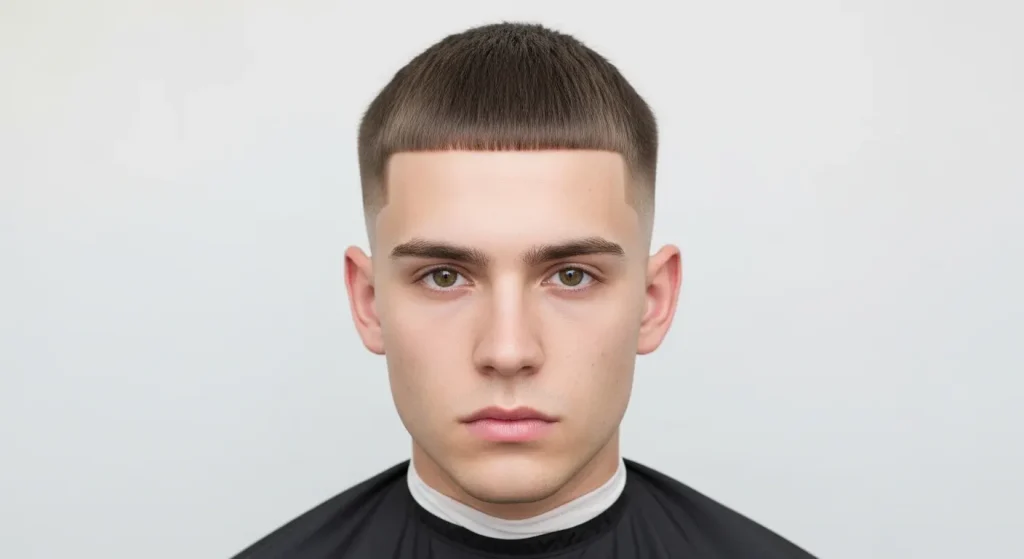
These styles look similar but differ in structure.
Caesar Cut
- Even length on top
- Straight horizontal fringe
- Structured and balanced
- Works well for receding hairlines
French Crop
- More textured and choppy
- Fringe often softer or uneven
- Usually paired with stronger fades
- Trend-driven and fashion-forward
Crew Cut
- Shorter on top with slight upward styling
- No defined fringe
- Traditional and military-inspired
If you want a defined fringe and forehead coverage, choose the Caesar.
If you prefer heavy texture and modern flair, go French crop.
If you want ultra-clean and minimal styling, go crew cut.
How to Style a Caesar Haircut in Under 3 Minutes
The Caesar cut is popular because styling is fast and simple.
Quick Routine
- Start with slightly damp hair.
- Apply a pea-sized amount of product.
- Push hair forward using fingers.
- Shape fringe evenly across forehead.
Blow Dry (Optional)
Blow drying adds slight volume but isn’t required. Use low heat and direct airflow forward.
Finger Styling
Most modern Caesars are designed for finger styling — no comb needed. Keep it natural and avoid overloading product.
Total daily time: 2–3 minutes.
Best Products for a Caesar Haircut
Choosing the right product depends on texture and finish preference.
Matte Clay
Best for textured Caesar cuts.
Provides hold without shine. Ideal for modern, natural finish.
Light Pomade
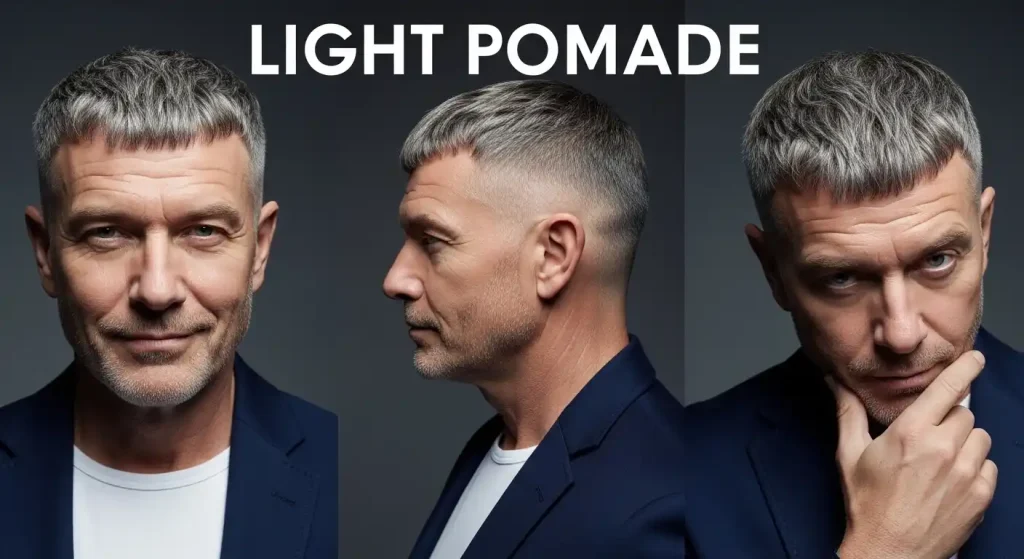
Adds subtle shine and structure. Good for classic, polished Caesars.
Styling Cream
Perfect for wavy or curly Caesars. Controls frizz without stiffness.
Low-Shine Wax
Great middle-ground option. Offers flexible hold and clean definition.
Tip: Avoid heavy gel — it makes short fringe look stiff and unnatural.
Maintenance Timeline (Week-by-Week Growth Guide)
One advantage of the Caesar haircut is predictable growth.
Week 1–2: Crisp & Structured
Lines are sharp. Fringe sits perfectly. Minimal styling required.
Week 3–4: Soft Fringe Growth
Edges begin to blur slightly. Fringe may feel heavier. Still manageable.
Week 5+: Shape Distortion
Sides lose sharpness. Fade grows out. Fringe may fall unevenly.
When to Rebook
Most men should rebook every 3–4 weeks to maintain the shape. Skin fades may require 2–3 week touch-ups.
Annual Cost & Maintenance Breakdown
Unlike many trendy cuts, the Caesar remains affordable long-term.
Barber Visit Frequency
Every 3–4 weeks (12–16 cuts per year).
Estimated Yearly Cost
If haircut costs $25–$50:
Annual estimate: $300–$800 depending on location and fade type.
Product Cost
1–2 styling products per year:
$40–$100 total.
Styling Time per Week
About 15–20 minutes total weekly.
Overall, it’s one of the most cost-efficient structured hairstyles.
Who Should Avoid the Caesar Haircut?
While versatile, it’s not perfect for everyone.
- Strong cowlick at the front (fringe won’t sit flat)
- Extremely thin crown (top may look sparse)
- Very long narrow face (can exaggerate vertical length)
- Extremely low styling tolerance (even short cuts need minor shaping)
In these cases, alternative short styles may work better.
Common Mistakes When Choosing a Caesar Cut
Avoid these errors to prevent regret:
Too Much Length
Excess top length turns it into a crop, losing its structured identity.
Wrong Fade Height
High fade on long face can distort proportions.
Ignoring Growth Pattern
Hair that grows upward or sideways may not sit correctly without texture adjustment.
Choosing Trend Over Face Structure
Not every viral Caesar suits every face shape. Structure always matters more than trend.
FAQs
Is a Caesar haircut attractive?
Yes, the Caesar haircut is considered attractive because it creates clean structure and balanced proportions. The short fringe frames the forehead while tight sides enhance jawline definition. When matched to the right face shape and fade height, it delivers a sharp, confident, and masculine appearance without looking overly styled.
Is it professional?
The Caesar cut is highly professional, especially when paired with a low fade or subtle taper. Its clean lines and short length make it suitable for corporate environments, formal workplaces, and conservative settings. Avoid extreme skin fades or disconnected versions if you want a more traditional, office-friendly finish.
Is it good for thin hair?
Yes, the Caesar haircut can work well for thin hair. A slightly blunt fringe creates the illusion of density, while even top length prevents patchy contrast. Avoid heavy texturing, as it can expose the scalp. A low fade or taper keeps the look balanced and natural.
How long does it last?
A Caesar haircut typically maintains its sharp shape for about 3–4 weeks. Skin fades may need touch-ups sooner, around 2–3 weeks. After week four, the fringe and sides begin to soften, and the structured silhouette starts losing definition.
Is it high maintenance?
No, the Caesar cut is low maintenance compared to most styled haircuts. Daily styling usually takes under three minutes using minimal product. The only regular upkeep required is trimming every few weeks to maintain the fringe line and fade sharpness.
Does it hide a big forehead?
Yes, the forward fringe helps reduce the visual height of the forehead by covering the hairline slightly. This makes the Caesar cut a popular option for men with larger foreheads or mild recession, as it balances facial proportions naturally.
Can you get it with curly hair?
Absolutely. A curly Caesar haircut works well when shaped properly. The curls are directed forward to form a soft fringe, while the sides are faded or tapered for structure. Light styling cream helps control frizz while maintaining natural texture.
FINAL DECISION FRAMEWORK
Should You Get a Caesar Haircut?
Before committing, use this checklist to decide if the Caesar cut truly fits you:
✔ Face shape match
Does the fringe balance your proportions without exaggerating length or width?
✔ Hair type compatibility
Is your hair straight, wavy, thick, or moderately thin (not extremely sparse at the crown)?
✔ Maintenance tolerance
Are you comfortable rebooking every 3–4 weeks for sharpness?
✔ Workplace rules
Does your environment allow short fades or prefer subtle tapers?
✔ Personal style identity
Do you prefer structured, minimalist, and clean aesthetics?
✔ Confidence factor
Does the look align with how you want to present yourself — sharp, controlled, and modern?
If you checked most of these, the Caesar haircut is likely a smart, timeless choice.
Conclusion
The Caesar haircut isn’t just another short hairstyle — it’s one of the smartest grooming choices a man can make.
It’s clean without being boring, stylish without being high-maintenance, and versatile enough to work for almost any age, profession, or lifestyle. Whether you go for a textured modern look, a sharp fade, or a subtle corporate version, the key is choosing the right variation for your face shape and hair type — not just copying a trend.
If you get the details right, the Caesar cut can instantly make your face look more structured, your style more intentional, and your overall appearance more put together.
So before your next barber visit, know exactly what you want, communicate it clearly, and own the look with confidence — because the difference between an average haircut and a great one is always in the details.