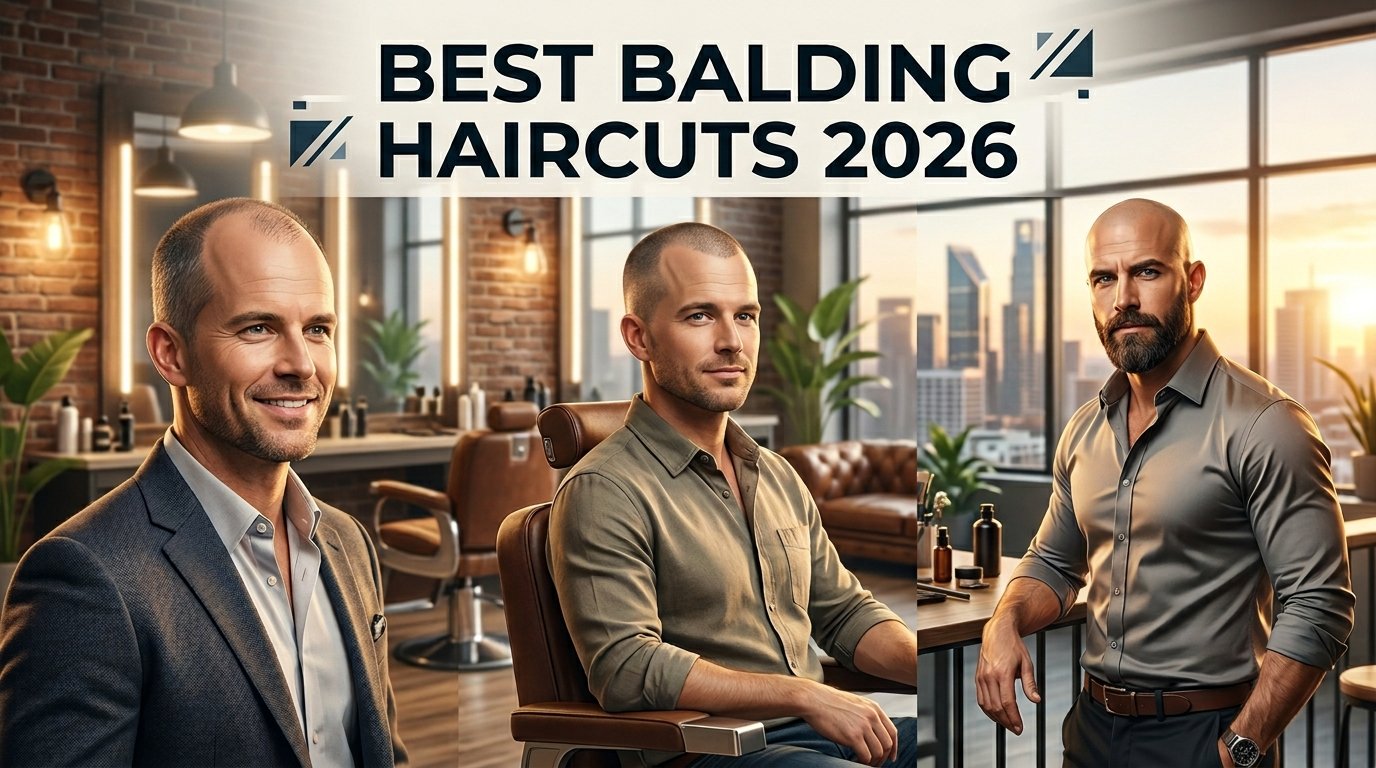
Hair loss is more common than ever, and in 2026, more men are searching for stylish balding haircuts that help them look sharper, younger, and more confident. Whether it’s a receding hairline, thinning crown, or overall thin hair, the right haircut can completely transform your appearance without trying to hide who you are. Modern barbering trends now focus on smart texture, clean fades, and low-maintenance hairstyles that work with thinning hair instead of against it.
One of the biggest mistakes men make is trying to cover bald spots with outdated comb-overs or longer hairstyles that only make thinning areas more noticeable. Today’s best hairstyles for balding men are designed to create structure, reduce scalp visibility, and make hair look naturally fuller and thicker. A well-chosen cut can sharpen facial features, balance head shape, and instantly boost overall confidence.
The key difference is learning how to style hair loss smartly rather than simply hiding it. Instead of fighting thinning hair, modern haircuts use texture, fade placement, shorter lengths, and beard combinations to create a cleaner and more masculine look. This shift in styling has made balding hairstyles one of the biggest men’s grooming trends heading into 2026.
In this guide, you’ll discover the best balding haircuts for men in 2026, including styles for receding hairlines, crown thinning, diffuse thinning, and bald spots. You’ll also learn which haircuts work best for your face shape, hair type, and lifestyle, along with barber-approved styling tips, beard pairings, common mistakes to avoid, and the latest haircut trends that make thin hair look thicker.
Understanding Hair Loss Before Choosing a Haircut
Choosing the right balding haircut starts with understanding the type of hair loss you have. Not all thinning patterns are the same, and the best hairstyle for a receding hairline may not work for someone dealing with crown thinning or diffuse thinning. Knowing how hair loss develops can help you choose a haircut that improves balance, reduces scalp visibility, and makes your hair appear thicker and more stylish.
Rad More:
Low Skin Fade Haircut: 30+ Styles, Trends & Barber Guide (2026)
What Causes Male Pattern Baldness?
Male pattern baldness is the most common cause of hair loss in men. It usually develops because of a combination of genetics, hormones, and age. The main hormone linked to hair loss is DHT (dihydrotestosterone), which gradually shrinks hair follicles over time. As follicles become weaker, hair grows thinner, shorter, and eventually stops growing completely. Other factors that can speed up hair thinning include stress, poor diet, smoking, lack of sleep, certain medications, scalp conditions, and rapid weight loss. While hair loss cannot always be stopped naturally, the right haircut for balding men can dramatically improve how your hair looks and how confident you feel.
Receding Hairline vs Crown Thinning vs Diffuse Thinning
Different types of hair loss require different haircut strategies. A receding hairline usually begins around the temples and creates an “M” shape. Short textured styles like the French crop, buzz cut, or crew cut often work best because they reduce contrast between thick and thinning areas. Crown thinning happens near the top or back of the head. This area can become more visible under bright light, especially with longer hairstyles. Haircuts with shorter sides and added texture on top help minimize scalp exposure. Diffuse thinning spreads evenly across the scalp instead of forming one bald spot. Men with diffuse thinning often benefit from layered, textured hairstyles that create movement and volume without exposing the scalp. Understanding your hair loss pattern helps you avoid styles that highlight thin areas and instead choose cuts that create a cleaner, fuller appearance.
Understanding the Norwood Scale
The Norwood Scale is the most widely used system for measuring stages of male pattern baldness. It ranges from mild hairline recession to advanced baldness. Norwood 1–2 usually involves minor recession around the temples, while Norwood 3–4 shows more noticeable hairline recession and crown thinning. In Norwood 5–6, larger bald areas begin to appear on top of the head, and Norwood 7 represents significant hair loss with limited remaining hair. Knowing your Norwood stage helps determine which hairstyles will work best. Early stages usually suit textured crops and fade haircuts, while mid stages work better with buzz cuts and short fades. Advanced stages often look best with a clean shaved head or ultra-short hairstyle.
Why Some Hairstyles Make Thinning Hair Look Worse
Many men accidentally make thinning hair more noticeable by choosing the wrong haircut. Longer hairstyles often separate and expose the scalp, especially in windy or bright conditions. Styles like long comb-overs, wet slick backs, heavy pompadours, middle parts, overgrown sides, and greasy hairstyles usually increase contrast between thin and thick areas, drawing more attention to hair loss. In most cases, shorter and more textured hairstyles create a stronger, cleaner, and more balanced look.
How Barbers Create the Illusion of Thicker Hair
Experienced barbers use several techniques to make thin hair look fuller and more structured. Adding texture creates movement and breaks up visible scalp areas, which is why styles like the textured crop work especially well for thinning hair. Proper fade placement reduces contrast between the sides and top, helping thin areas blend more naturally. Shorter hair lengths also appear denser because there is less separation between strands, making styles like the buzz cut and crew cut ideal for balding men. Most barbers recommend matte clay, texture powder, or sea salt spray instead of shiny products because glossy finishes can expose the scalp. A well-groomed beard can also improve facial balance and shift attention away from thinning hair, creating a stronger and more masculine appearance.
How to Choose the Best Balding Haircut
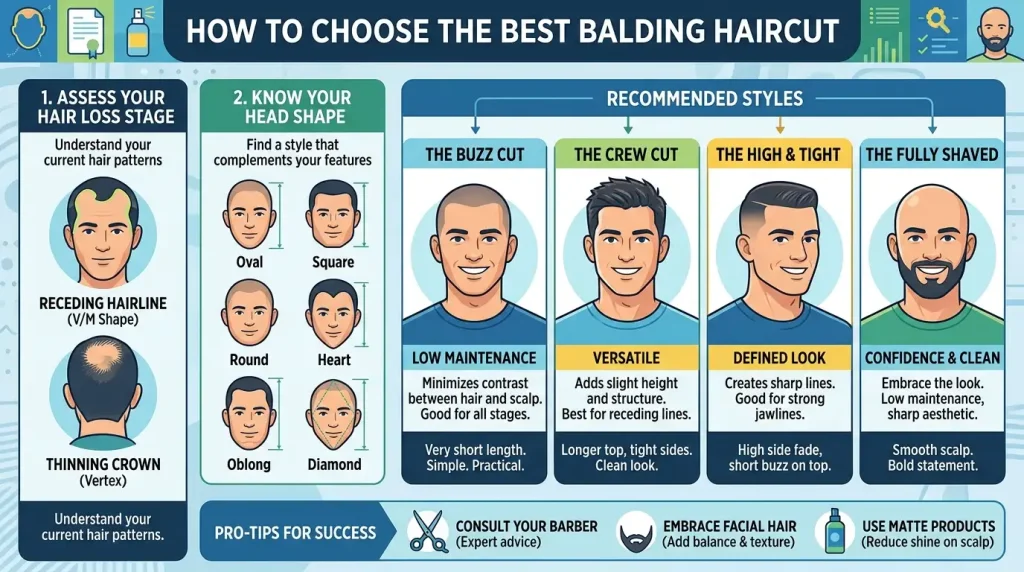
Choosing the right balding haircut is not just about style—it’s about balance, proportion, and how well the haircut works with your natural hair loss pattern, face shape, and lifestyle. The goal is to create a clean, structured look that reduces attention to thinning areas while improving overall appearance and confidence.
Choose Based on Hair Loss Stage
Your level of hair loss plays a major role in deciding the right haircut. If you are in the early stages of receding hairline, styles like the textured crop, French crop, or short fade work well because they maintain some coverage while adding texture. For moderate thinning, especially around the crown, shorter styles like the crew cut, buzz cut, or taper fade are more effective because they reduce contrast. In advanced hair loss stages, a buzz cut or fully shaved head often looks cleaner and more intentional than trying to keep longer hair.
Choose Based on Face Shape
Your face shape determines how balanced your haircut will look. A round face usually benefits from height and structure, such as a high fade or textured top. Square faces work well with softer styles like a crew cut or side part fade. For oval faces, almost all styles work, giving more flexibility with modern trends like the French crop or buzz cut fade. Long faces should avoid too much height on top and instead go for balanced styles like a low fade or short textured cut.
Choose Based on Hair Type
Different hair types react differently to thinning. Fine hair benefits from short textured cuts that create volume illusion, such as the textured crop or buzz cut. Straight hair works well with fades and structured styles like the crew cut or Ivy League haircut. Wavy hair adds natural texture, making it ideal for messy crops or short quiffs. Curly hair can actually help hide thinning better when kept short and shaped properly with a fade or taper cut.
Choose Based on Lifestyle and Maintenance
Your daily routine should influence your haircut choice. If you prefer low maintenance, styles like the buzz cut, crew cut, or shaved head are ideal because they require minimal styling. For a more professional or styled look, cuts like the Ivy League, side part fade, or textured crop offer a polished appearance but require regular upkeep. Active lifestyles often suit shorter cuts because they stay neat without effort.
Matching Haircuts with Beard Styles
Pairing your haircut with the right beard style can significantly improve balance and draw attention away from thinning areas. A buzz cut with a full beard creates a strong masculine look, while a fade haircut with stubble offers a clean and modern appearance. Men with longer or patchy beards should ensure the beard is well-groomed so it complements the haircut rather than overpowering it. Beard fade combinations are especially effective for creating structure and symmetry.
Best Short vs Medium-Length Styles for Thinning Hair
Short hairstyles are generally the safest and most effective option for balding men, as they reduce scalp contrast and make thinning less noticeable. Styles like the buzz cut, crew cut, and fade cuts are the most reliable choices. Medium-length styles can still work if the hair has enough density, especially styles like the textured crop or messy fringe, but they require more styling effort. In most cases, shorter hair provides a cleaner, thicker, and more controlled appearance, especially for noticeable hair loss.
Best Balding Haircuts for Men in 2026
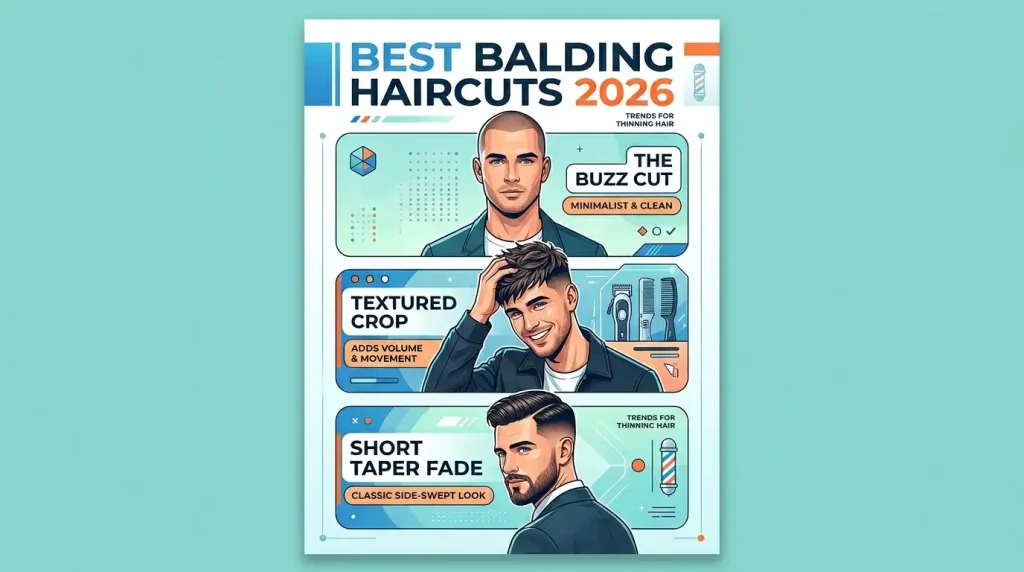
In 2026, the best balding haircuts for men focus on creating structure, reducing scalp visibility, and making thin hair look thicker through smart use of texture, fades, and short lengths. These styles are designed to work with different stages of male pattern baldness, from early receding hairlines to more advanced thinning on the crown.
Buzz Cut
The buzz cut is one of the most reliable choices for men with thinning hair because it removes contrast between thick and thin areas, creating a uniform look.
Why it works:
It eliminates patchiness and makes hair loss less noticeable by keeping everything evenly short.
Best face shapes:
Oval, square, and diamond face shapes work especially well with buzz cuts.
Maintenance level:
Very low—requires trimming every 1–2 weeks.
Styling tips:
Keep edges clean with a line-up and pair with a beard for stronger facial balance.
Crew Cut
A classic crew cut keeps the sides short while leaving slightly more length on top, helping add subtle structure without exposing the scalp too much. It works well for early to moderate thinning.
Textured Crop
The textured crop is one of the top modern choices for 2026. The choppy layers create movement, which helps disguise thinning areas and makes hair appear fuller.
French Crop
The French crop features a short fringe that naturally covers a receding hairline, making it ideal for frontal thinning while maintaining a clean, modern shape.
Caesar Cut
The Caesar cut uses a straight, forward fringe to reduce visibility of a receding hairline. It’s especially effective for men with early-stage hair loss.
Ivy League Haircut
The Ivy League haircut is a polished, professional style that keeps enough length for styling while still controlling thinning areas. It works best for mild hair loss.
Regulation Cut
A military-inspired style, the regulation cut is neat, structured, and ideal for men who want a clean, professional look without emphasizing thinning areas.
High and Tight
The high and tight features very short sides with a slightly longer top. It reduces contrast and works well for men with more noticeable hair loss.
Comb Over Fade
A modern version of the classic comb-over, the comb over fade uses a fade on the sides to make the top blend better, helping reduce the appearance of thinning.
Side Part Fade
The side part fade adds structure and direction, making thinning hair look more controlled and styled instead of flat or sparse.
Low Fade
A low fade keeps the transition subtle and natural, making it ideal for men who want a softer, less aggressive haircut while still managing thinning areas.
Mid Fade
The mid fade offers balance between subtle and bold, helping draw attention upward and away from thinning sides or crown areas.
High Fade
The high fade creates strong contrast that emphasizes the top of the hair, making it useful for men with limited density who want a sharper look.
Bald Fade
The bald fade (skin fade) gradually blends into the skin, removing weight from the sides and making the top appear more structured and intentional.
Taper Fade
The taper fade is a more natural-looking fade that keeps some length around the edges, making it a great option for conservative or professional styles.
Slick Back
The slick back can work for early thinning if hair still has density. It creates a clean, mature look but should be avoided if thinning is advanced, as it can expose the scalp.
Faux Hawk
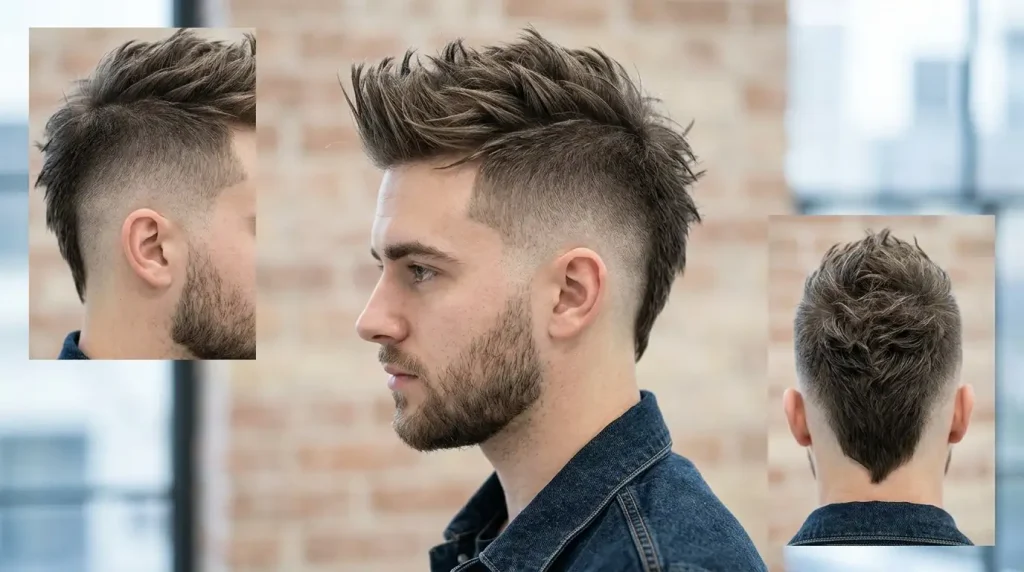
The faux hawk adds height and structure to the center of the head, helping create the illusion of fuller hair while keeping sides tight.
Short Quiff
The short quiff adds volume at the front, which works well for mild recession and helps lift the overall appearance of the hairline.
Butch Cut
The butch cut is slightly longer than a buzz cut but still very short, making it a strong option for men who want minimal styling and a neat appearance.
Shaved Head
The shaved head is a bold, confident choice for advanced hair loss. It removes all contrast and creates a strong, clean look.
Bald + Beard Style
Pairing a bald head with a beard is one of the strongest modern grooming combinations. It restores facial balance and creates a masculine, structured appearance.
Power Donut Style
The power donut keeps hair on the sides while the top is heavily thinned or shaved. It’s less common but still seen in certain styling or transitional stages of hair loss.
Best Haircuts by Hair Loss Type
Different types of hair loss need different haircut strategies. The key to choosing the right balding haircut is not just following trends, but matching your style to your specific pattern of thinning. This helps reduce scalp visibility, improve balance, and make hair look naturally fuller.
Best Haircuts for Receding Hairline
A receding hairline is one of the most common early signs of male pattern baldness, usually starting at the temples. The goal is to soften the hairline and reduce contrast.
Best options include:
- French Crop (covers front naturally with fringe)
- Caesar Cut (short forward fringe hides recession)
- Buzz Cut (removes contrast completely)
- Textured Crop (adds volume and movement)
- High Fade (shifts attention upward)
Best Haircuts for Crown Thinning
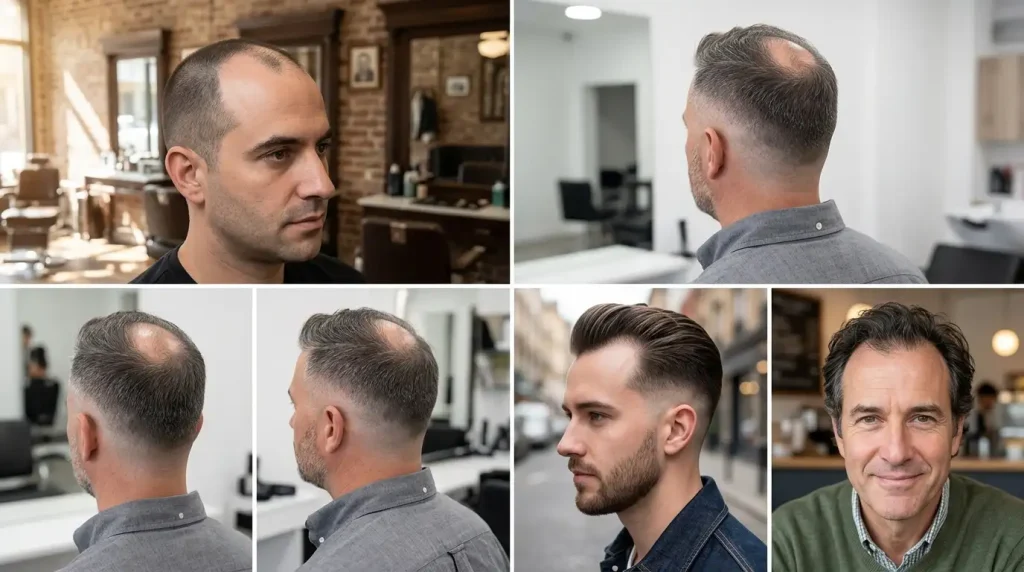
Crown thinning occurs at the top-back of the head and becomes more visible under light or certain angles.
Best options include:
- Crew Cut (even, controlled length)
- Buzz Cut (uniform coverage)
- Textured Crop (adds density illusion)
- Mid Fade (balances sides and crown)
- Short Quiff (adds front distraction)
Best Haircuts for Diffuse Thinning
Diffuse thinning spreads evenly across the scalp, making density reduction more noticeable.
Best options include:
- Buzz Cut
- Crew Cut
- French Crop
- Textured Crop
- Short Caesar Cut
These styles reduce separation between strands and create a fuller overall appearance.
Best Haircuts for Bald Spots
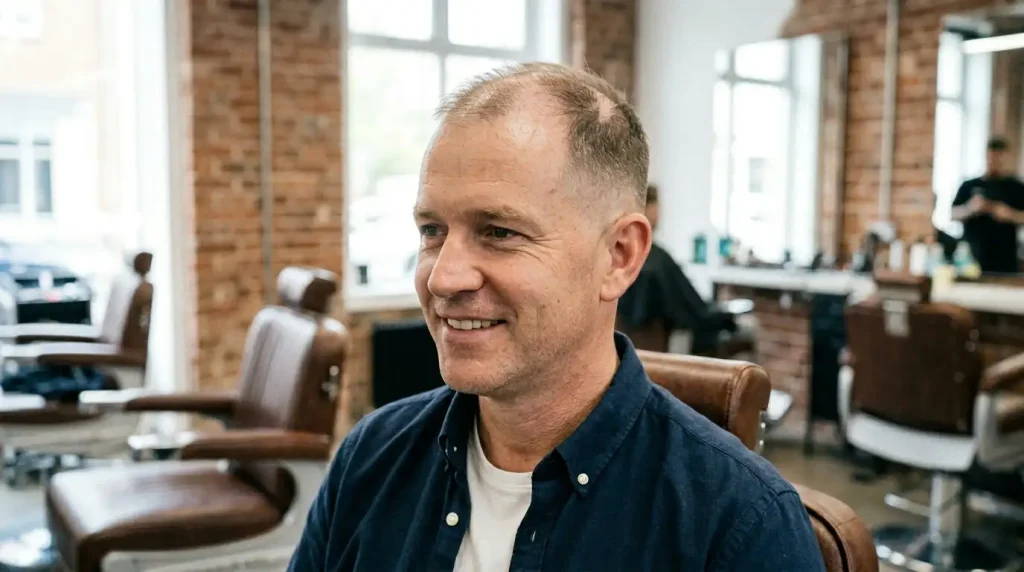
Bald spots usually appear randomly and can be difficult to conceal with longer hair.
Best options include:
- Buzz Cut (most effective solution)
- Skin Fade / Bald Fade
- Short Crop
- Shaved Head
- High and Tight
Short styles help blend uneven areas and remove patch contrast.
Best Haircuts for Mature Hairline
A mature hairline is a natural, slightly receded hairline that develops with age.
Best options include:
- Ivy League Haircut
- Side Part Fade
- Crew Cut
- Taper Fade
- Textured Crop
These styles maintain a professional look without over-emphasizing recession.
Best Haircuts for Patchy Hair Loss
Patchy hair loss creates uneven density, making styling more challenging.
Best options include:
- Buzz Cut
- Skin Fade
- Butch Cut
- Short Crop
- Shaved Head
Shorter lengths help even out inconsistencies and reduce visual gaps.
Best Haircuts for Frontal Hair Thinning
Frontal thinning affects the front hairline and forehead area, making styling direction very important.
Best options include:
- French Crop (best for coverage)
- Caesar Cut
- Textured Fringe Styles
- Comb Over Fade
- Short Quiff
These styles direct attention away from the hairline and add controlled volume at the front.
Best Balding Hairstyles by Face Shape
Choosing the right balding haircut based on your face shape is essential for creating balance and improving overall appearance. The goal is to make thinning hair look intentional while enhancing natural facial proportions.
Oval Face
An oval face shape is the most versatile, meaning almost any haircut works well. Men with this face shape can confidently try styles like the buzz cut, textured crop, French crop, or fade haircuts. These styles maintain natural balance without overpowering facial structure.
Round Face
A round face benefits from haircuts that add height and structure. Styles like the high fade, textured crop, and short quiff help elongate the face and reduce roundness. Avoid overly wide or bulky sides.
Square Face
A square face shape already has strong angles, so softer styles work best. The crew cut, side part fade, and taper fade help maintain structure while slightly softening sharp jawlines.
Diamond Face
For a diamond face, the goal is to balance narrow forehead and chin areas. The French crop, textured fringe, and low fade work well because they add volume at the top while keeping sides controlled.
Long Face
A long face shape should avoid excessive height on top. Styles like the buzz cut, low fade, or side part help create width and balance facial length.
Heart-Shaped Face
A heart-shaped face benefits from styles that reduce forehead emphasis. The textured crop, Caesar cut, and medium fade help balance a wider forehead with a narrower chin.
Best Balding Haircuts by Hair Type
Your hair type plays a major role in how well a haircut will hide thinning and improve density appearance. Different textures require different styling approaches.
Straight Hair
Straight hair tends to show scalp more easily, so texture is important. Best styles include the textured crop, crew cut, and buzz cut, which help reduce flatness and create structure.
Wavy Hair
Wavy hair naturally adds volume, making it one of the best types for thinning hair. Styles like the messy crop, short quiff, and fade cuts work especially well by enhancing natural movement.
Curly Hair
Curly hair can help disguise thinning when kept short and shaped properly. Best options include the short crop, taper fade, and buzz cut with curls, which maintain definition without exposing sparse areas.
Coily Hair
Coily hair has strong natural volume, but uneven thinning can still occur. The short fade, buzz cut, and high and tight are ideal for maintaining clean structure and even density.
Fine Hair
Fine hair is most prone to visible thinning. The best solution is short, textured cuts like the textured crop, Caesar cut, and buzz cut, which reduce separation and create fullness illusion.
Thick Hair With Thinning Areas
When thick hair begins thinning unevenly, contrast becomes an issue. Styles like the crew cut, fade haircut, and short textured styles help blend thick and thin areas for a more consistent look.
Best Professional Haircuts for Balding Men
When it comes to workplace-friendly grooming, the best professional haircuts for balding men focus on looking clean, structured, and confident without drawing attention to thinning areas. These styles are ideal for office environments, meetings, and formal settings where a polished appearance matters.
Ivy League
The Ivy League haircut is a longer version of the crew cut that allows subtle styling on top while keeping the sides neat. It works well for early to moderate thinning because the added length can be shaped to create volume, making the hair appear fuller. This cut is especially popular among professionals because it looks sharp without being overly styled.
Side Part
The side part is a timeless professional style that adds structure and direction to thinning hair. By creating a defined parting line, it helps organize the hair in a way that reduces the appearance of uneven density. When paired with a fade or taper, it becomes even more effective for modern balding styles.
Regulation Cut
The regulation cut is a classic military-inspired hairstyle known for its clean and disciplined look. It features short sides with slightly more length on top, making it a great option for men who want a neat and professional appearance without emphasizing hair loss.
Taper Fade
The taper fade is one of the most versatile professional haircuts. It gradually shortens the hair around the sides and neckline, creating a smooth transition that blends well with thinning areas. This cut works especially well in corporate environments because it looks modern, subtle, and well-groomed.
Executive Crew Cut
The executive crew cut combines short sides with a slightly longer, structured top, offering a refined and authoritative look. It is ideal for professionals with thinning hair because it maintains enough length to style while keeping the overall appearance clean and controlled.
Hairstyles Balding Men Should Avoid
Not every hairstyle works well with balding or thinning hair. In fact, some popular styles can actually make hair loss more visible by increasing contrast, exposing the scalp, or creating an unbalanced shape. If your goal is to achieve a cleaner and more confident look, it’s important to avoid the following styles.
Long Comb Overs
The long comb over is one of the most outdated approaches to hiding a receding hairline. Instead of blending thinning areas, it often separates strands and exposes the scalp, especially in wind or bright lighting. This can make hair loss more obvious rather than concealing it.
Heavy Pompadours
Heavy pompadours rely on volume, which can be difficult to maintain with thinning hair. When hair density is low, this style often collapses or looks unnatural, drawing attention to weak areas instead of creating fullness.
Wet Slick Backs
The wet slick back uses shiny products that flatten the hair and increase scalp visibility. For men with thinning hair, this style can highlight sparse areas and make hair appear thinner than it actually is.
Sharp Middle Parts
A sharp middle part divides the hair evenly, which can expose thinning on both sides of the scalp. For men with early or moderate hair loss, this style often emphasizes imbalance rather than improving it.
Overgrown Sides
When the sides are left too long, they create a boxy shape that makes the top look even thinner in comparison. This imbalance can make the overall hairstyle look unstructured and outdated.
Uneven Disconnected Styles
Disconnected hairstyles with harsh contrasts between top and sides can be risky for balding men. Without proper blending, these cuts can highlight thinning zones and make hair loss more noticeable instead of creating a smooth transition.
Best Hair Products for Balding Men
The right hair products for thinning hair can make a major difference in how full, thick, and controlled your hair looks. Instead of hiding hair loss, these products work by adding texture, volume, and scalp coverage illusion, which is especially useful for receding hairlines and crown thinning. Most modern barbers rely on lightweight, matte-finish products that avoid shine and heaviness.
Texture Powder
Texture powder is one of the most effective products for thinning hair because it instantly adds lift at the roots and creates separation between strands. It absorbs oil, reduces scalp visibility, and makes hair look fuller within seconds. It works best on dry hair and is ideal for creating messy, voluminous styles like the textured crop or spiky looks.
Matte Clay
Matte clay is a strong styling product that gives hold without shine. It helps shape the hair while keeping a natural finish, which is important for avoiding scalp exposure. It works best for short to medium styles like the crew cut, French crop, and side part fade, especially when you want control without looking greasy.
Sea Salt Spray
Sea salt spray is a pre-styling product used to create natural texture and volume. It adds grip to the hair and makes it easier to style after blow-drying. It is especially useful for fine or flat hair, helping create a more “lived-in” and fuller appearance, but it should be used carefully on very dry hair to avoid stiffness.
Thickening Shampoo
A thickening shampoo does not permanently stop hair loss, but it helps make hair appear fuller by coating strands and improving texture. It is designed to reduce oil buildup and increase volume from the root, making hair easier to style with a natural lift effect.
Hair Fibers
Hair fibers are cosmetic products made of keratin that attach to existing hair strands to instantly make thinning areas look denser. They are especially effective for covering bald spots, receding hairlines, and crown thinning, creating a natural shadow effect when applied correctly.
Volumizing Mousse
Volumizing mousse is a lightweight foam applied to damp hair before styling. It creates lift at the roots and adds structure without weighing the hair down. When blow-dried properly, it helps fine or thinning hair look significantly fuller and more controlled throughout the day.
Celebrity Balding Haircuts That Actually Work
Many celebrities have embraced balding hairstyles and turned them into signature looks. These styles prove that hair loss does not reduce style—in fact, the right cut can enhance presence, masculinity, and confidence.
Jason Statham
Jason Statham is known for his signature clean shaved head. This look works because it removes all contrast and creates a strong, masculine facial structure. It’s one of the best examples of embracing advanced hair loss confidently.
Jude Law
Jude Law has often dealt with a receding hairline while maintaining a stylish appearance. His use of shorter styles like textured crops and natural side styling shows how early-stage hair loss can still look sharp and modern.
David Beckham
David Beckham has experimented with multiple fade haircuts, including buzz cuts, side parts, and textured styles. His looks highlight how blending fades with controlled length can manage thinning areas effectively.
John Travolta
John Travolta is a strong example of transitioning from styled hair to a more natural shaved or closely cropped look. His transformation shows how adapting to hair loss can improve overall appearance and confidence.
Dwayne Johnson
Dwayne “The Rock” Johnson uses a buzz cut with beard combination, which creates a powerful and balanced look. This style is ideal for men with thinning hair because it shifts focus to facial structure.
Zinedine Zidane
Zinedine Zidane has consistently worn a clean shaved head, showing that a simple, uniform style can be extremely effective for advanced hair loss while maintaining a professional and iconic appearance.
Frequently Asked Questions
What is the best haircut for balding men?
The best balding haircut depends on your level of hair loss, but the most reliable options are the buzz cut, crew cut, and textured crop. These styles reduce contrast between thinning and thick areas, making hair look more even and structured.
Does short hair make thinning hair look thicker?
Yes, in most cases short hair makes thinning hair look thicker. Shorter styles reduce separation between strands, which minimizes scalp visibility and creates a denser overall appearance.
Are fades good for thinning hair?
Yes, fade haircuts are excellent for thinning hair because they remove bulk from the sides and create a clean transition. This helps draw attention upward and makes the top look more balanced and fuller.
Should balding men shave their head?
Shaving the head is a strong option for men with advanced hair loss. A clean shaved head removes uneven density and creates a bold, intentional look that many men find more confident and low-maintenance.
What haircut works best for crown thinning?
For crown thinning, styles like the buzz cut, crew cut, and textured crop work best. These cuts reduce contrast in the crown area and make thinning less noticeable from different angles.
Can a buzz cut hide hair loss?
A buzz cut doesn’t technically hide hair loss, but it makes it far less noticeable. By keeping hair at a uniform length, it removes patchiness and creates a clean, even appearance.
What hairstyles should balding men avoid?
Balding men should avoid styles like long comb-overs, wet slick backs, heavy pompadours, and sharp middle parts. These styles often expose the scalp more and make thinning hair look worse.
Which haircut makes men look younger?
Haircuts that add structure and reduce scalp visibility, such as the textured crop, French crop, and clean fade styles, often make men look younger by creating a fuller and more modern appearance.
Are textured hairstyles better for thin hair?
Yes, textured hairstyles are highly effective for thin hair because they add movement and break up flat areas. This creates the illusion of volume and helps disguise thinning spots.
What is the best low-maintenance haircut for balding men?
The best low-maintenance haircut for balding men is the buzz cut. It requires minimal styling, works with all stages of hair loss, and always looks clean without daily effort.
Final Thoughts
Choosing the right balding haircut in 2026 is not about hiding hair loss—it’s about upgrading your overall look with smart, modern styling. Whether you’re dealing with a receding hairline, crown thinning, or more advanced hair loss, the right cut can instantly make your hair appear thicker, cleaner, and more structured.
The key is to stop fighting your hair and start working with it. Styles like the buzz cut, textured crop, and modern fade haircuts are designed to reduce contrast, improve balance, and highlight your strongest facial features. When paired with the right beard style and light styling products, even thin hair can look intentional and stylish.
Instead of outdated comb-overs or heavy styling, today’s best approach is simplicity, texture, and confidence. The most attractive look is not about having more hair—it’s about having the right haircut that fits your face, hair type, and personality.
In the end, the best balding hairstyle is the one that makes you feel confident the moment you look in the mirror.