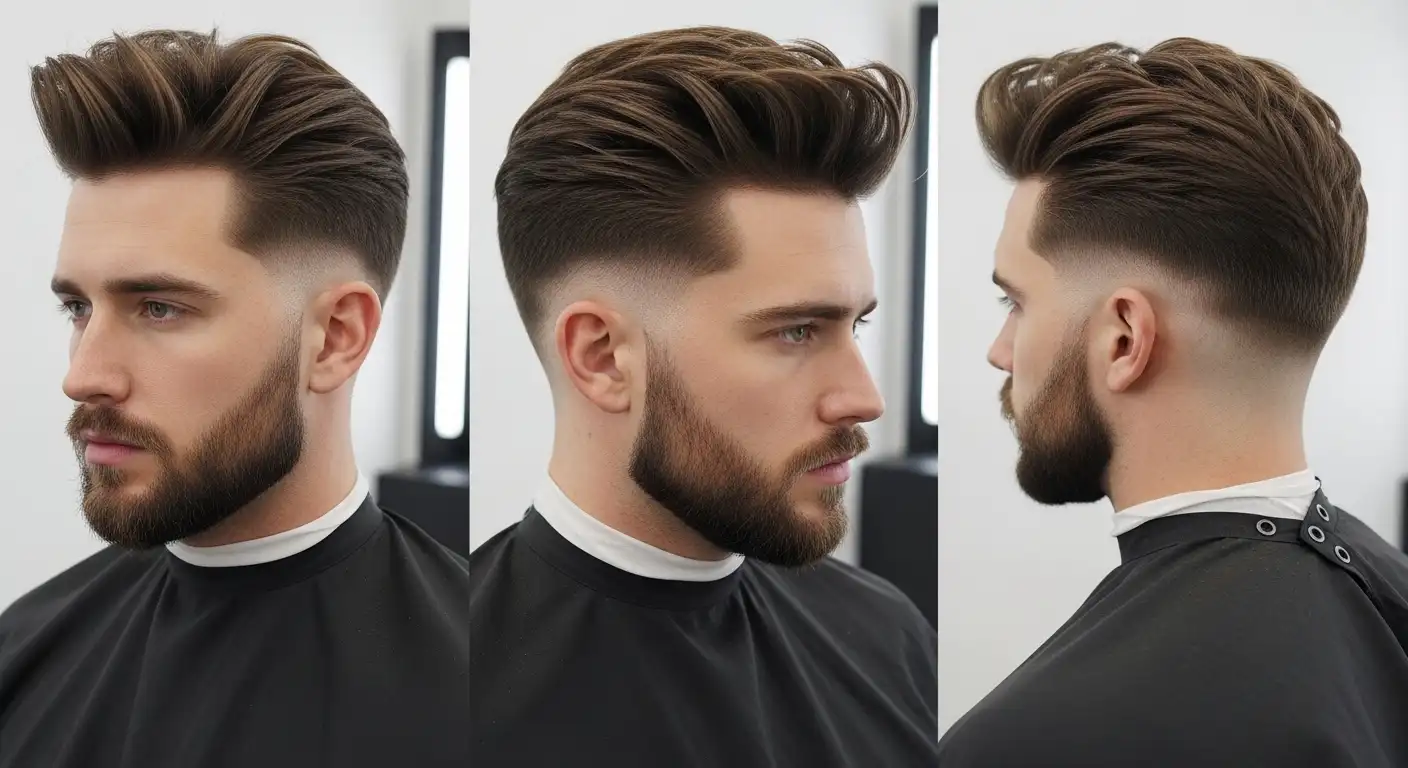
The best haircuts for men with thick hair in 2026 focus on removing bulk, adding texture, and creating structure that works with your natural density — not against it. Thick hair is often seen as a blessing — but without the right cut, it can quickly turn into bulk, puffiness, and styles that feel heavy instead of sharp. If you’ve ever struggled with sides that stick out, a top that feels too dense, or a haircut that looks good for two days and then loses structure, you’re not alone.
The truth is, not every hairstyle works for men with thick hair. Density, texture, growth pattern, and face shape all change how a cut behaves. What looks great on someone with medium hair can feel overwhelming when you have volume and weight to manage.
That’s why this guide goes beyond just listing haircuts for men with thick hair. Inside, you’ll discover the best short, medium, and long hairstyles for thick hair, how to remove bulk properly, which fades work best, how to style thick hair step-by-step, and how to choose a haircut based on your face shape and lifestyle.
Whether you want a low-maintenance textured crop, a structured professional side part, or a long layered flow that moves naturally, this is the complete style selection guide designed specifically for men with thick hair.
Quick Answer
The best haircuts for men with thick hair are textured crops, layered cuts, taper fades, and quiffs. These styles remove bulk, control puffiness, and add structure while keeping the hair easy to manage and naturally sharp.
Best Fade Haircuts for Men 2026 Ultimate Style Guide
Best Soccer Player Haircuts for Men 2026
Line Up Haircut Guide for Men 2026: Styles, Trends & Tips
Long Hairstyles for Men (30 Best Styles & Grooming Tips)
50 Best Hairstyles for Men With Thick Hair
What Are the Best Haircuts for Men With Thick Hair?
The best haircuts for men with thick hair are styles that remove bulk while maintaining structure, such as textured crops, layered cuts, taper fades, and quiffs. These hairstyles control volume, reduce puffiness, and enhance natural movement for a clean, balanced look.
Best Haircuts for Men With Thick Hair
Thick hair gives you volume, structure, and styling flexibility — but without the right cutting strategy, it quickly turns into unnecessary bulk. The problem isn’t thick hair itself. It’s how it’s cut.
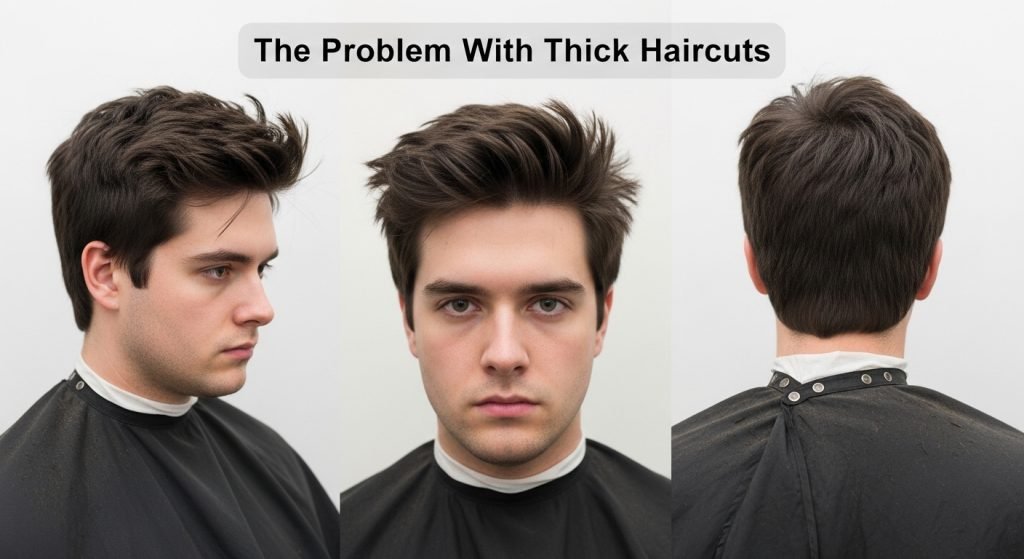
Why Thick Hair Turns Into Bulk
When thick hair isn’t layered or internally debulked, it stacks on itself. Instead of movement, you get heaviness. The sides start pushing outward, the top looks overly dense, and the shape loses definition within weeks. Thick hair needs controlled weight removal — not just shorter length.
Why Some Styles Look “Helmet-Like”
A common mistake is cutting thick hair evenly without accounting for density. When there’s no internal texture or graduation, the hair forms a solid mass. The result? A rounded, stiff silhouette that lacks flow and natural separation.
Why Barbers Often Remove Too Little Weight
Many barbers focus on fade height and outline sharpness but neglect internal thinning. Thick hair requires strategic layering, point cutting, or thinning shears to reduce heaviness without compromising fullness.
Density vs Coarseness Confusion
Density refers to how many hairs you have per square inch. Coarseness refers to the thickness of each strand. Many men confuse the two. You can have dense but fine hair — or coarse but lower density hair. Understanding this difference is critical when choosing the right haircut for men with thick hair.
Why Thick Hair Is Actually a Major Advantage
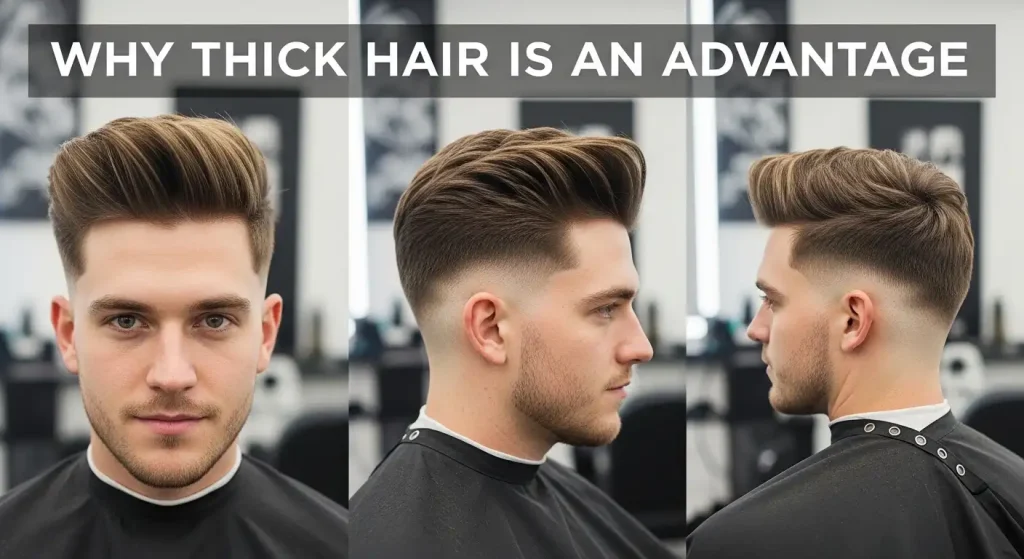
While many men focus on the challenges of managing thick hair, they overlook one major fact — thick hair offers structural advantages that thinner hair simply cannot replicate. When cut correctly, it becomes a powerful asset.
Volume = Structure
Natural volume creates built-in shape. Unlike flat or fine hair, thick hair holds height and dimension effortlessly. This means styles like the textured crop, quiff, or layered side part look fuller and more defined without excessive product.
Better Hold Potential
Because of higher density, thick hair has stronger natural support. It grips styling products better and maintains form longer throughout the day. With the right cut and a quality matte clay or pomade, hold becomes effortless instead of forced.
More Style Flexibility
Men with thick hair can experiment with short, medium, and long hairstyles more easily. From tight fades to flowing layered cuts, thick hair adapts well when weight is managed correctly.
Thick Hair vs Thin Hair Contrast
Thin hair often requires illusion techniques to create fullness. Thick hair already has the foundation — it simply needs controlled shaping. When structured properly, thick hair becomes easier to style than most men realize.
Understanding Your Thick Hair Type
Not all thick hair behaves the same. One of the biggest mistakes men make is choosing a haircut based only on inspiration photos instead of hair behavior.
Straight & Dense
This type sits heavier at the sides and can appear boxy without layering. It benefits from internal weight removal and structured fades.
Wavy & Voluminous
Natural movement adds character but can expand outward. Controlled layering helps define waves without creating puffiness.
Coarse & Heavy
Individual strands are thicker, making hair feel stiff. This type responds best to texturizing techniques and lighter styling products.
Puffy & Frizz-Prone
Often expands in humidity. Requires strategic thinning and moisture-balancing styling routines.
Understanding your exact type allows you to choose hairstyles for men with thick hair that actually perform well daily.
How to Choose the Right Haircut for Thick Hair
Choosing the best haircut for men with thick hair isn’t about trends — it’s about alignment. Use this simple framework:
Step 1: Identify Hair Behavior
Determine whether your hair is dense, coarse, wavy, or prone to puffiness. The cutting technique must match your growth pattern and strand thickness.
Step 2: Match Your Face Shape
Round, square, oval, diamond, and oblong faces require different proportions. Thick hair can either enhance balance or exaggerate width depending on structure.
Step 3: Decide Your Maintenance Tolerance
Are you willing to blow-dry and style daily, or do you prefer a low-maintenance haircut? Thick hair can support both — but the cut must be chosen accordingly.
Why Most Haircuts Fail on Thick Hair
Most haircuts for men with thick hair fail because they focus only on length instead of weight removal. Without layering or thinning, thick hair becomes bulky, loses shape quickly, and requires excessive styling to manage.
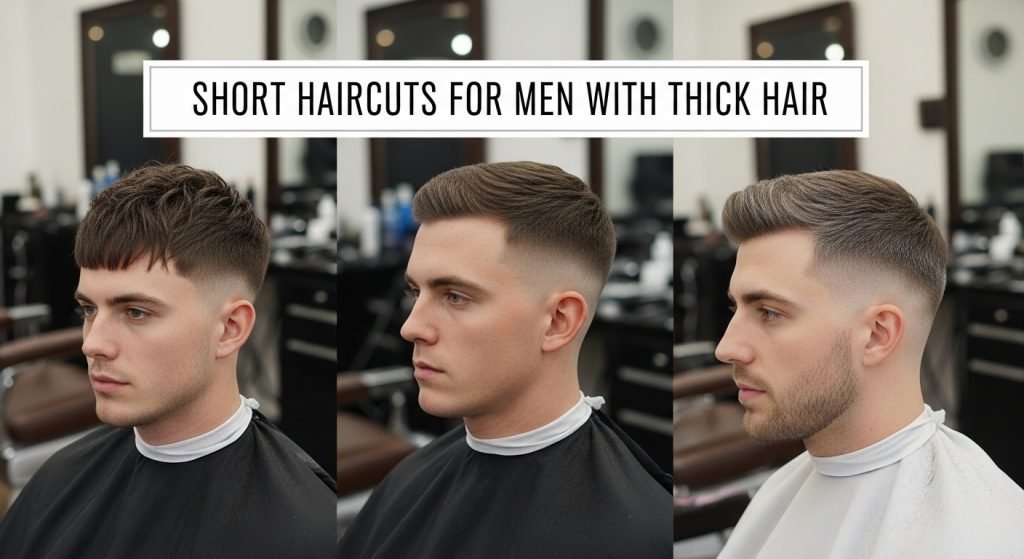
Short Haircuts for Men With Thick Hair
You can also explore spiky hairstyles for men if you want a more textured, modern look with volume on top.
Textured Crop
A textured crop works exceptionally well for dense hair because it uses point cutting and layering to break up bulk. Paired with a low or mid fade, it keeps the sides tight while maintaining movement on top.
French Crop
The French crop adds a defined fringe while keeping length manageable. It’s great for men whose thick hair tends to push forward naturally.
Crew Cut
A classic crew cut reduces overall density while keeping a masculine silhouette. Ideal for men who want structure without daily styling effort.
Buzz Cut with Taper
A buzz cut with taper controls bulk completely while preserving clean edges. Perfect for thick hair that grows outward quickly.
High Fade + Structured Top
A high fade removes side heaviness, while a slightly longer top keeps volume controlled and intentional.
Medium-Length Hairstyles for Thick Hair
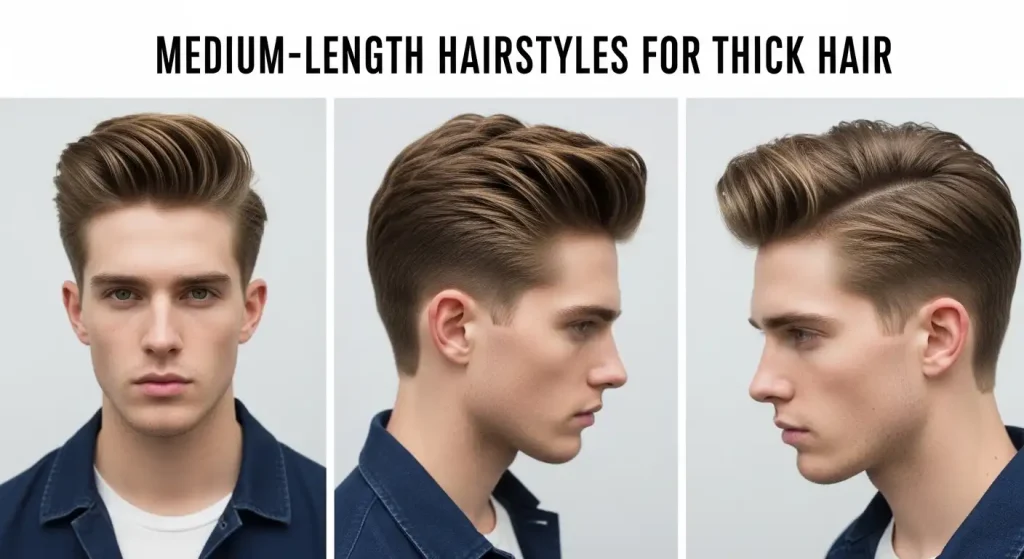
Medium styles offer the best balance between volume and versatility. Thick hair shines in this range when layered correctly.
Quiff
The quiff uses natural density to create height. With proper debulking, it avoids the “helmet” effect while maintaining lift.
Side Part
A structured side part works well for professional settings. Thick hair helps maintain separation and hold throughout the day.
Blowout Taper
The blowout taper enhances natural fullness while tapering the neckline and sides for balance.
Modern Comb-Over
Unlike traditional flat comb-overs, the modern version uses texture and fade blending to keep thick hair controlled.
Layered Brush Back
Layering is crucial here. It removes internal weight while allowing the hair to flow backward naturally.
Long Hairstyles for Men With Thick Hair
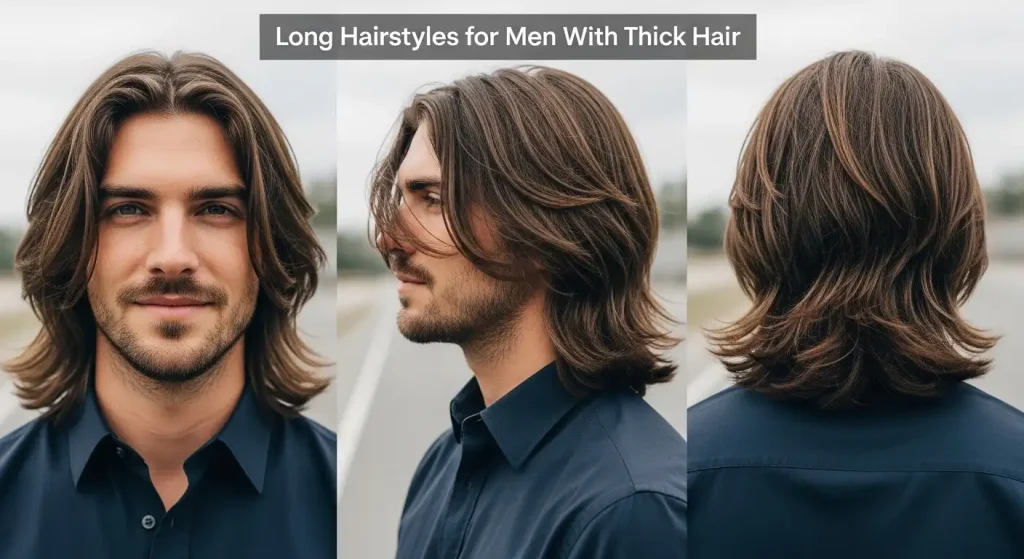
Thick hair truly becomes an advantage at longer lengths — if managed correctly.
Bro Flow
The bro flow embraces natural movement. Best suited for men with medium-to-thick density and slight wave.
Curtain Haircut
A layered curtain haircut works exceptionally well with thick hair, adding shape and softness.
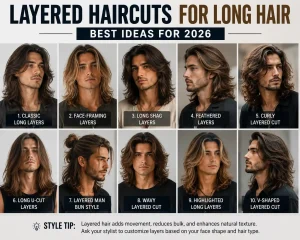
Long Layered Cut
Strategic layering prevents long thick hair from looking triangular or bottom-heavy.
Modern Mullet
The updated modern mullet blends textured top layers with controlled length in the back.
Shoulder-Length Flow
For maximum movement, shoulder-length styles require weight removal and moisture control to prevent bulk buildup.
Best Haircuts for Thick Hair by Face Shape
Choosing a haircut based on face shape ensures thick hair enhances your proportions instead of overpowering them.
Round Face
Opt for height and tighter sides. A textured quiff or high fade adds vertical balance and reduces width.
Square Face
Strong jawlines pair well with structured cuts like a crew cut or layered side part.
Oval Face
Most hairstyles for men with thick hair work here. Focus on maintaining proportion rather than adding excess height.
Diamond Face
Add volume at the temples with medium-length layered styles to balance cheekbone prominence.
Oblong Face
Avoid excessive height. Medium layered styles or textured crops keep proportions balanced.
Best Haircuts for Thick Hair
| Haircut | Maintenance | Volume Control | Best For |
|---|---|---|---|
| Textured Crop | Low | High | Thick + short |
| Quiff | Medium | Medium | Volume styling |
| Layered Cut | Medium | High | Long hair |
| Buzz Cut | Very Low | Maximum | Low effort |
Haircuts That Remove Bulk & Reduce Puffiness
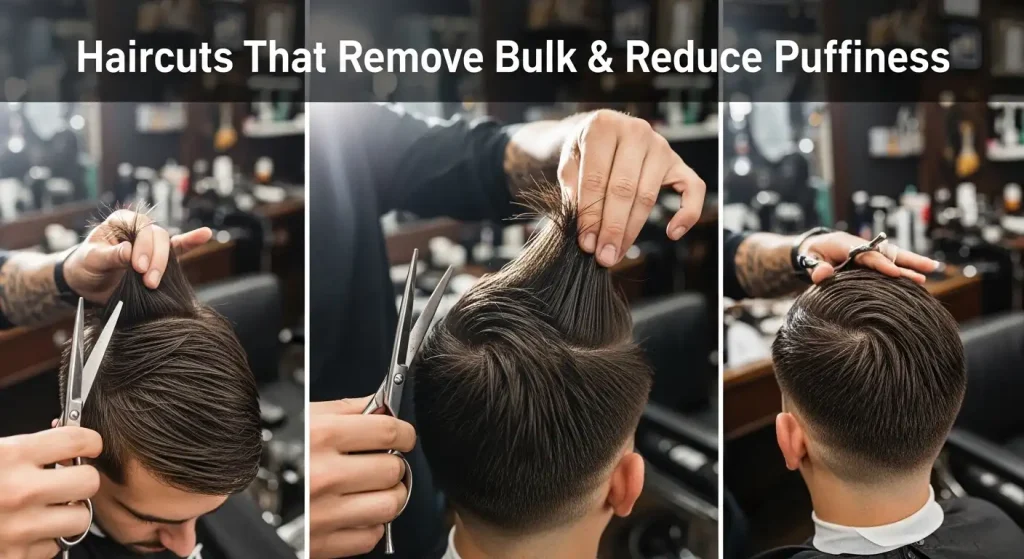
If you struggle with thick hair that feels heavy, expands outward, or turns puffy, the solution isn’t always going shorter — it’s removing weight strategically. This is where technique matters more than style name.
Internal Layering
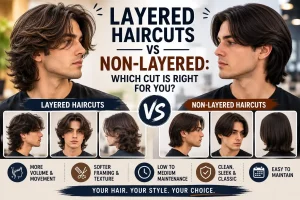
Internal layering reduces density from inside the haircut without thinning the outer shape. It keeps fullness while creating movement and preventing that boxy, bulky appearance.
Thinning Shears
Used correctly, thinning shears can break up excess density and soften harsh weight lines. The key is moderation — over-thinning can cause frizz or uneven texture.
Razor Cutting vs Scissor Cutting
Razor cutting creates softer, lighter ends and removes weight efficiently, making it ideal for coarse or very dense hair. Scissor cutting, on the other hand, maintains structure and control. The right choice depends on your hair behavior.
Undercut Strategies
An undercut removes side bulk instantly, allowing the top to maintain volume without looking wide. It’s one of the most effective ways to manage thick hair without sacrificing length.
Most competitors list styles — but rarely explain the technical methods that actually control bulk.
Best Fade Types for Thick Hair
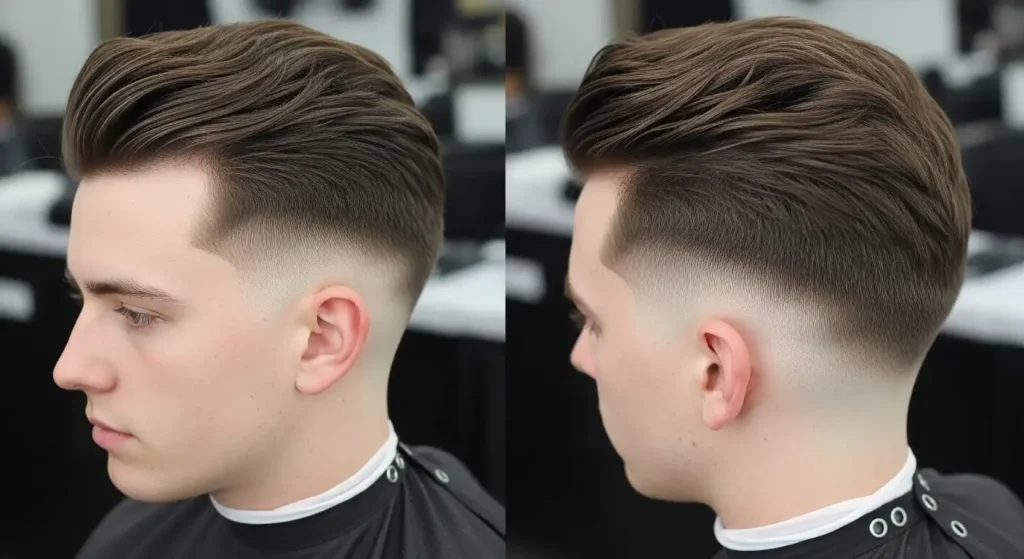
Fades are especially powerful for thick hair because they remove side heaviness while keeping the top structured.
Low Fade
A low fade keeps transitions subtle and professional while reducing puffiness near the ears.
Mid Fade
The mid fade balances boldness and control. It’s ideal for men who want noticeable contrast without going extreme.
Drop Fade
A drop fade curves naturally around the head, complementing thick hair’s density while keeping shape clean.
Burst Fade
The burst fade works well with textured tops or modern mullets, keeping the sides tight while allowing volume above.
Taper Fade
A taper fade offers the most conservative option, maintaining length while subtly controlling bulk at the neckline and sideburns.
Choosing the right fade depends on how much weight you need removed and how bold you want the contrast.
Thick Hair Hairstyles Based on Lifestyle
The best haircut for men with thick hair isn’t just about face shape — it’s about daily routine and personal style.
Corporate Professional
Opt for structured cuts like a side part, low fade, or layered taper. These styles look polished and remain controlled in formal environments.
College / Student
Textured crops, blowout tapers, and modern mullets offer personality while remaining easy to manage.
Athlete
Short fades, crew cuts, and tapered buzz cuts reduce sweat-related puffiness and require minimal styling.
Creative / Fashion-Forward
Layered curtain haircuts, modern mullets, or longer textured styles showcase thick hair’s natural volume.
Low-Effort Men
Choose low-maintenance haircuts like short textured tops with tapered sides. Thick hair already provides structure — it just needs light shaping.
Low Maintenance Haircuts for Thick Hair
If you prefer a style that looks sharp without daily effort, thick hair actually works in your favor. The key is choosing cuts that control bulk and growth patterns naturally.
Short Textured Styles
A short textured crop or slightly messy top keeps density controlled while allowing natural movement. Minimal styling is required — just a light matte product for definition.
Tapered Cuts
A clean tapered cut removes side heaviness without dramatic contrast. It grows out evenly, making it ideal for men who don’t want frequent barber visits.
Natural Flow
Medium-length natural flow styles work well when internally layered. They embrace thick hair’s volume instead of fighting it, requiring only light styling to maintain shape.
How to Style Thick Hair Step-by-Step
Styling thick hair isn’t about using more product — it’s about using the right method.
Pre-Styler Application
Apply a lightweight pre-styler or heat protectant to damp hair. This adds control and prevents frizz before heat styling.
Blow-Dry Direction
Blow-dry in the direction you want your hair to sit. Use airflow to lift at the roots while controlling side expansion. Thick hair responds strongly to directional drying.
Product Layering
Start small. Use a pea-sized amount of matte clay or pomade, warming it between your palms before applying evenly. Add more only if necessary.
Locking Hold
Finish with light hairspray if you need extended hold. Thick hair already has structure — you’re refining it, not forcing it.
Best Styling Products for Thick Hair
Choosing the right product dramatically changes how thick hair behaves.
Clay vs Pomade
Clay offers strong hold with a matte finish and works best for textured or modern styles.
Pomade provides shine and smoother control, ideal for slick backs and side parts.
Matte vs Shine
Matte finishes reduce the appearance of bulk, while shine enhances sleekness. For very dense hair, matte often looks more natural.
Sea Salt Spray
A sea salt spray enhances texture and movement in medium-to-long styles without heaviness.
Strong Hold Options
For high-volume styles like quiffs, use strong-hold clays or pastes — but apply sparingly to avoid stiffness.
Thick Hair and Beard Combinations
Pairing your haircut with the right beard style creates balance and sharpens your overall look.
Stubble + Textured Crop
A short textured crop with light stubble keeps the look clean and modern without overwhelming facial structure.
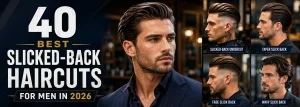
Full Beard + Slick Back
A structured slick back balances well with a full beard, especially when sides are faded for contrast.
Fade Blending Into Beard
Blending a fade into the beard removes side bulk and creates a seamless transition from hair to facial hair.
This combination strategy is rarely optimized by competitors but adds high engagement value.
Thick Hair Mistakes Most Men Make
Even great hair can look messy if handled incorrectly.
Overgrowing Sides
Thick hair expands quickly. Letting the sides grow too long creates width and imbalance.
Using Too Much Product
Heavy application causes clumping and stiffness. Thick hair needs controlled styling, not saturation.
Ignoring Weight Removal
Choosing styles without internal layering leads to puffiness and bulk buildup.
Choosing Trends Blindly
Not every trending haircut suits dense hair. Structure and proportion matter more than popularity.
Not Communicating Clearly With Barber
If you don’t specify weight removal, thinning, or fade height, you may end up with unnecessary bulk.
Thick Hair Trends for 2026
Modern men’s hairstyles continue evolving, and thick hair remains a major advantage.
Korean-Inspired Layered Cuts
Soft, airy layers create movement and reduce heaviness — especially popular in medium-length styles.
Soft Tapers Replacing Harsh Fades
Natural-looking tapers are trending over extreme high-contrast fades.
Modern Mullet Evolution
The updated mullet blends texture and subtle fades for a cleaner, wearable look.
Textured Fringe Dominance
Fringes with internal texture are gaining popularity, offering shape without stiffness.
How Often Should Men With Thick Hair Get a Haircut?
Thick hair grows with visible density, which means shape and structure can disappear faster than you expect. Managing growth properly keeps bulk under control and maintains balance.
Week 2–3
At this stage, the outline starts softening. Fades lose sharpness, and the sides may begin expanding slightly. A quick cleanup or taper refresh helps maintain structure.
Week 4–5
Bulk becomes more noticeable. Thick hair starts pushing outward, especially around the temples and crown. This is the ideal window for a full maintenance haircut.
When Bulk Becomes Visible
If your hairstyle begins looking wider instead of defined, or styling takes longer than usual, excess weight is building up internally.
Growth Management Strategy
Men with thick hair benefit from trimming every 3–5 weeks depending on length and fade height. Short styles require more frequent maintenance, while layered medium cuts can stretch longer.
Consistent maintenance prevents the “helmet effect” before it starts.
Office-Friendly & Professional Thick Hairstyles
Thick hair can look powerful and polished when structured properly. The goal is clean proportions without excessive contrast.
Conservative Fades
Low fades or subtle tapers maintain professionalism while removing side bulk.
Clean Taper Cuts
A structured taper keeps the neckline sharp and the silhouette controlled — ideal for corporate environments.
Structured Side Part
A layered side part offers balance and refinement. Thick hair naturally holds separation, making this style reliable throughout the workday.
Professional styles should emphasize proportion, not extreme height or dramatic disconnection.
Should You Change Your Hairstyle?
Before switching styles, use this quick decision checklist:
Face Shape Compatibility – Does the new cut enhance your proportions?
Maintenance Tolerance – Are you willing to style it daily?
Lifestyle Match – Does it suit your work, activity level, and personality?
Styling Commitment – Do you have the right tools and products?
Professional Rules – Will it align with workplace expectations?
If the answer is “yes” across most categories, the change will likely work in your favor.
FAQ
Is thick hair good for fades?
Yes. Thick hair works exceptionally well with fades because the density creates strong contrast between the sides and top. A properly blended low, mid, or taper fade removes bulk while keeping the upper section structured and defined.
What is the best low maintenance haircut for thick hair?
Short textured crops and tapered cuts are among the best low maintenance options. They control bulk naturally, grow out evenly, and require minimal styling while still looking intentional and sharp.
How do I make thick hair less puffy?
Reduce puffiness by asking for internal layering or controlled thinning. Blow-drying in the correct direction and using lightweight matte products also helps prevent expansion and bulk buildup.
Does thinning thick hair damage it?
When done correctly by a skilled barber, thinning does not damage hair. Over-thinning or improper technique can cause frizz, so moderation and professional application are key.
What product works best for thick hair?
Matte clay is often ideal because it provides strong hold without excess shine. For sleeker styles, pomade works well. The right choice depends on the hairstyle and desired finish.
Are long hairstyles good for thick hair?
Yes. Thick hair supports long styles exceptionally well when layered properly. Weight removal prevents heaviness, allowing natural movement and shape to shine.
Conclusion
Thick hair isn’t the problem — poor structure is. When cut and styled correctly, thick hair becomes one of the biggest advantages a man can have. It provides natural volume, stronger hold, and more versatility than finer hair types. The key is understanding how to manage density, weight removal, and proportion instead of simply choosing a trending style.
Whether you prefer a short textured crop, a professional side part, a clean taper fade, or a longer layered flow, the right haircut for men with thick hair depends on three things: your face shape, your hair behavior, and your maintenance commitment. Once those align, styling becomes easier, bulk stays controlled, and your haircut works with you — not against you.
Remember, thick hair needs strategy, not just scissors. Communicate clearly with your barber, maintain regular trims, and use the right products sparingly. When structure meets intention, thick hair doesn’t look heavy — it looks powerful.
The best haircuts for men with thick hair aren’t about removing volume — they’re about controlling it. When you combine the right cut, proper layering, and smart styling, thick hair becomes your biggest advantage.