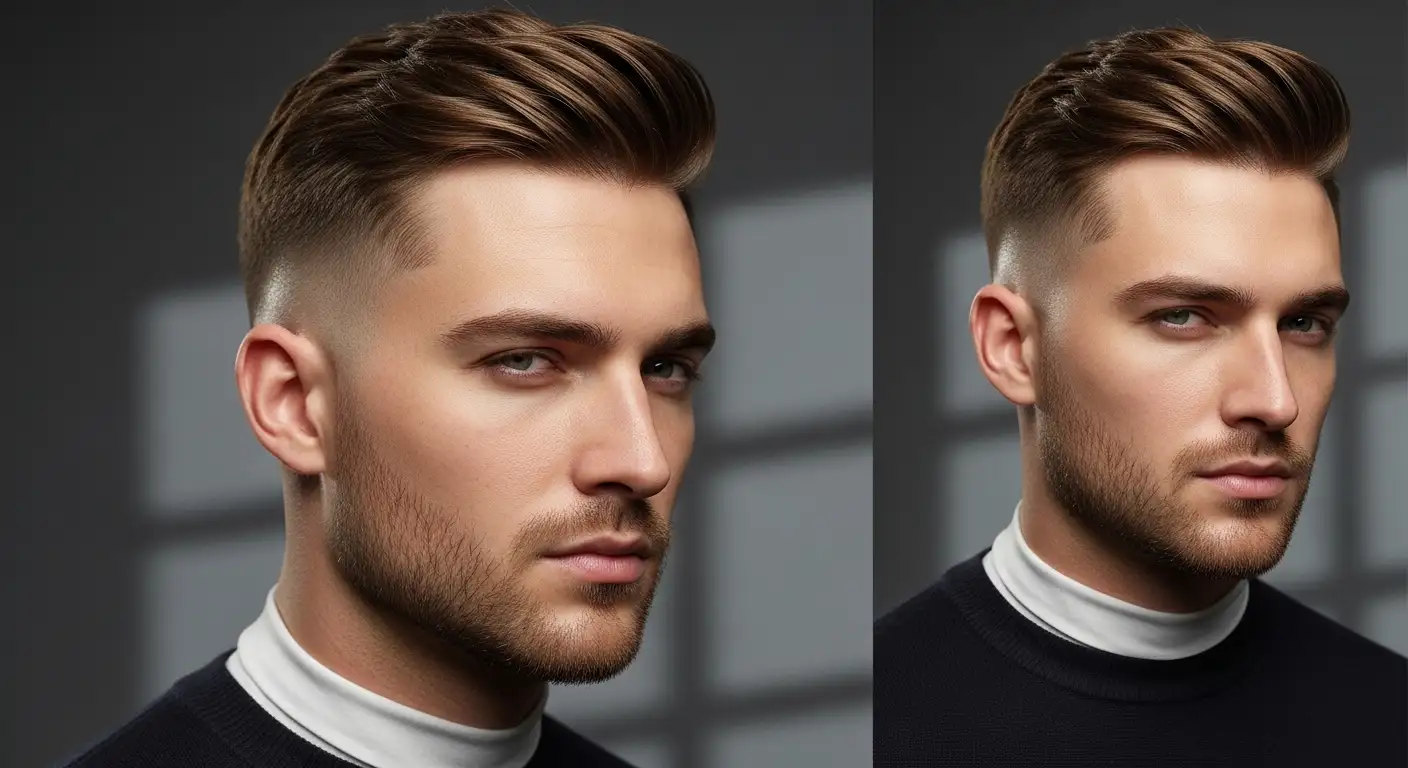
The low fade haircut is one of the most versatile, professional, and modern men’s haircuts today. It features a gradual fade that starts just above the ears and neckline, creating a clean and subtle transition into longer hair on top. Unlike a mid fade or high fade, the low fade keeps the look sharp without appearing too aggressive, making it ideal for both office settings and casual styles.
From a textured crop to a pompadour, the low fade works with almost every hair type — straight, wavy, curly, thick, or even thinning hair. It enhances the jawline, balances different face shapes, and offers manageable maintenance, which is why it remains one of the most popular fade haircuts for men.
In this complete guide, you’ll discover the best low fade styles, how to choose the right option for your face shape, the correct guard numbers to ask your barber for, smart beard pairing tips, and a realistic 4-week maintenance plan to keep your fade looking sharp.
What Is a Low Fade Haircut?
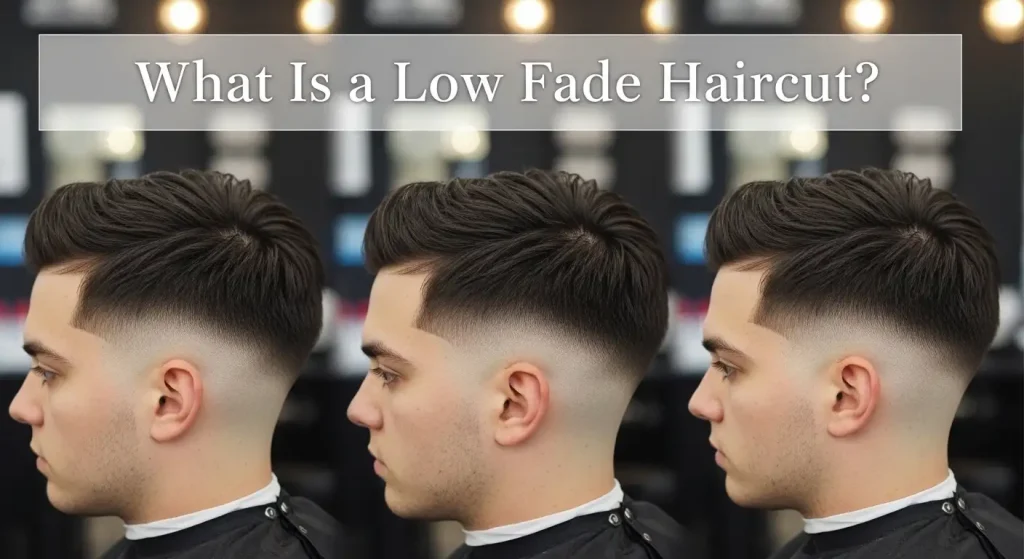
A low fade haircut is a men’s hairstyle where the fade begins just above the ears and along the neckline, gradually blending into longer hair on top. Unlike a taper, which only shortens hair at the sideburns and nape, a low fade creates a more noticeable yet soft transition. It’s considered subtle and professional because the fade stays low, maintaining a clean, balanced look without exposing too much scalp.
Where the Fade Begins
The low fade starts slightly above the ears and curves naturally around the hairline and neckline. The fade area remains low on the head, keeping most of the upper sides intact while blending downward into shorter lengths.
How It Differs From a Taper
A taper haircut gradually shortens hair only at the sideburns and neckline, keeping the sides mostly full. A low fade, however, blends higher into the sides, creating a more defined and modern transition between short and long hair.
Why It’s Considered Subtle
The low fade is seen as subtle and professional because it avoids extreme contrast. It provides a clean finish without the bold scalp exposure of a high fade, making it suitable for corporate, school, and formal settings.
Quick Definition:
A low fade haircut is a hairstyle where the fade begins just above the ears and neckline, gradually blending into longer hair on top for a clean and subtle appearance.
You May Also Like:
Best Older Mens Hairstyles 2026 for Men Over 50
Best Fringe Haircuts Men 2026 Modern Styles You Must Try
Long Hairstyles for Men (30 Best Styles & Grooming Tips)
Best Fringe Haircuts Men 2026 Modern Styles You Must Try
45 Best Low Fade Haircuts for Men
Low Fade vs Mid Fade vs High Fade
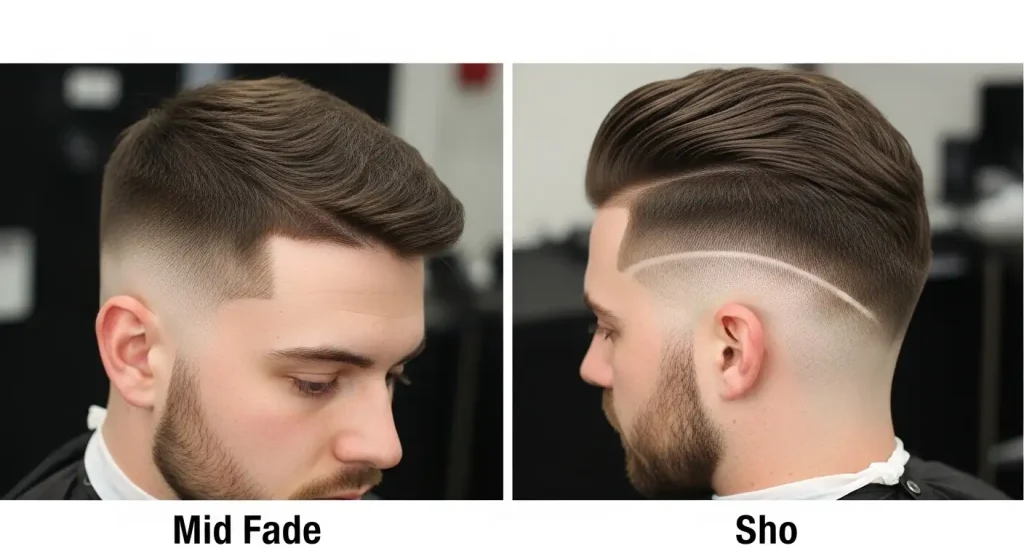
Understanding the difference between a low fade, mid fade, and high fade helps you choose the right level of contrast, professionalism, and maintenance. While all three are types of fade haircuts for men, the key difference lies in where the fade begins and how dramatic the transition looks.
Start Point Difference
- Low Fade: Begins just above the ears and neckline, keeping most of the sides longer.
- Mid Fade: Starts around the temple area, creating a balanced blend between subtle and bold.
- High Fade: Begins near the upper sides or forehead corner, removing more hair and exposing more scalp.
The higher the fade starts, the stronger the visual contrast.
Aggressiveness Level
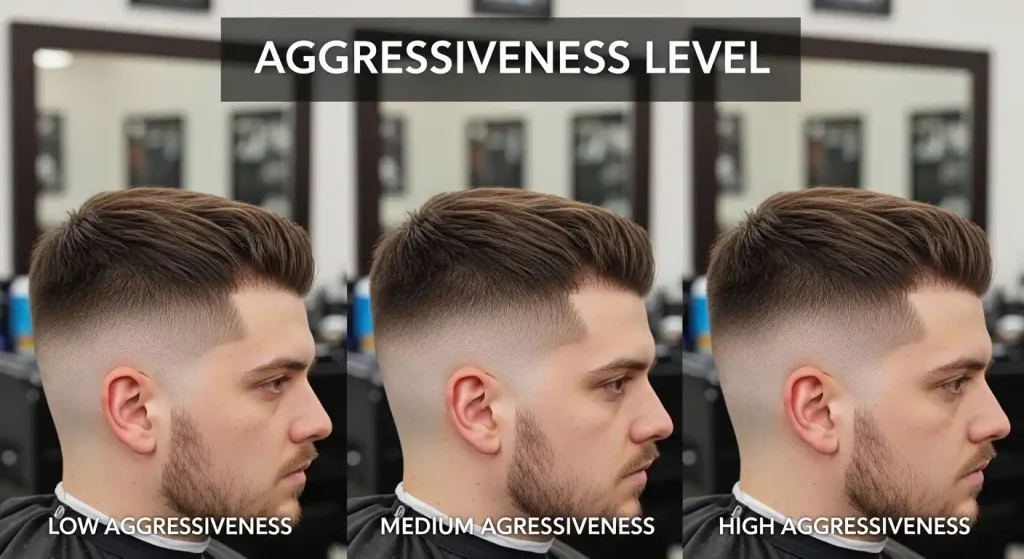
- Low Fade: Most subtle and conservative.
- Mid Fade: Balanced and modern — noticeable but not extreme.
- High Fade: Most bold and dramatic, creating sharp contrast between the sides and top.
If you prefer a clean but understated look, the low fade haircut is the safest choice.
Best for Professional Settings
- Low Fade: Ideal for corporate environments, interviews, and formal events.
- Mid Fade: Works well in both creative and business settings.
- High Fade: Better suited for casual, athletic, or trend-driven styles.
For maximum workplace flexibility, the low fade offers the most professional appearance.
Maintenance Difference
- Low Fade: Requires trimming every 3–4 weeks.
- Mid Fade: Needs touch-ups every 2–3 weeks.
- High Fade: Demands frequent maintenance, often every 1–2 weeks, to keep the sharp contrast clean.
The higher the fade, the faster it loses its sharp definition.
Related Haircut Guides:
– Mid Fade Haircut for Men
– High Fade Haircut Styles
– Taper Fade vs Fade Explained
– Best Pompadour Hairstyles
30 Best Low Fade Haircut Styles for Men
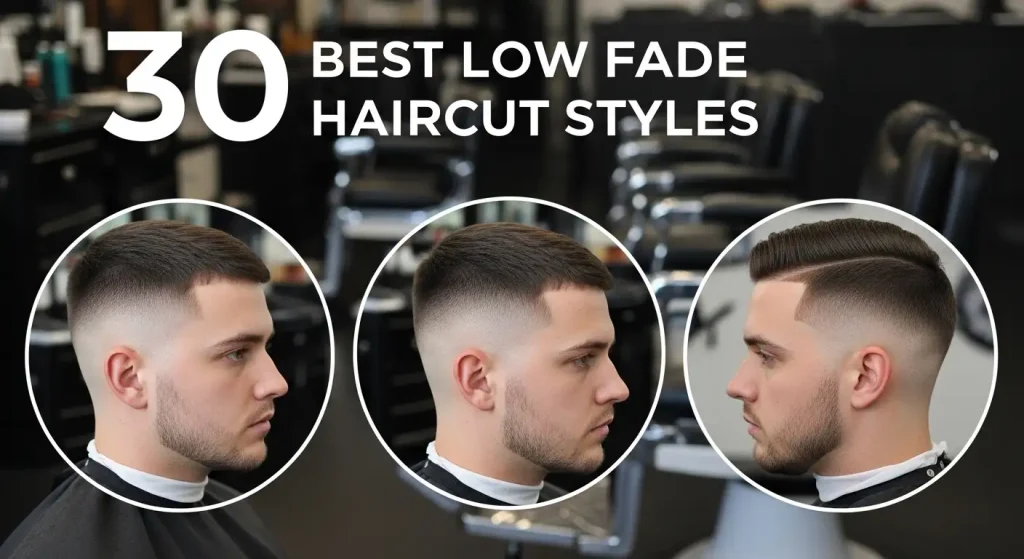
The low fade haircut pairs effortlessly with modern and classic styles. Below are the most popular and versatile variations men choose today.
Low Fade Textured Crop
A textured crop with a low fade creates a clean yet slightly messy look. The short, choppy top adds movement while the low fade keeps the sides sharp and professional.
Low Fade Pompadour
The low fade pompadour blends classic volume with modern contrast. Ideal for men who want height on top without an aggressive side fade.
Low Fade Quiff
A quiff with low fade adds lift at the front while maintaining subtle sides. Perfect for balancing round or fuller face shapes.
Low Fade Crew Cut
The crew cut with low fade is clean, athletic, and low maintenance. Great for professional settings and structured face shapes.
Low Fade Buzz Cut
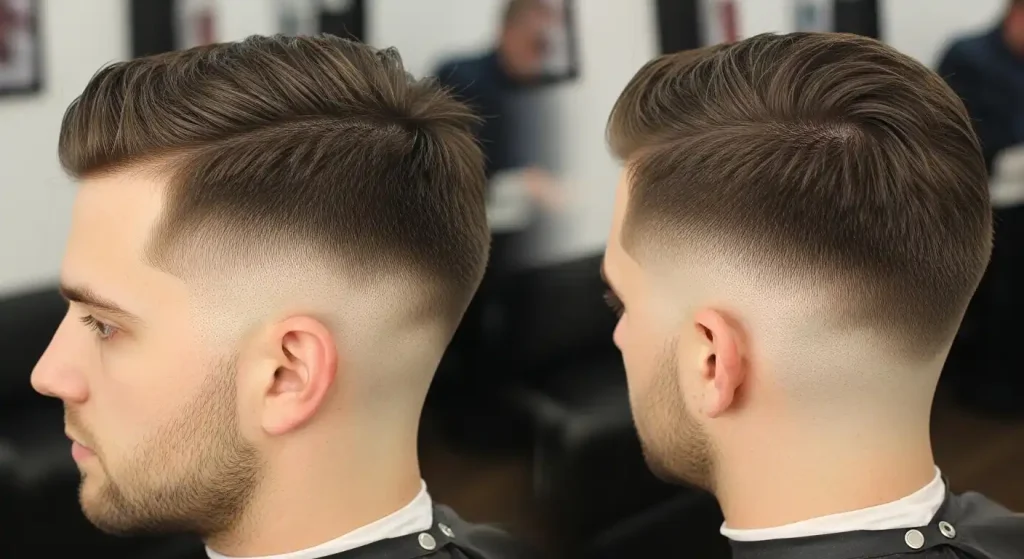
A buzz cut with low fade enhances jawlines and creates a masculine finish. Excellent for thinning hair or receding hairlines.
Low Fade Undercut
The low fade undercut offers stronger contrast while keeping the fade start low. Ideal for bold styling and modern looks.
Low Fade Slick Back
A slick back with low fade delivers a polished, business-ready appearance with controlled shine and structure.
Low Fade Side Part
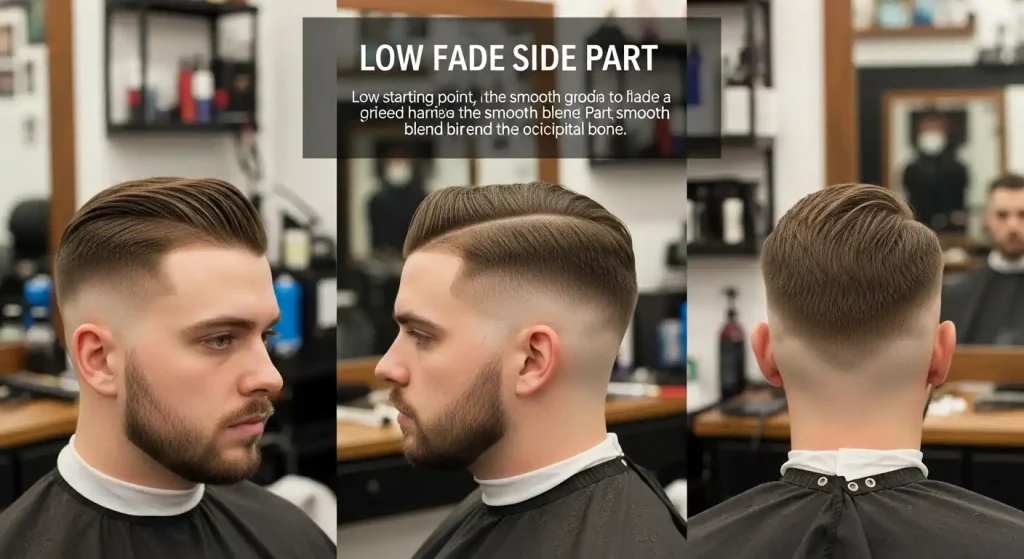
The low fade side part blends timeless elegance with subtle fading, making it one of the most professional variations.
Low Fade Curly Hair
A low fade for curly hair removes bulk from the sides while enhancing natural curl volume on top.
Low Fade Afro
The low fade afro keeps the shape structured while maintaining natural texture and density.
Low Fade Long on Top
Keeping the top longer creates strong contrast while the low fade maintains balance and versatility.
Low Drop Fade
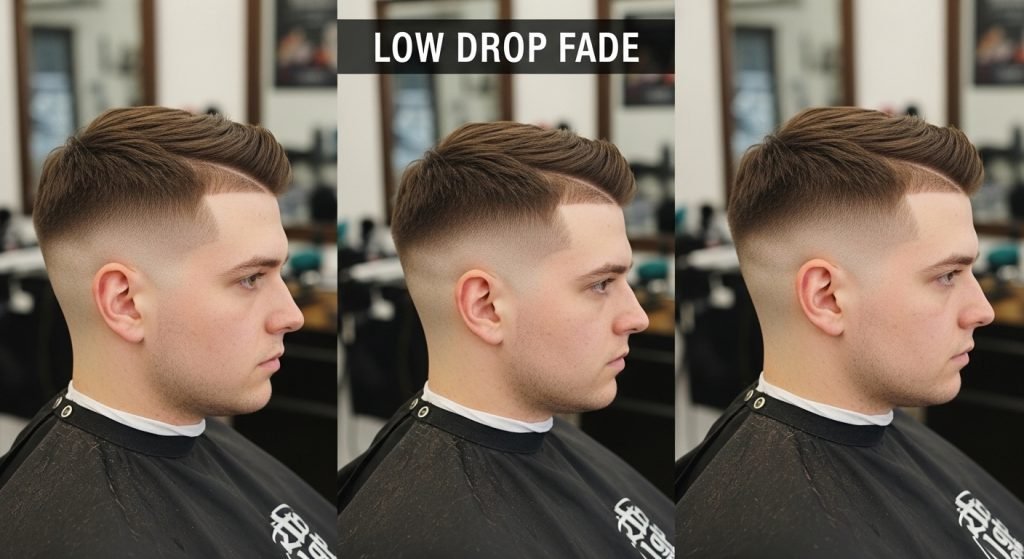
A low drop fade curves behind the ear, following the natural head shape for a smoother, more sculpted finish.
Low Skin Fade
The low skin fade blends down to the skin near the neckline, creating a sharper and more defined base.
Low Fade with Hard Part
Adding a hard part introduces definition and separation, making the haircut appear sharper and more structured.
Low Fade by Face Shape
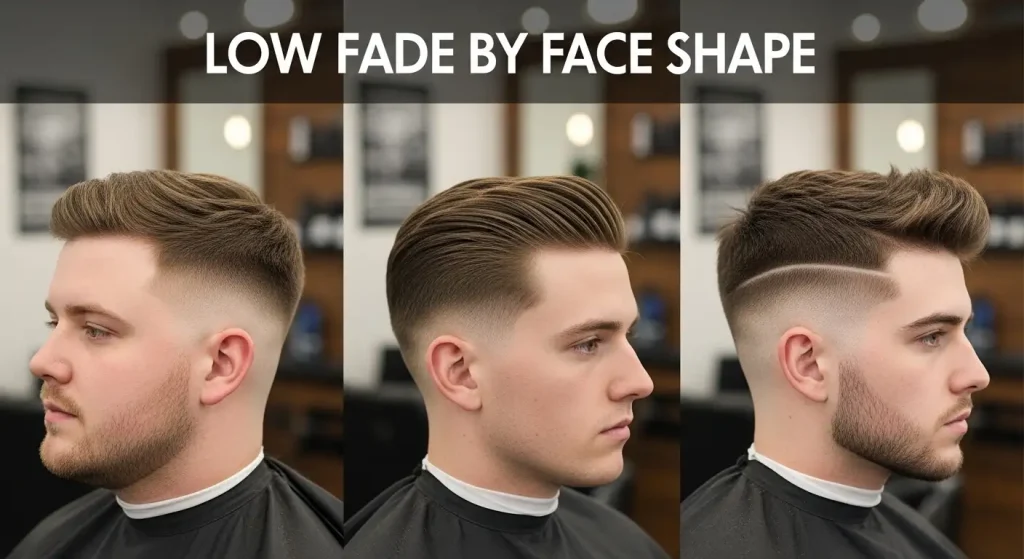
Choosing the right low fade haircut depends heavily on your face shape. The fade placement and top height can visually elongate, widen, or balance facial proportions.
Round Face
Best choice: Low fade with height on top (quiff or pompadour).
Why: Adding vertical volume elongates the face and reduces width.
Avoid: Flat styles that make the face appear wider.
Oval Face
Best choice: Almost any low fade style works.
Why: Oval faces are naturally balanced.
Tip: Avoid excessive height that over-elongates proportions.
Square Face
Best choice: Low fade crew cut or textured crop.
Why: The fade highlights strong jawlines and angular features.
Height recommendation: Moderate volume works best.
Diamond Face
Best choice: Low fade with fuller sides and moderate top length.
Why: Too much height can exaggerate cheekbone width.
Tip: Keep balance between sides and top.
Heart Face
Best choice: Low fade with fringe or textured crop.
Why: Fringe softens a wider forehead and balances a narrower chin.
Long Face
Best choice: Low fade with minimal top height.
Why: Excess height elongates the face further.
Avoid: High-volume pompadours or tall quiffs.
Low Fade by Hair Type
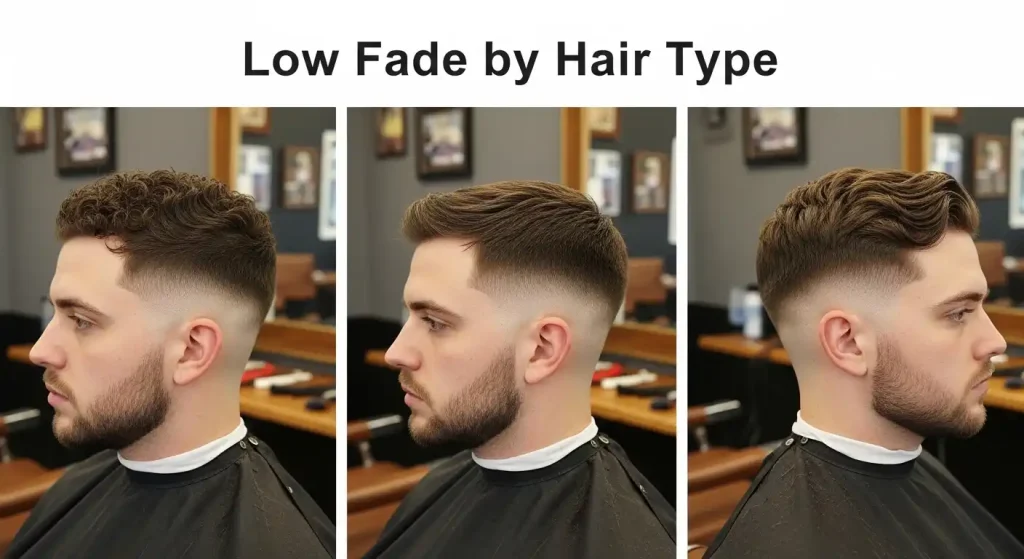
Choosing the right low fade haircut also depends on your hair type. The texture, density, and thickness of your hair affect how the fade blends and how the top should be styled.
Thick Hair
A low fade for thick hair removes excess bulk from the sides while allowing volume on top. Textured crops, quiffs, and pompadours work especially well. Ask your barber for internal thinning if your hair feels too heavy.
Thin Hair
For thin hair, a low fade creates the illusion of fullness by tightening the sides and focusing attention on the top. Short, layered styles work best. Avoid overly long tops that expose scalp.
Fine Hair
Fine hair benefits from a soft low fade with subtle blending. Use lightweight styling products like matte clay or texture powder to create movement without flattening the hair.
Coarse Hair
A low fade on coarse hair controls volume while maintaining structure. Keep the top slightly longer to balance thickness and request clean blending to avoid harsh transitions.
Curly Hair
A low fade for curly hair enhances natural curl definition while reducing side bulk. The fade keeps the shape clean and prevents the haircut from looking overly rounded.
Wavy Hair
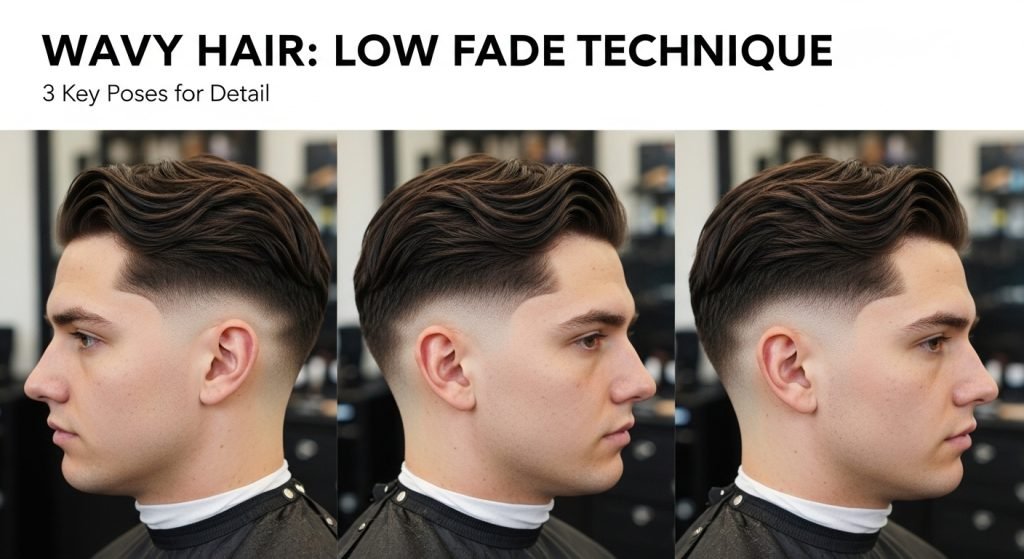
The Wavy hair pairs perfectly with a low fade textured style. Medium length on top allows natural movement while the fade keeps the look polished.
Receding Hairline
A low fade with short top length helps reduce contrast around the temples. Styles like a crew cut or textured crop work well. Avoid high fades that exaggerate hairline recession.
Low Fade With Beard Pairing Guide
Pairing a low fade haircut with a beard creates balance and enhances masculinity. The key is maintaining proportion between the fade and facial hair length.
Stubble
A low fade with stubble creates a clean, modern appearance. It highlights the jawline without overpowering the haircut. Ideal for professional environments.
Short Boxed Beard
This combination offers strong definition. The low fade keeps the sides tight, while the short boxed beard adds structure and maturity.
Full Beard
A low fade with a full beard creates contrast and masculinity. Make sure the beard is properly shaped to avoid looking bottom-heavy.
Goatee
A low fade with a goatee keeps focus on the chin area. This pairing works well for men who want facial definition without full beard density.
Clean Shave Look
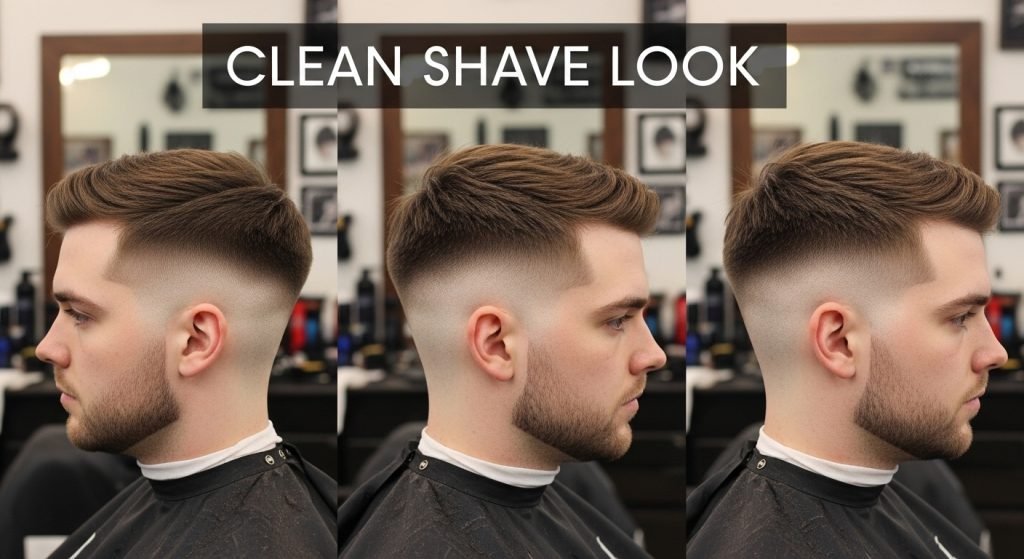
A clean shave with low fade produces the most professional and minimal aesthetic. It’s sharp, balanced, and ideal for corporate settings.
Guard Numbers & Clipper Settings Explained
Understanding guard numbers helps you communicate clearly with your barber and avoid haircut mistakes. In a low fade haircut, clipper guards control how short the hair gets and how smoothly it blends into longer lengths.
#0 – Skin (Bald Base)
A #0 guard (or no guard) cuts hair down to the skin. In a low skin fade, this creates the cleanest and sharpest base near the neckline and around the ears. Barbers often refer to this as a bald fade foundation.
#1 – Fade Base
A #1 guard leaves very short hair (about 1/8 inch). This is commonly used as the starting length above the skin area in a low fade. It creates a tight, clean transition without full scalp exposure.
#2 – Blend Zone
A #2 guard (about 1/4 inch) is often used in the blend area between the faded section and the longer hair above. This guard softens the transition and prevents harsh lines.
Taper Zone Length
The taper zone refers to the sideburns and neckline area. Barbers gradually reduce length in this zone using guard progression (for example, #2 → #1 → #0) to achieve a smooth gradient.
Barber Language You Should Know
- “Open vs closed lever” – Adjusts clipper blade length slightly for precision blending.
- “Debulking” – Removing excess thickness before fading.
- “Guideline” – The initial line created to structure the fade.
- “Blend out the line” – Softening visible transitions.
Using this terminology increases clarity and ensures better results.
Blending Explanation
A proper low fade blend is achieved through:
- Gradual guard progression
- Lever adjustments
- Scissor-over-comb technique
- Cross-checking for dark spots
The goal is a seamless gradient, not visible steps between lengths.
Pro Barber Tip:
Professional barbers recommend starting with a lower guard and gradually blending upward instead of cutting too short too quickly. This ensures better control and a smoother fade transition.
How to Ask Your Barber for the Perfect Low Fade
Most haircut mistakes happen due to unclear communication. Here’s how to confidently request the exact low fade haircut you want.
Bring Reference Photos
Always show 1–2 clear images of your desired style. Visual references eliminate guesswork and prevent misunderstandings.
Explain the Fade Starting Point
Specify that you want a low fade starting just above the ears and neckline. If you prefer subtlety, say you want it kept “low and conservative.”
Specify Length on Top
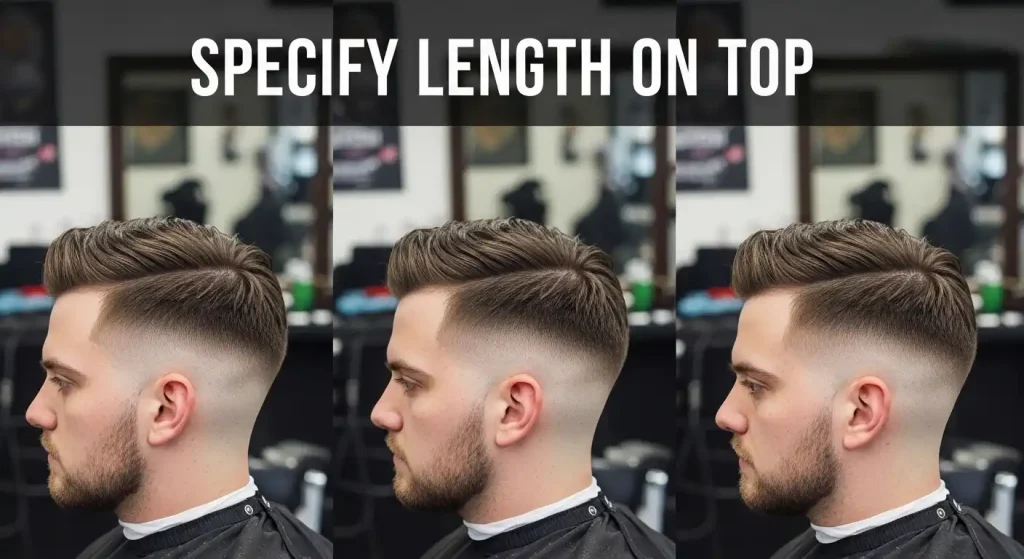
Be precise:
- “Keep 2 inches on top.”
- “Short textured crop.”
- “Medium length for styling.”
Request Blending Style
Tell your barber whether you want:
- A soft, gradual blend
- A clean skin fade
- A slightly sharper contrast
Clear blending instructions avoid uneven results.
Clarify Neckline Preference
Options include:
- Natural neckline
- Tapered neckline
- Sharp squared neckline
This small detail significantly affects how polished the haircut looks.
4-Week Low Fade Maintenance Timeline
A low fade haircut looks best when maintained strategically. Here’s what realistically happens week by week — and how to keep it sharp.
Week 1 – Sharp
Your fade lines are crisp, the blend is clean, and the neckline is fresh.
✔ Use a matte clay or light pomade for controlled styling.
✔ Wash hair 2–3 times per week to preserve natural texture.
✔ Minimal effort required — just light daily styling.
Week 2 – Natural
The fade begins to soften slightly, but still looks clean.
✔ Continue using texture powder or matte styling cream for volume.
✔ Wash frequency: 3 times per week if you use product regularly.
✔ Optional light neckline cleanup if you prefer ultra-clean edges.
Week 3 – Edges Soften
You’ll notice the fade contrast reducing and the neckline losing sharpness.
✔ Schedule a quick edge-up (line-up) if you want to extend the cut’s lifespan.
✔ Avoid heavy shine products that emphasize uneven growth.
✔ Maintain beard shape to keep overall structure balanced.
Week 4 – Needs Refresh
The fade starts blending into uniform growth, losing its defined gradient.
✔ Time for a full cut refresh, not just an edge-up.
✔ Consider adjusting top length if you want variation.
✔ Deep cleanse scalp before your appointment for best cutting results.
Product Suggestions
- Matte clay → Natural texture
- Light pomade → Sleek styles
- Texture powder → Volume for fine hair
- Beard oil (if paired with beard) → Balanced grooming
Edge-Up vs Full Cut
- Edge-up: Cleans neckline and sideburns, extends cut by 1–2 weeks.
- Full cut: Restores the complete fade gradient and shape.
A low fade typically needs a full refresh every 3–4 weeks for optimal sharpness.
Is a Low Fade Professional?
The low fade haircut is considered one of the most professional fade styles because it keeps the sides controlled and avoids extreme scalp exposure.
Corporate Safe Version
✔ Keep the fade subtle (avoid skin exposure if needed).
✔ Pair with a side part, crew cut, or short textured crop.
✔ Maintain clean neckline and minimal styling product shine.
Ideal for: offices, interviews, formal events.
Creative Industry Version
✔ Slightly stronger contrast allowed.
✔ Can pair with quiff, pompadour, or longer textured top.
✔ Matte styling products maintain a modern look.
Ideal for: design, media, startups, fashion.
Conservative Environments
✔ Choose a soft low fade, not mid or high.
✔ Avoid hard parts or dramatic undercuts.
✔ Keep top length moderate and neatly styled.
For schools and strict workplaces, the low fade offers the safest balance between style and professionalism.
Is a Low Fade Attractive?
Beyond style, the low fade haircut influences perception and first impressions.
Jawline Exposure
A low fade tightens the sides, which visually enhances the jawline and cheek structure, making facial features appear sharper.
Masculinity Perception
Clean fades are often associated with discipline, grooming, and confidence. Subtle fades signal control without aggression.
First Impression Studies
Well-groomed hair significantly affects first impressions. A clean fade suggests:
✔ Attention to detail
✔ Professionalism
✔ Self-respect
Even subtle grooming changes can impact perceived competence.
Confidence Factor
When a haircut frames the face correctly, it improves posture and self-perception. The low fade’s balanced contrast makes it flattering for most men, which naturally boosts confidence.
Common Mistakes That Ruin a Low Fade
Even the best low fade haircut can look unbalanced if key details are ignored. Here are the most common mistakes men make:
Too High Fade Placement
If the fade starts too high, it turns into a mid fade or high fade, losing the subtle, professional look. Always confirm that the fade begins just above the ears and neckline.
Poor Blending
Visible lines or uneven transitions ruin the clean gradient. Proper guard progression, lever control, and blending technique are essential for a seamless finish.
Over-Styling
Heavy gels or overly shiny products can make the fade look greasy and highlight imperfections. Stick to matte clay or light styling cream for a natural result.
Wrong Top Length
Too much length creates extreme contrast; too little removes styling flexibility. The top should complement your face shape and hair type.
Ignoring Face Shape
A fade that doesn’t match your facial structure can exaggerate flaws. Height and volume must balance proportions for the most flattering outcome.
FAQs
What is a low fade haircut?
A low fade haircut is a men’s hairstyle where the fade begins just above the ears and neckline, gradually blending into longer hair on top. It creates a clean, subtle transition that looks professional and modern without exposing too much scalp.
Is low fade high maintenance?
A low fade requires moderate maintenance. Most men need a refresh every 3–4 weeks to keep the gradient sharp. Compared to a high fade, it grows out more naturally and is easier to manage between cuts.
What guard number is best?
The best guard number depends on preference. A #0 or skin creates a sharper base, while a #1 or #2 guard provides a softer blend. Most low fades use guard progression from #0 or #1 upward for smooth transitions.
Does low fade suit round face?
Yes, a low fade works well for round faces, especially when paired with added height on top, such as a quiff or pompadour. Extra volume elongates the face and reduces visual width.
How often should you trim?
Most men should trim a low fade haircut every 3–4 weeks. If you prefer ultra-sharp edges, a light edge-up at week two can extend the clean appearance.
Can older men get a low fade?
Absolutely. A low fade is one of the most age-flexible haircuts. Keeping the fade subtle and pairing it with a classic top style makes it suitable for men in their 30s, 40s, 50s, and beyond.
Does low fade make you look younger?
A clean low fade haircut can create a sharper, more structured appearance, which often gives a youthful impression. Tight sides highlight facial features and reduce bulk, contributing to a fresher overall look.
Final Decision Framework – Should You Get a Low Fade?
Before choosing a low fade haircut, consider these five factors:
✔ Face shape – Add or reduce height based on your proportions.
✔ Hair density – Thin hair benefits from shorter tops; thick hair allows more volume.
✔ Work environment – Low fades are ideal for professional and school settings.
✔ Maintenance tolerance – Expect trims every 3–4 weeks.
✔ Personal style – Choose between classic, modern, or bold variations.
If you want a haircut that is versatile, professional, and modern, the low fade remains one of the safest and most flattering choices for men in 2026.
Conclusion
The low fade haircut stands out as a timeless and practical choice for men who want a style that looks clean without being overly dramatic. Its subtle transition, combined with flexibility on top, makes it suitable for almost every face shape, hair type, and lifestyle.
Whether you prefer a classic, professional look or something more modern and textured, the low fade gives you the freedom to adapt your style while maintaining a sharp overall appearance. With the right maintenance routine and clear communication with your barber, it’s a haircut that consistently delivers confidence and versatility.
If you’re looking for a reliable, stylish option that works in both formal and casual settings, the low fade remains one of the best decisions you can make.