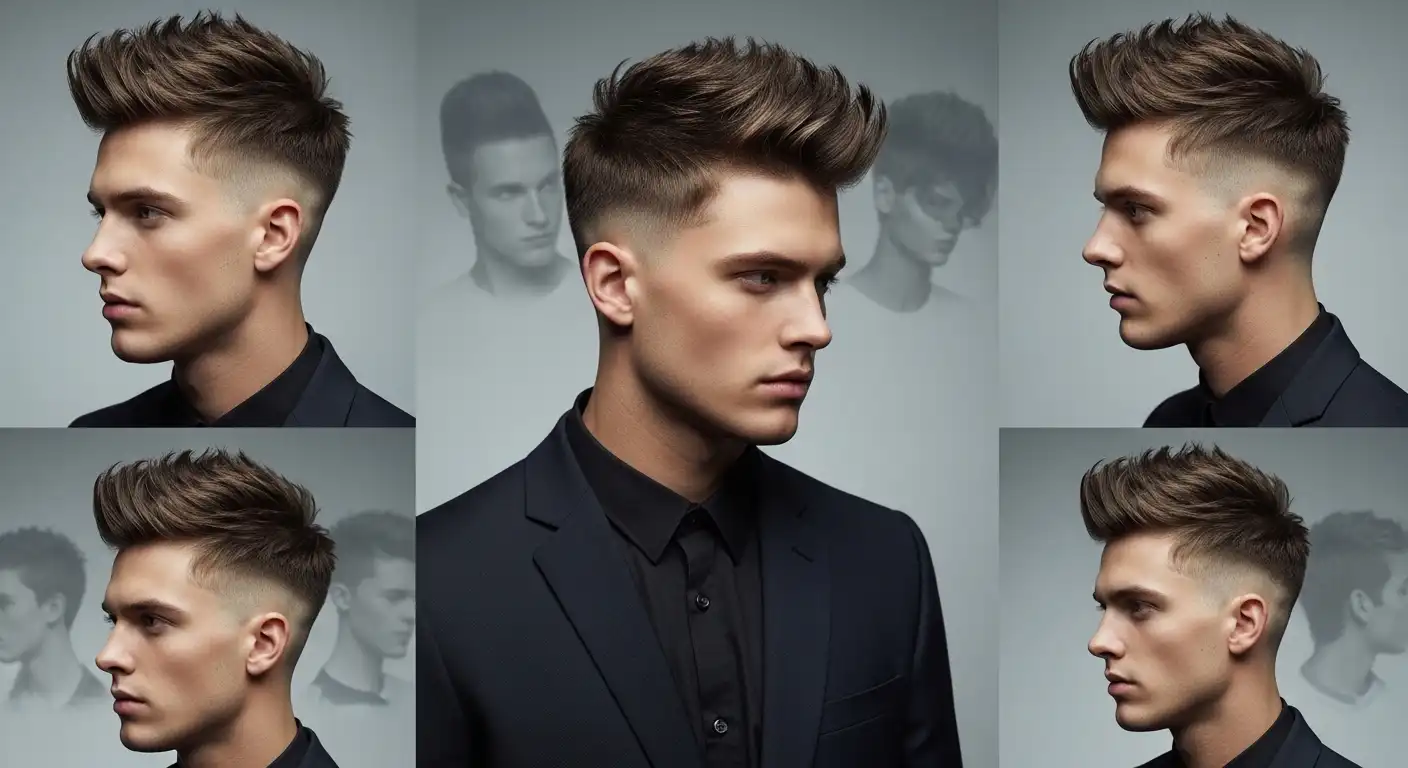
Spiky hairstyles for men have made a powerful comeback in 2026 — but with a modern twist. Gone are the days of stiff, gel-heavy spikes. Today’s styles focus on natural texture, matte finishes, and clean fades that enhance your face shape instead of overpowering it. The result? A sharper, more confident look that works in both casual and professional settings.
In 2026, the best spiky hairstyles for men are all about balance — controlled height, structured layering, and effortless movement. Whether you have thick, thin, straight, or wavy hair, the right spiky haircut can add volume, define your jawline, and completely upgrade your overall appearance.
But here’s where most men go wrong: choosing the wrong spike length, using too much product, or ignoring how their face shape affects the final look. That’s why this guide is different.
Inside, you’ll discover 40 modern spiky hairstyles for men, carefully ranked by face shape, boldness, and maintenance level — along with expert styling tips, product recommendations, and exactly what to tell your barber to get the perfect cut every time.
What Are Spiky Hairstyles for Men?
Spiky hairstyles for men are modern haircuts where the hair is styled upward using texture and volume instead of heavy gel. In 2026, they focus on matte finish, natural movement, and clean fades to enhance face shape and create a sharp, masculine look.
You May Also Like:
Line Up Haircut Guide for Men 2026: Styles, Trends & Tips
Best Soccer Player Haircuts for Men 2026
38 Best Spiky Hairstyles for Men
Best Fringe Haircuts Men 2026 Modern Styles You Must Try
Shift from Shiny Gel → Matte Texture
The biggest change? We’ve moved away from wet, crunchy gel spikes to matte, touchable texture. Modern styling clays and lightweight waxes create structure without shine, giving spikes a natural finish that looks intentional rather than stiff. The result is volume with flexibility — not helmet hair.
Clean Fades + Structured Volume
Today’s spikes are rarely standalone. They’re paired with low, mid, or high fades that create contrast and shape. The clean sides make the top look fuller and sharper. Instead of random spikes, barbers now focus on structured height that complements your head shape and jawline.
Social Media Influence
Platforms like Instagram, TikTok, and barber showcase pages have redefined how spikes are styled. Short textured crops, messy controlled spikes, and blended fades dominate grooming feeds. Men are no longer copying boy-band looks — they’re adopting refined, barber-crafted versions.
Modern Masculinity Aesthetic
Spiky hair naturally adds vertical height, which subtly enhances facial structure. That upward lift creates a sharper silhouette, often making the face appear leaner and more angular. In 2026, men are leaning toward hairstyles that look confident but not overdone — spikes deliver exactly that balance.
Low-Maintenance but Sharp Appeal
Compared to longer styles, spiky haircuts are relatively easy to manage. With the right cut and product, styling takes just a few minutes. Trim every 2–3 weeks, apply a small amount of clay, and you’re done. It’s sharp without being high effort — and that practicality is part of the comeback.
The Evolution of Spiky Hair
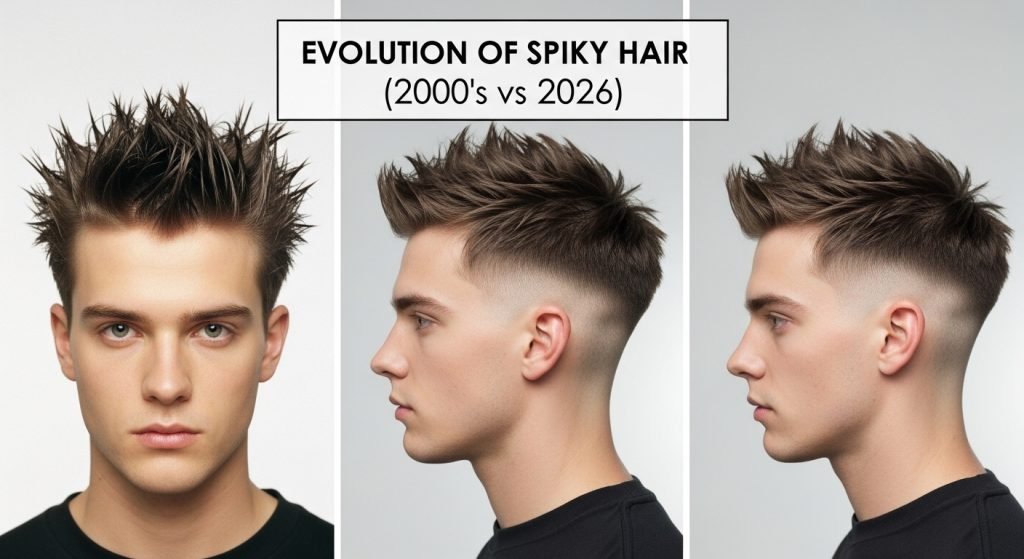
From 2000s Gel to Modern Texture
Spiky hair has gone through a dramatic transformation. What once symbolized rebellious, gel-heavy styling has evolved into something far more controlled and versatile.
Early 2000s Stiff Spikes
In the early 2000s, spikes were exaggerated and rigid. Heavy gel was applied to fully dry hair, locking strands into sharp, separated points. The shine was intense, the hold was extreme, and movement was almost nonexistent.
While bold, the look often appeared artificial and overly styled.
Why Heavy Gel Fell Out of Style
As grooming trends shifted toward natural finishes, high-shine gel started to feel outdated. It lacked flexibility, exaggerated thinning areas, and didn’t pair well with modern fades. Men began preferring hair that looked effortless rather than frozen in place.
The Rise of Natural Movement & Texture
Barbers adapted by introducing layering and texturizing techniques. Instead of forcing hair into stiff spikes, they began creating controlled lift with movement. This allowed spikes to look softer, more wearable, and adaptable for both professional and casual settings.
Matte Clay Dominance
Today, matte clay has largely replaced gel as the go-to product for spikes. It provides strong hold with a natural finish, enhances thickness, and allows restyling throughout the day. Combined with precision fades and modern cutting techniques, spikes now look contemporary rather than nostalgic.
40 Best Spiky Hairstyles for Men
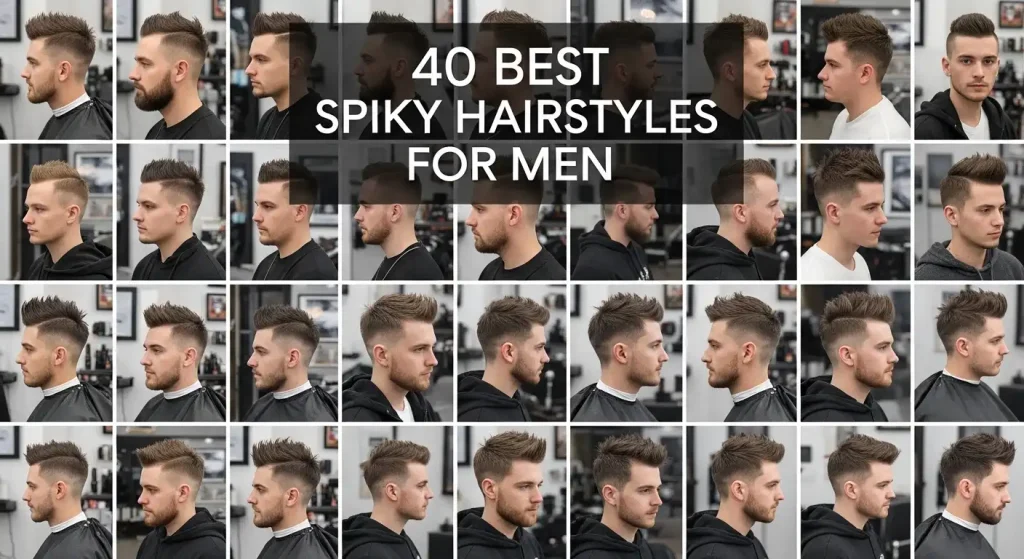
Spiky hairstyles for men aren’t one-size-fits-all. The right version depends on your hair length, fade preference, and how bold you want to go. Below are the most modern, wearable, and barber-approved spiky haircuts in 2026 — organized by structure and intensity.
Short Spiky Haircuts
Short spikes are clean, sharp, and easy to maintain. They work especially well for busy professionals or guys who want a low-effort daily routine.
Classic Short Spikes
This timeless option keeps the top around 1–2 inches with light texturizing. It’s styled upward using matte clay for a natural finish. Ideal for straight or slightly wavy hair, and works well with most face shapes.
Maintenance: Low
Best For: Everyday wear, office-friendly looks
Crew Cut Spikes
A modern upgrade to the traditional crew cut, this style keeps the sides tight while leaving just enough length on top for subtle lift. Instead of sharp tips, the spikes are short and structured.
Maintenance: Very low
Best For: Athletic builds, square faces
Buzz Cut with Texture
This ultra-short style adds slight texture to an otherwise buzzed top. Instead of visible spikes, it creates micro-lift using light product. Clean, masculine, and extremely easy to maintain.
Maintenance: Minimal
Best For: Strong jawlines, low styling tolerance
Spiky Fade Haircuts
Pairing spikes with fades creates contrast and makes the top look fuller and sharper.
Low Fade Spikes
The fade starts just above the ears, creating a subtle transition into textured spikes. It’s clean without being aggressive.
Maintenance: Moderate
Best For: Professional environments
Mid Fade Spikes
A balanced fade that enhances the structure of the spikes. This version offers more contrast than a low fade but remains versatile.
Maintenance: Moderate
Best For: Most face shapes
High Fade Spikes
The fade begins higher on the head, making the spikes stand out dramatically. It adds vertical emphasis and a bold edge.
Maintenance: Higher (requires frequent trims)
Best For: Round faces needing elongation
Skin Fade Spikes
The most dramatic variation. The sides are shaved to the skin, emphasizing the textured spikes on top.
Maintenance: High
Best For: Confident, high-contrast style
Taper Fade with Spikes
A softer, more gradual fade around the neckline and sideburns. This keeps the look clean without removing too much weight.
Maintenance: Moderate
Best For: Office-friendly modern cuts
Textured & Messy Spikes
These styles focus less on sharp points and more on natural movement.
Textured Crop Spikes
Inspired by the modern textured crop, this cut uses choppy layers to create short, forward-styled spikes with natural volume.
Maintenance: Moderate
Best For: Thick hair
Messy Matte Spikes
This style uses clay to create imperfect, slightly separated spikes. It looks effortless but still intentional.
Maintenance: Low to moderate
Best For: Casual settings
Side-Swept Spikes
Instead of straight upward spikes, the hair angles slightly to one side, adding movement and softness.
Maintenance: Moderate
Best For: Oval and diamond faces
Medium-Length Spiky Styles
These versions offer more dramatic height and require stronger styling.
Spiky Quiff
A hybrid between a quiff and spikes. The front is lifted higher while the rest maintains controlled texture.
Maintenance: Moderate to high
Best For: Elongating round faces
Faux Hawk Spikes
The sides are faded while the center strip remains spiky. Edgy but wearable when styled cleanly.
Maintenance: Moderate
Best For: Bold personalities
Layered Spikes
Multiple layers are cut into the top to create depth and dimension. This prevents spikes from looking flat or clumped.
Maintenance: Moderate
Best For: Thick or dense hair
Spiky Undercut
The sides are disconnected from the top, creating strong contrast. The longer top allows for sharper or messier spikes.
Maintenance: Higher
Best For: Trend-focused styles
Bold & Statement Spikes
These are high-impact styles that stand out immediately.
Liberty Spikes
Long, dramatic spikes styled vertically. Not for subtle personalities — this is a statement look.
Maintenance: High
Best For: Edgy fashion-forward styles
Spiky Mullet
Combines modern spikes on top with longer length in the back. A bold mix of retro and contemporary.
Maintenance: High
Best For: Trendsetters
High-Contrast Spikes
Sharp spikes paired with extremely tight fades or shaved designs. Maximum definition and visual impact.
Maintenance: High
Best For: Strong facial features
Spiky Hairstyles Ranked by Boldness Level
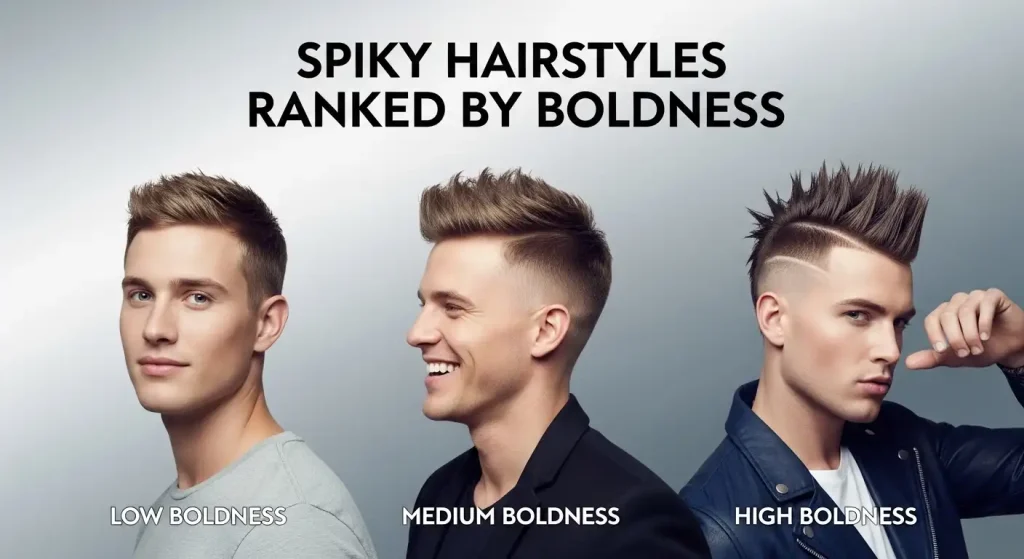
Not all spiky hairstyles send the same message. Some look clean and corporate-ready, while others are high-contrast and attention-grabbing. Ranking them by intensity helps you choose a style that matches your personality, workplace, and maintenance tolerance.
Level 1 – Clean & Professional
These styles keep spikes short, controlled, and structured. The sides are typically low fades or tapers, and the top stays under 2 inches.
Examples:
- Classic short spikes
- Crew cut spikes
- Low taper fade with soft texture
Why it works:
The spikes are subtle rather than dramatic. They add slight height without creating sharp separation. This makes the haircut office-friendly and easy to maintain.
Best For:
Corporate settings, students, conservative dress codes.
Level 2 – Balanced & Stylish
This level adds more texture and visible lift. The fade is more defined, and the top has enough length for noticeable structure.
Examples:
- Mid fade textured spikes
- Side-swept spikes
- Textured crop spikes
- Spiky quiff (moderate height)
Why it works:
It balances professionalism with modern edge. The structure is visible but not extreme, making it versatile for both casual and semi-formal environments.
Best For:
Most men. This is the safest “modern but not loud” category.
Level 3 – High Contrast & Bold
These styles maximize height, separation, and fade contrast. The spikes are longer, sharper, and more defined.
Examples:
- High fade spikes
- Skin fade spikes
- Faux hawk spikes
- Liberty spikes
- Spiky undercut
Why it works:
High contrast draws attention upward, creating a strong silhouette. These styles project confidence and individuality.
Best For:
Creative industries, trend-focused personalities, bold aesthetics.
Spiky Hairstyles Quick Comparison
| Style Type | Maintenance | Boldness | Best For |
|---|---|---|---|
| Short Spikes | Low | Low | Office |
| Mid Fade Spikes | Medium | Medium | Everyday |
| High Fade Spikes | High | High | Bold looks |
Best Spiky Hairstyles by Face Shape
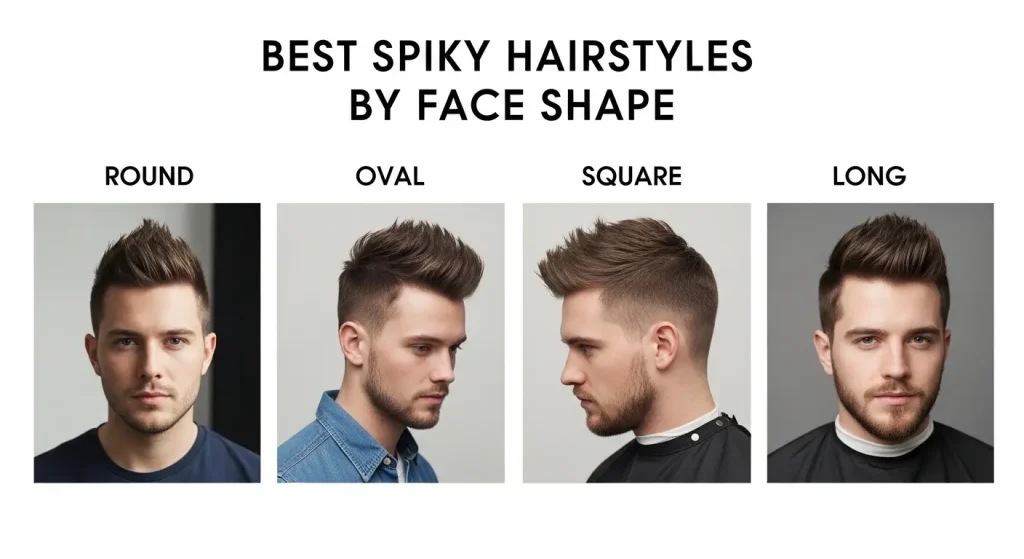
Choosing the right spiky hairstyle for your face shape makes a massive difference. The height, width, and fade placement can subtly reshape how your face appears.
Round Face
Round faces benefit from vertical lift.
Best Styles:
- High fade spikes
- Spiky quiff
- Faux hawk spikes
Visual Illusion:
Height elongation. Spikes add vertical structure, making the face appear longer and leaner. Avoid wide, bulky sides — they increase facial width.
Oval Face
Oval faces are naturally balanced, so most spiky hairstyles work well.
Best Styles:
- Mid fade textured spikes
- Side-swept spikes
- Layered spikes
Visual Illusion:
Maintain proportion. Avoid extreme height that disrupts natural balance.
Square Face
Square faces have strong jawlines, so controlled structure works best.
Best Styles:
- Classic short spikes
- Crew cut spikes
- Low fade spikes
Visual Illusion:
Jaw emphasis. Short spikes highlight angular features without exaggerating width.
Diamond Face
Diamond faces have wider cheekbones and narrower foreheads.
Best Styles:
- Textured crop spikes
- Side-swept spikes
- Moderate spiky quiff
Visual Illusion:
Width balance. Slight volume on top adds harmony without over-accentuating cheekbones.
Long Face
Long faces should avoid excessive height.
Best Styles:
- Low fade spikes
- Short textured spikes
- Soft matte spikes
Visual Illusion:
Controlled lift. Keep spikes shorter to prevent further elongation.
If you’re exploring other modern cuts, check out our guide on older mens hairstyles for refined and low-maintenance options.
Best Spiky Hairstyles by Hair Type
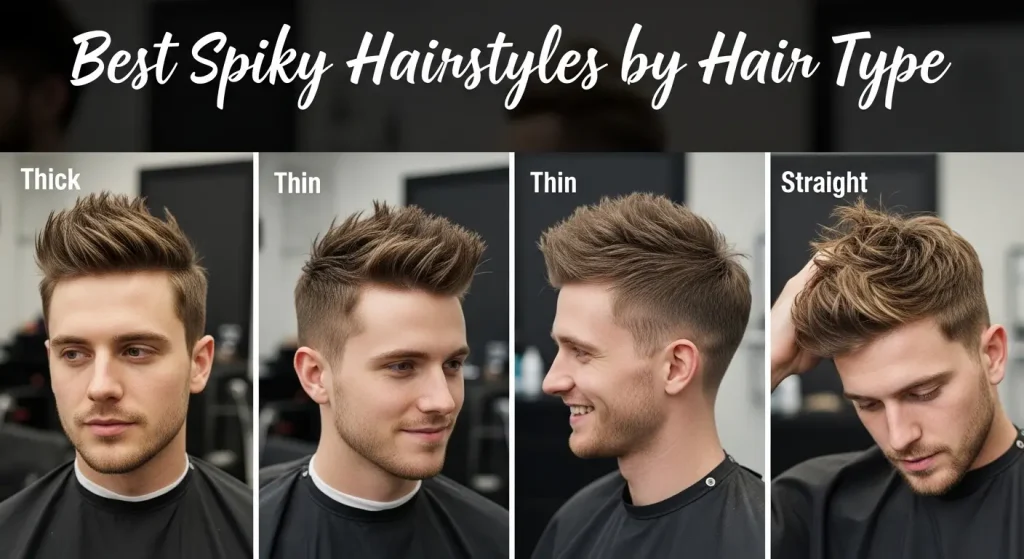
Hair density and texture determine how spikes behave. Choosing the right cut and product ensures better hold and shape.
Thick Hair
Thick hair naturally supports spikes but can look bulky.
Advice:
- Ask for texturizing or thinning shears
- Use matte clay for control
- Avoid heavy gel
Thick hair works best with layered spikes and mid-to-high fades.
Thin Hair
Thin hair needs lightweight structure.
Advice:
- Keep spikes shorter (under 2 inches)
- Use volumizing pre-styler
- Avoid oily products that separate strands
Micro-spikes or textured crop styles are ideal.
Straight Hair
Straight hair spikes easily and holds structure well.
Advice:
- Blow-dry upward for volume
- Use clay or wax for flexible hold
Most spiky hairstyles for men are easiest on straight hair.
Wavy Hair
Wavy hair creates natural texture but requires direction.
Advice:
- Use a blow dryer to guide shape
- Apply medium-hold clay
- Avoid fighting natural movement
Messy matte spikes work especially well.
Curly Hair
Curly hair doesn’t form traditional sharp spikes but can create lifted textured peaks.
Advice:
- Keep top shorter
- Use curl-enhancing cream with light hold
- Embrace textured spikes rather than rigid points
Spiky curls look modern when paired with a clean fade.
How to Style Spiky Hair Step-by-Step
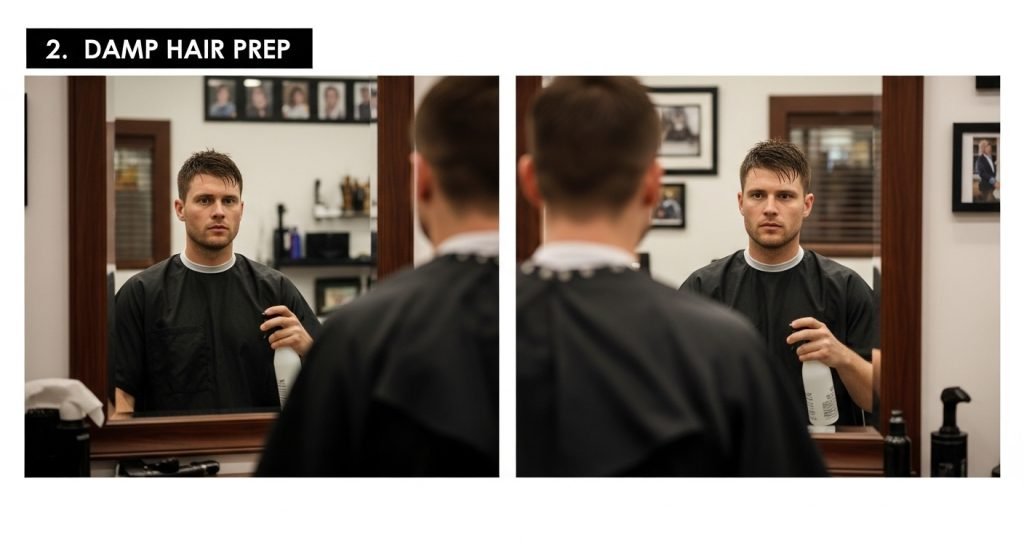
The difference between sharp, modern spikes and outdated crunchy tips comes down to technique. Follow this structured method to get volume, control, and long-lasting hold without stiffness.
Prep on Damp Hair
Start with towel-dried hair — not soaking wet, not fully dry. Damp hair allows better product absorption and easier shaping.
- Use a lightweight volumizing spray if your hair is thin.
- Comb hair upward or slightly forward depending on the spike direction.
- Avoid applying heavy product at this stage.
Why this matters:
Styling on dry hair with heavy product often leads to clumping and uneven spikes.
Blow-Dry for Lift
Blow-drying is what creates the foundation for strong spikes.
- Use medium heat.
- Direct airflow upward while lifting hair with your fingers or a vent brush.
- Focus on the roots to build height first.
For maximum lift, dry the hair in the opposite direction first, then push it into place.
Pro Tip:
If you skip blow-drying, spikes will collapse faster — especially on fine or straight hair.
Product Distribution Method
This is where most people go wrong.
- Scoop a small, pea-sized amount of product.
- Rub it fully between your palms until evenly spread.
- Apply from back to front, distributing lightly before shaping.
Never dump product in one spot. Uneven application creates stiff chunks instead of clean spikes.
Finger Texturizing
Use your fingertips — not your whole hand — to pinch small sections upward.
- Twist slightly while lifting.
- Separate strands to avoid clumping.
- Keep movement natural, not perfectly symmetrical.
Modern spiky hairstyles for men rely on controlled imperfection rather than sharp, identical points.
Locking Hold Technique
After shaping, allow hair to cool completely.
If needed:
- Add a light mist of flexible hairspray.
- Avoid touching hair once set.
Cooling sets the structure created during blow-drying. Constant reshaping breaks hold.
Best Products for Spiky Hair
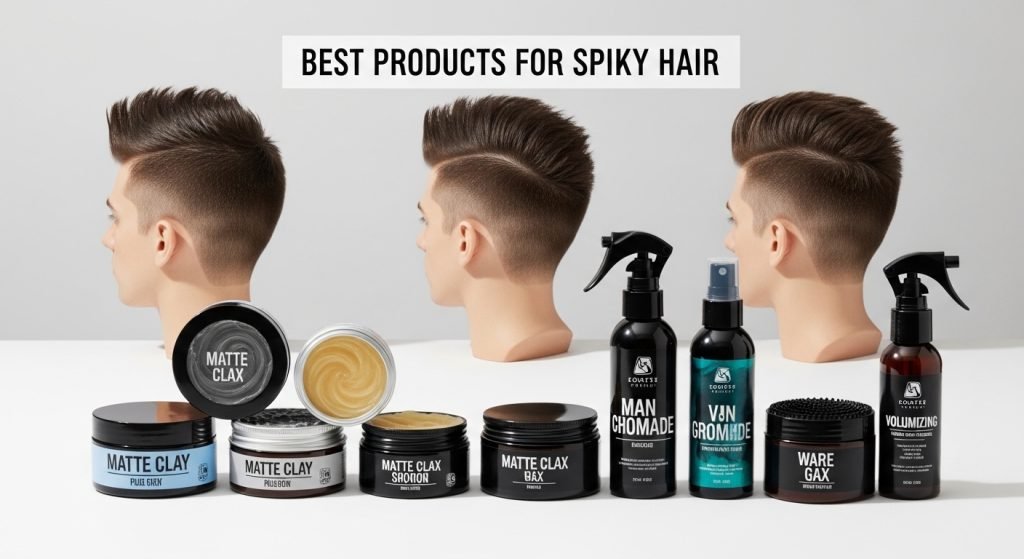
Choosing the right product determines whether your spikes look modern and textured or stiff and outdated.
Clay (Matte, Strong Hold)
Best for: Natural-looking spikes with strong control.
- Adds thickness.
- Absorbs oil.
- Creates volume without shine.
Ideal for most modern spiky hairstyles in 2026.
Wax (Flexible Control)
Best for: Medium hold with reworkable texture.
- Slight shine.
- Good for messy or layered spikes.
- Allows restyling throughout the day.
Great for balanced, stylish looks.
Pomade (Shine Finish)
Best for: Sleek, defined spikes.
- Adds noticeable shine.
- Works better for side-swept or softer spikes.
- Not ideal for very high volume styles.
Use sparingly to avoid flattening.
Gel (Structured Spikes)
Best for: Sharp, rigid structure.
- Maximum hold.
- High shine.
- Can look stiff if overused.
Modern use requires lighter application than early 2000s styles.
Product Science Explained
Understanding why products work helps you avoid common mistakes.
Why Polymers Create Hold
Most styling products contain polymers — flexible compounds that coat hair strands and create structure as they dry. When blow-dried, these polymers lock strands in position while still allowing slight flexibility (depending on the product).
Stronger hold = denser polymer concentration.
Why Over-Application Collapses Volume
Too much product adds weight.
Excess weight:
- Pulls hair downward.
- Reduces root lift.
- Causes clumping.
- Exposes scalp on thin hair.
Always start small — you can add more, but removing excess requires rewashing.
Matte vs Shine Psychology
Finish changes perception.
- Matte finish: Modern, effortless, thicker-looking hair.
- Shine finish: Structured, sleek, more formal or retro feel.
In 2026, matte texture dominates because it appears more natural and masculine.
Exactly What to Tell Your Barber
One of the biggest reasons spiky hairstyles fail isn’t styling — it’s communication. Saying “I want spikes” is too vague. Precision makes the difference between sharp and sloppy.
Here’s how to explain your spiky haircut clearly and confidently.
Guard Number Examples (For the Sides)
Your fade determines how dramatic your spikes look.
- #0–#1 guard: Very tight, high contrast (bold look)
- #1–#2 guard: Clean but not extreme (balanced look)
- #2–#3 guard: Softer, professional-friendly fade
If you’re unsure, ask for:
“A mid fade starting at a #1 and blending smoothly upward.”
Fade Height Request
Specify where the fade should start:
- Low fade: Starts just above the ear (clean, conservative)
- Mid fade: Middle of the sides (balanced)
- High fade: Near the temples (bold, sharp contrast)
- Taper fade: Only around neckline and sideburns (subtle)
Fade height dramatically affects how intense your spikes appear.
Length on Top (In Inches)
Spikes need enough length — but not too much.
- 1–1.5 inches: Short, controlled spikes
- 2 inches: Ideal for structured spikes
- 3+ inches: Best for quiff-style or faux hawk spikes
Be specific. Saying “leave it long” creates inconsistency.
Texture Preference
This step is critical.
Ask for:
- “Point cutting for texture”
- “Texturizing shears to remove bulk”
- “Layered top for movement”
Without texturizing, spikes look flat or clumpy.
Blending Request
Spiky hairstyles look modern when the transition is seamless.
Say:
“Blend the fade smoothly into the top — no harsh disconnect.”
Unless you want a true undercut, always request clean blending.
Beard Blending (If Applicable)
If you have facial hair, it should flow naturally into your fade.
Ask for:
- “Fade the sideburn into the beard.”
- “Keep the beard tight to match the fade.”
Disconnected beard lines ruin sharp spiky cuts.
Example Script Block
If you want a simple way to say it:
“I’d like a mid fade starting at a #1, blended smoothly into about 2 inches on top. Please add texture so I can style short matte spikes. Keep it clean but not too aggressive.”
Clear. Precise. High conversion.
How Spiky Hair Grows Out (Week-by-Week Guide)
Most articles ignore this — but understanding growth helps you plan trims.
Week 1 – Crisp Definition
Fresh cut.
Sharp fade.
Maximum structure.
Spikes stand easily with minimal product. Contrast is strongest.
Week 2 – Softer Texture
Fade begins blending slightly.
Top gains subtle weight.
Still sharp — but slightly more natural-looking.
This is the sweet spot for most men.
Week 3 – Casual Look
Sides lose tightness.
Top becomes heavier and slightly harder to spike.
You may need:
- More product
- Stronger blow-drying
This stage works for messy matte styles but loses crisp contrast.
Week 4 – Rebook Time
Fade appears grown out.
Spikes lose structure and height.
Volume collapses faster.
If you prefer sharp, clean spikes — this is when you rebook.
Maintenance & Trim Frequency
Spiky hairstyles are moderate-maintenance compared to longer styles.
Every 2 Weeks vs Every 3 Weeks
- Every 2 weeks: Ideal for high fades and bold spikes
- Every 3 weeks: Works for low fades or softer spikes
Skin fades usually require tighter scheduling.
How to Refresh at Home
Between cuts:
- Trim neckline lightly (if experienced)
- Blow-dry upward daily
- Use minimal product
- Avoid over-washing (dries hair out)
Keeping sides neat extends lifespan.
Quick Morning Styling Routine (5 Minutes)
- Lightly dampen hair.
- Blow-dry upward for 1–2 minutes.
- Apply small amount of clay.
- Pinch spikes into place.
Done.
Consistency matters more than complexity.
Spiky Hair Maintenance Scorecard
Here’s how spiky hairstyles for men rate across key factors:
| Category | Rating |
| Styling Time | ★★☆☆☆ (5–7 minutes daily) |
| Product Cost | ★★☆☆☆ (Small amount per use) |
| Trim Frequency | ★★★☆☆ (Every 2–3 weeks) |
| Workplace Compatibility | ★★★★☆ (Depends on intensity) |
| Effort Level | ★★★☆☆ (Moderate) |
Spiky Hairstyles for Different Occasions
Most guides show styles — but don’t explain when to wear them. The right spiky hairstyle should adapt to your lifestyle, not fight it.
Office
For professional settings, keep spikes short and controlled.
Best Choices:
- Low fade with soft spikes
- Crew cut spikes
- Taper fade with light texture
Keep shine minimal and height moderate. Matte products look modern and intentional without appearing flashy.
Goal: Clean structure, not dramatic contrast.
School
Students can go slightly bolder while keeping things manageable.
Best Choices:
- Mid fade textured spikes
- Messy matte spikes
- Textured crop spikes
These styles balance trend appeal with easy daily styling.
Goal: Stylish but practical.
Gym
You want hold without stiffness.
Best Choices:
- Short textured spikes
- Low-maintenance crop spikes
Use lightweight clay so hair stays in place but doesn’t harden. Avoid heavy gel — sweat makes it look rigid.
Goal: Controlled, flexible hold.
Date Night
This is where you can increase height and structure.
Best Choices:
- Spiky quiff
- Side-swept spikes
- Mid fade with defined texture
Add slightly more volume at the front for a sharper silhouette.
Goal: Confident, polished, but natural.
Formal Events
Keep spikes structured but refined.
Best Choices:
- Short clean spikes with taper fade
- Subtle side-textured spikes
Avoid messy or overly separated spikes. Use light pomade if you prefer a slightly sleek finish.
Goal: Sharp, not rebellious.
Spiky Hairstyles With Beards
Spikes and facial hair must complement each other — not compete.
Stubble Pairing
Short spikes with light stubble create a clean, masculine balance.
- Works best with low or mid fades
- Keeps the look modern and sharp
Great for everyday style.
Faded Beard Blend
A faded beard that gradually transitions into the sideburn area creates flow.
- Perfect with mid or high fade spikes
- Enhances structure and symmetry
This combination looks intentional and polished.
Full Beard Contrast
Longer spikes with a full beard create bold contrast.
- Keep beard shaped and trimmed
- Avoid overly bulky sides
Balance is key — too much volume on both top and bottom overwhelms the face.
Signs Spiky Hair May Not Suit You
Not every hairstyle works for every man — and honesty builds trust.
Strong Cowlick
If your crown grows aggressively in one direction, spikes may separate awkwardly. You’ll need stronger product and careful blow-drying.
High Recession Line
Excessive height on top can exaggerate hairline recession. Shorter, textured spikes are safer than tall quiff-style versions.
Very Thin Crown
Long, separated spikes can expose scalp. Keep spikes short and use volumizing techniques.
Extremely Low Styling Tolerance
If you dislike using product or blow-drying, spiky hairstyles may frustrate you. They require at least 5 minutes daily effort.
Common Mistakes When Choosing Spiky Hairstyles
Avoid these errors if you want your spikes to look modern — not outdated.
Too Much Length
Long spikes without structure fall flat and look messy. Most modern spikes work best between 1–3 inches.
Ignoring Growth Pattern
Hair direction matters. Forcing spikes against natural growth creates uneven shape and weak hold.
Overusing Gel
Heavy gel:
- Adds shine
- Clumps strands
- Reduces natural movement
Modern spikes rely more on matte texture.
Not Considering Face Proportions
Tall spikes elongate the face. Wide sides increase width. Choose structure based on facial balance.
Choosing Trend Over Lifestyle
A high-contrast skin fade may look amazing online — but require trims every 2 weeks. Always match style with maintenance tolerance.
The Psychology Behind Spiky Hairstyles
Hairstyles subtly influence perception. Spikes create upward energy — and that matters.
Height = Dominance Illusion
Vertical lift draws the eye upward, making you appear taller and sharper. It subtly enhances presence.
Structured Spikes = Confidence
Controlled spikes suggest intention and discipline. Clean fades combined with texture project self-assurance.
Soft Spikes = Approachability
Messier matte spikes feel relaxed and modern. They soften the face while maintaining structure.
Bold Spikes = High-Energy Personality
High fades and sharp separation communicate intensity and individuality. This style stands out immediately.
FAQs
Are spiky hairstyles professional?
Yes — if styled correctly. Short, controlled spikes paired with a low or taper fade can look clean and office-appropriate. Avoid extreme height, skin fades, or overly separated spikes in conservative environments. Matte texture and subtle structure make spiky hairstyles modern without appearing rebellious.
What product works best?
Matte clay works best for most spiky hairstyles because it provides strong hold without shine. Wax offers flexible control, while pomade adds shine for sleeker styles. Gel creates the strongest hold but can look stiff if overused. Choose based on desired finish and hair thickness.
Is spiky hair good for thin hair?
Yes, but keep spikes short. Micro-textured spikes add volume and lift, making thin hair appear fuller. Avoid heavy or shiny products, which separate strands and expose scalp. Use lightweight volumizing spray before blow-drying to improve density and structure.
Does spiky hair damage hair?
Spiky hair itself doesn’t damage hair. Damage usually comes from excessive heat styling or heavy product buildup. Use moderate heat when blow-drying and wash out styling products regularly. Choosing quality products and avoiding daily harsh gel prevents dryness and breakage.
Which fade works best?
A mid fade works best for most men because it balances contrast and versatility. Low fades are more professional and subtle, while high or skin fades create bold definition. The ideal fade depends on your face shape and how dramatic you want the spikes to appear.
How long does spiky hair last?
A fresh spiky haircut looks sharp for about 2–3 weeks. High fades may require trims closer to every 2 weeks, while taper fades can last slightly longer. Daily styling only takes a few minutes, but maintaining contrast requires consistent barber visits.
Are spikes high maintenance?
Spiky hairstyles are moderately low maintenance. Daily styling takes about 5–7 minutes with the right product and blow-dry technique. However, fades require trimming every 2–3 weeks to keep the look sharp. Compared to longer styles, spikes are relatively easy to manage.
Final Decision Framework
Should You Get a Spiky Hairstyle?
Spiky hairstyles for men are versatile — but they’re not one-size-fits-all. Use this checklist to decide confidently.
✔ Face Shape Match
Do spikes enhance your proportions?
Round faces benefit from height.
Long faces should avoid excessive lift.
Square faces suit controlled, structured spikes.
✔ Hair Type Compatibility
Thick hair supports layered spikes.
Thin hair needs shorter, textured versions.
Curly hair works best with softer lifted peaks rather than rigid points.
✔ Maintenance Tolerance
Are you willing to style for 5 minutes daily?
Can you commit to trims every 2–3 weeks?
If not, consider a lower-maintenance cut.
✔ Workplace Rules
Does your environment allow bold fades?
If corporate, stick with low fades and subtle spikes.
✔ Style Personality
Do you prefer clean and structured?
Balanced and stylish?
Or bold and high contrast?
Your haircut should match your identity — not just trends.
Final Thought
If you want a hairstyle that adds height, sharpness, and modern edge without requiring extreme effort, spiky hair remains one of the most adaptable choices in 2026. Choose the version that fits your face, lifestyle, and confidence level — and it will work for you, not against you. The best spiky hairstyles for men in 2026 aren’t about trends — they’re about precision, balance, and confidence. Choose a style that fits your face shape, lifestyle, and maintenance level, and you’ll get a haircut that works every single day.