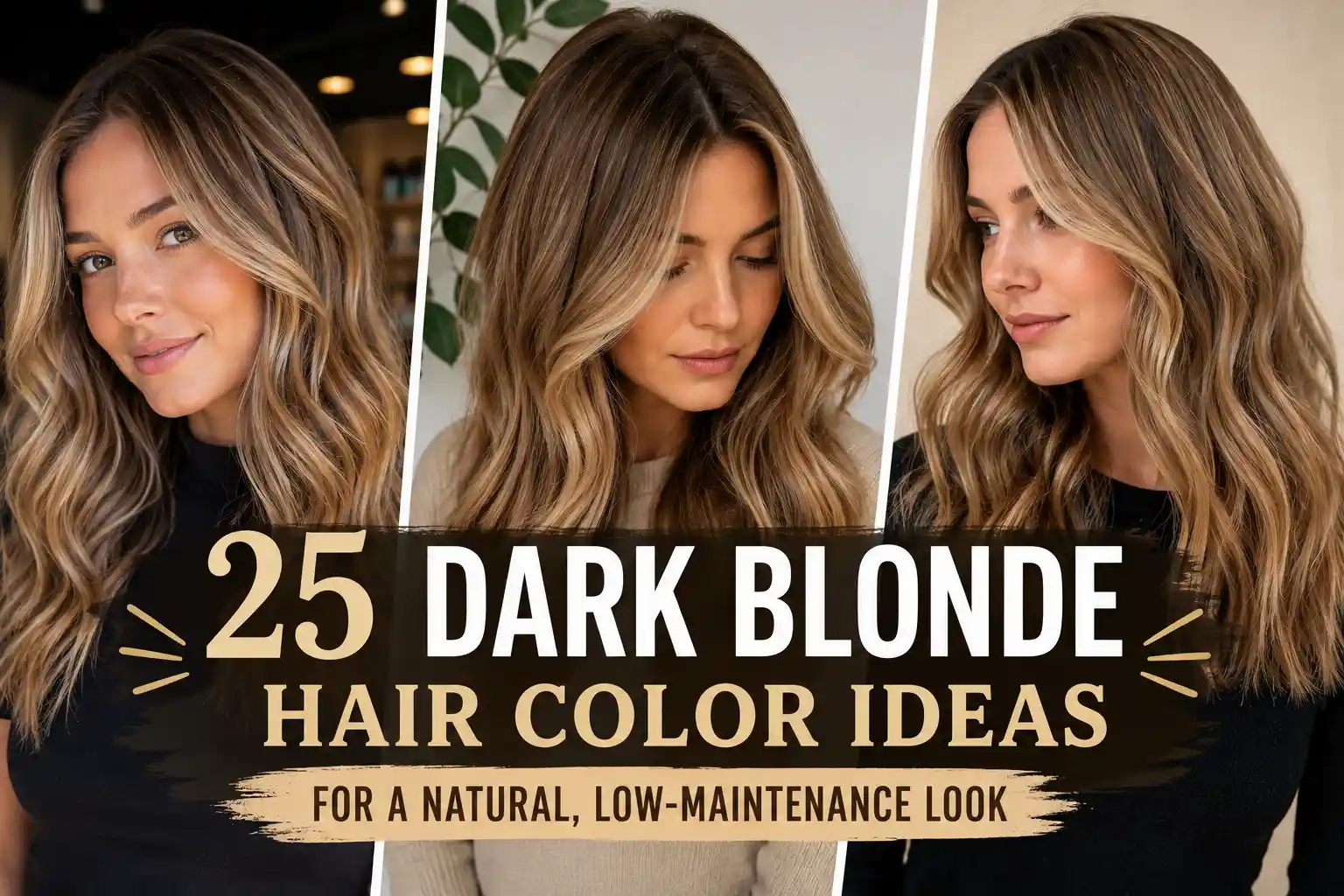
Finding the perfect blonde isn’t always easy. Go too light and you may face frequent salon visits, visible roots, and ongoing maintenance. Stay too dark and you might miss the brightness and dimension that make blonde hair so appealing.
That’s one reason dark blonde hair continues to be one of the most requested salon colors. It provides a balance between brunette richness and blonde brightness, making it flattering, wearable, and surprisingly adaptable.
Whether you’re considering your first blonde transformation, trying to blend gray hair more naturally, searching for a lower-maintenance color, or simply exploring different blonde shades, this guide covers everything you need to know—from choosing the right undertone to maintaining healthy, dimensional color.
Quick Answer
Dark blonde hair is a versatile hair color that typically falls at Level 7 on the professional hair color scale. It sits between light brown and medium blonde, offering the brightness of blonde with more depth, softer grow-out, and lower maintenance than lighter blonde shades. Popular variations include ash dark blonde, honey blonde, beige blonde, mushroom blonde, caramel blonde, dark blonde balayage, and rooted dark blonde.
What Is Dark Blonde Hair?
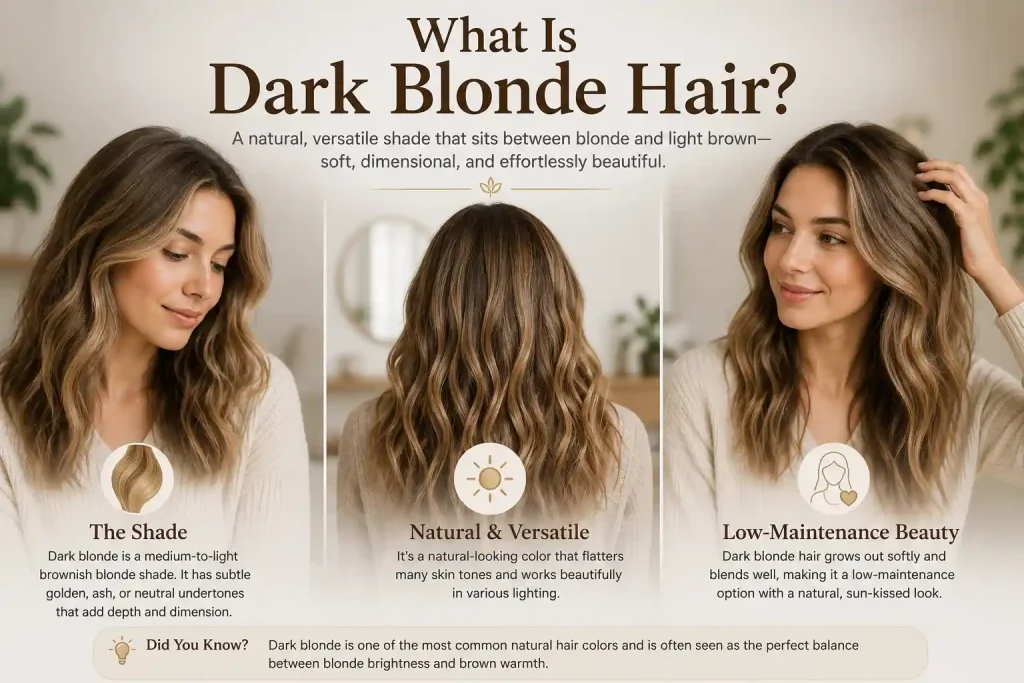
Dark blonde hair is a blonde shade with more depth and pigment concentration than medium or light blonde colors. It occupies the space between light brown and traditional blonde shades, creating a natural-looking result that works for a wide variety of skin tones.
Professional colorists generally classify dark blonde as a Level 7 hair color, although the exact appearance can vary depending on undertones and formulation.
Key Characteristics of Dark Blonde Hair
• More depth than medium blonde
• Brighter than light brown hair
• Available in warm, cool, and neutral tones
• Easier root maintenance than lighter blondes
• Works well with balayage and highlights
• Creates natural-looking dimension
• Suitable for many age groups and lifestyles
• Often appears lighter outdoors and deeper indoors
One of the biggest advantages of dark blonde hair is versatility. It can be customized to look sophisticated, sun-kissed, cool-toned, modern, or effortlessly natural.
Is Dark Blonde Hair Blonde or Brown?
This question appears frequently because dark blonde sits near the boundary between blonde and brunette shades.
Technically, dark blonde is considered blonde, not brown. The confusion comes from its deeper depth level and the fact that some dark blonde shades contain beige, caramel, or ash undertones that resemble light brown hair in certain lighting conditions.
Dark Blonde vs Light Brown
| Feature | Dark Blonde | Light Brown |
|---|---|---|
| Professional Level | 7 | 5–6 |
| Blonde Pigment | Higher | Lower |
| Brightness | More reflective | More muted |
| Root Visibility | Moderate | Low |
| Overall Appearance | Blonde | Brunette |
Natural sunlight often reveals blonde tones more clearly, while indoor lighting can make dark blonde appear richer and slightly darker.
Understanding Hair Color Levels
Before choosing a blonde shade, it helps to understand how professional colorists classify hair color.
| Level | Color Family |
| 1 | Black |
| 2–3 | Dark Brown |
| 4–5 | Medium Brown |
| 6 | Light Brown |
| 7 | Dark Blonde |
| 8 | Medium Blonde |
| 9 | Light Blonde |
| 10 | Very Light Blonde |
Why Hair Levels Matter
Hair level affects:
• How much lightening is required
• Whether bleach is necessary
• Color longevity
• Maintenance frequency
• Risk of brassiness
• Cost of salon services
For example, someone starting with Level 6 light brown hair may achieve dark blonde in a single appointment, while someone with Level 3 dark brown hair may require multiple sessions.
Dark Blonde vs Dirty Blonde vs Bronde
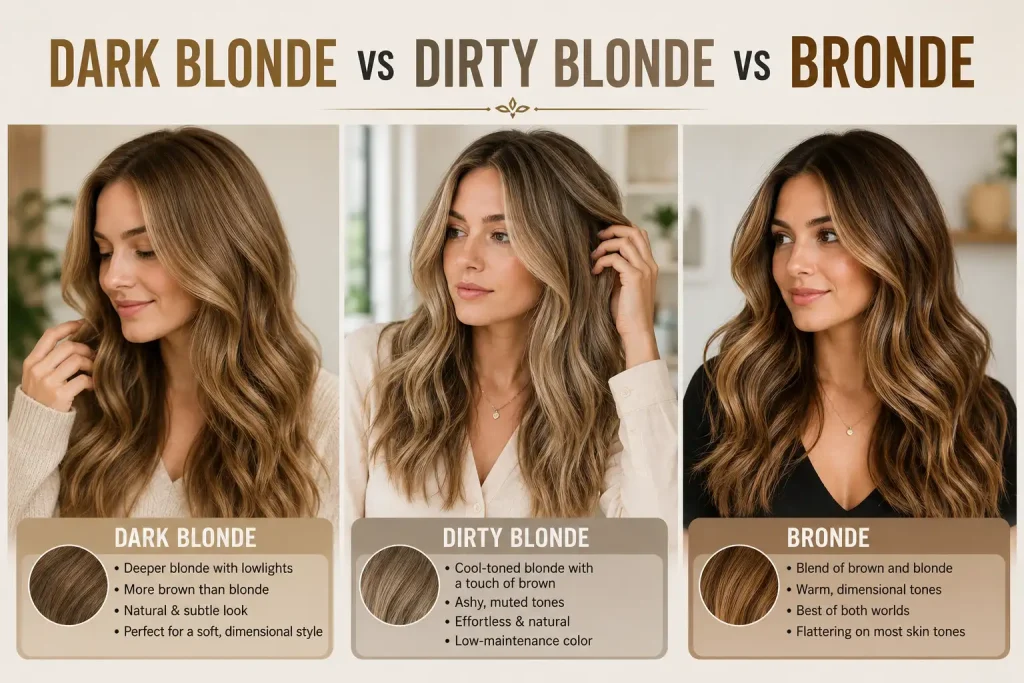
Although these shades are closely related, they produce different results.
Dark Blonde
A true blonde shade with noticeable blonde pigmentation and moderate depth.
Best for:
People wanting classic blonde brightness with manageable upkeep.
Dirty Blonde
A blend of blonde, beige, and ash tones.
Best for:
People seeking a natural, lived-in appearance.
Bronde
A deliberate mix of blonde and brunette tones.
Best for:
People transitioning from darker hair colors.
| Shade | Appearance | Maintenance |
| Dark Blonde | Balanced blonde | Moderate |
| Dirty Blonde | Muted blonde | Low |
| Bronde | Blonde-brunette blend | Low |
| Light Brown | Soft brunette | Very Low |
The Most Popular Dark Blonde Hair Shades
Ash Dark Blonde
Ash dark blonde contains cool undertones that help neutralize warmth and brassiness.
Ideal for:
• Cool skin tones
• Pink undertones
• Neutral complexions
• Modern, sophisticated looks
Maintenance Level:
Moderate
Honey Dark Blonde
Honey blonde adds golden warmth without becoming overly yellow.
Ideal for:
• Warm skin tones
• Olive complexions
• Natural-looking dimension
• Sun-kissed finishes
Maintenance Level:
Low to Moderate
Mushroom Blonde
Mushroom blonde combines taupe, beige, and cool ash tones.
Ideal for:
• Neutral undertones
• Fine hair needing dimension
• Low-maintenance color routines
• Contemporary color trends
Maintenance Level:
Low
Caramel Blonde
Caramel blonde blends blonde brightness with rich golden-brown warmth.
Ideal for:
• Brunette transitions
• Medium and olive skin tones
• Gray blending
• Dimensional color lovers
Maintenance Level:
Low to Moderate
Beige Blonde
Beige blonde sits between warm and cool, making it one of the most versatile choices.
Ideal for:
• Most skin tones
• First-time blondes
• Professional environments
• Natural-looking results
Maintenance Level:
Moderate
Best Dark Blonde Shades by Skin Tone
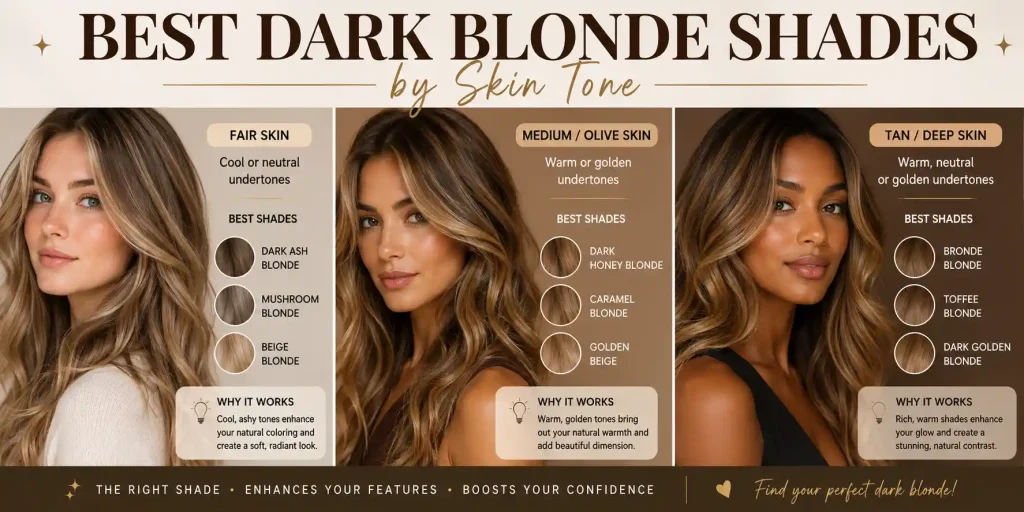
One of the biggest mistakes people make when choosing a hair color is focusing only on the shade name rather than the undertone.
Professional colorists often agree that undertones have a greater impact on the final result than the actual depth level.
Best Dark Blonde for Fair Skin
Fair skin often benefits from shades that create balance without overwhelming the complexion.
Recommended shades:
• Ash dark blonde
• Mushroom blonde
• Beige blonde
• Soft neutral blonde
Consider avoiding extremely golden shades if your skin has strong pink undertones, as they can emphasize redness.
Best Dark Blonde for Medium Skin
Medium skin tones are among the most versatile when it comes to blonde shades.
Recommended shades:
• Honey blonde
• Golden dark blonde
• Neutral dark blonde
• Soft caramel blonde
These tones add warmth while maintaining a natural appearance.
Best Dark Blonde for Olive Skin
Olive skin often pairs beautifully with richer blonde shades.
Recommended shades:
• Caramel blonde
• Golden blonde
• Bronde-inspired dark blonde
• Rooted dark blonde
The goal is creating contrast without looking overly light.
Best Dark Blonde for Deep Skin Tones
Deep complexions often look stunning with warmer blonde variations.
Recommended shades:
• Rich caramel blonde
• Warm honey blonde
• Dark golden blonde
• Dimensional blonde highlights
Adding depth at the root often creates the most flattering result.
How to Get Dark Blonde Hair
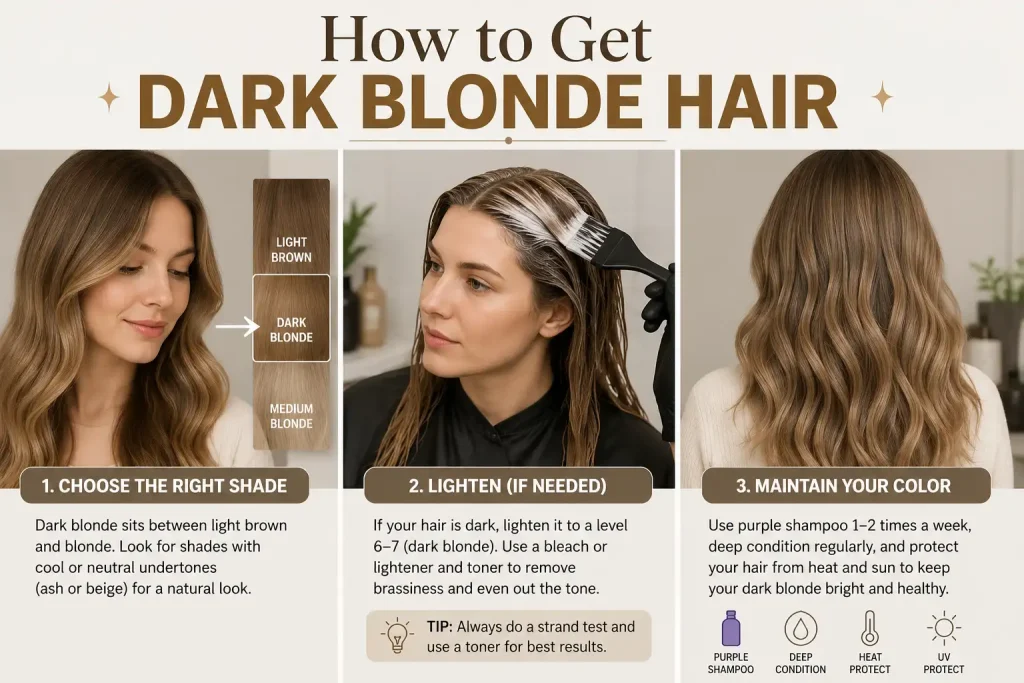
The path to dark blonde depends heavily on your starting color, hair history, and desired undertone.
A person with naturally light brown hair may require only subtle lifting and toning. Someone with dark brown or previously colored hair may need multiple appointments.
Professional Color Process
Most salon transformations follow these steps:
- Evaluate current hair level.
- Identify desired undertone.
- Assess previous color history.
- Lighten the hair if necessary.
- Apply the dark blonde formula.
- Tone unwanted warmth.
- Finish with a gloss treatment.
Does Dark Blonde Hair Require Bleach?
Not always.
Whether bleach is needed depends on your starting color.
| Starting Hair Color | Bleach Usually Needed? |
|---|---|
| Level 7–8 Blonde | Usually No |
| Level 6 Light Brown | Sometimes |
| Level 5 Brown | Often |
| Level 3–4 Dark Brown | Usually Yes |
| Black Hair | Yes |
A professional consultation is especially important when moving several levels lighter.
Dark Blonde Hair for Gray Coverage
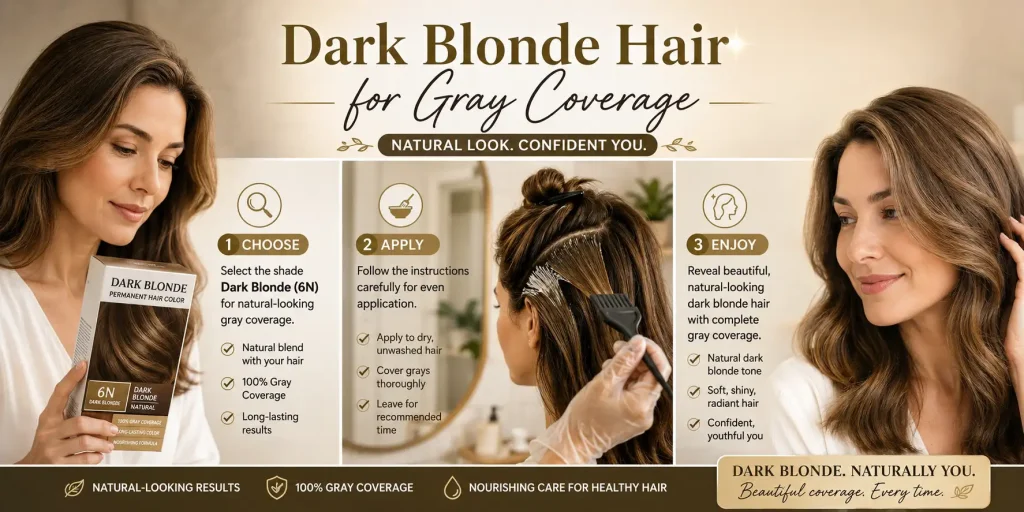
One of the most overlooked advantages of dark blonde hair is its ability to blend gray hair naturally.
Many people discover that dark blonde offers softer regrowth lines than darker colors.
Why Dark Blonde Works for Gray Hair
Benefits include:
• Less noticeable regrowth
• Softer contrast
• More natural appearance
• Easier maintenance
• Added dimension
• Brighter overall look
Best Dark Blonde Shades for Gray Blending
Colorists often recommend:
• Beige dark blonde
• Neutral blonde
• Honey blonde
• Soft ash blonde
• Dimensional balayage
Gray Coverage Strategies
For significant gray coverage:
• Permanent color may work best.
• Highlights can help disguise regrowth.
• Lowlights can add depth.
• Root shadow techniques soften transitions.
People with 25–50% gray hair often achieve particularly natural results with dimensional dark blonde shades.
Dark Blonde Balayage Ideas
Balayage remains one of the most requested blonde services because it creates soft, natural transitions.
Unlike traditional foil highlights, balayage produces a more lived-in appearance.
Popular Dark Blonde Balayage Styles
Rooted Dark Blonde Balayage
A darker root gradually melts into blonde ends.
Benefits:
• Less maintenance
• Softer grow-out
• Natural dimension
Honey Blonde Balayage
Creates warmth and brightness.
Best for:
• Warm skin tones
• Sun-kissed looks
Ash Blonde Balayage
Adds cooler tones while minimizing brassiness.
Best for:
• Cool undertones
• Modern color preferences
Caramel Blonde Balayage
Ideal for brunettes transitioning lighter.
Benefits:
• Rich dimension
• Easy maintenance
• Softer contrast
Dark Blonde Highlights vs Balayage
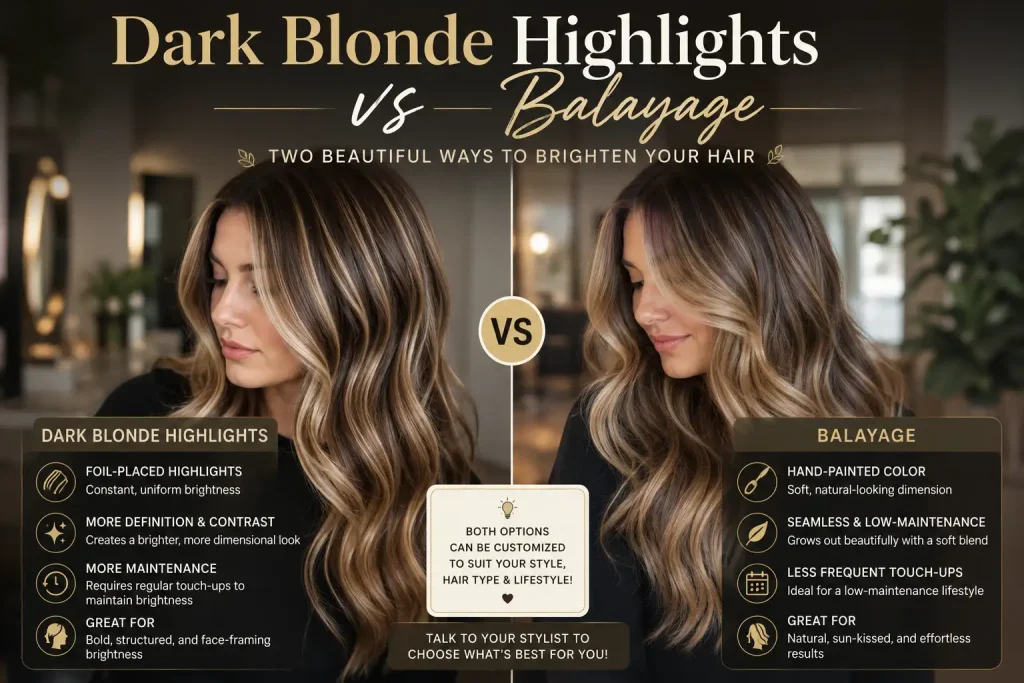
Many people are unsure whether highlights or balayage will better suit their goals.
Highlights
Highlights create more uniform brightness.
Best for:
• Maximum blonde effect
• Structured placement
• Gray blending
Balayage
Balayage creates softer transitions.
Best for:
• Low maintenance
• Natural appearance
• Fewer touch-ups
| Feature | Highlights | Balayage |
| Maintenance | Higher | Lower |
| Brightness | Stronger | Softer |
| Grow-Out | More visible | Less visible |
| Natural Appearance | Moderate | High |
Dark Blonde Hair for Fine Hair
Hair color can influence how thick or thin hair appears.
Dark blonde shades often create visual fullness because they reflect light while maintaining depth.
Best Choices for Fine Hair
• Mushroom blonde
• Beige blonde
• Dimensional balayage
• Soft highlights
• Root shadow combinations
Adding subtle contrast throughout the hair can create the illusion of density and movement.
Techniques That Help Fine Hair
• Face-framing highlights
• Lowlights
• Gloss treatments
• Multi-dimensional color placement
Avoid overly flat single-process color when volume is a concern.
Dark Blonde Hair for Women Over 40 and 50
Many women choose dark blonde because it softens facial features while reducing the maintenance demands of darker colors.
Dark blonde can:
• Brighten the complexion
• Blend gray naturally
• Add softness
• Create dimension
• Reduce harsh contrast
Most Flattering Choices
• Beige blonde
• Honey blonde
• Soft caramel blonde
• Neutral blonde
Highly dimensional color often appears more youthful than solid color applications.
Dark Blonde Hair Maintenance Calendar
A common misconception is that dark blonde hair is maintenance-free.
While easier to maintain than platinum blonde, it still benefits from a consistent routine.
Weekly
• Use color-safe shampoo
• Deep condition once
• Apply heat protection
Every 2–4 Weeks
• Use purple shampoo if brassiness develops
• Refresh gloss if needed
Every 6–8 Weeks
• Toner appointment
• Trim damaged ends
Every 8–12 Weeks
• Highlight refresh
• Balayage maintenance
• Root blending service
This schedule helps maintain brightness, shine, and tone without excessive salon visits.
Preventing Brassiness
Brassiness occurs when warm pigments become visible as color fades.
It is one of the most common complaints among blondes.
Common Causes
• Hard water
• Chlorine
• Sun exposure
• Heat styling
• Product buildup
• Color fading
How to Prevent Brassiness
• Use purple shampoo strategically
• Install a shower filter
• Protect hair from UV exposure
• Avoid excessive heat styling
• Schedule regular gloss treatments
• Use salon-quality color-safe products
Many people overuse purple shampoo. In reality, occasional use is often more effective than daily use.
Best Products for Dark Blonde Hair
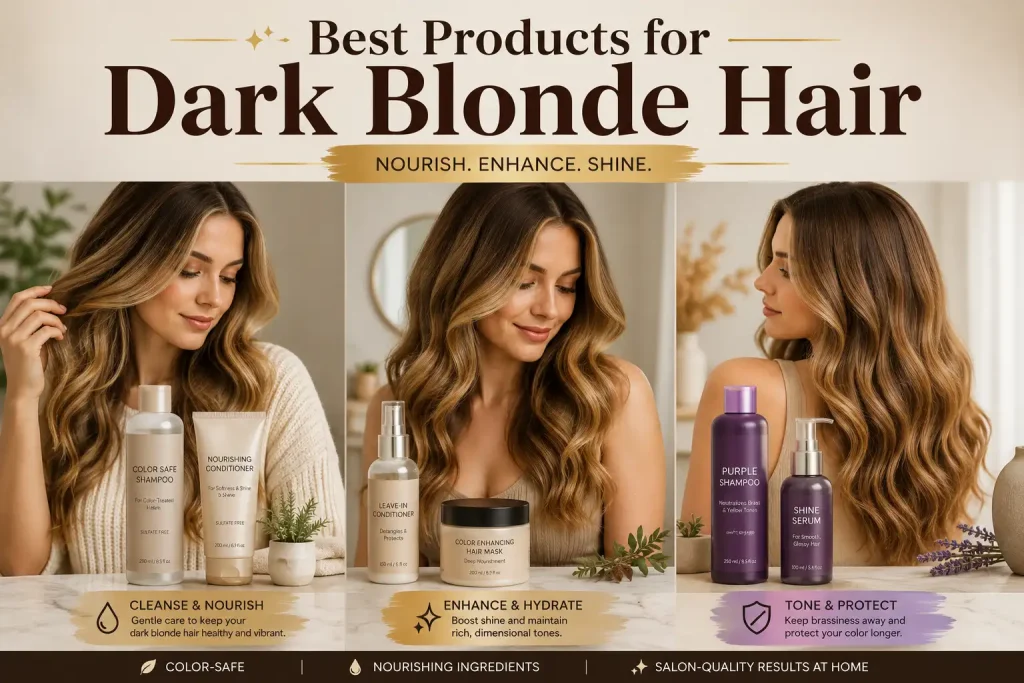
Choosing the right products can make the difference between a rich, dimensional blonde and a color that fades quickly or develops unwanted warmth.
While product selection should always consider your hair type, porosity, and color history, most colorists recommend building a routine around color protection, moisture retention, and tone maintenance.
Essential Product Categories
Color-Safe Shampoo
A gentle sulfate-free shampoo helps preserve pigment and reduce premature fading.
Benefits:
• Longer-lasting color
• Reduced dryness
• Better shine retention
• Less brassiness
Purple Shampoo
Purple shampoo helps neutralize yellow tones.
Best for:
• Ash blonde shades
• Beige blonde shades
• Cool-toned dark blonde colors
Use only when needed. Overuse can leave hair looking dull or overly cool.
Deep Conditioning Treatments
Color-treated hair often loses moisture during the lightening process.
Look for products that support:
• Hydration
• Elasticity
• Smoothness
• Shine
Heat Protectants
Heat styling remains one of the biggest causes of color fading.
A quality heat protectant can:
• Minimize damage
• Reduce breakage
• Help preserve color longevity
Gloss Treatments
Glosses help maintain tone and reflective shine between salon visits.
Benefits include:
• Improved color richness
• Enhanced softness
• Better light reflection
• Refreshed blonde tones
Product Priorities by Shade
| Shade | Most Important Product |
|---|---|
| Ash Blonde | Purple Shampoo |
| Honey Blonde | Moisture Treatment |
| Mushroom Blonde | Gloss Treatment |
| Beige Blonde | Color-Safe Shampoo |
| Caramel Blonde | Deep Conditioner |
Dark Blonde Hair Cost Guide
The cost of dark blonde hair depends on your starting color, desired result, geographic location, stylist experience, and maintenance routine.
Initial Color Transformation Costs
| Service | Typical Range |
| Toner Refresh | $30–$80 |
| Gloss Treatment | $40–$100 |
| Partial Highlights | $100–$250 |
| Full Highlights | $150–$400+ |
| Balayage | $200–$500+ |
| Major Blonde Transformation | $300–$800+ |
Ongoing Maintenance Costs
Many people focus only on the initial appointment cost.
However, maintenance often determines the true annual investment.
Typical yearly maintenance may include:
• Toners
• Glosses
• Haircuts
• Deep treatments
• Highlight refresh appointments
Low-Maintenance Options
If reducing salon visits is a priority, consider:
• Root shadow techniques
• Dimensional balayage
• Bronde-inspired dark blonde
• Honey blonde shades
• Lived-in blonde color placement
These approaches generally grow out more naturally.
Before and After Expectations
One of the biggest causes of disappointment is unrealistic expectations.
The final result depends on:
• Starting hair level
• Previous color history
• Hair condition
• Desired undertone
• Number of sessions
Example 1: Light Brown to Dark Blonde
Starting Level:
6
Expected Timeline:
Often achievable in one appointment.
Result:
Natural-looking blonde with moderate maintenance.
Example 2: Medium Brown to Dark Blonde
Starting Level:
5
Expected Timeline:
One to two appointments.
Result:
Dimensional blonde with possible toner maintenance.
Example 3: Dark Brown to Dark Blonde
Starting Level:
3–4
Expected Timeline:
Multiple appointments.
Result:
Gradual lightening helps preserve hair health.
Example 4: Gray Blending Transformation
Starting Condition:
25–50% gray hair.
Recommended Approach:
Dimensional dark blonde with highlights.
Result:
Softer regrowth and more natural transitions.
What Most Clients Notice
After moving to dark blonde, many people report:
• Brighter complexion
• Softer facial contrast
• More visible dimension
• Less severe root lines than lighter blondes
• Greater styling flexibility
Common Dark Blonde Hair Mistakes
Even beautiful color can become disappointing if maintenance and shade selection are ignored.
Choosing the Wrong Undertone
This is one of the most common mistakes.
For example:
• Warm shades can exaggerate redness on some skin tones.
• Extremely cool shades may look flat on warm complexions.
Going Too Light Too Fast
Aggressive lifting can increase:
• Dryness
• Breakage
• Brassiness
• Uneven color
Gradual transitions often produce healthier and more natural-looking results.
Ignoring Hair Porosity
Hair porosity influences:
• Color absorption
• Color retention
• Toning needs
• Product performance
High-porosity hair may require additional maintenance.
Skipping Gloss Appointments
Gloss treatments are often overlooked.
However, they can significantly improve:
• Shine
• Tone
• Softness
• Color longevity
Overusing Purple Shampoo
Many people assume more is better.
In reality, excessive use can leave hair looking dull or slightly gray.
Professional Colorist Tips for Better Results
Experienced colorists often share similar advice when helping clients achieve dark blonde hair.
Tip 1: Bring Multiple Reference Photos
One photo rarely captures the exact tone, depth, and placement you want.
Tip 2: Focus on Undertones
The difference between ash, beige, honey, and caramel often matters more than the shade name itself.
Tip 3: Prioritize Hair Health
Healthy hair reflects light more effectively and typically makes color look more expensive.
Tip 4: Consider Maintenance Before Choosing a Shade
The most beautiful shade is not always the most practical.
Choose a color that fits your lifestyle and maintenance preferences.
Tip 5: Build Dimension
Single-process color can sometimes appear flat.
Combining:
• Highlights
• Lowlights
• Root shadows
• Glosses
often creates a richer result.
Frequently Asked Questions
What level is dark blonde hair?
Dark blonde is generally classified as Level 7 on the professional hair color scale, although undertones and brand formulas can slightly influence appearance.
Is dark blonde hair rare?
Natural dark blonde hair is less common than brown hair but more common than very light blonde shades. It appears most frequently among people of Northern and Central European ancestry.
Does dark blonde hair require bleach?
Not always.
People with naturally blonde or light brown hair may achieve dark blonde without bleach, while darker hair often requires lightening.
Can dark blonde hair cover gray?
Yes.
Dark blonde is one of the most effective shades for soft gray blending because it reduces contrast and creates more natural regrowth patterns.
How often should dark blonde hair be toned?
Most people benefit from toning every 6–12 weeks depending on hair porosity, washing habits, and desired tone.
Is dark blonde low maintenance?
Compared with platinum, icy blonde, and very light blonde shades, dark blonde is generally easier to maintain because root growth is less noticeable.
What is the difference between dark blonde and ash blonde?
Dark blonde refers to the depth level.
Ash blonde refers to the undertone.
A dark blonde shade can also be ash blonde if it contains cool gray-based pigments.
Can brunettes become dark blonde?
Yes.
Many brunettes successfully transition to dark blonde. Depending on the starting color, multiple sessions may be required to maintain hair health.
Does dark blonde make hair look thicker?
In many cases, yes.
Dimensional dark blonde colors can create visual depth, movement, and contrast that make fine hair appear fuller.
What is the most low-maintenance dark blonde shade?
Rooted beige blonde, mushroom blonde, and dimensional balayage styles are often considered among the lowest-maintenance options.
Final Thoughts
Dark blonde hair remains one of the most versatile and flattering hair colors because it combines the brightness of blonde with the depth and practicality of darker shades.
Whether you prefer ash blonde, honey blonde, mushroom blonde, beige blonde, caramel blonde, balayage, highlights, or gray-blending color techniques, there is a version of dark blonde that can suit your skin tone, lifestyle, and maintenance goals.
Before choosing a shade, focus on three factors: undertone, maintenance expectations, and starting hair level. These decisions often have a greater impact on your satisfaction than the color name itself.
When customized correctly, dark blonde hair can provide a sophisticated, dimensional look that remains beautiful between salon visits while requiring significantly less upkeep than lighter blonde shades. Save your favorite inspiration photos, discuss your goals with a professional colorist, and choose a shade that works not only for your complexion—but also for your everyday life.