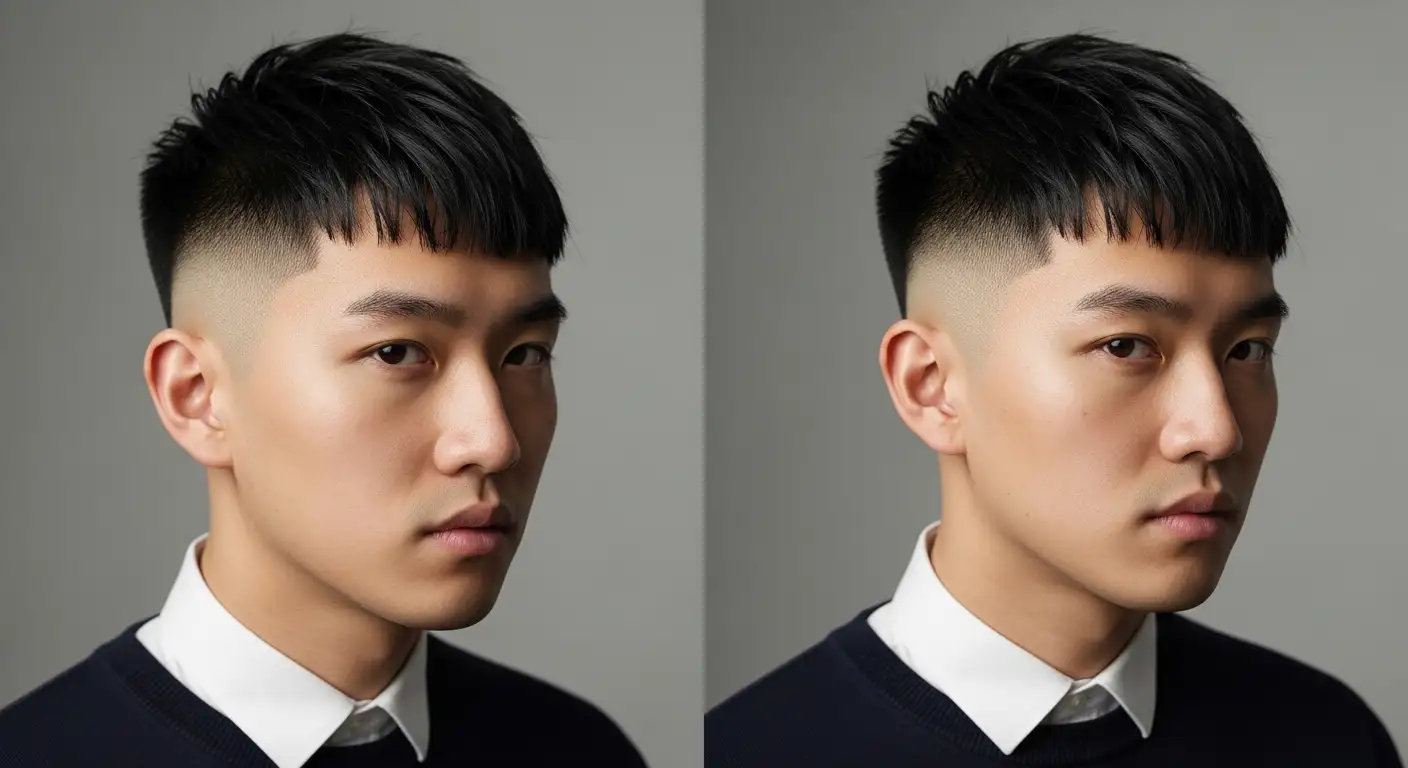
Asian hairstyles for men are no longer just a trend — they’ve become a global style movement. From K-drama inspired cuts to modern fades and textured crops, today’s looks are sharper, cleaner, and more versatile than ever. But here’s the truth: not every trending haircut works for every face shape, hair density, or lifestyle.
Asian hair is typically thick, straight, and resistant to volume, which means certain styles look incredible — while others fall flat without the right cut or technique. Choosing the wrong fade placement, too much height, or the wrong layering method can completely change the outcome.
In this complete guide, you’ll discover the best Asian hairstyles for men, broken down by hair length, face shape, maintenance level, and professional setting. You’ll also learn how to ask your barber correctly, which products actually work for Asian hair, and how to avoid the most common haircut mistakes.
What are the best Asian hairstyles for men?
The best Asian hairstyles for men include textured crops, two block cuts, curtain hairstyles, Caesar cuts, and low fade styles. These haircuts work especially well with thick, straight hair and can be customized for different face shapes and lifestyles.
You May Also Like:
Long on Top Short on Sides Haircut: 18 Best Styles for Men in 2026
Spiky Hairstyles for Men 2026: 40 Best Modern Spiky Haircuts
Line Up Haircut Guide for Men 2026: Styles, Trends & Tips
Best Soccer Player Haircuts for Men 2026
40 Popular Korean Haircuts for Men
Why Asian Hair Is Unique (Texture, Density & Growth Pattern)
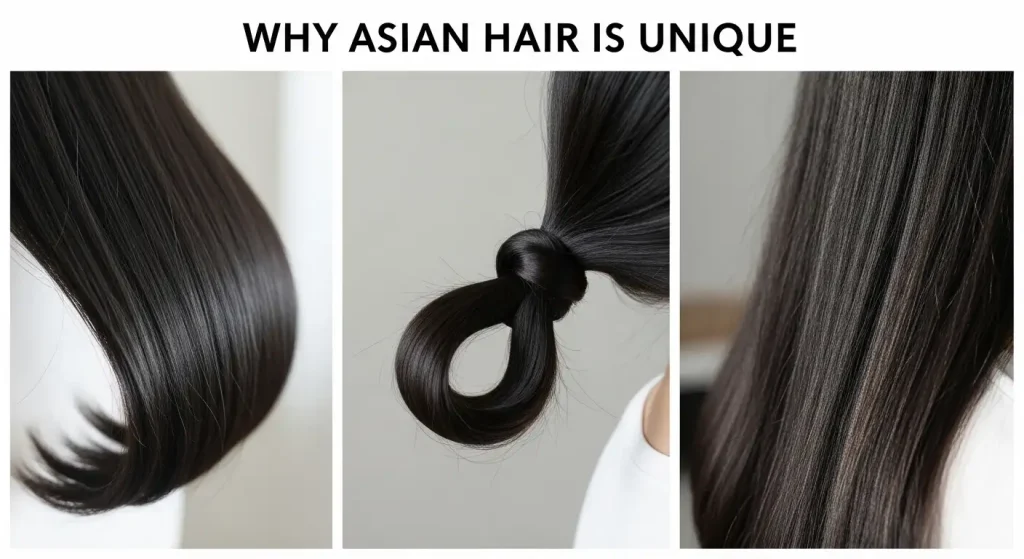
Understanding how Asian hair behaves is the key to choosing a haircut that actually works. Most Asian men naturally have straight, coarse strands with a round hair shaft structure, which affects how the hair falls, holds shape, and responds to styling.
Straight Coarse Strands
Asian hair tends to grow very straight from the root, often appearing smooth and sleek. Because of its coarser diameter, it can feel strong and healthy, but it may also resist curls or dramatic shape changes without heat or product support.
Thickness & Resistance
Many Asian men have high hair density, meaning more strands per square inch. While this creates a full appearance, it also adds weight. Heavy bulk can make certain layered styles collapse if not properly texturized by the barber.
Volume Behavior
Unlike naturally wavy or curly hair, straight thick hair doesn’t automatically create lift. Volume must be intentionally built through strategic layering, thinning, and blow-dry technique. Without proper structure, styles can look flat or overly boxy.
Why Fades Behave Differently
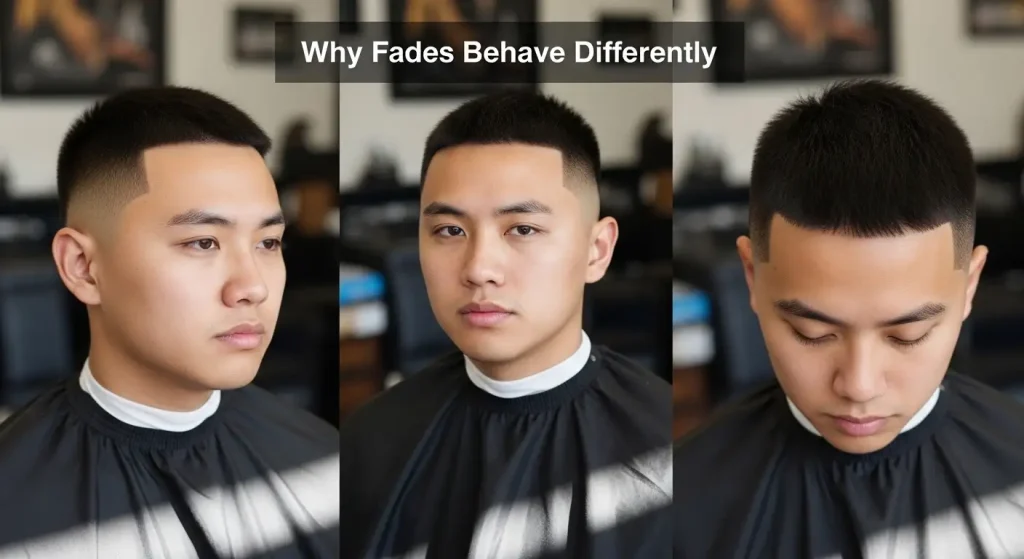
Because Asian hair is dense and dark, fades appear more dramatic and defined. Any blending mistakes become visible quickly. A poorly executed fade can look harsh, while a well-blended taper creates a clean, sharp silhouette.
Common Styling Struggles
- Hair sticking out at the sides
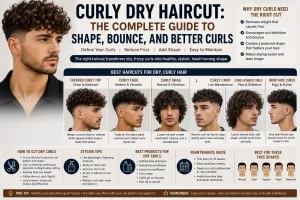
- Difficulty holding curls
- Heavy top collapsing after a few hours
- Overusing product leading to greasy texture
Choosing styles that work with your natural density — rather than against it — makes all the difference.
STYLE COMPARISON
| Style | Maintenance | Best For |
|---|---|---|
| Buzz Cut | Very Low | Busy lifestyle |
| Two Block | Medium | Trendy look |
| Curtain Cut | Medium | Balanced face |
| Textured Crop | Low | Thick hair |
| Wolf Cut | High | Fashion style |
25 Best Asian Hairstyles for Men in 2026
Below are modern, versatile options organized by length so you can find the right fit for your lifestyle and maintenance preference.
Short Asian Hairstyles
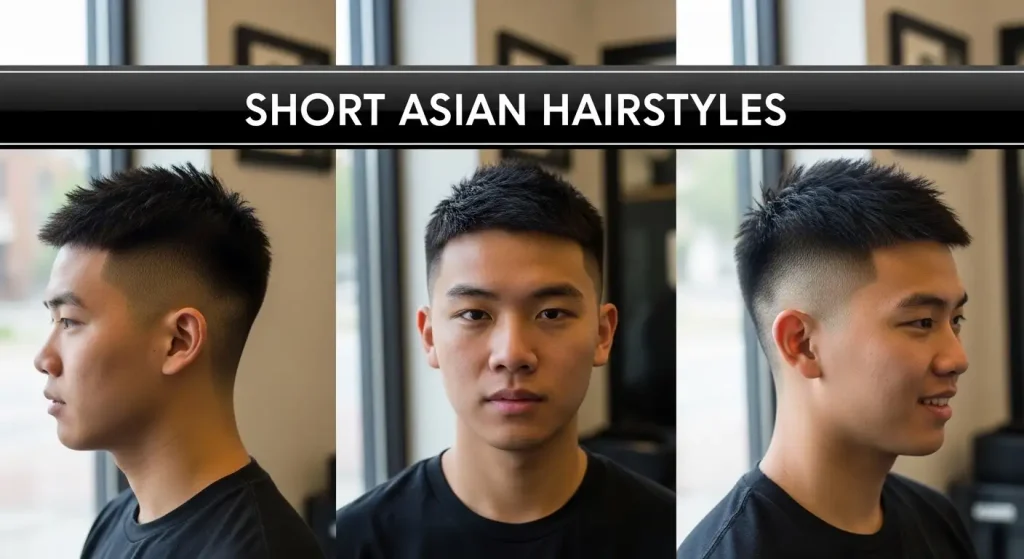
Buzz Cut Fade
A clean and masculine choice that highlights facial structure. The fade adds sharpness while keeping maintenance low. Ideal for men who prefer a minimalist look.
Textured Crop
This style adds controlled movement on top while keeping the sides tight. Perfect for thick hair that needs debulking without losing fullness.
Crew Cut
A classic short haircut that works well in professional environments. Slight texture on top prevents it from looking flat.
Caesar Cut
Defined fringe at the front with short sides. Great for men wanting a structured, low-effort style with a modern edge.
Medium Length Styles
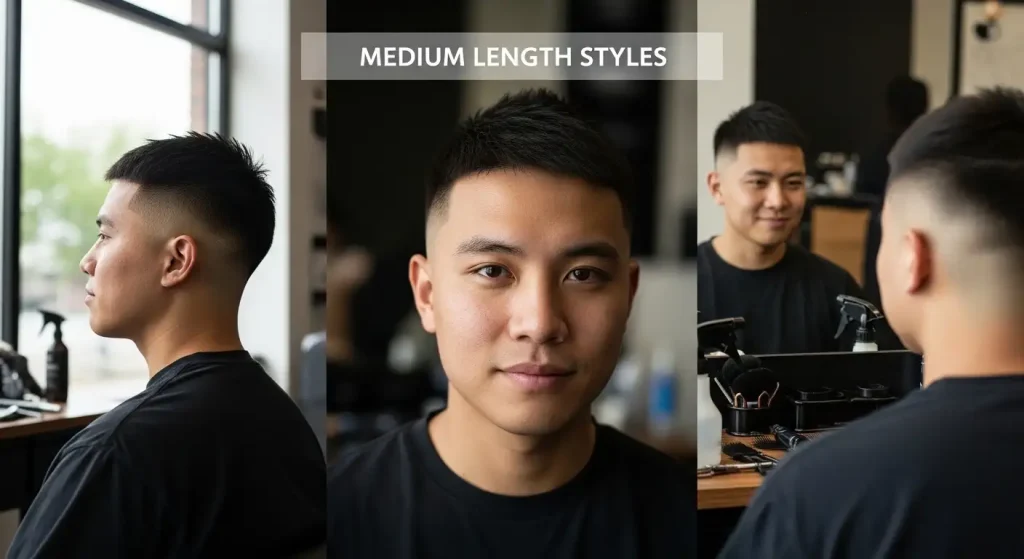
Two Block
One of the most popular modern Asian haircuts. Shorter sides with a longer top create strong contrast while maintaining versatility.
Curtain Haircut
Center-parted layers frame the face and soften sharp features. Works especially well for oval and square face shapes.
Comma Hair
Inspired by Korean trends, this style features a curved front section resembling a comma shape. It adds personality without extreme styling.
Messy Quiff
Volume-focused and stylish, the messy quiff adds height and dimension while maintaining a relaxed finish.
Long Asian Hairstyles
Man Bun
Practical and stylish for men growing their hair out. Keeps thick hair controlled while still making a bold statement.
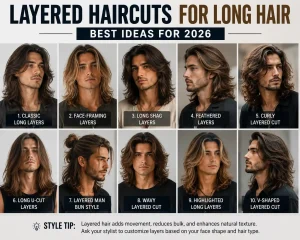
Long Layered
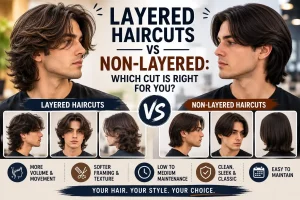
Strategic layering removes bulk and adds movement, preventing long straight hair from appearing too heavy.
Shag
Textured layers throughout create natural volume and edge. Ideal for men wanting a fashion-forward look.
Asian Wolf Cut
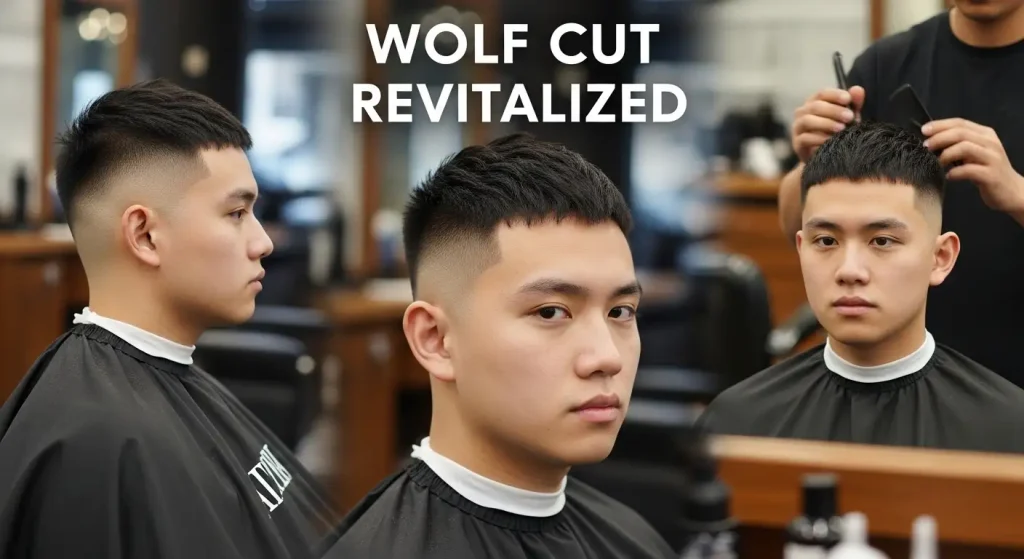
A hybrid of shag and mullet with layered structure and tapering sides. Trend-driven and bold, especially popular among younger audiences.
Korean Hairstyles vs Japanese vs Western Asian Trends
Asian men’s hairstyles are not one single category. Regional culture, media influence, and workplace expectations shape how trends evolve. Understanding these differences helps you choose a style that fits your personality and lifestyle.
K-Pop Influence (Korean Trends)
Korean hairstyles are heavily shaped by K-pop idols and K-dramas. These looks often feature:
- Soft layers
- Natural volume
- Two block cuts
- Comma hair and curtain styles
- Light perms for texture
The focus is on youthful, polished, and camera-ready aesthetics. Hair usually looks styled but effortless, with controlled shine and smooth movement.
Anime Influence (Japanese Trends)
Japanese-inspired styles often lean toward creative expression and individuality. Common elements include:
- Shag cuts
- Wolf cuts
- Layer-heavy medium styles
- Edgy fringe placement
- Lighter or dyed hair tones
Anime and street subcultures influence more experimental shapes. These styles emphasize texture, movement, and personality rather than corporate polish.
Street Fashion Differences
- Korean street style favors clean silhouettes and balanced volume.
- Japanese street fashion embraces bold structure and layered chaos.
- Western Asian trends (in the US, UK, Canada, Australia) often blend fades, undercuts, and modern barbering techniques with traditional Asian hair density.
Western interpretations tend to combine sharp fades with longer textured tops, creating a hybrid look.
Business Culture Haircut Differences
Workplace expectations vary significantly:
- In Korea and Japan, conservative environments favor neat side parts, short tapers, and structured cuts.
- In Western countries, Asian men often adopt fades, textured crops, or modern quiffs even in professional settings.
If you work in a strict corporate setting, choose styles with controlled volume and clean side profiles.
Understanding these cultural influences allows you to choose a haircut that aligns with both your aesthetic goals and your environment.
Best Asian Hairstyles by Face Shape
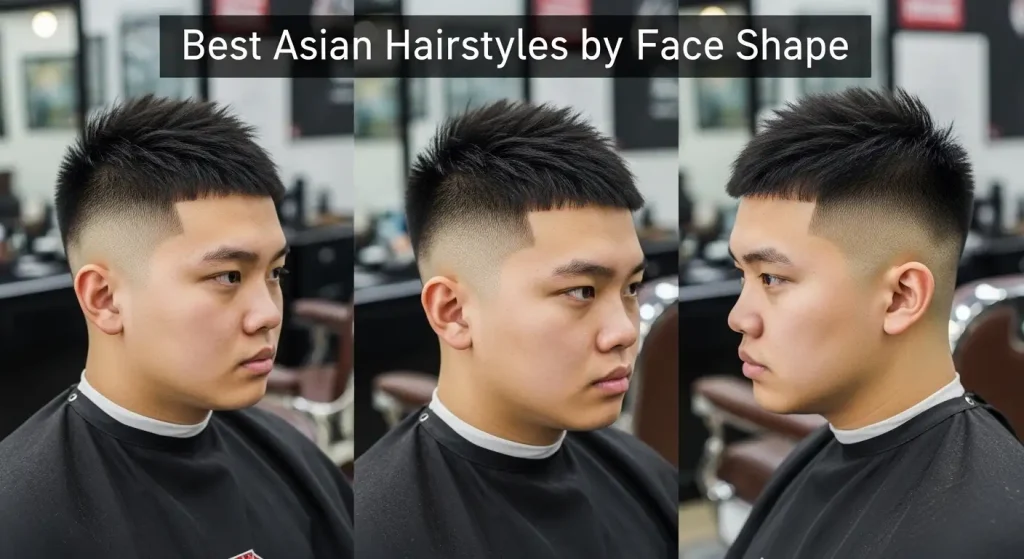
Choosing the right haircut depends heavily on your facial structure. The goal is always balance and proportion.
Round Face
A round face benefits from height and angular definition.
Best options:
- Textured quiff
- Two block with volume
- Low fade with longer top
- Side-part with lift
Avoid heavy straight fringe that widens the face. Focus on vertical height.
Oval Face
Oval faces are naturally balanced, making them highly versatile.
Best options:
- Curtain haircut
- Textured crop
- Crew cut
- Comma hair
- Messy quiff
Most styles work well, but avoid excessive height that elongates the face too much.
Square Face
Square faces already have strong jawlines. The aim is to soften or enhance strategically.
Best options:
- Side-swept medium styles
- Two block with light layering
- Low taper fade
- Light fringe cuts
Avoid overly boxy cuts that exaggerate width.
Diamond Face
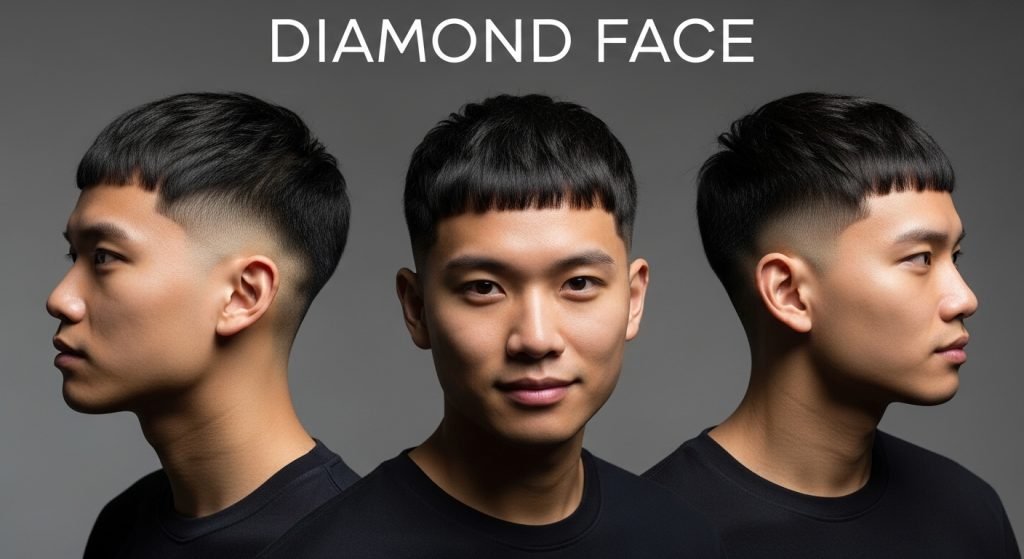
Diamond faces have wider cheekbones and narrower forehead and chin.
Best options:
- Curtain haircut
- Medium layered styles
- Textured fringe
- Side-swept quiff
Avoid ultra-tight fades that emphasize cheekbone width. Balance is key.
Best Hairstyles for Thick, Thin & Receding Asian Hair
Hair density and hairline position dramatically impact which styles work best.
Thick Hair Solutions
Thick Asian hair can become bulky if not managed properly.
Best styles:
- Textured crop
- Layered shag
- Two block with thinning
- Medium quiff with debulking
Ask your barber for texturizing and thinning techniques to remove excess weight.
Thin Hair Solutions
Thinner hair requires styles that create the illusion of fullness.
Best options:
- Short textured crop
- Side part with subtle volume
- Light fringe cuts
- Low taper fade
Avoid heavy products that weigh hair down. Use matte styling products for lift.
Thinning Crown Solutions
If your crown is thinning:
- Keep sides tighter to reduce contrast
- Add texture to the top
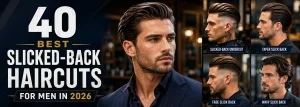
- Avoid slick-back styles that expose scalp
A slightly messy textured top helps disguise density loss.
Hairline Camouflage Cuts
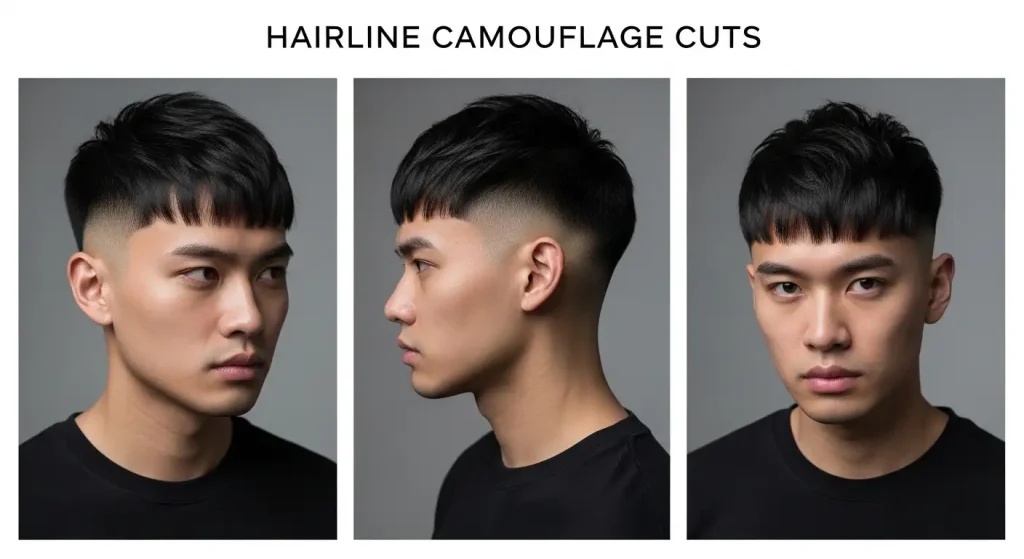
For receding hairlines:
- Textured fringe
- Caesar cut
- Two block with forward styling
- Short crop with soft fringe
These styles shift focus forward rather than backward.
Volume-Boosting Styles
If your hair falls flat:
- Blow-dry upward with a round brush
- Use lightweight volumizing spray
- Try layered medium cuts
- Consider a soft perm for texture
Building structure into the haircut itself is more important than relying only on product.
Fade Guide for Asian Hair (Low, Mid, High, Skin, Taper)
Fades look especially sharp on Asian hair because of its dark color, density, and straight structure. However, that same density makes mistakes more visible. Choosing the right fade height and blend is critical.
Low Fade
Starts just above the ear and gradually blends upward.
Best for:
- Professional settings
- Subtle contrast
- Medium-length tops
Low fades maintain structure without looking aggressive.
Mid Fade
Begins around the temple area and creates stronger contrast.
Best for:
- Textured crops
- Two block styles
- Messy quiffs
It balances boldness and versatility.
High Fade
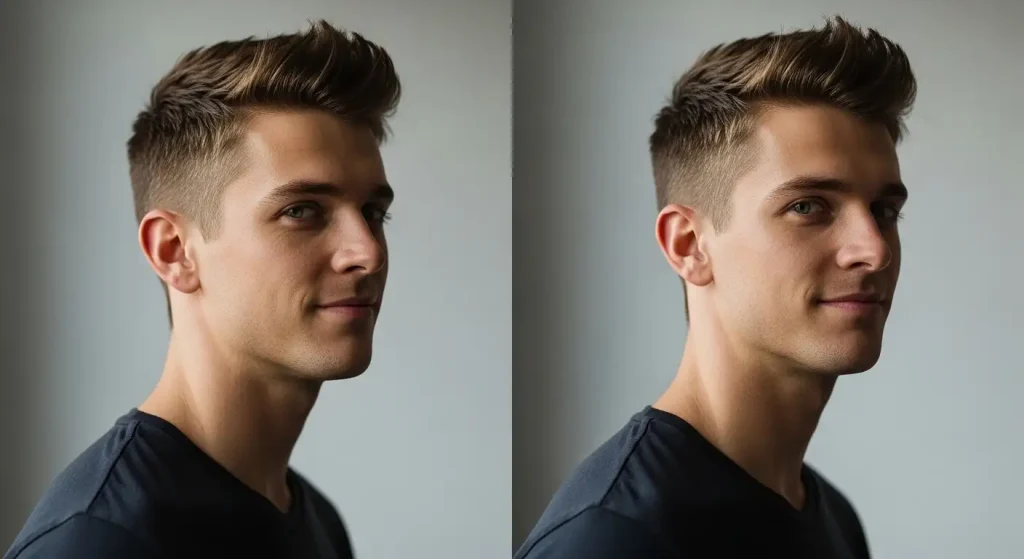
Starts higher near the parietal ridge.
Best for:
- Short styles
- Buzz cuts
- High-contrast looks
High fades emphasize facial structure but can look harsh if not blended well.
Skin Fade
Blends down to bare skin at the base. Because Asian hair is thick and dark, skin fades appear very defined. Precision is essential.
Taper Fade
A softer version that focuses on the neckline and sideburn area. Ideal for conservative workplaces.
Guard Numbers
Understanding guard numbers helps you communicate clearly:
- #0 or skin = shaved
- #1 = very short
- #2 = short but visible
- #3–#4 = moderate length
For most Asian hair types, a #1 or #2 base with a smooth blend works well.
When a Fade Looks Too Harsh
- Blend line is visible
- Contrast is too dramatic
- Fade starts too high for face shape
- Top length is too heavy compared to sides
Balancing density between top and sides prevents a disconnected look.
Blending Techniques
Ask for:
- Gradual blending
- Proper weight removal at the ridge
- Texturizing on top to reduce bulk
Because Asian hair is dense, blending must remove weight strategically, not just shorten length.
How to Ask Your Barber for the Perfect Asian Hairstyle
Most haircut mistakes happen due to poor communication. Being specific avoids disappointment.
Show Reference Photos
Bring 2–3 images from different angles. Make sure the model has similar hair density and face shape to yours.
Mention Guard Numbers
Instead of saying “short,” say:
“#2 on the sides with a low fade.”
Specific numbers eliminate confusion.
Explain Desired Length on Top
Use measurable language:
- “Leave 3 inches on top.”
- “I want enough length to style forward.”
Avoid vague instructions like “medium.”
Request Layering
If your hair is thick, say:
“Please add layers and remove bulk.”
Layering prevents heavy, flat tops.
Ask for Texture
Say:
“Add texture so it doesn’t look too stiff.”
Texture makes straight hair easier to style and more natural-looking.
Clear communication turns a good haircut into a great one.
4-Week Maintenance Timeline Plan
Asian hair grows quickly and can lose shape fast. A structured schedule keeps your haircut sharp.
Week 1 – Fresh
Your fade is crisp and shape is defined.
Use minimal product and enjoy the clean silhouette.
Week 2 – Natural
The fade softens slightly.
Maintain edges around neckline and sideburns if needed.
Week 3 – Edge Up
Bulk begins to show, especially at the sides.
Schedule a quick edge-up or taper refresh to maintain structure.
Week 4 – Full Trim
The haircut has grown out significantly.
Time for a full reshape to restore balance and layering.
Following this cycle keeps your hairstyle intentional rather than overgrown.
Styling Products That Actually Work for Asian Hair
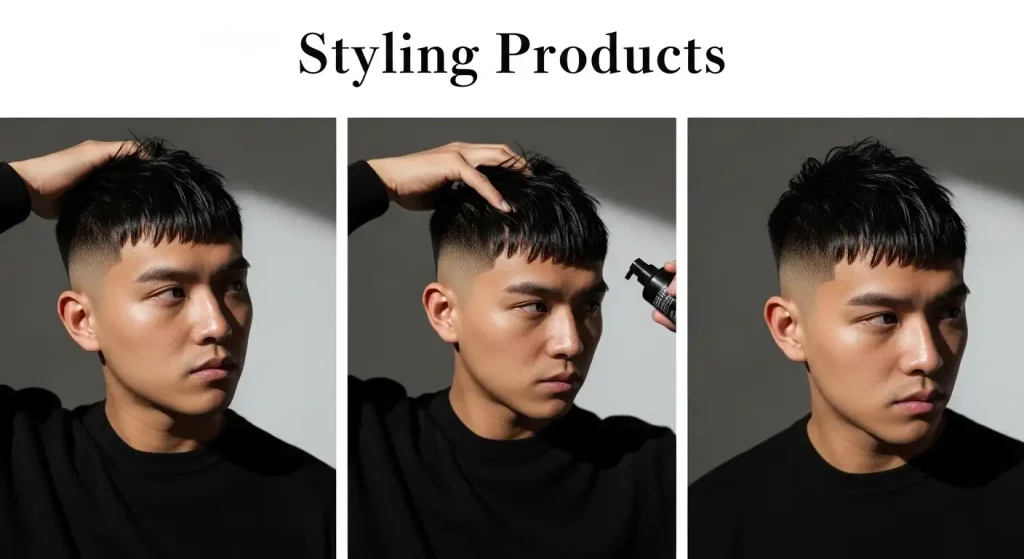
Because Asian hair is often straight and dense, heavy products can weigh it down. Choosing the right formula matters.
Pomade vs Clay
- Pomade adds shine and sleekness. Best for slick-back or side-part styles.
- Clay provides matte texture and stronger hold. Ideal for textured crops and quiffs.
For most modern styles, matte clay is more versatile.
Sea Salt Spray
Adds light texture and volume without heaviness.
Best used as a pre-styler before blow-drying.
Lightweight Wax
Offers flexible hold without stiffness.
Perfect for medium-length curtain or two block styles.
Korean Perm Maintenance
If you have a soft perm:
- Use sulfate-free shampoo
- Avoid heavy oils
- Scrunch gently while drying
- Use lightweight curl cream
Maintaining moisture prevents frizz and keeps curls defined.
Growing Out Strategy (Short to Medium Transition Plan)
Growing out Asian hair can be challenging because thickness creates awkward bulk.
Trim Frequency
Get light trims every 4–6 weeks to maintain shape while allowing length growth.
Managing Bulk
Ask your barber to:
- Thin out heavy sections
- Maintain clean side structure
- Shape gradually rather than letting it grow unevenly
Removing weight prevents the “mushroom” phase.
When to Reshape
Once the top reaches medium length (around 3–5 inches), reshape into:
- Two block
- Curtain haircut
- Textured layered style
Common Mistakes Asian Men Make With Haircuts
Even the most popular hairstyle can look wrong if it doesn’t match your hair type or face structure. Avoid these common mistakes to ensure your haircut enhances your overall appearance.
Too Much Height
Because Asian hair is naturally straight and thick, adding excessive height can make the head look elongated or unbalanced. High-volume quiffs or extreme lifts only work if your face shape supports vertical length. Controlled structure looks sharper than exaggerated height.
Over-Fading
Fades can look very dramatic on dark, dense hair. Starting the fade too high or making the contrast too sharp can create a disconnected look. A well-balanced fade should complement the top — not overpower it.
Heavy Product Use
Using too much pomade or wax can weigh thick hair down and create a greasy finish. Asian hair responds better to lightweight matte products that enhance texture rather than compress it.
Ignoring Face Shape
Choosing a trendy cut without considering facial structure leads to imbalance. For example, heavy straight fringe can widen a round face, while too much height can overstretch a long face. Proportion always comes first.
Are Asian Hairstyles Professional? (Workplace Guide)
Yes — but the key is choosing the right variation for your environment. Professionalism depends on structure, neatness, and maintenance.
Corporate Safe Styles
Best for strict workplaces:
- Low taper fade
- Crew cut
- Side part
- Short textured crop
These cuts offer clean lines, controlled volume, and minimal distraction, making them suitable for formal settings.
Creative Field Styles
If you work in fashion, media, design, or tech:
- Two block
- Curtain haircut
- Messy quiff
- Wolf cut (subtle version)
These styles allow personality while still looking intentional.
School-Friendly Cuts
Students benefit from:
- Low fade with short top
- Textured crop
- Classic taper
- Natural medium-length layers
These are easy to manage and appropriate for most dress codes.
Professional appearance is less about the trend and more about grooming consistency and maintenance.
FAQs
What haircut suits Asian men best?
The best haircut depends on face shape, hair density, and lifestyle. Popular choices include the textured crop, two block, low fade, and curtain haircut. These styles work well with naturally straight, thick hair and can be adjusted for both professional and casual settings.
Is two block good for round face?
Yes, the two block can suit a round face if styled with added height and reduced side bulk. Keeping volume on top and avoiding heavy straight fringe helps elongate the face and create better proportion.
Are fades high maintenance?
Fades require maintenance every 2–4 weeks to keep the blend sharp. While daily styling is minimal, regular trims are necessary because dense, dark hair makes regrowth noticeable quickly.
Do Asian men need special hair products?
Not necessarily special, but lightweight, matte products work better for thick straight hair. Heavy, shiny pomades can weigh hair down, while clay and sea salt spray help create volume and texture.
Can Asian men pull off long hair?
Absolutely. Long layered cuts, shag styles, and man buns work well with thick hair. The key is proper layering and bulk removal to prevent heaviness and maintain movement.
Final Decision Framework – Which Style Should You Choose?
Before committing to a haircut, evaluate these five factors:
✔ Face shape – Choose styles that balance proportions rather than follow trends blindly.
✔ Hair density – Thick hair benefits from layering and thinning; thinner hair needs texture and volume illusion.
✔ Work environment – Corporate settings favor clean tapers; creative roles allow experimentation.
✔ Maintenance tolerance – Fades require frequent trims; medium layered styles offer flexibility.
✔ Personal style – Your haircut should reflectayour identity and confidence level.