
Quick Answer
Under current Navy haircut regulations, men’s hair may be up to 4 inches long and 2 inches in bulk. It must remain off the ears and above the collar. Women’s loose hair may touch but not fall below the lower back edge of the collar. Longer hair must be secured when required.
Navy Hair Regulations at a Glance
The following measurements come from the current U.S. Navy Uniform Regulations, Article 2201.1.
| Standard | Current Requirement |
|---|---|
| Men’s maximum hair length | 4 inches |
| Men’s maximum hair bulk | 2 inches |
| Men’s position | Off the ears and above the collar |
| Men’s taper | At least ¾ inch upward; no more than ¾ inch outward |
| Men’s hard part | Up to 4 inches long and ⅛ inch wide |
| Women’s loose hair | May touch but not fall below the lower back collar edge |
| Women’s maximum bulk | 2 inches, excluding the bun |
| Maximum bun projection | 3 inches from the scalp |
| Angled women’s cuts | Up to 1½ inches difference from front to back |
| Ponytail drop | Up to 3 inches below the lower collar edge |
| Ponytail projection | Up to 3 inches behind the securing accessory |
| Multiple braid diameter | Up to ¼ inch per braid |
| Loose lock width | Up to ⅜ inch |
| Loose lock spacing | No more than ⅜ inch apart |
A hairstyle may meet these measurements and still need correction if it prevents proper headgear or equipment use.
What Hair Length and Bulk Mean
Hair length and hair bulk are not the same measurement. Confusing them is one of the most common mistakes.
Hair Length
Hair length measures one strand from the scalp to its end. Under the men’s standard, no individual hair may exceed 4 inches.
A curly strand may look shorter in its natural state. Its actual length can still be greater when extended.
Hair Bulk
Bulk measures how far the styled mass projects from the scalp. It does not measure the total length of one strand.
For example, four-inch hair may remain compliant when combed close to the head. The same hair could exceed the bulk limit when styled into a tall quiff.
The Practical Test
Check the hairstyle in its normal duty-ready form:
• Measure the longest individual strand.
• Measure the styled projection from the scalp.
• Put on the required uniform cover.
• Confirm that hair does not distort the cover.
• Test any helmet, hearing protection, or safety equipment used for duty.
Navy Hair Regulations for Men
Men’s hair must appear neat, clean, balanced, and graduated. It must remain off the ears and above the collar when wearing a uniform or performing duty.
The top may reach 4 inches in length, but styled bulk cannot exceed 2 inches. Hair cannot extend below the eyebrows when headgear is removed or show beneath the front of headgear.
Taper Requirements
Hair around the ears and neck must taper upward from the lower natural hairline by at least ¾ inch. It may extend outward no more than ¾ inch before blending into longer hair.
The Navy recognizes that this exact taper may be difficult to create on some curly or wavy textures. However, the back and sides must still show a graduated appearance.
Acceptable neckline finishes include:
• Natural taper
• Rounded neckline
• Blocked neckline
• Straight neckline
Sideburn Requirements
Sideburns must:
• Remain neatly trimmed
• Match the general haircut
• Have an even width
• End with a clean horizontal line
• Stop above the top of the ear opening
Flared sideburns and muttonchop-style shapes are not authorized. Sideburns are not allowed with a completely bald hairstyle.
Best Regulation-Friendly Navy Haircuts for Men
The Navy lists flat tops, shaved heads, high-and-tights, fades, and Afros as examples of authorized styles. Each option must still meet the applicable measurements.
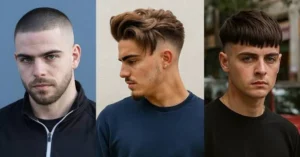
Buzz Cut
A buzz cut uses one short guard across most or all of the head. It works well for straight, wavy, curly, fine, and thick hair.
Styling difficulty: Very low
Typical upkeep: Every two to four weeks
Ask your barber: “Give me an even buzz cut with a clean neckline and no designs.”
Crew Cut
A crew cut leaves modest length on top with shorter, graduated sides. It offers more shape than a buzz cut without creating excess bulk.
Best for: Most face shapes and hair textures
Styling difficulty: Low
Typical upkeep: Every three to five weeks
Ivy League
The Ivy League is a longer crew cut with enough hair for a side part. It suits sailors who want a professional cut that does not look extremely short.
Keep the top comfortably below the four-inch limit. Style it close enough to remain below two inches of bulk.
High and Tight
A high and tight has very short sides with a compact section of hair above. The strong contrast creates a classic military appearance.
Ask for a smooth transition rather than a narrow central strip. An extreme version may begin to resemble an unauthorized faux hawk.
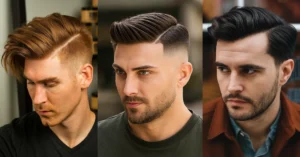
Low Fade
A low fade begins near the lower hairline. Its softer transition can make grow-out less noticeable between appointments.
This is a practical choice for sailors who cannot visit a barber every one or two weeks.
Mid Fade
A mid fade begins around the temple area. It gives a sharper outline than a low fade without removing as much side coverage as a high fade.
The blend must remain visibly graduated from the hairline upward.
High Fade
A high fade removes more weight from the sides and back. It can work well for thick, dense, curly, or coily hair.
Avoid leaving a disconnected block of long hair above the fade.
Flat Top
A flat top creates an upright, level surface across the top. Dense straight, wavy, or tightly coiled hair usually holds this shape best.
The top must remain within both the length and bulk limits.
Short Afro
A short Afro is specifically recognized as an authorized example. The shape should remain balanced, controlled, and below two inches of bulk.
A rounded silhouette usually grows out more evenly than a sharply squared top.
Shaved Head
A bald or shaved head is authorized under the men’s standard. However, sideburns are not worn with a bald hairstyle.
A shaved head requires frequent upkeep if the wearer wants an even finish.
Are Fades and Hard Parts Allowed?
Yes, fades are allowed when the sides and back create a graduated appearance. Low-top fades, hi-top fades, and high-and-tight styles appear among the Navy’s authorized examples.
A fade becomes risky when it creates:
• A disconnected top
• An exaggerated central strip
• A faux-hawk outline
• Decorative shaved curves
• Letters, symbols, or pictures
Hard-Part Rules for Men
One narrow, straight fore-and-aft hard part is authorized.
It may be:
• Cut, clipped, or shaved
• No longer than 4 inches
• No wider than ⅛ inch
Decorative lines, double parts, zigzags, and curved designs are not authorized.
Hard-Part Rules for Women’s Very Short Hair
One straight hard part may also be used with an authorized very short hairstyle. It must remain within the same four-inch length and one-eighth-inch width limits.
For women, the part must sit above the temple and no higher than the crown where the side meets the top.
Navy Hair Regulations for Women
Women may wear short, medium, or long hair under current fleet regulations. The finished hairstyle must remain balanced and work with uniform headgear, protective masks, and other equipment.
Loose hair may touch the horizontal line at the lower edge of the back collar. It cannot fall below that line.
With jumper uniforms, hair may extend up to 1½ inches below the top of the jumper collar. Dinner dress uniforms have a separate relaxed provision, while other grooming rules continue to apply.
Bangs, Layers, and Angled Cuts
Bangs cannot extend below the eyebrows.
Layered styles are allowed when the layers create a smooth, graduated appearance. Extremely lopsided cuts are not authorized.
An angled bob or similar cut may have no more than 1½ inches of difference between its front and back lengths.
Short Hair Limits
Very short hairstyles may measure up to:
• 4 inches in individual length
• 2 inches in styled bulk
The hair should be long enough to prevent the scalp from being readily visible. A bald or razor-shaved hairstyle is generally not authorized under the women’s standard except for documented medical care.
Best Short Navy Haircuts for Women
Short hair can reduce daily styling and remove the need for buns or ponytails. The best option depends on texture, collar placement, and headgear.
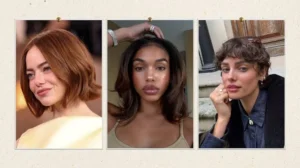
Collar-Free Bob
A collar-free bob ends clearly above the lower collar edge. It is easy to wear loose when the perimeter stays controlled.
Ask the stylist to check the length while you sit and stand naturally.
Graduated Bob
A graduated bob is shorter in the back and longer near the face. Keep the front-to-back difference within 1½ inches.
This cut can prevent the back from resting on the collar while preserving some face-framing length.
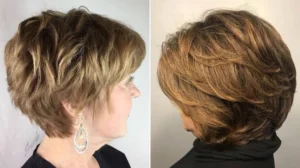
Short Layered Bob
Soft internal layers remove weight without producing an uneven outline. This works well for thick, straight, or wavy hair.
Avoid heavily shattered layers that create loose pieces around the headgear line.
Soft Pixie
A pixie with tapered sides and a controlled top is easy to maintain. It can suit fine, thick, straight, wavy, or curly hair.
The finished cut should not expose broad shaved sections of the scalp.
Textured Crop
A short crop works well for natural movement and waves. Keep the texture controlled enough for headgear to fit without gaps.
A light styling cream may provide definition without creating stiff height.
Curly Crop
A rounded curly crop preserves natural texture while reducing daily styling. The stylist should assess the finished shape when dry.
This matters because shrinkage can hide the actual strand length.
Compact Afro
A compact Afro offers a balanced shape for tightly curled and coily hair. Keep the styled projection within two inches.
A soft taper can reduce bulk around the ears and neckline.
Short Tapered Cut
A gradual taper controls fullness around the sides and back. It should blend smoothly into the top without decorative shaved sections.
Curly, Coily, and Afro-Textured Hair
The Navy rules specifically recognize the different qualities of curled, waved, and straight hair. Texture does not need to be flattened or hidden to look professional.
The main concerns remain:
• Finished bulk
• Individual strand length
• Balanced shape
• Headgear fit
• Equipment safety
Practical Texture Tips
• Have curly or coily hair shaped while dry or close to its duty-ready state.
• Check the true strand length without permanently stretching the style.
• Use a rounded outline to make grow-out easier to manage.
• Avoid heavy products that stain covers or collect visible residue.
• Keep dense side areas controlled beneath hearing protection.
• Test the cut with required headgear before leaving the barber.
• Choose a barber who understands shrinkage, coils, and graduated tapers.
A short Afro, tapered Afro, curly crew cut, wave cut, compact coil crop, or controlled hi-top fade may work under the men’s standard when all measurements are met.
Buns, Ponytails, and Long Hair
Long hair does not automatically need to be cut. It must be secured when it extends beyond the permitted loose-hair length.
Bun Requirements
A regulation bun must:
• Sit at the back of the head
• Project no more than 3 inches from the scalp
• Stay within the width of the back of the head
• Contain all loose ends
• Allow proper headgear placement
The two-inch bulk limit applies to the hair outside the bun.
Ponytail Requirements
A single ponytail, single braid, or French braid may be worn with service, working, and physical training uniforms.
A ponytail must not:
• Extend more than 3 inches below the lower collar edge
• Project more than 3 inches behind its securing accessory
• Exceed the width of the back of the head
• Be visible from the front
• Interfere with headgear or equipment
Hair cannot remain below the collar in areas with hazards such as rotating equipment. In those settings, it must be secured differently.
Braids, Twists, Cornrows, Rolls, and Locks
Current Navy rules allow several protective styles under the women’s standard. Each style has its own dimensions and placement requirements.
French and Dutch Braids
One braid may run down the center of the back of the head. Two braids may also be worn, with one on each side.
Each side braid may measure up to 1 inch in diameter. The braid’s end may extend no more than 3 inches below the lower collar edge.
Multiple Braids
Multiple braids must:
• Cover the whole head
• Remain uniform in size
• Measure no more than ¼ inch in diameter
• Be tightly interwoven
• Remain free of beads and decorative materials
They may hang loose within the permitted limits or be secured into a compliant bun.
Cornrows
Cornrows must run in symmetrical front-to-back rows and remain close to the scalp.
Each row may measure no more than ¼ inch in diameter. About ⅛ inch or less of scalp should show between rows.
The rows must end at the nape and remain secured with bands matching the hair color.
Rolls
Two rolls may be worn, with one on each side near the lower hairline. Each roll may measure up to 1 inch in diameter.
The rolls must not interfere with headgear.
Locks
Locks should continue from root to end in one direction. Partings should form square or rectangular sections.
When locks hang loose:
• Spacing cannot exceed ⅜ inch
• Width or diameter cannot exceed ⅜ inch
• The locks must remain tightly interlaced
Faux locks are allowed when the finished style meets all requirements. Locks cannot be combined with braids, twists, or another contrasting hairstyle.
Hair Accessories, Wigs, and Extensions
Hair accessories should match or closely resemble the hair color. They must remain practical and avoid creating a safety or foreign-object hazard.
Authorized options may include:
• Up to two small matching barrettes
• Hairpins
• Bobby pins
• Small rubber bands
• Thin fabric elastic bands
• Concealed bun-forming accessories
Unauthorized examples include:
• Scrunchies
• Claw clips
• Butterfly clips
• Combs worn as accessories
• Headbands
• Visible decorative bun accessories
Wigs, extensions, and hairpieces must look natural, fit securely, and meet the same grooming limits. Extensions should match the wearer’s current hair color.
Natural-looking blonde, brunette, brown, red, gray, and black shades are permitted. Highlights and tints should remain close to the base color.
Authorized vs Unauthorized Navy Hairstyles
| Generally Authorized When Compliant | Unauthorized or High-Risk |
|---|---|
| Buzz cut | Decorative shaved designs |
| Crew cut | Faux hawk under men’s standards |
| Ivy League | Men’s braids, twists, or locks |
| High and tight | Extreme disconnected undercut |
| Low, mid, or high fade | Multiple hard parts |
| Flat top | Zigzag or curved shaved lines |
| Short Afro | Unnatural multicolored hair |
| Women’s collar-free bob | Extremely asymmetrical cut |
| Women’s tapered crop | Women’s bald or razor-shaved style |
| Regulation bun | Loose ends projecting from a bun |
| Single ponytail | Ponytail exceeding size limits |
| Authorized braids and locks | Widely spaced protruding braids |
| Natural-looking highlights | Decorative beads in braids |
| Matching hair extensions | Bright, mismatched extensions |
The table is a practical summary, not a replacement for the full rule. Commanding officers retain responsibility for determining whether a hairstyle falls outside the standard.
Haircuts That Work Best With Navy Headgear
A haircut can meet the written measurements and still cause equipment problems. Always test the finished style with the items used during duty.
Check the following:
• Does the cover sit level?
• Does hair show beneath the front edge?
• Does the hairstyle create excessive gaps?
• Does a bun push the cover or helmet forward?
• Do pins create pressure beneath a helmet?
• Does side bulk break the seal of hearing protection?
• Can protective masks and emergency equipment fit correctly?
• Could a ponytail or braid reach moving machinery?
A lower bun may work with one cover but conflict with another. Placement should follow the equipment used for the assigned duty.
What to Ask Your Barber or Stylist
Avoid asking only for a “Navy haircut.” That phrase can describe several very different cuts.
Use exact instructions instead.
Barber Script for Men
“Keep every strand under four inches and the finished bulk under two inches. Leave the hair off my ears and above my collar. Give the sides and back a smooth graduated taper. Don’t add designs or a disconnected top.”
For a hard part, add:
“Give me one straight fore-and-aft part. Keep it under four inches long and one-eighth inch wide.”
Barber Script for Short Women’s Hair
“Keep the finished cut under four inches in length and two inches in bulk. Make the shape balanced and smooth. It must work with fitted headgear and stay above my collar.”
For an angled bob, add:
“Keep the difference between the front and back within one and a half inches.”
Stylist Script for Textured Hair
“Preserve my natural texture, but keep the duty-ready shape below two inches of bulk. Use a smooth taper and check the finished cut with my headgear.”
Smart Appointment Tip
Ask the barber to leave a small margin below the maximum. A haircut cut exactly to the limit may grow beyond it within days.
Common Navy Haircut Mistakes
Confusing Length With Bulk
Four-inch hair is not automatically compliant. It can exceed the two-inch bulk limit when lifted or styled too high.
Choosing a Disconnected Undercut
A strong disconnect may fail the requirement for a graduated appearance. Ask for visible blending between the sides and top.
Adding a Decorative Hard Part
One narrow straight part is allowed. Multiple lines, curves, patterns, and symbols are not.
Forgetting the Collar Test
A short bob may clear the collar in front but touch it at the back. Check the length while standing and sitting.
Measuring Curly Hair Only in Its Shrunken State
Shrinkage affects appearance but does not erase the strand’s actual length. Check both the styled shape and individual length.
Ignoring Headgear
A tall style or high bun can distort a cover even when its measurements seem acceptable.
Using Unauthorized Accessories
A small matching elastic may work. A visible scrunchie, claw clip, or decorative headband does not.
Waiting Too Long Between Cuts
A fade may remain neat while hair begins touching the ears. Check the outline weekly.
Navy Haircut Maintenance Guide
The Navy does not require one universal haircut schedule. The correct schedule is simply frequent enough to remain within standards.
| Haircut or Style | Practical Upkeep Range |
|---|---|
| Shaved head | Every 2–7 days |
| High or skin fade | Every 1–3 weeks |
| Mid fade | Every 2–4 weeks |
| Low fade | Every 3–5 weeks |
| Buzz cut | Every 2–4 weeks |
| Crew cut | Every 3–5 weeks |
| Ivy League | Every 4–6 weeks |
| Short Afro | Every 3–6 weeks |
| Pixie or short crop | Every 4–6 weeks |
| Collar-free bob | Every 4–8 weeks |
| Braids or locks | Correct loose sections as needed |
These are practical barber ranges, not official Navy deadlines. Hair growth, texture, density, and duty conditions will change the schedule.
Boot Camp and Naval Academy Hair Requirements
Fleet grooming standards, boot-camp processing, and Naval Academy entry rules should not be treated as identical.
Navy Boot Camp
Men should confirm current recruit haircut procedures with their recruiter or written Recruit Training Command instructions. Processing practices can change.
Women should arrive with hair that can quickly meet the applicable standard. Long hair may need to be secured throughout training.
Avoid making a major last-minute cut based only on an old video or another service’s rules.
United States Naval Academy
The Naval Academy can set separate entry requirements for incoming midshipmen.
For the Class of 2030, the Academy reinstated a rule requiring incoming female plebes to have hair at chin length or shorter on Induction Day. This is an Academy entry requirement, not a fleetwide rule for all female sailors. Military Times reported the change on June 25, 2026.
Applicants should follow their current official reporting instructions.
How to Confirm the Latest Rules
Policies and program-specific instructions can change. Verify the rule before reporting for training or choosing a borderline style.
Use this order:
- Check MyNavyHR Article 2201.1.
- Review recent NAVADMIN messages and the Uniform Regulations summary of changes.
- Read current reporting instructions from your training or commissioning program.
- Ask your recruiter about recruit-processing requirements.
- Ask your chain of command about operational safety limits.
- Request guidance before wearing an unusual or borderline hairstyle.
The Navy cannot publish an example of every possible haircut. Leadership judgment remains part of enforcement.
Frequently Asked Questions
How long can men’s hair be in the Navy?
Men’s hair may measure up to 4 inches in individual length and 2 inches in styled bulk. It must remain off the ears, above the collar, and clear of the eyebrows.
It also cannot show beneath the front edge of required headgear.
Are skin fades allowed in the Navy?
Yes. A skin fade can be acceptable when it creates a smooth, graduated appearance and meets all other rules.
Avoid decorative lines, a disconnected top, or a faux-hawk shape.
Can men have an undercut in the Navy?
The regulations do not ban every haircut called an undercut. However, the sides and back must show a graduated appearance.
A sharply disconnected undercut is risky. Ask for a blended version with a controlled top.
Can women wear ponytails in the Navy?
A single ponytail is authorized with service, working, and physical training uniforms. It cannot hang more than 3 inches below the lower collar edge or project more than 3 inches behind its securing accessory.
Operational hazards may require the hair to remain above the collar.
Are braids, twists, and locks authorized?
They are authorized under the applicable women’s standards when they meet the rules for size, spacing, placement, neatness, and headgear fit.
Under the men’s standard, braids, twists, plaits, and locks are listed as unauthorized in uniform or duty status.
Can women shave their heads in the Navy?
Bald or razor-shaved hairstyles are generally unauthorized under the current women’s standard. An exception may apply for documented medical treatment or care.
Very short tapered hairstyles can be worn when they meet the stated length, bulk, and scalp-visibility requirements.
Can sailors dye their hair?
Yes, when the result looks like a natural hair color. Highlights and tints should remain similar to the base color.
Clearly unnatural colors and dramatic multicolored combinations are not authorized.
Are wigs and hair extensions allowed?
Yes. Wigs, hairpieces, and extensions must look natural, fit securely, and meet all other grooming standards.
Extensions should match the wearer’s current hair color.
How often does the Navy require haircuts?
The Navy does not set one haircut interval for everyone. Hair must be cut often enough to remain within the required length, bulk, collar, ear, and appearance limits.
A high fade may need service every one to three weeks. A longer crew cut may remain neat for four or five weeks.
Can Navy hair touch the collar?
Under the men’s standard, hair must remain above the collar. Under the women’s standard, loose hair may touch but cannot fall below the lower edge of the back collar.
Longer hair must be secured unless a specific uniform exception applies.
Conclusion
Current Navy haircut regulations allow many practical styles, but the finished appearance must meet exact limits. Men’s hair can reach four inches in length and two inches in bulk, while women have separate rules for short hair, buns, ponytails, braids, and locks.
Choose a haircut that works with your texture, schedule, uniform, and safety equipment. Bring the official measurements to your barber, leave room for grow-out, and confirm unusual styles with your chain of command.
SEO Title: Navy Haircut Regulations for Men and Women (2026)
Meta Description: Learn current Navy haircut regulations for men and women, including length, bulk, fades, buns, ponytails, braids, locks, and barber wording.
Suggested Slug: navy-haircut-regulations