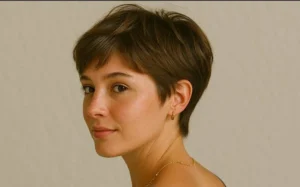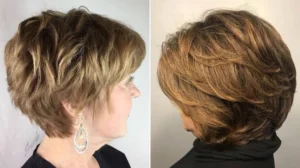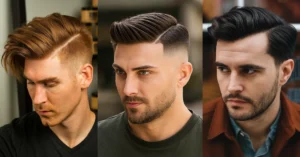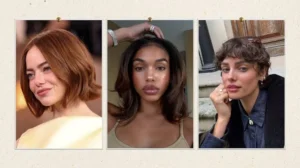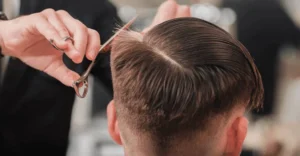
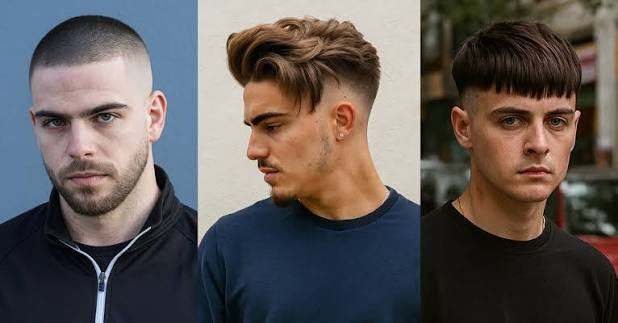
A skin fade haircut blends the sides and back down to bare skin. It can look subtle, sharp, professional, sporty, or bold depending on where the fade begins and how the hair is cut on top.
The best skin fade is not always the highest or tightest one. Your hair texture, density, face shape, head profile, styling routine, and preferred grow-out should guide the final cut.
Skin fades remain popular in 2026, but they are no longer the automatic choice for every short haircut. Softer tapers, burst fades, longer textured tops, and less rigid outlines are also gaining attention. That makes personalization more important than simply requesting “a fade.”
Quick Answer
A skin fade removes the hair completely at the bottom of the sides and back. The blend then becomes gradually longer as it moves toward the top.
Choose a low skin fade for subtle contrast, a mid skin fade for balance, or a high skin fade for a sharper and more exposed finish.
Skin Fade Haircuts at a Glance

| Your Priority | Best Starting Style | Why It Works |
|---|---|---|
| Softest appearance | Low skin fade | Keeps more darkness above the ears |
| Balanced everyday cut | Mid skin fade | Works with most top lengths |
| Strongest contrast | High skin fade | Exposes more of the sides |
| Curly or coily top | Low drop skin fade | Preserves shape and temple weight |
| Almost no styling | Buzz cut skin fade | The top needs little daily work |
| Professional finish | Low fade with side part | Clean without appearing extreme |
| Bold modern shape | Burst fade mohawk | Curves around the ears |
| Softer grow-out | Low zero fade | Leaves a slight shadow at the base |
| Longer top | Low fade with flow | Maintains more connection and movement |
| Fine or lower-density hair | Mid fade with short texture | Reduces contrast between long and thin areas |
What Is a Skin Fade Haircut?
A skin fade, also called a bald fade, gradually reduces the hair until the lowest section reaches bare skin. A barber may use clippers, a detail trimmer, a foil shaver, or another close-finishing tool.
The word skin describes the shortest point of the haircut. It does not describe where the fade begins.
A skin fade can therefore be:
• Low, beginning near the ears and neckline
• Mid, beginning around the middle of the sides
• High, beginning close to the temples or upper sides
• Drop, curving lower behind the ears
• Burst, forming a rounded transition around each ear
• Temple, focusing mainly around the sideburn and temple area
Professional barbers often consider the desired hairstyle and face shape together rather than choosing the fade in isolation.
Is a Skin Fade Still Popular in 2026?
The skin fade is still a strong choice, especially with buzz cuts, crops, curls, waves, quiffs, high-and-tight cuts, mohawks, and short mullets.
However, the wider 2026 trend is moving away from treating tight fades as the default for every client. Longer layers, soft mullets, natural texture, grown-out shapes, and less severe side work are becoming more visible.
That does not mean the skin fade is outdated. It means the best versions now feel more intentional.
A current skin fade often includes:
• A narrower bald section
• A low or dropped transition
• A natural front hairline
• More movement through the top
• Texture instead of a stiff, glossy finish
• A shape designed to grow out more smoothly
• Enough weight around curls, waves, or longer hair
Low Skin Fade Haircuts
A low skin fade begins close to the ears and neckline. It removes less side weight than a mid or high fade.
This placement is ideal when you want visible detail without making the scalp the main feature. It also pairs well with professional, classic, curly, and longer hairstyles.
Low Skin Fade With Textured Crop
This cut combines a narrow skin fade with short, broken texture on top. It works especially well with straight or wavy medium-density hair.
Ask for approximately one-and-a-half to two inches on top with point-cut texture. A small amount of matte paste creates separation without making the hair look stiff.
Styling difficulty: Easy
Maintenance: Every two to three weeks
Best feature: Clean shape with low daily effort
Low Skin Fade With Side Part
A side part gives the low fade a more traditional and controlled finish. Keeping some weight near the part prevents the style from looking disconnected.
This cut suits office settings, formal events, and anyone who prefers a neat silhouette. Ask for a soft natural part unless you specifically want a shaved line.
Styling difficulty: Easy to moderate
Best hair: Straight or lightly wavy
Best finish: Cream, light pomade, or grooming tonic
Low Skin Fade Buzz Cut
A low fade adds shape to a simple buzz cut while keeping the overall style understated. The top can range from a very short burr to a fuller number-three or number-four length.
A slightly longer top often grows out more evenly than an extremely short buzz. It can also reduce the visual contrast between the scalp and hair.
Styling difficulty: Minimal
Maintenance: Frequent barber visits, almost no home styling
Ask for: A low skin fade with an even buzzed top
Low Skin Fade With Curly Top
This version keeps the fade close to the lower hairline while preserving natural curl volume above.
The barber should check the shape after accounting for shrinkage and curl direction. Removing too much weight near the temple can make the top appear narrow or disconnected.
Styling difficulty: Easy
Best product: Lightweight curl cream
Ask for: A low fade with darker temple corners and a rounded dry shape
Low Drop Skin Fade With Waves
The transition curves lower behind the ears instead of traveling straight across the back. This follows the natural shape of the head and can create a smoother rear profile.
It works well with natural waves, brushed texture, or a short wavy crop.
Styling difficulty: Easy
Maintenance: Two to three weeks
Best for: Wavy hair that needs less bulk around the lower sides
Low Skin Fade With Slicked-Back Hair
A low fade can clean the lower edges without removing the connection needed for a longer slicked-back top.
Keep enough length near the parietal ridge, where the upper sides meet the top. Otherwise, the haircut may look like a disconnected undercut.
Styling difficulty: Moderate
Best product: Flexible cream or medium-hold pomade
Ask for: A low skin fade with connected upper sides
Mid Skin Fade Haircuts
A mid skin fade usually begins between the top of the ear and the temple. It creates more contrast than a low fade without exposing as much scalp as a high fade.
This is the most flexible starting point for many people. It works with short, medium, straight, wavy, curly, and structured top styles.
Mid Skin Fade Crew Cut
The crew cut stays short but leaves slightly more length near the front. The mid fade gives it a clean athletic shape.
This style works for most textures and requires little morning effort. Ask the barber to maintain enough front length to follow your natural growth direction.
Styling difficulty: Very easy
Maintenance: Two to three weeks
Best for: Active routines and warm weather
Mid Skin Fade French Crop
A French crop directs short hair forward into a blunt or lightly broken fringe.
The fringe can help control strong growth patterns near the front. A textured finish also works well when straight hair tends to sit flat.
Styling difficulty: Easy
Best hair: Straight, wavy, fine, or medium-density
Ask for: A mid fade with a short textured fringe
Mid Skin Fade Quiff
A mid fade creates a clear frame around a short or medium quiff. Keep the front around two to four inches, depending on your density and desired height.
A lower quiff is easier to maintain and often feels more current than a tall, rigid front.
Styling difficulty: Moderate
Tools: Blow-dryer and light matte product
Best for: Straight or wavy hair with some natural lift
Mid Skin Fade With Waves
This cut leaves enough length for the wave pattern while removing bulk below it.
The barber should avoid cutting into the established wave direction. Brushing habits, crown position, and grain direction should be discussed before the cut.
Styling difficulty: Easy to moderate
Maintenance: Regular brushing and barber visits
Ask for: A mid skin fade that preserves the wave pattern above
Mid Skin Fade With Spiky Texture
Short separated texture adds movement without requiring a full quiff. The fade keeps the sides compact while the top remains loose.
Avoid heavy gel, which can turn small spikes into a rigid shell. Use a small amount of clay or paste on dry hair.
Styling difficulty: Easy
Best top length: One-and-a-half to three inches
Best finish: Matte or natural
Mid Skin Fade With Hard Part
A hard part is a narrow shaved line that creates a clear division between the top and sides.
It can look sharp, but it requires commitment. As the line grows, it becomes more visible and must be refreshed or grown out carefully.
Styling difficulty: Moderate
Maintenance: High
Best for: People who prefer a highly defined finish
High Skin Fade Haircuts
A high skin fade begins close to the temple or upper sides. It removes most side weight and makes the top the main focus.
This cut creates the strongest contrast. It also exposes more of the head shape, ears, scalp, and natural growth patterns.
High-and-Tight Skin Fade
The high-and-tight leaves a compact strip of hair on top with closely faded sides.
It is direct, practical, and easy to style. However, the high placement makes head shape and crown growth more visible.
Styling difficulty: Minimal
Maintenance: One to three weeks
Best for: Short hair and no-fuss routines
High Skin Fade Buzz Cut
A high fade with a short buzz creates a bold and clean silhouette.
The shorter the top, the more visible the scalp becomes. Choosing a slightly longer guard can soften that contrast.
Styling difficulty: None
Ask for: A high skin fade with a number-two or number-three top
Best for: People comfortable with strong scalp exposure
High Skin Fade Textured Crop
Texture helps soften the sharp difference between bare sides and a fuller top.
Keep the fringe choppy rather than perfectly straight unless you want a strict geometric shape.
Styling difficulty: Easy
Best hair: Straight or thick wavy hair
Best product: Matte clay or texture powder
High Skin Fade Pompadour
This cut combines very tight sides with a tall, swept-back top.
It makes a strong statement but demands regular blow-drying and enough natural density. A thin or very soft top may struggle to hold the required shape.
Styling difficulty: High
Maintenance: High
Best for: Thick straight or wavy hair
High Skin Fade Faux Hawk
The hair becomes longer toward the center without forming a narrow traditional mohawk strip.
The result can look textured and wearable when the top is kept loose. Ask for scissor-cut texture rather than hard spikes.
Styling difficulty: Moderate
Best top length: Two to four inches
Best finish: Dry and separated
High Skin Fade With Curly Top
The exposed sides place all attention on the curls.
This works best when the top has a clear shape. The barber should preserve enough temple weight to prevent the haircut from becoming top-heavy.
Styling difficulty: Easy
Best product: Curl cream or light gel
Maintenance: Frequent fade visits with less frequent top reshaping
Drop and Burst Skin Fade Haircuts
A drop fade dips lower behind the ears. A burst fade curves around each ear and usually leaves more length at the back.
These shapes are useful when a standard straight fade does not complement the hairstyle or head profile.
Drop Skin Fade With Crop
The drop line follows the head curve beneath a short textured crop.
This can make the rear shape look more balanced than a straight fade. It also leaves slightly more weight behind the ears.
Drop Skin Fade Pompadour
The lowered rear transition creates a softer foundation beneath a high-volume top.
Ask for connected upper sides so the pompadour does not appear pasted onto bare skin.
Burst Skin Fade With Curls
The fade forms a clean arc around the ear while preserving curls above and behind it.
This is a strong option for rounded curls, coily texture, and fuller rear shapes.
Burst Skin Fade Mohawk
The burst fade removes hair around the ears while keeping a longer strip through the center and back.
The width of that strip controls how bold the final haircut looks. A wider center creates a more wearable shape.
Burst Skin Fade Mullet
This variation keeps length behind the head while cleaning the temple and ear areas.
Burst fades and softer mullet shapes remain visible in current short-hair trend coverage.
Skin Fade Haircuts for Curly and Coily Hair

Curly and coily hair can create excellent contrast against a skin fade, but the cut must respect shrinkage, density, curl direction, and dry shape.
Professional barber guidance commonly emphasizes that texture and density change how a fade should be built. A reference image should show hair similar to yours, not only the fade you like.
Short Afro Skin Fade
A short shaped Afro creates a clean rounded top above faded sides.
Ask the barber to check the outline from the front, side, and back. The shape should remain balanced after the hair dries.
Sponge Curl Skin Fade
Sponge curls create separated coils above a low or mid fade.
Keep enough length for the curl pattern to form. Cutting the top too short may remove the texture that makes the style work.
Twist Top With Skin Fade
Short or medium twists pair well with a low or mid fade.
The barber should protect the twist base and avoid pushing the front hairline backward during cleanup.
Braided Top With Skin Fade
Braids can sit above low, mid, drop, or temple fades.
Plan the haircut and braiding service together. The fade should not remove hair needed for the intended braid pattern.
Curly Fringe Skin Fade
The fringe falls naturally toward the forehead while the sides remain tight.
This is useful when curls grow forward or when you prefer less height above the face.
Skin Fades With Longer Hair on Top
A longer top makes the fade more dramatic. It also increases the need for blow-drying, product, shaping, and regular top trims.
The connection between the top and upper sides becomes especially important. Removing too much weight can create an accidental undercut.
Textured Quiff Skin Fade
The top is lifted and pushed slightly backward without becoming smooth or rigid.
A textured quiff works well with medium-density straight or wavy hair.
Classic Pompadour Skin Fade
The pompadour is brushed upward and backward into a rounded shape.
This style requires enough length, density, and time. It is not a true low-maintenance haircut.
Loose Slick Back Skin Fade
A loose slick back keeps natural separation rather than creating a wet, solid surface.
Use a flexible cream and direct the hair backward with your fingers.
Side-Swept Skin Fade
The top moves across the forehead or diagonally backward.
This can work with natural cowlicks when the barber follows the existing growth direction.
Short Curtains With Skin Fade
The front opens near the center while the sides are faded tightly.
Keep some upper-side connection to prevent the haircut from looking too wide above and too narrow below.
Disconnected Undercut Skin Fade
The long top sits directly above very short sides without a gradual connection.
This is a deliberate high-contrast style. It can be harder to grow out than a connected fade.
Long Curly Top Skin Fade
Long curls create a strong difference between texture above and bare skin below.
Internal layers can reduce excess bulk while preserving curl length. A professional curl-aware stylist or barber is the safest choice for major reshaping.
How to Choose a Skin Fade for Your Hair Type
The fade itself is cut on the sides and back, but your top texture determines the overall result.
| Hair Type | Best Starting Fade | Top Guidance |
|---|---|---|
| Straight | Low or mid skin fade | Add texture to prevent flatness |
| Wavy | Low drop or mid fade | Follow the natural movement |
| Curly | Low drop or burst fade | Preserve corner weight and dry shape |
| Coily | Low, drop, or temple fade | Account for shrinkage and density |
| Fine | Low or mid fade | Keep the top short and lightweight |
| Thick | Mid or high fade | Remove bulk without over-thinning |
| Strong cowlick | Low or mid fade | Leave extra length around the growth pattern |
| Braids or twists | Low or temple fade | Protect the hair needed for the style |
Straight Hair
Straight hair reveals uneven blend lines quickly. A smooth transition and thoughtful top texture are essential.
Ask for point cutting or light layering instead of aggressive thinning.
Wavy Hair
Wavy hair adds movement and can make a fade feel less severe.
A low drop fade often follows the natural shape without removing too much side weight.
Curly and Coily Hair
The haircut should be evaluated when the hair is dry or close to its natural finished state.
Ask the barber to preserve the temple corners when removing them would make the top appear narrow.
Thick Hair
Thick hair can support crops, pompadours, quiffs, curls, and longer fringes.
Bulk should be removed strategically. Excess thinning can create short hairs that stand up or disrupt the natural pattern.
Fine or Lower-Density Hair
A very long top beside bare sides can make density differences more visible.
A short textured crop, crew cut, buzz cut, or modest quiff often creates a more unified appearance. This is cosmetic styling advice, not medical guidance.
Choosing a Skin Fade by Face and Head Shape
Face-shape advice should be treated as a starting point, not a strict rule.
The complete silhouette includes the top height, fringe, side width, beard, ears, hairline, crown, and rear head shape.
Round Face
A low or mid fade with moderate height can create a longer-looking silhouette.
Avoid extremely wide curls or a very flat top when your goal is more vertical balance.
Oval Face
Most fade heights can work with an oval face.
Choose based on scalp exposure, top length, and maintenance rather than trying to correct the face shape.
Square Face
Low, mid, and high fades can all complement strong angles.
A softer textured top can balance a very sharp hairline and beard.
Long or Oblong Face
Too much vertical height may make the face appear longer.
Consider a low fade with a flatter crop, side-swept fringe, or controlled curls.
Heart-Shaped Face
Leaving some upper-side weight can balance a broader forehead and narrower lower face.
A low fade may feel more balanced than a very high transition.
Diamond Face
A low fade or drop fade can preserve more width around the upper sides.
Avoid removing all temple weight unless strong contrast is the intended effect.
Rear Head Shape
A drop fade can follow the occipital bone, the curved area at the back of the skull.
The fade should be adapted to the actual profile rather than copied as a straight line from a photograph.
Skin Fade vs. Taper Fade, Zero Fade, and Bald Fade
These terms are often confused because barbershop wording varies.
| Cut | Shortest Point | Overall Contrast | Typical Grow-Out |
|---|---|---|---|
| Skin fade | Bare skin | High | Shows new growth quickly |
| Bald fade | Bare skin | High | Usually the same as a skin fade |
| Zero fade | Very short shadow | Moderate to high | Slightly softer |
| Taper fade | Usually leaves more hair | Low to moderate | More gradual |
| Temple taper | Short mainly at temples | Subtle | Keeps most side weight |
| Shadow fade | Visible dark base | Moderate | Softer than bare skin |
Skin Fade vs. Bald Fade
These usually refer to the same haircut. Both blend the hair down to bare skin.
Because terminology varies, show the barber exactly how high you want the bald area.
Skin Fade vs. Zero Fade
A zero fade normally leaves a faint shadow at the shortest point.
That small amount of hair can make the cut look less severe and grow out more gradually.
Skin Fade vs. Taper Fade
A taper concentrates the shortest hair around the temples, sideburns, and neckline.
It keeps more hair through the sides and generally requires less frequent sharpening.
Skin Fade Guard Numbers and Measurements
Clipper guards describe how much hair remains after cutting. Guard systems can vary slightly by brand, but the common U.S. system increases in eighth-inch steps.
For example:
| Guard | Approximate Hair Left |
|---|---|
| No guard or closed blade | Very close clipper cut |
| #1 | 1/8 inch |
| #2 | 1/4 inch |
| #3 | 3/8 inch |
| #4 | 1/2 inch |
| #5 | 5/8 inch |
| #6 | 3/4 inch |
| #8 | 1 inch |
Fades often use several guards and lever positions rather than one number. StyleSeat notes that zero through number-three guards are commonly involved in fade work.
Do not simply ask for “a number one skin fade.” That phrase does not explain:
• Where the fade should begin
• How wide the bald section should be
• Whether the blend should drop behind the ears
• How much hair should remain on top
• Whether the hairline should look natural or sharply lined
• Whether you want a clipper, trimmer, or foil finish
How to Ask Your Barber for a Skin Fade
A useful barber request should cover five choices:
- Fade height
- Fade shape
- Width of the bald section
- Top length and texture
- Hairline and neckline finish
Current barber consultation guidance recommends pairing guard numbers with actual measurements and bringing several useful photographs rather than relying on one image.
Low Skin Fade Request
“Give me a low skin fade that starts just above the ear. Keep the bald section narrow and let the blend drop slightly behind the head. Leave about two inches on top with natural texture.”
Mid Skin Fade Request
“I want a mid skin fade with a smooth transition and no heavy dark line. Leave a number-three length near the ridge and about two-and-a-half inches on top. Keep the front hairline natural.”
Curly Skin Fade Request
“Give me a low drop skin fade, but keep the temple corners darker. Shape the curls when they are dry and leave enough length for shrinkage. Do not push the front hairline back.”
Buzz Cut Skin Fade Request
“I want a number-two buzz cut on top with a low skin fade. Keep the fade soft and narrow rather than taking it high.”
Skin Fade With Beard Request
“Blend the temple into my beard without removing too much sideburn. Keep the beard fuller below the cheek and taper only the upper connection.”
The Three-Photo Rule
Bring three reference images:
• Dream photo: The overall haircut you want
• Texture-match photo: The style on hair similar to yours
• No-go photo: A fade height or shape you do not want
Try to show the front, side, and back. A single front-facing celebrity photograph rarely explains the full haircut.
Professional, School-Friendly, and Age-Inclusive Skin Fades
A skin fade can work in many settings when the height, top, and outline are chosen carefully.
The haircut is not limited to one age group or gender. What matters is the wearer’s comfort, personal style, workplace or school rules, and willingness to maintain it.
More conservative choices include:
• Low skin fade with a side part
• Low skin fade crew cut
• Low drop fade with curls
• Mid fade with a short textured top
• Natural front hairline
• No shaved design or hard part
• Tapered beard connection
• Slight shadow instead of a fully shaved base
For strict dress codes, confirm whether bare-skin fades, designs, hard parts, or extreme contrast are allowed.
Skin Fade Haircuts With Beards
The haircut and beard should be planned as one outline.
A smooth beard fade usually becomes gradually longer as it moves from the temple toward the cheek and jaw. A disconnected beard intentionally removes the sideburn link.
Popular combinations include:
• Skin fade with stubble
• Low skin fade with short boxed beard
• Mid skin fade with full beard
• High skin fade with compact beard
• Drop fade with curly beard
• Skin fade with disconnected beard
• Clean-shaven skin fade
Ask the barber how much sideburn will remain before the fading begins. Once that connection is removed, it takes time to grow back.
How to Style a Skin Fade Haircut
The faded area needs almost no styling. Your routine depends on the hair left on top.
For Crops and Short Texture
• Dry the hair in its natural direction.
• Rub a pea-sized amount of matte paste between your palms.
• Apply from back to front.
• Separate small sections with your fingertips.
For Quiffs and Pompadours
• Apply a light pre-styler to damp hair.
• Blow-dry upward and backward.
• Use a brush for smooth volume or fingers for texture.
• Finish with a small amount of clay, paste, or pomade.
For Curls and Coils
• Apply curl cream or light gel to damp hair.
• Distribute gently without flattening the pattern.
• Air-dry or use a diffuser on low heat.
• Avoid heavy products that create buildup near the scalp.
For Slicked-Back Hair
• Apply a flexible cream to damp or dry hair.
• Comb backward for structure.
• Run your fingers through the top for a softer finish.
• Avoid excessive product near the faded sides.
Skin Fade Maintenance and Grow-Out Timeline
A skin fade begins losing its bare appearance as soon as new hair becomes visible.
The haircut can still remain balanced after the skin effect fades. Your appointment schedule should depend on whether you want constant sharpness or simply a good overall shape.
| Time After Haircut | What You May Notice |
|---|---|
| Days 1–3 | Maximum contrast and cleanest outline |
| Days 4–7 | Light shadow appears in the bare area |
| Week 2 | The transition looks softer but remains defined |
| Week 3 | The fade loses crispness and side bulk increases |
| Week 4 | Low fades may remain wearable; high fades can look uneven |
| Weeks 5–6 | The cut begins resembling a grown-out short back and sides |
Recommended Appointment Timing
• Every 7–10 days: Extremely sharp finish
• Every 2 weeks: Consistently clean fade
• Every 3 weeks: Balanced appearance with moderate grow-out
• Every 4 weeks: Better for low fades and relaxed outlines
• Every 5–6 weeks: Transitioning toward a taper or longer sides
Byrdie describes bald fades as high-maintenance, while barber and grooming guides commonly suggest refreshes within roughly one to three weeks for a crisp result.
How to Grow Out a Skin Fade
Growing out a skin fade does not require shaving everything again.
At each visit, ask the barber to:
- Leave more darkness at the lowest point.
- Reduce the amount removed around the temples.
- Blend the sides without returning to bare skin.
- Preserve length around the parietal ridge.
- Move from a skin fade to a zero fade.
- Move from a zero fade to a taper.
- Reshape the top as the sides become fuller.
For coily hair, one possible progression is buzz cut, low fade, taper, and then a fuller Afro shape.
Common Skin Fade Mistakes
Taking the Fade Too High
A high guideline cannot be lowered without waiting for the hair to grow.
Ask the barber to show you the planned height before removing the hair.
Making the Bald Section Too Wide
A wide bare band creates more contrast and can make the fade look harsher.
Request a narrow skin section when you want a softer result.
Leaving a Dark Blend Line
A visible horizontal line usually means the transition was not fully softened.
Good blending should look gradual from most normal viewing angles.
Removing Too Much Temple Weight
This is especially important for curls, coils, longer tops, and lower-density hair.
Keeping darker corners can support the top shape.
Pushing Back the Hairline
A very sharp lineup may be cut behind the natural edge to create a straight line.
State clearly that you want the barber to follow your natural hairline.
Cutting the Crown Too Short
Cowlicks and strong crown patterns can stand up when cut at the wrong length.
The barber should evaluate growth direction before reducing the crown.
Ignoring the Beard Connection
A great fade can still look unfinished when the sideburn and beard transition do not match.
Discuss the beard before the haircut begins.
Choosing a Style That Requires Too Much Work
A pompadour, tall quiff, or long slick back may need daily blow-drying.
Choose a crop, crew cut, buzz cut, or short curls when time is limited.
Can You Cut a Skin Fade at Home?
A true skin fade is difficult to perform on yourself because the blend wraps around the back of the head.
Professional barbers generally advise against attempting a detailed fade without the right tools, mirror setup, and clipper control.
The most common home mistakes include:
• Raising one side higher than the other
• Creating a hard bald guideline
• Cutting into the crown
• Pushing back the front hairline
• Using a beard trimmer instead of proper clippers
• Removing too much hair while trying to correct a line
• Creating an uneven rear transition
For minor cleanup, trim only obvious neck growth or stray sideburn hairs. Avoid rebuilding the fade unless you already have solid clipper experience.
How Much Does a Skin Fade Cost in the USA?
Prices depend on the city, barber experience, shop type, service length, and whether beard work or designs are included.
Booksy’s current U.S. guide lists classic or fade haircuts at roughly $30 to $65, with common appointment lengths of 30 to 60 minutes. StyleSeat separately lists fades around $30 to $40, although local pricing can be much higher.
You may pay more for:
• A senior or highly requested barber
• A haircut and beard combination
• Shampoo or styling services
• Hair designs
• Longer scissor work on top
• A major restyle
• Premium locations
• After-hours or mobile appointments
Always check the shop’s current service menu before booking.
Skin Fade Scalp and Skin Comfort
A skin fade exposes areas that were previously covered by hair.
Tell the barber before the service if you have:
• Active cuts or irritation
• Tender bumps
• Recent sunburn
• Sensitivity to close shaving
• A history of discomfort from foil shavers or razors
• Scalp areas you do not want shaved closely
Do not ask a barber to shave over broken, inflamed, or painful skin. Persistent scalp concerns should be discussed with a qualified healthcare professional rather than treated as a haircut problem.
FAQs
Is a skin fade the same as a bald fade?
Yes, the terms usually describe the same finish. Both reduce the lowest section of hair to bare skin.
Barber terminology can vary, so show a photograph and point to how high you want the skin section.
What is the difference between a zero fade and a skin fade?
A zero fade leaves a faint hair shadow at the base. A skin fade removes visible hair completely.
The zero fade usually appears softer and may grow out more gradually.
Which skin fade grows out best?
A low skin fade usually grows out more smoothly because it keeps more hair through the upper sides.
A low drop fade or low zero fade is even more forgiving when you prefer longer gaps between appointments.
How long does a skin fade stay sharp?
The bare finish begins showing a shadow within several days.
Most people who want a consistently crisp fade return every one to three weeks.
Can a skin fade work with fine hair?
Yes, but the top length should be chosen carefully.
A short crop, crew cut, or buzzed top may look more unified than a long disconnected style beside bare sides.
Can curly or coily hair have a skin fade?
Yes. Skin fades can work very well with curls, coils, twists, braids, and short Afro shapes.
The barber should consider shrinkage, density, dry shape, and the amount of temple weight needed.
Should I get a low, mid, or high skin fade?
Choose low for subtle contrast, mid for balance, and high for a stronger exposed look.
When uncertain, begin with a low fade. It is easier to take the fade higher during the appointment than to reverse a cut that is already too high.
Does a skin fade need a sharp lineup?
No. A skin fade can be paired with a natural, softly cleaned, or sharply defined front hairline.
A natural edge usually grows out more smoothly and reduces the risk of the line being pushed backward.
Can I request a skin fade without a razor?
Yes. Ask the barber which finishing tools will be used.
Depending on your desired closeness and skin comfort, the barber may use clippers, a trimmer, or a foil shaver instead of an open razor.
How long does a skin fade appointment take?
A standard fade appointment commonly lasts around 30 to 60 minutes, although detailed top work, beard shaping, or designs can increase the time.
What should I do if my skin fade is too high?
Do not try to lower it by cutting more hair.
Let the sides grow, keep the next cleanup lower, and transition toward a low fade, zero fade, or taper over several appointments.
Conclusion
A skin fade haircut works best when the fade height supports the hair on top. Low fades offer subtle contrast, mid fades provide balance, and high fades create the strongest finish.
Choose a version that suits your real texture, density, head shape, routine, and appointment schedule. Bring several useful reference photos, explain what you do not want, and agree on the fade height before the barber creates the first guideline.
The best result is not simply the tightest fade. It is the cut that looks good in the chair, remains manageable at home, and still feels balanced as it grows.